
Ng, Pierce et al. (2014) — Applied Animal Behaviour Science
The Effect of Dog Human Interaction on Cortisol and Behavior in Registered Animal Assisted Activity Dogs
Published: July 12, 2026
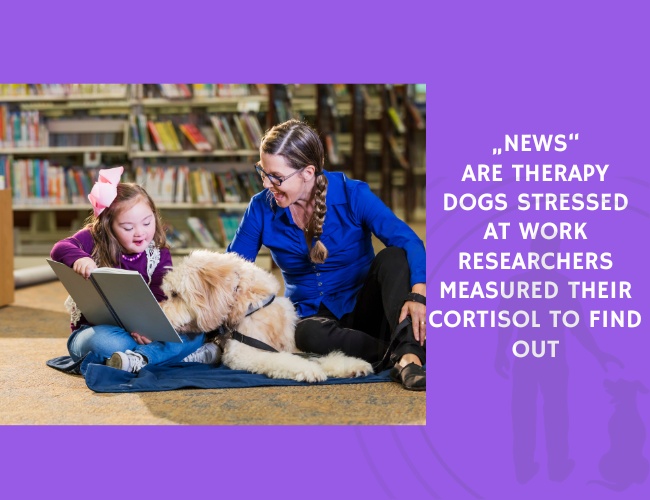
Therapy dogs work in environments that are unfamiliar, crowded, and emotionally loaded by design. It is a reasonable question whether that work is actually good for the dog. Researchers decided to measure the answer directly rather than infer it from observation alone, tracking stress hormones across 15 registered animal assisted activity dogs in real working conditions. 🐾
Researchers Zenithson Ng, B. Pierce, C. Otto, and their team collected saliva samples every 30 minutes before, during, and after a standardised 60 minute session across three distinct settings for each dog: an actual animal assisted activity session with college students in a residence hall common area, a novel room with no human interaction at all, and a session inside the dog’s own home with their handler. Each session was videotaped and specific behaviours during structured petting interactions were coded for analysis. This design allowed the researchers to isolate exactly what was driving any physiological stress response.
What the Cortisol Data Actually Showed
The most important finding sits in what did not differ. Salivary cortisol concentration and stress associated behaviour during the 60 minute animal assisted activity session were not statistically different from the same dogs spending equivalent time at home. This is the central result of the study and it directly addresses the welfare question the researchers set out to answer. The dogs working with college students in an unfamiliar communal space showed the same physiological stress profile as when they were simply at home with their handler.
The novel setting told a different story entirely. Cortisol levels were significantly higher in the novel room with no interaction compared to both the activity setting and the home setting at the 30 minute mark. The dogs found genuine unfamiliar isolation more physiologically stressful than working an active therapy session with strangers. This is a striking distinction and it points directly at what the researchers identify as the likely explanatory factor: predictability. A familiar type of interaction in an unfamiliar place produced less stress than an unfamiliar situation with no clear structure or interaction at all.
Behaviourally, dogs showed significantly more standing and ambulating during the activity setting compared to home, which the researchers interpret as engagement and alert interest rather than distress, particularly given that cortisol levels in that same setting remained low. Cortisol was negatively correlated with panting and standing at specific points in the novel and activity settings respectively, adding further nuance to how these behavioural signals should be read in context rather than treated as universal stress markers.
Why Predictability May Matter More Than Familiarity ⚠️
This finding has real implications for how animal assisted work is structured and evaluated. The instinct might be to assume that a familiar location is what keeps a working dog calm. This data suggests something more specific: it is the predictability and structure of the interaction itself that matters most, not simply whether the physical environment is familiar.
A therapy dog who has been trained through positive, structured exposure to know what an activity session involves, what is expected of them, and what the rhythm of the interaction will be, appears to carry that internal structure with them into new physical spaces without it translating into measurable physiological stress. The work itself, when it follows a familiar pattern, functions almost like a portable form of safety, regardless of the room it happens in.
This reframes how we should think about preparing dogs for any kind of structured public engagement, not just formal animal assisted activity work. It is not primarily about exposing a dog to every possible location in advance. It is about building a consistent, well understood interactive structure that the dog can rely on regardless of where it takes place.
What This Means for the Dogs in Your Own Life 🐕
At Zoeta Dogsoul, this research connects directly to how we think about NeuroBond. The finding that predictability of interaction matters more than familiarity of place is a structural insight, not just a welfare footnote for therapy work. A dog who has internalised a clear, consistent pattern of expectation with their handler carries a form of psychological anchoring into unfamiliar situations that location alone cannot provide.
This is the practical expression of the Invisible Leash. It is not a literal physical connection. It is the structure of relationship and expectation that travels with the dog, anchoring them even when the surrounding environment changes completely. The data here suggests that structure, built through consistent training and relationship, may be doing more protective work against situational stress than most owners realise. 🐾
Source: Ng, Z., Pierce, B., Otto, C., Buechner-Maxwell, V., Siracusa, C., & Werre, S. (2014). The effect of dog human interaction on cortisol and behavior in registered animal assisted activity dogs. Applied Animal Behaviour Science. Published October 1, 2014.










