
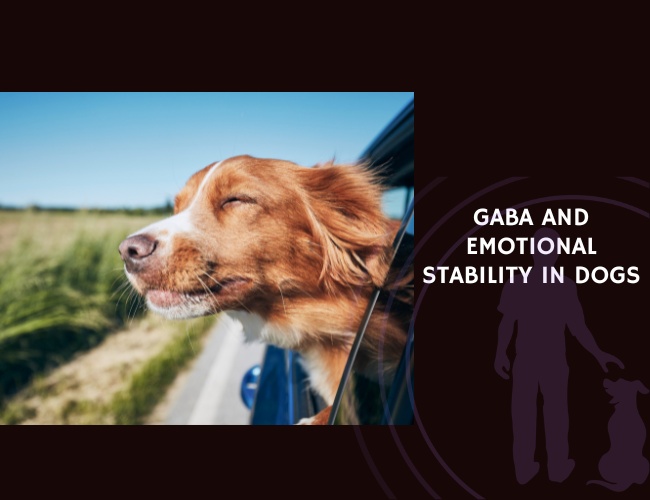
Have you ever watched your dog go from zero to a hundred in a single heartbeat — barking at the doorbell, then somehow finding their way back to a relaxed sprawl on the rug twenty minutes later? That swing between alarm and ease isn’t random. It’s chemistry. 🧠
Beneath every wagging tail, every settled sigh, and every moment of genuine calm sits a quiet biochemical hero: gamma-aminobutyric acid, or GABA. It’s the brain’s primary “off switch,” the inhibitory neurotransmitter responsible for slowing down an overstimulated nervous system and allowing your dog to simply be. When GABA is doing its job well, your dog recovers from stress quickly, sleeps deeply, and meets the world with curiosity instead of dread. When it isn’t, even small surprises can spiral into big reactions.
In this guide, we’ll walk through what the science actually tells us about GABA, why so many dogs (an estimated 72.5% show some form of anxiety-like behaviour) struggle with emotional regulation, and — most importantly — what you, as a devoted dog parent, can actually do about it. Let us guide you through the neurobiology, the gut-brain connection, the developmental windows, and the practical, non-pharmacological ways you can support your dog’s inner calm. 🐾
Character & Behaviour: What “Calm” Really Looks Like
Before we dive into the science, it’s worth pausing on something many owners get wrong: calm isn’t always what it looks like on the surface.
A dog lying quietly in the corner could be deeply relaxed — or they could be shut down, bracing internally while appearing still externally. Genuine emotional stability has a particular signature, one that’s written into the body as much as the behaviour:
- Soft, blinking eyes and a loose, wiggly posture
- Slow, even breathing rather than shallow panting
- Quick recovery after a startle — a bark at the mailman followed by an easy return to rest
- Willingness to engage, explore, and take treats even in mildly novel situations
Dogs who struggle with this kind of regulation tend to show the opposite: prolonged tension after a trigger, restlessness that doesn’t resolve, or a kind of “stuck” hypervigilance where every sound seems to matter. Understanding why this happens starts with understanding what’s actually happening inside their brain.
Next, we’ll explore the molecular story behind that calm — or that chronic unease.
GABA: The Brain’s Natural Brake Pedal
What GABA Actually Does
Think of your dog’s brain as having two pedals: an accelerator (glutamate, the primary excitatory neurotransmitter) and a brake (GABA, the primary inhibitory one). Healthy emotional functioning depends on these two systems working in balance — what neuroscientists call the excitation–inhibition, or E/I, balance.
GABA works by hyperpolarising neurons — essentially making them less likely to fire — which dampens excessive fear responses, smooths out arousal spikes, and supports the kind of behavioural flexibility that lets a dog adapt instead of panic. When a dog doesn’t produce enough GABA, or their receptors don’t respond to it efficiently, neurons fire too readily. The result? An anxious, reactive nervous system that struggles to find its way back to baseline. 🧡
Two Receptor Systems, One Coordinated Brake
GABA acts through two receptor types that work on different timescales:
- GABA-A receptors are fast-acting ion channels. When GABA binds, chloride flows into the neuron almost instantly, producing rapid, precise inhibition — this is the system that interrupts a spike of fear in real time.
- GABA-B receptors are slower, longer-lasting, and responsible for the sustained inhibitory “tone” that keeps a dog’s baseline emotional state steady over hours, not seconds.
Together, these two systems explain why some dogs can be momentarily startled but settle within moments (strong GABA-A function), while others maintain a steady, grounded temperament day to day (strong GABA-B tone). A dog with both working well is, neurobiologically speaking, built for resilience.
What the Numbers Mean: GABA-A vs GABA-B at a Glance
The science here can get dense fast, so here’s a simple side-by-side breakdown of what these two receptor systems actually do, in plain terms:
| Feature | GABA-A Receptors | GABA-B Receptors |
|---|---|---|
| Type | Ionotropic (ion channel) | Metabotropic (G-protein coupled) |
| Mechanism | Opens chloride channels directly | Triggers a slower internal signalling cascade |
| Speed | Fast — milliseconds | Slow — seconds to minutes |
| Effect duration | Brief, phasic inhibition | Sustained, tonic inhibition |
| Real-world role | Interrupting a sudden fear spike (e.g. a loud bang) | Maintaining steady baseline calm over hours |
| What weak function looks like | Slow recovery from a single startle | Generally “wired,” restless baseline temperament |
A simple way to remember it: GABA-A is the emergency brake, GABA-B is the parking brake. A dog needs both working well — one to interrupt sudden spikes of fear, and one to hold a steady, settled baseline between them.
The Brain Regions That Depend on This Balance
GABA isn’t doing its work in one isolated spot — it’s woven through several brain regions that, together, shape your dog’s emotional life:
- The amygdala, the brain’s threat-detection centre, relies on GABAergic interneurons to keep fear responses proportionate. When this inhibition weakens, fear becomes exaggerated, prolonged, and disconnected from the actual level of threat.
- The prefrontal cortex governs impulse control and top-down emotional regulation. Specialised GABA-releasing cells here — parvalbumin-positive interneurons — provide the inhibitory scaffolding for attention, working memory, and self-control.
- The hippocampus regulates contextual learning and memory. When its GABAergic circuits falter, dogs can begin generalising fear — reacting to safe situations as though they were dangerous.
- The lateral habenula helps limit impulsivity by regulating dopamine and serotonin systems.
- The hypothalamus coordinates the stress-hormone (HPA) axis; GABAergic neurons here keep cortisol release contained rather than runaway.
This is the architecture behind every moment your dog manages to stay grounded — or doesn’t.
Building Blocks: How GABA Is Made
GABA is synthesised from glutamate by an enzyme called glutamic acid decarboxylase (GAD), and this conversion requires vitamin B6 as a cofactor. Magnesium plays a supporting role too, helping to keep excitatory glutamate receptors from becoming overly sensitive. This means GABA production isn’t purely “in the dog’s head” — it’s downstream of nutrition, gut health, and overall physiological balance, which we’ll come back to shortly. 🐾
Did you know that this is also where the Invisible Leash concept becomes biologically literal? The Invisible Leash reminds us that awareness, not tension, guides the path — and at a cellular level, that’s exactly what healthy GABAergic tone provides: guidance through inhibition, not force.
Next, we’ll explore what happens to this delicate system under stress — and why some dogs bounce back while others spiral.
Stress Resilience: Why Some Dogs Bounce Back and Others Don’t
Acute Stress: A Healthy, Time-Limited Surge
When your dog encounters something startling — a slammed door, an unfamiliar dog — their body responds with a burst of glutamate, norepinephrine, and cortisol. This is completely normal. In a dog with healthy GABAergic function, this excitatory surge is contained: the amygdala, prefrontal cortex, and hippocampus all provide inhibitory feedback that brings the dog back to baseline once the moment passes.
In a dog with impaired GABAergic regulation, that containment fails. The result is prolonged sympathetic activation, a slower return to normal heart rate and cortisol levels, and an increased sensitivity to the next stressor — a kind of cumulative loading that makes each subsequent trigger feel bigger than the last.
Chronic Stress: The Self-Reinforcing Spiral
This is where things become genuinely concerning. Sustained cortisol elevation — the hallmark of chronic stress — actively damages the GABA system itself:
- It reduces the number of available GABA-A receptors
- It impairs the GAD enzyme responsible for producing GABA in the first place
- It alters the structure of GABAergic interneurons, especially the fast-acting parvalbumin cells
The outcome is a feedback loop: chronic stress weakens GABAergic capacity, which weakens the dog’s ability to regulate future stress, which produces even more dysregulation. This cycle is one of the central mechanisms by which ordinary stress transitions into a persistent anxiety disorder.
Measurable, Not Theoretical: What Brain Imaging Shows
It’s easy to read all of this as abstract theory, so it’s worth pausing on the fact that E/I balance can actually be measured. Researchers studying epileptic dogs have used magnetic resonance spectroscopy (MRS) — a brain-imaging technique that detects the concentration of specific metabolites — to track the ratio between glutamate and glutamine (often written as the GLX ratio) following pharmacological intervention.
Why does this matter for emotional stability, even outside of epilepsy? Because it confirms, in real, scannable brain tissue, that:
- The excitation–inhibition balance is a genuine, physical neurochemical state — not just a behavioural label
- Shifts in this ratio correspond with measurable changes in brain function and clinical presentation
- Interventions that target inhibitory neurotransmission produce detectable, trackable changes in brain chemistry, not just surface-level behaviour
In other words, when we talk about a dog being “dysregulated,” we’re not speaking metaphorically. There is a measurable chemical signature behind it — which is exactly why this field is moving from speculation toward genuine clinical evidence.
Your Voice Matters More Than You Think
Here’s something worth sitting with: research shows that dogs are physiologically responsive to human vocal tone and facial expression, with angry or tense vocal cues producing measurable changes in canine postural stability and balance. In plain terms — your emotional state is contagious to your dog’s nervous system. Calm, predictable handling genuinely supports their GABAergic regulation, while anxious or unpredictable behaviour from you can undermine it.
This is the heart of the NeuroBond approach: through consistent, emotionally regulated presence, trust becomes the foundation not just of training, but of your dog’s biology itself.
Next, we’ll look at what happens when this stress-regulation system breaks down completely — and how that shows up as everyday anxiety.
Anxiety, Fear & Hypervigilance: When the Brakes Wear Thin
A Shared Neurological Root
Noise sensitivity, separation distress, social anxiety, generalised restlessness, fear-based aggression — these may look like entirely different problems on the surface, but they share a common neurobiological thread: insufficient GABAergic inhibitory control over the brain’s fear circuitry. The result is a nervous system that reacts disproportionately, and recovers too slowly.
Why Some Dogs Startle at Everything
In dogs with strong GABAergic tone, a moderate sound or sight is processed and evaluated without triggering a full fear cascade. In dogs with reduced inhibitory capacity, that same stimulus can blow straight past evaluation and into panic. This isn’t a training failure or a “difficult temperament” — it’s a measurable difference in inhibitory threshold.
Separation Distress and the Gut Connection
Separation-related distress reflects a specific failure: the FEAR system activates when your dog is left alone, and without adequate GABAergic containment, that activation doesn’t settle — it persists, often expressing itself as vocalisation, destructive behaviour, or house-soiling. Intriguingly, researchers increasingly believe the gut microbiome plays a meaningful role here, since a dysbiotic gut can mean reduced endogenous GABA production reaching the brain via the vagus nerve.
The Cost of Constant Vigilance
Hypervigilance — that wired, can’t-settle alertness some dogs live in almost permanently — isn’t just unpleasant to witness. It’s metabolically expensive, it erodes the capacity for learning and social engagement, and it keeps the body in a state of chronic physiological stress that further degrades GABAergic function. It’s a cycle that feeds itself unless something interrupts it.
You’re not alone if this sounds familiar — many devoted, attentive owners live with dogs who simply can’t seem to switch off, no matter how much love and structure they provide. The good news is that this pattern is biologically explainable, and biologically addressable. 🧡
Gabapentin and the Pharmacological Evidence for GABA’s Role
If your dog has ever been prescribed gabapentin — whether for anxiety, chronic pain, or seizures — you’ve already had direct, real-world exposure to this entire framework in action. Gabapentin is an anticonvulsant that modulates calcium channel activity and indirectly supports GABAergic neurotransmission, and it has well-documented clinical use in veterinary medicine for:
- Epilepsy and seizure management
- Chronic and neuropathic pain
- Post-operative pain
- Situational and generalised anxiety
Its effectiveness at reducing anxiety is more than just a helpful side effect — it’s meaningful clinical evidence for the central thesis of this entire article: shifting the E/I balance toward inhibition genuinely produces calming effects, across species, consistently and reproducibly.
This is also a useful bridge point for owners: if your dog’s anxiety or reactivity feels beyond what nutrition, sleep, and environmental changes can address alone, this is exactly the kind of conversation worth having with your veterinarian. Pharmacological support and the foundational, non-pharmacological strategies in this article aren’t competing approaches — they work together, often most effectively when combined with patience and consistency on your end. 🐾
Next, we’ll move from fear regulation to something closely related: the brain’s capacity for self-control.
Impulse Control: The Neuroscience Behind “Self-Control”
What’s Really Happening When a Dog “Can’t Help Themselves”
Impulse control — resisting the urge to lunge, bark, snatch, or react — depends on the integrity of prefrontal circuits that are, once again, scaffolded by GABAergic interneurons. These cells are essential for delaying gratification, inhibiting reactive aggression, and maintaining flexibility under frustration.
When GABAergic function in the prefrontal cortex is compromised, the practical consequences are familiar to many owners: reduced attention span, increased impulsivity, difficulty holding back a prepotent response, and trouble learning through delayed reinforcement (the classic “wait” cue that never quite sticks).
Serotonin’s Supporting Role
GABA doesn’t operate alone here. Serotonergic neurons interact bidirectionally with GABAergic interneurons throughout the prefrontal cortex, amygdala, and hippocampus — meaning that reduced serotonin tone can weaken GABAergic regulation, and vice versa. In practice, this tells us that impulse control is never about a single “magic” neurotransmitter; it’s about a coordinated system, with GABA providing the foundational inhibitory scaffold the rest of the system builds upon.
This is exactly why patience-based training works at a biological level, not just a behavioural one. Through the NeuroBond lens, every calm repetition you offer your dog is literally helping wire stronger inhibitory circuitry — proof that emotional connection and neuroscience are not separate conversations.
Calm. Balanced. Resilient.
GABA Slows Reactivity GABA acts as the brain’s primary inhibitory system reducing excessive neural activity and helping dogs recover from stress instead of remaining trapped in arousal.
Balance Creates Stability Healthy interaction between excitatory and inhibitory pathways allows emotional flexibility preventing small triggers from escalating into prolonged fear or reactivity.

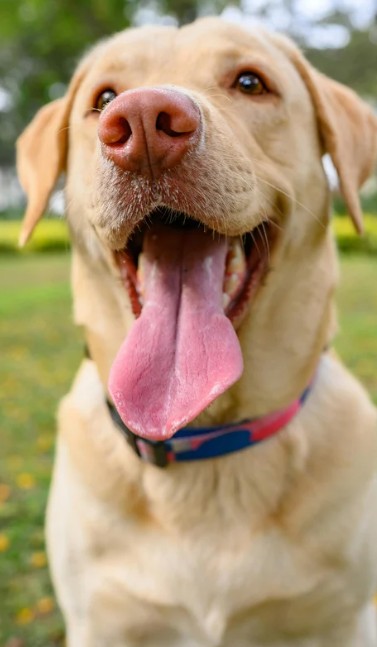
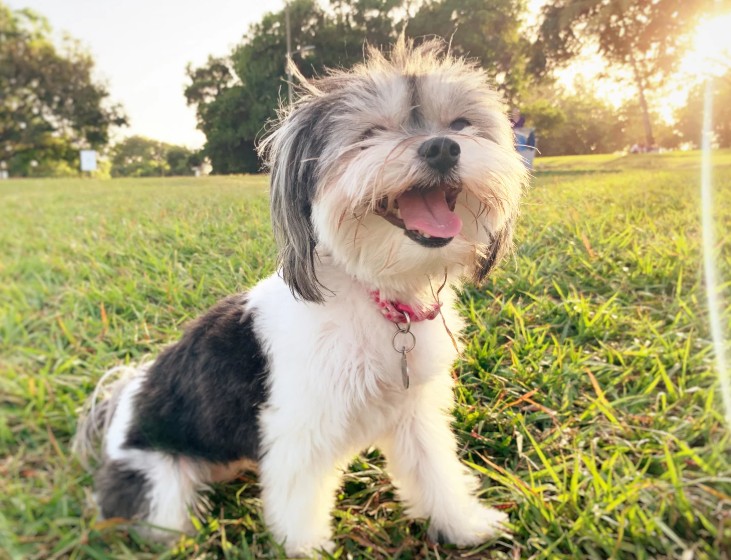
Regulation Supports Recovery When nutrition gut health and NeuroBond aligned experiences strengthen inhibitory function dogs become calmer more adaptable and emotionally resilient. 🐾
Neutering, Testosterone, and GABAergic Function: It’s Complicated
If you’re weighing the timing of neutering against your dog’s behaviour and temperament, it’s worth knowing that the science here is genuinely more nuanced than the common advice suggests. Testosterone does interact with GABAergic function — but not in a simple, one-directional way.
Here’s what the research actually points to:
- Neutering reduces circulating testosterone, which can influence GABAergic regulation — but the relationship isn’t straightforwardly “more testosterone equals more aggression”
- Some studies suggest testosterone may actually support certain aspects of healthy GABAergic function rather than undermine it
- In some dogs, neutering has been associated with an increase in anxiety-related behaviours rather than a decrease
- Outcomes appear to be breed-dependent and individually variable, rather than predictable across the board
The practical takeaway: neutering is a legitimate and often important medical decision, but it shouldn’t be approached as a behavioural fix on its own. If impulse control or reactivity is the primary concern, it’s worth discussing the full picture — age, breed, individual temperament, and behavioural history — with your vet or a qualified behaviourist before assuming timing alone will resolve the issue.
Next, we’ll explore one of the most overlooked pillars of emotional stability: sleep.
🧠 GABA and Emotional Stability in Dogs
The neurobiology behind calm, resilient, well-regulated dogs 🐾
Phase 1: GABA — The Brain’s Natural Brake
Understanding the inhibitory systemEvery calm moment your dog experiences depends on a single neurochemical principle: the balance between excitatory drive and inhibitory control.
GABA-A receptors open chloride channels for fast, millisecond inhibition — the “emergency brake” that interrupts a sudden fear spike. GABA-B receptors work through slower G-protein signalling, producing sustained “parking brake” calm over hours, not seconds.
A dog with strong GABAergic tone startles, then settles within moments. A dog with weak tone stays wired long after the trigger has passed, or carries a generally restless baseline even when nothing is happening.
• Adequate Vitamin B6 and magnesium support GABA synthesis
• Calm, predictable handling protects both receptor systems
• Avoid stacking stressors before expecting recovery
Phase 2: Stress Resilience & Recovery
Why some dogs bounce back fasterStress itself isn’t the problem — it’s what happens after the stressor that reveals a dog’s true regulatory capacity.
Brain imaging (MRS) studies tracking glutamate-glutamine ratios confirm that excitation-inhibition balance is a real, scannable chemical state — not just a behavioural label. Shifts toward inhibition are detectable, trackable, and clinically meaningful.
Chronic stress reduces GABA-A receptor density, impairs the enzyme that produces GABA, and alters interneuron structure. The result: weakened regulation makes the next stressor harder to recover from — a cycle that can quietly escalate into a true anxiety disorder.
• Your tone of voice and body language are directly regulating, not just communicative
• Build in recovery time between stressors rather than back-to-back exposure
• Consistency from you supports consistency in their nervous system
Phase 3: Anxiety, Fear & Hypervigilance
When the brakes wear thinNoise sensitivity, separation distress, and chronic hypervigilance look different on the surface, but share one neurological root.
Insufficient GABAergic control over the brain’s fear circuitry means responses become disproportionate and recovery slows. Around 72.5% of dogs show some form of anxiety-like behaviour — this is a widespread, biologically grounded pattern, not a character flaw.
• Disproportionate startle to ordinary sounds
• Persistent vocalisation or destruction when left alone
• A nervous system that never seems to fully “switch off”
Gabapentin’s well-documented clinical effectiveness for canine anxiety is direct pharmacological evidence for this framework. If environmental and nutritional support aren’t enough on their own, a conversation with your vet about combined approaches is a reasonable, evidence-based next step.
Phase 4: Impulse Control
The neuroscience behind self-controlResisting the urge to lunge, snatch, or react depends on prefrontal circuits scaffolded by GABAergic interneurons.
GABA and serotonin interact bidirectionally throughout the prefrontal cortex, amygdala, and hippocampus. Impulse control is never a single-neurotransmitter story — GABA provides the foundational inhibitory scaffold the rest of the system builds upon.
Testosterone’s relationship to GABAergic function isn’t straightforward — some studies suggest neutering can increase anxiety-related behaviours in certain dogs rather than reduce them. Timing should be discussed individually, not assumed as a behavioural fix.
• Every calm, patient repetition strengthens inhibitory circuitry
• Delay-based reinforcement (wait, settle) trains the actual brain mechanism, not just the behaviour
• Low-arousal training environments produce more lasting results than high-pressure ones
Phase 5: Sleep & Neural Restoration
Rest as neurochemical medicineA specific GABA-releasing brain region literally switches your dog from wakefulness into sleep.
The hypothalamus’s GABAergic neurons inhibit the brain’s arousal systems to allow sleep onset. Sleep and GABA function feed each other bidirectionally — good sleep restores receptor sensitivity; poor sleep further weakens it.
Slow settling, frequent waking, restlessness overnight, or excessive daytime sleep paired with poor nighttime rest — a sign of fragmented, non-restorative sleep rather than genuine recovery.
In randomised, placebo-controlled trials, dogs supplemented with the GABA-producing probiotic LP815 settled faster, slept more consistently, and showed reduced daytime sleep — all without sedation or reduced daytime activity.
Phase 6: Nutrition & the Gut-Brain Axis
Calm starts in the bellyYour dog’s gut microbiome actively produces neurotransmitters, including GABA, and communicates directly with the brain.
Communication runs via the vagus nerve, hormonal, and immune pathways. Clinical trials of GABA-producing probiotic strains have shown statistically significant reductions in anxiety and aggression-related behaviours.
• Vitamin B6 — essential cofactor for GABA synthesis
• Magnesium — keeps excitatory glutamate receptors balanced
• GABA-producing probiotic strains — research-backed gut support
• Consistent feeding routines — supports stable gut and neurotransmitter health
Phase 7: Development, Ageing & Breed
A system that changes across a lifetimeGABAergic tone isn’t fixed — it’s shaped by developmental windows, age, and breed-specific wiring.
The socialisation period (roughly weeks 3-12) is when fear, inhibition, and impulse circuits are most malleable. As dogs age, GABA synthesis naturally declines, contributing to cognitive and emotional changes.
Around 6-18 months, hormonal surges temporarily destabilise GABA receptor sensitivity — increased impulsivity at this age reflects genuine reorganisation, not a training failure.
• Puppies: gentle handling, varied positive exposure
• Adolescents: low-arousal, patient training
• Seniors: GABA-precursor nutrition, enrichment, predictable routines
Phase 8: Genuine Calm vs. Behavioural Suppression
The distinction that matters mostA dog can appear calm while internally remaining in chronic distress — and the difference is visible in the body, once you know what to look for.
• Soft, blinking eyes and loose movement
• Slow, regular breathing
• Relaxed facial, jaw, and shoulder muscles
• Quick recovery after a startle
• Tension around the eyes (whale eye), tight mouth, furrowed brow
• Shallow, rapid breathing
• Freezing rather than relaxing
• Out-of-context yawning or lip-licking
📊 Breed Differences in GABAergic Wiring
Border Collies, German Shepherds, Malinois: higher baseline arousal but typically fast GABAergic recovery, built for rapid re-engagement.
Cavaliers, Bichons: tend toward higher baseline GABAergic tone and lower HPA reactivity.
Chihuahuas, Jack Russells: can retain high reactivity regardless of size, reflecting different selective pressures.
Greyhounds, Whippets: their calm is earned regulation between bursts of fast-twitch activity, not passive temperament.
Bulldogs, Frenchies: chronic hypoxia may add oxidative stress affecting interneuron health.
• GABA-A = emergency brake (fast, seconds) | GABA-B = parking brake (slow, hours)
• Genuine calm = quick recovery + loose body | Suppression = stillness + hidden tension
• E/I Balance = Excitation (Glutamate) vs. Inhibition (GABA) — stability lives in the equilibrium
• Sleep, gut health, predictability, and bonding all directly raise GABAergic tone
• Adolescence (6-18 months) = temporary GABAergic reorganisation, not regression
Through the NeuroBond approach, every calm, consistent interaction you share with your dog becomes biology — strengthening the very inhibitory circuits that make trust possible. The Invisible Leash reminds us that awareness, not tension, guides the path toward a regulated nervous system. And in moments of Soul Recall, we’re reminded that emotional memory and physical state were never truly separate. Supporting your dog’s GABAergic health isn’t a quick fix — it’s a relationship, built one regulated moment at a time.
© Zoeta Dogsoul – Where neuroscience meets soul in dog training
Sleep & Recovery: Why Rest Is Neurochemical Medicine
GABA Is What Puts Your Dog to Sleep
A specific cluster of GABA-releasing neurons in the hypothalamus (the ventrolateral preoptic area, or VLPO) is responsible for actively inhibiting the brain’s arousal systems, allowing the transition from wakefulness into sleep. When GABAergic function is impaired, this “off switch” weakens — leading to difficulty settling, fragmented sleep, reduced deep restorative sleep, and increased nighttime restlessness.
A Two-Way Street
Sleep and GABAergic function feed each other in both directions. Quality sleep restores GABA receptor sensitivity, clears metabolic waste from neural tissue, and consolidates the extinction memories that help your dog “unlearn” fear. Sleep deprivation does the reverse — reducing receptor sensitivity, raising inflammatory markers, elevating cortisol, and impairing your dog’s ability to recover emotionally from the day’s stressors.
Real Evidence: The LP815 Probiotic Trials
Here’s where the science gets genuinely exciting. In a randomised, placebo-controlled trial, dogs supplemented with the GABA-producing probiotic strain Lactiplantibacillus plantarum LP815 showed faster settling after their owners left, reduced excessive daytime sleep, and more consistent nighttime sleep — all without sedation. Their daytime activity levels remained stable, meaning the improvement reflected genuine regulation, not a drugged-down dog. That distinction matters enormously for welfare. 🐾
Next, we’ll head straight to where a great deal of this regulation actually begins: the gut.
Nutrition & the Gut–Brain Axis: Calm Starts in the Belly
The Gut as a Second Source of GABA
One of the most exciting developments in this entire field is the recognition that your dog’s gut microbiome actively produces neurotransmitters — including GABA — and communicates with the brain via the vagus nerve, hormonal signalling, and immune pathways. This gut–brain axis means dietary and microbiome-based interventions may offer a genuinely sustainable, non-pharmacological route toward better emotional regulation.
What the Research Shows
Clinical trials examining GABA-producing probiotic strains like LP815 have demonstrated statistically significant reductions in anxiety and aggression-related behaviours. This isn’t a wellness trend — it’s peer-reviewed evidence that what happens in the gut shapes what happens in the brain.
Nutritional Building Blocks Worth Knowing
A few practical takeaways for supporting GABA production through diet:
- Vitamin B6 is an essential cofactor for the enzyme (GAD) that converts glutamate into GABA — without enough of it, GABA synthesis capacity drops
- Magnesium helps regulate excitatory glutamate receptor sensitivity, keeping the E/I balance from tipping toward overexcitement
- Gut-supportive, GABA-producing probiotic strains offer a research-backed path to supporting endogenous GABA production
- Consistent feeding routines support overall gut health, which in turn supports stable neurotransmitter production
This is Soul Recall in its most physical form — the idea that emotional memory and bodily state are never truly separate, and that healing one often means tending to the other.
Next, let’s look at how age, development, and breed shape this whole system from the start.
Development, Ageing & Breed Differences
The Critical Puppy Window
The early weeks of a puppy’s life are a uniquely malleable period for GABAergic development. Interestingly, in the first 1–3 weeks of life, GABA is actually excitatory rather than inhibitory, due to high intracellular chloride levels — it only switches to its familiar calming role as the brain matures. This transition is experience-dependent: gentle handling and positive social contact accelerate healthy maturation, while early stress or neglect can delay it, leaving a more excitable, anxiety-prone baseline.
The socialisation window — roughly weeks 3 through 12 — is when the amygdala, prefrontal cortex, and hippocampus are rapidly developing, and it’s a critical period for shaping lifelong emotional resilience.
Adolescence: Not Regression, Reorganisation
If your “perfectly trained” puppy suddenly seems to forget everything around six to eighteen months of age, you’re not imagining it — and it’s not a training failure. Canine adolescence brings synaptic pruning, continued prefrontal maturation, and hormonal surges that temporarily destabilise GABA receptor sensitivity. The result is often increased impulsivity and reactivity. Understanding this as a developmental phase, not a behavioural breakdown, changes everything about how you respond to it. Low-arousal, positive-reinforcement training during this window genuinely protects the maturing GABAergic system.
Ageing and Cognitive Decline
As dogs age, GABA synthesis naturally declines, interneurons are lost, and receptor expression shifts — contributing to Canine Cognitive Dysfunction Syndrome, with its hallmark disorientation, disrupted sleep, and increased anxiety. Supportive measures — GABA-precursor supplementation, antioxidant-rich nutrition, environmental enrichment, and predictable routines — can meaningfully slow this trajectory.
Breed Matters Too
Selective breeding has shaped GABAergic tone and HPA reactivity differently across breeds:
- Working and herding breeds (Border Collies, German Shepherds, Belgian Malinois) show higher baseline arousal but often faster GABAergic recovery — built for rapid re-engagement
- Calm companion breeds (Cavaliers, Bichons) tend toward higher baseline GABAergic tone
- Small but reactive breeds (Chihuahuas, Jack Russells) can retain high reactivity regardless of size
- Sighthounds (Greyhounds, Whippets) display efficient GABAergic regulation between bursts — their calm is earned, not passive
- Brachycephalic breeds (Bulldogs, Frenchies) may face added challenges from chronic hypoxia-related oxidative stress affecting interneuron health
Knowing your dog’s breed-typical wiring isn’t about lowering expectations — it’s about meeting their actual nervous system where it is. 😄
Next, we’ll explore the environment your dog lives in every day, and why predictability is doing more work than you might realise.
Environment & the Power of Predictability
Why Routine Is Neurochemical, Not Just Behavioural
A predictable environment isn’t just “nice to have” — it directly reduces the cognitive and physiological load on your dog’s stress-response systems. When the environment is consistent, the prefrontal cortex can regulate the amygdala using learned safety cues, GABAergic interneurons can maintain steady tone without constant demand, and the HPA axis can reliably return to baseline between stressors.
Unpredictability — inconsistent rules, chaotic households, frequent rehoming — does the opposite: it chronically activates the stress-response system and steadily erodes GABAergic integrity over time.
Enrichment That Actually Supports the Brain
Environmental enrichment increases hippocampal neurogenesis, upregulates BDNF (which supports the survival of GABAergic interneurons), and reduces baseline cortisol. The most effective forms include:
- Olfactory enrichment — scent trails and nosework activate reward circuits and promote focused, calm arousal
- Cognitive enrichment — puzzle feeders and training tasks strengthen prefrontal inhibitory control
- Social enrichment — positive interactions with trusted humans and dogs activate oxytocin, which in turn supports GABAergic tone
- Physical enrichment — varied terrain, swimming, and movement support GABA synthesis and restorative sleep
The Cost of Chronic Stress on the Developing Brain
Sustained stress doesn’t just feel bad — it physically remodels the brain: shrinking prefrontal connections, enlarging fear-processing regions in the amygdala, suppressing new hippocampal neuron growth, and reducing local GABAergic interneuron density. This is why dogs rescued from chronically stressful environments often need extended, patient, low-demand rehabilitation rather than quick fixes — their nervous system needs time to physically rebuild.
Next, we’ll cover something every thoughtful owner should be able to recognise: the difference between a dog who is truly calm, and one who has simply learned to go quiet.
Genuine Calm vs. Behavioural Suppression
This distinction might be the single most important thing in this entire article. 🐾
A dog can appear calm while internally remaining in a state of chronic distress — particularly if they’ve learned, through punishment or intimidation, that expressing fear or discomfort only invites more trouble. To the untrained eye, this dog might look “well-behaved.” Their nervous system tells a very different story.
Markers of genuine calm:
- Low baseline cortisol and high heart rate variability
- Relaxed facial, jaw, and shoulder muscles
- Slow, regular breathing
- Soft, blinking eyes and loose, fluid movement
Markers of behavioural suppression:
- Elevated cortisol despite outward stillness
- Tension around the eyes (whale eye), tight mouth, furrowed brow
- Shallow, rapid breathing
- Freezing rather than relaxing
- Excessive, out-of-context displacement behaviours like lip-licking or yawning
This is why training methods built on fear or intimidation are neurobiologically counterproductive — they don’t build genuine regulation, they build suppression, with real long-term costs to your dog’s GABAergic health. True calm has to be built, not forced.
Signs Your Dog May Have Low GABAergic Tone
Everything above is fascinating, but you came here for something usable. Here’s a practical, self-assessment style checklist — not a diagnostic tool, but a way to recognise patterns worth paying attention to (and worth raising with your vet or behaviourist if several apply consistently):
Arousal & recovery
- Struggles to settle for several minutes (or longer) after a startle, rather than recovering within seconds
- Seems to “stack” stress across the day — small triggers become bigger reactions by evening
- Shows disproportionate reactions to ordinary sounds, sights, or touch
Impulse control & focus
- Difficulty holding a “wait” or “stay,” even with consistent practice
- Snatches treats, rushes through doorways, or struggles to pause before acting
- Short attention span during training, especially in mildly stimulating environments
Sleep
- Takes a long time to settle at night or during crate/rest time
- Wakes frequently, paces, or seems restless overnight
- Excessive daytime sleeping paired with poor nighttime sleep (a sign of fragmented rather than restorative rest)
Body language & baseline state
- Frequently tense facial muscles, furrowed brow, or “whale eye”
- Shallow or rapid breathing at rest
- Restlessness that doesn’t resolve even in a calm, familiar environment
- Out-of-context displacement behaviours — yawning, lip-licking, or scratching when nothing obvious is happening
Digestive and developmental flags
- Ongoing digestive sensitivity or irregularity (worth flagging given the gut–brain connection)
- A history of early-life stress, inconsistent socialisation, or rehoming
- Currently in adolescence (roughly 6–18 months), where temporary GABAergic reorganisation is expected
If you’re nodding along to several of these, it doesn’t mean something is “wrong” with your dog — it means there’s a clear, biological starting point for support, whether that’s environmental, nutritional, behavioural, or in some cases medical. A pattern across multiple categories, rather than a single isolated sign, is usually the more meaningful signal.
Bringing It Together: The Four Pillars of Emotional Stability
Everything we’ve covered points toward one integrated picture — what we think of as four interlocking pillars that determine a dog’s capacity for genuine emotional stability:
- GABAergic inhibitory capacity — the neurochemical foundation enabling fear regulation, impulse control, and stress recovery
- HPA axis calibration — a stress-response system that activates appropriately, without being chronically sensitised
- Oxytocin-mediated bonding — the relational bridge between trust and physiological regulation, where positive connection with you literally reduces stress hormones and strengthens GABAergic tone
- Environmental predictability — the steady, consistent context that lets all of the above function without constant overload
These four pillars don’t operate independently — they interact dynamically. Strong bonding lowers stress reactivity, which preserves inhibitory tone. Healthy GABAergic capacity supports the consistency that builds environmental predictability. Each pillar reinforces the others, which also means that neglecting one will quietly undermine the rest.
That intricate, living interplay between body, brain, and bond — that’s the essence of Zoeta Dogsoul.
Is This Approach Right for You?
If you’ve read this far, you’re probably the kind of owner who wants to understand why, not just what — and that curiosity is itself one of the best things you can offer your dog. Supporting GABAergic health isn’t about a single product or a quick fix; it’s a layered, ongoing commitment that touches nutrition, sleep, environment, training philosophy, and the emotional quality of your relationship.
This approach is right for you if:
- You’re willing to think in terms of nervous system support, not just obedience
- You want training methods that build genuine calm rather than surface-level compliance
- You’re open to addressing gut health, sleep, and environment alongside behaviour
- You can offer patience during developmental transitions like adolescence, rather than expecting linear progress
It may not be the right fit if you’re looking for an instant behavioural switch — true regulation is built gradually, through consistency and trust, not overnight.
Whatever stage you and your dog are at, understanding the neuroscience behind their emotional world is a powerful first step. You’re not just managing behaviour — you’re supporting the biological foundation that makes calm, connected companionship possible. 🧡










