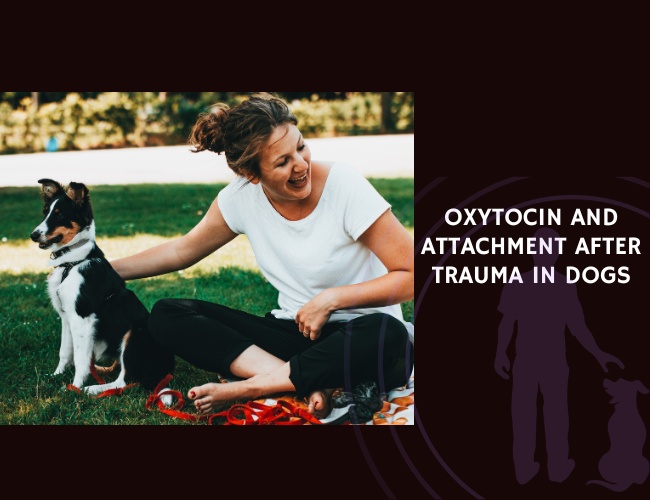
More Than a Hormone — A Window Into Your Dog’s Inner World
When people talk about the bond between a dog and their human, they often reach for simple explanations. “She loves you,” they say. “He trusts you.” And while those words carry real truth, they leave out the extraordinary biological story unfolding beneath the surface every time your traumatized dog chooses to stay close, make eye contact, or rest beside you without flinching.
That story begins with oxytocin — a neuropeptide often called the “bonding hormone” — but it doesn’t end there. Because if there’s one thing current neuroscience makes clear, it’s that oxytocin is not a magic switch. It cannot manufacture trust on its own. It cannot erase what trauma has written into a dog’s nervous system with a single dose or a single act of kindness. What it can do, however, is amplify something far more powerful: the effect of consistent, emotionally attuned caregiving over time.
If you share your life with a dog who has known fear, loss, neglect, or harm, understanding how oxytocin and attachment systems work — and how trauma disrupts them — may be the most important thing you ever read. Not because it gives you a shortcut, but because it gives you a map. 🧠
Does Your Dog Carry Trauma? A Diagnostic Starting Point
Recognizing trauma before you can address it
Before exploring the neuroscience of recovery, you need to know what you’re working with. Many people adopt or rescue a dog without access to their full history — and even when a history is known, trauma rarely presents itself with a neat label. It shows up in behavior, in body, and in the quality of the space a dog creates around themselves.
Understanding whether your dog’s challenges are rooted in trauma is the first step toward responding appropriately. Without that understanding, even the most well-intentioned care can miss the mark.
Behavioral trauma indicators: what to watch for
The following behaviors may indicate a trauma history. No single sign is definitive — look for clusters, patterns, and consistency across different environments:
Social and relational signals:
- Avoidance of eye contact, or conversely, a fixed, hard stare without softness
- Freezing, flinching, or cowering in response to raised hands, sudden movement, or raised voices
- Difficulty accepting touch, or tolerance of touch without relaxation (the dog endures rather than enjoys)
- Indiscriminate friendliness with all humans combined with an inability to form a specific bond
- Excessive following or shadowing of one person, combined with panic when that person leaves the room
- Showing teeth, growling, or snapping with no clear trigger that others can identify
Physical and somatic signals:
- Chronic tension in the jaw, neck, or shoulders — a dog that never fully relaxes their musculature
- Tucked tail that does not lift even in familiar, safe environments
- Ears pinned back as a default resting position, not just a situational response
- Trembling or shaking in non-cold conditions — especially around feeding, handling, or new people
- Hypervigilance — constant scanning, inability to settle, startling at ordinary sounds
- Gastrointestinal issues without a dietary cause — chronic stress impairs digestive function
Environmental and contextual signals:
- Fear responses disproportionate to the actual stimulus (a dropped pen triggering full panic)
- Strong avoidance of specific objects, rooms, postures, or types of people — these often encode specific traumatic associations
- Resource guarding with high intensity even when resources are plentiful
- Difficulty eating or drinking when others are present
- Regression to earlier fearful behaviors after apparent progress — a hallmark of trauma-based learning
Trauma-rooted fear vs. temperament-based anxiety: a critical distinction
This is one of the most important distinctions you can make, and one of the most commonly confused. Both look similar on the surface — a fearful dog is a fearful dog, you might think. But the neurobiological roots are different, and so are the most effective responses.
Temperament-based anxiety reflects a genetic predisposition toward higher baseline arousal or lower stress thresholds. It tends to be consistent across all environments from early puppyhood, present even in dogs raised in stable, loving homes, and it responds reasonably well to structured desensitization and confidence-building work because the dog’s attachment system itself is intact.
Trauma-rooted fear typically emerges or intensifies following a specific period of adversity. Key distinctions include:
- It often has identifiable triggers that map onto the trauma (a specific type of person, location, sound, or handling)
- The dog may show contrasting behavior — confident in some contexts, collapsed in others — because the nervous system is responding to associations, not blanket sensitivity
- Recovery tends to require longer timelines and relationship-based approaches before behavioral training becomes effective
- Regression under stress is more pronounced and more frequent
- The dog’s capacity to use you as a safe base is specifically compromised — the attachment system itself has been disrupted, not just the arousal threshold
You are not necessarily choosing between these categories. Some dogs carry both. But the emphasis of your approach shifts significantly depending on which is primary, and knowing the difference prevents you from pushing a trauma-rooted dog through desensitization exercises before the neurobiological foundation for learning exists. 🧠
Understanding Oxytocin: What It Actually Does in Your Dog’s Brain
Oxytocin is a relationship amplifier, not a relationship creator
Oxytocin is produced in the hypothalamus and released throughout the brain and body during moments of positive social contact — a calm gaze, a gentle touch, a shared walk. In dogs, it plays a fundamental role in establishing and maintaining attachment relationships with their human caregivers. But the research reveals something crucial that is often misunderstood: oxytocin does not create bonds indiscriminately. It strengthens bonds that already exist.
This means that oxytocin is not “social glue” that randomly sticks your dog to whoever happens to be nearby. It is a system that deepens trust within established relationships — and that distinction matters enormously when you are working with a dog recovering from trauma.
Both the genetic variation in the oxytocin receptor (OXTR) gene and the quality of caregiving your dog experiences influence how their attachment security develops. Biology and experience are working together, not separately. Oxytocin amplifies the effects of sensitive, responsive caregiving — it does not substitute for it.
How oxytocin shapes behavior you can actually see
You might notice that your dog makes more eye contact on a calm morning walk than in a busy, unpredictable environment. That’s not coincidence. Research in juvenile dogs confirms that oxytocin concentrations are associated with attachment-related behaviors: proximity-seeking, eye contact, and responsiveness to the caregiver. The stronger your dog’s oxytocin signaling within the relationship, the more clearly these attachment behaviors emerge.
What makes this especially interesting is that breed background shapes how oxytocin translates into visible behavior. Labrador Retrievers, for example, show stronger correlations between oxytocin concentrations and attachment-related behaviors compared to Akitas — a breed genetically closer to wolves, with naturally higher baseline cortisol levels and a more reactive stress response system.
This is not a value judgment on any breed. It is a reminder that you are not working with a generic dog — you are working with a neurobiologically specific individual, shaped by genetics, early history, and everything that has happened since. 🐾
Oxytocin and social recognition: why your face matters
One of oxytocin’s lesser-known roles is supporting social recognition — the neurological capacity to identify and preferentially respond to specific individuals. This is deeply relevant for traumatized dogs, because trauma often disrupts this system. A dog who has been harmed or neglected may struggle to distinguish between “safe person” and “everyone else,” defaulting either to hypervigilance around all humans or to indiscriminate, anxious friendliness.
Rebuilding selective attachment — the kind where your dog truly recognizes you as their anchor — requires more than oxytocin activation. It requires oxytocin activation in the context of consistent, predictable interaction with you specifically. That is why presence, routine, and reliability are not soft variables in recovery. They are the neurochemical architecture of healing.
What Trauma Does to the Bonding System
Trauma rewires the brain from the inside out
Early life adversity — neglect, abuse, separation, repeated rehoming — does not simply create behavioral problems that you can train away. It fundamentally alters the neurobiological systems that support attachment. This is a distinction that changes everything about how you approach recovery.
Research shows that emotional neglect is associated with lower plasma oxytocin levels, insecure attachment patterns, and elevated fear responses to social situations. Trauma doesn’t just make a dog anxious around strangers. It changes the neurochemical foundations of social trust itself.
Perhaps most striking is the epigenetic dimension of this disruption. Dogs with adverse early histories show different DNA methylation patterns in the oxytocin receptor (OXTR) gene and the glucocorticoid receptor (NR3C1) gene compared to dogs raised without trauma. This means:
- The HPA axis — the body’s primary stress regulation system — becomes dysregulated
- Behavioral responses to stress and social engagement are altered at a biological level
- The very receptors that oxytocin binds to may be epigenetically silenced or downregulated
This is not a reason for despair. It is a reason for patience, and for precision.
The cortisol problem: why calm comes first
In traumatized dogs, chronic elevation of cortisol — the primary stress hormone — actively interferes with oxytocin-mediated attachment processes. When cortisol is chronically high, it suppresses oxytocin signaling or reduces receptor sensitivity. The two systems work in opposition, and in a traumatized nervous system, cortisol is almost always winning.
This is why a calm environment is not a luxury for a recovering dog. It is a neurochemical prerequisite. The priority is not to find ways to “boost” oxytocin artificially. The priority is to reduce the conditions that keep cortisol chronically elevated — unpredictability, threat cues, emotional volatility in the home — so that the oxytocin system can simply do what it was designed to do.
Here’s what that means practically:
- Loud, chaotic environments suppress oxytocin function and prolong trauma patterns
- Consistent schedules, familiar spaces, and stable social contacts allow cortisol to normalize
- Emotional safety is not just a psychological concept — it is a physiological state that either permits or prevents healing
Why you cannot inject trust
A particularly important finding involves intranasal oxytocin administration in dogs. When oxytocin was given nasally to pet dogs, the effects on owner-directed attachment behavior were limited and inconsistent. This tells us something profound: you cannot shortcut the bonding process through external hormone administration.
Endogenous oxytocin — the kind produced naturally by positive social interaction — appears far more effective than pharmacological approaches. The conditions that stimulate endogenous release are the conditions you create every day: calm touch, predictable presence, attuned responsiveness to your dog’s signals. That is the real medicine. 🧡
The Wider Neurochemical Picture: Beyond Oxytocin
Why one hormone cannot tell the whole story
Oxytocin gets most of the attention in discussions of bonding and trauma, but your dog’s nervous system is not running on a single chemical. Recovery from trauma involves a whole network of neurochemicals working in concert — and understanding that network helps you see why some approaches work and others don’t, and why progress sometimes feels non-linear even when you’re doing everything right.
Dopamine: the motivation to connect
Dopamine is your dog’s anticipation and motivation system. It drives approach behavior — the willingness to move toward something rather than away from it. In a healthy, non-traumatized dog, proximity to a trusted caregiver activates dopaminergic reward pathways. Your dog wants to be near you because nearness has historically produced good things.
In traumatized dogs, dopamine pathways are often disrupted. The expectation of punishment, unpredictability, or abandonment rewires the reward system so that social approach becomes associated with risk rather than reward. This is why some traumatized dogs appear “unmotivated” — not because they lack drive, but because their dopamine system has learned that reaching out rarely leads anywhere safe. Rebuilding dopaminergic motivation requires repeated positive experiences of social approach — small, low-stakes interactions where coming to you predictably produces something pleasant and never produces something frightening.
Serotonin: emotional stability and impulse regulation
Serotonin regulates mood stability, impulse control, and the capacity to tolerate uncertainty without tipping into panic. Chronically low serotonin is associated with anxiety, compulsive behavior, aggression driven by emotional dysregulation, and difficulty with flexible thinking. Traumatized dogs frequently show behavioral patterns consistent with serotonin dysregulation: reactive responses to minor triggers, inability to self-soothe, compulsive licking or pacing, and difficulty transitioning between emotional states.
This is the neurochemical context in which veterinary behaviorists sometimes introduce SSRIs — selective serotonin reuptake inhibitors — as a temporary scaffold. Medication is not a character flaw or a shortcut. When a dog’s cortisol is so chronically elevated and their serotonin so depleted that the nervous system cannot access even brief windows of calm, medication can create enough neurochemical stability for the relational work — the real work — to begin. Think of it as lowering the floor enough so that your dog can finally stand on it.
GABA: the brake pedal of the nervous system
GABA (gamma-aminobutyric acid) is the primary inhibitory neurotransmitter — the neurological brake pedal. It dampens overactivation and enables a dog to come down from an aroused state. In traumatized dogs, the GABA system is often underactive, meaning the brake doesn’t engage effectively. A dog who cannot settle, cannot transition out of an alert state, or remains physiologically activated for hours after a mild stressor is showing signs of GABA dysregulation.
Practices that support GABA activity include slow, rhythmic movement (calm leash walks), predictable daily patterns that signal “all is well,” and the experience of co-regulation with a calm caregiver. These are not metaphors for comfort — they are literal neurochemical interventions available to you every single day.
The vagus nerve: the highway of felt safety
The vagus nerve is the body’s primary parasympathetic pathway — the physical highway through which signals of safety travel from the environment into the nervous system. Polyvagal theory, developed by neuroscientist Stephen Porges and increasingly applied in both human and animal trauma work, describes how the vagus nerve mediates three distinct physiological states:
- Ventral vagal (safe and social) — calm, engaged, curious, connected. This is the state in which oxytocin operates most effectively and in which genuine bonding occurs.
- Sympathetic activation (mobilized for threat) — fight, flight, hypervigilance. Cortisol is elevated, oxytocin is suppressed, and learning is significantly impaired.
- Dorsal vagal (shutdown) — freeze, collapse, dissociation. A dog in this state may appear calm or even compliant, but they are neurologically unavailable. This is sometimes mistaken for “good behavior.”
Understanding vagal states helps you recognize that your dog’s behavior is always a nervous system response, not a character statement. A dog who suddenly “shuts down” during training is not being stubborn — they have moved into dorsal vagal shutdown. A dog who bolts unpredictably has not forgotten their recall — their sympathetic system has overridden all trained responses. Your calm, grounded presence is the most powerful vagal signal available: it communicates to your dog’s nervous system, via the vagus nerve, that the environment is safe enough to return to social engagement. 🧠
Sleep: the brain’s overnight repair cycle
Sleep is not passive recovery. During REM sleep in particular, the brain actively consolidates safety memories, processes emotional experiences, and regulates stress hormones. Dogs who are chronically stressed or living in unpredictable environments often show disrupted sleep patterns — they remain hypervigilant even at rest, startling easily, sleeping lightly, and waking frequently.
This matters neurobiologically because a sleep-deprived or sleep-disrupted dog cannot fully consolidate the positive relational experiences you are working to create. Each calm interaction, each moment of trust, each small breakthrough — these need sleep to move from short-term experience into long-term neurological change.
Practical steps to support sleep quality in a recovering dog include:
- Providing a dedicated resting space with sides or a cover to reduce environmental monitoring
- Maintaining a consistent sleep schedule aligned with natural light cycles
- Avoiding high-arousal activities in the two hours before rest periods
- Ensuring the sleep environment is free from the sensory cues associated with past trauma
- Allowing the dog to rest near you initially — proximity during sleep is itself a powerful safety signal
When your dog begins sleeping deeply, rolling onto their back, or choosing to nap without hypervigilance, you are witnessing the nervous system beginning to trust the environment. That is not a small thing. 🐾
Body Language as a Neurological Report: What Your Dog Is Telling You
The daily data your dog is broadcasting
Every moment of every day, your dog is communicating their neurological state through posture, movement, facial expression, and muscle tension. Learning to read these signals is not just useful for training — it is how you understand whether the conditions for healing are present or absent. When oxytocin is deficit, the body tells you. When cortisol is elevated, the body tells you. You just have to know the language.
Stress signals: the quiet ones most people miss
Calming signals and early stress indicators are often subtle enough to be overlooked — or misread as neutral or even positive behavior. Watch for these specifically:
Low-arousal stress signals (early warning):
- Yawning outside of a rest context — a physiological attempt to self-regulate
- Lip licking or tongue flicks with no food present
- Looking away or turning the head during interaction — this is not rudeness; it is a de-escalation request
- Sudden sniffing of the ground during training or social interaction
- Slow blinking or half-closed eyes in a context that doesn’t call for drowsiness
- Scratching when nothing has changed and there is no itch
Mid-arousal stress signals:
- Whale eye — visible white of the eye at the outer edge, head turned but eyes tracking
- Tight commissure — the corners of the mouth pulled back and down, creating a tense, drawn expression
- Tail carried low but with rapid, stiff movement (not a happy wag — the whole body does not move)
- Ears flat against the skull or rotating rapidly to track every sound
- Coat that stands along the spine (piloerection) even in non-aggressive contexts
- Rigid, deliberate movement with no fluidity
High-arousal stress signals:
- Panting without physical exertion or heat
- Trembling or shaking that persists after the triggering event has passed
- Inability to take food even when hungry — cortisol at this level suppresses appetite
- Repetitive behavior — spinning, circling, pacing — as the nervous system seeks discharge
- Hard stare with stillness: this is not confidence; it is a threat-response freeze
Reading recovery: what oxytocin looks like in the body
Just as stress has a physical signature, so does safety. As attachment security builds and oxytocin becomes more functionally active, you will begin to see:
- A mouth that hangs open softly with no tension in the jaw
- Ears that sit in a relaxed, natural position without constant rotation
- A tail that waves in broad, loose arcs — the whole rear end sometimes moving with it
- Voluntary eye contact with a soft, round eye and no hard edge
- The ability to take food gently from your hand even in a new environment
- A body that stretches, rolls, or exposes the belly unprompted
- Sighing — a long exhale that signals genuine parasympathetic activation
When you see these signs, you are watching the neurochemistry of trust expressing itself through the body. You are watching the NeuroBond doing what it is designed to do. 🧡
Connected. Trusted. Healing.
Oxytocin Strengthens Bonds Oxytocin does not create attachment on its own it amplifies trust that develops through consistent safe and emotionally responsive relationships.
Trauma Limits Connection Early adversity disrupts attachment systems making closeness eye contact and emotional security harder to access despite a dog’s desire for connection.
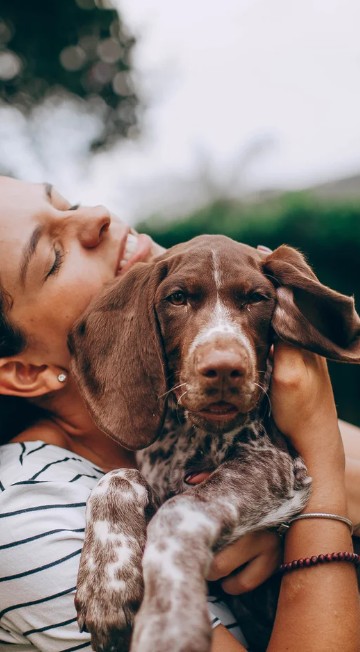


Consistency Builds Trust Through predictable caregiving patient presence and NeuroBond aligned interaction attachment strengthens over time allowing safety confidence and secure relationships to emerge. 🐾
Touch Without Pressure: Consent-Based Physical Connection
Not all dogs can be petted — and that’s important information
One of the most frequently recommended ways to stimulate endogenous oxytocin is gentle touch. And the research supports this. But here is what the research also shows: touch that is imposed rather than invited can trigger threat responses in a touch-averse dog, releasing cortisol rather than oxytocin and actively worsening the very thing you are trying to heal.
Many traumatized dogs have histories involving painful handling, restraint, or touch used as punishment. For these dogs, human hands are encoded as potential threats, and well-intentioned petting may register at the neurological level as an assault, not an offering. Recognizing this is not a reason to avoid touch. It is a reason to approach it with complete respect for your dog’s autonomy.
The graduated consent model
Consent-based touch follows a simple but profound principle: the dog always has the choice, and you always read the answer. Here is a practical progression:
Stage 1 — Presence without touch. Sit near your dog without attempting contact. Let them experience proximity to you as neutral and non-demanding. Your body should be turned slightly sideways, not facing them directly, and you should avoid holding sustained eye contact. This stage may last days or weeks for severely touch-averse dogs.
Stage 2 — Extending the invitation. Offer your hand at dog-nose level, back of the hand forward, and wait. Do not move toward your dog. Let them choose whether to sniff, ignore, or retreat. Retreating is not failure — it is honest communication, and honoring it builds the trust that makes future approach possible.
Stage 3 — Touch at the chest and shoulder. If your dog moves toward your hand or remains still with soft body language, begin with brief, light touch at the chest or the side of the neck — areas that are not perceived as threatening. Three to five seconds, then withdraw your hand and pause. Watch the response. Does your dog lean in, stay neutral, or move away?
Stage 4 — Reading permission. A dog who is tolerating touch will show frozen or flat body language — the opposite of invitation. A dog who is genuinely enjoying touch will lean in, nudge your hand when you stop, or soften their whole body posture. Only the second constitutes consent. Only the second triggers oxytocin.
Stage 5 — Gradual expansion. Over time, as trust builds, the areas that can be touched and the duration of contact naturally expand. This process cannot be rushed without undoing the progress it represents. 🐾
🧬 Oxytocin & Attachment After Trauma in Dogs
A science-backed roadmap for understanding how trauma disrupts the bonding system — and how consistent, attuned caregiving rebuilds it.
Phase 1: Recognizing Trauma
Does your dog carry a trauma history? Here’s how to identify it.Trauma rarely announces itself. It shows up in the way a dog moves, holds their body, and relates to the world. Look for consistent patterns across environments — not isolated moments.
Behavioral signals to watch:
- • Freezing, flinching, or cowering at raised hands or sudden movement
- • Avoiding eye contact or showing a hard, unblinking stare
- • Tolerance of touch without relaxation — enduring, not enjoying
- • Compulsive shadowing of one person combined with panic during separation
- • Growling or snapping with no trigger others can identify
The body holds what the history cannot tell you. Chronic stress leaves physical signatures that are often mistaken for breed traits or “personality.”
- • Chronic jaw, neck, or shoulder tension — never truly relaxed musculature
- • Tucked tail that doesn’t lift even in familiar, safe environments
- • Hypervigilance — constant environmental scanning, easy startle response
- • GI issues without dietary cause — cortisol disrupts digestive function
- • Trembling or shaking around feeding, handling, or new people
Temperament anxiety is consistent from puppyhood, present even in safe homes, and responds well to desensitization — the attachment system is intact.
Trauma-rooted fear has identifiable triggers, shows context-specific collapse, involves pronounced regression, and requires relationship-first approaches before behavioral training can take hold.
Phase 2: Understanding Oxytocin
What it actually does — and what it cannot do alone.Oxytocin is produced in the hypothalamus and released during positive social contact — a calm gaze, gentle touch, a shared walk. It does not create bonds indiscriminately. It strengthens bonds that already exist.
Both genetics (OXTR gene variation) and caregiving quality shape how attachment security develops. Oxytocin amplifies the effects of sensitive, responsive caregiving — it cannot substitute for it.
One of oxytocin’s core roles is supporting social recognition — the ability to identify and preferentially respond to specific individuals. Traumatized dogs often have this system disrupted, defaulting to hypervigilance or indiscriminate friendliness.
Rebuilding selective attachment requires oxytocin activation in the context of consistent, predictable interaction with you specifically. Presence, routine, and reliability are the neurochemical architecture of healing.
Research on intranasal oxytocin administration in dogs shows limited, inconsistent effects on attachment behavior. Exogenous oxytocin does not reliably produce bonding.
Endogenous oxytocin — released naturally through positive social interaction — is far more effective. The conditions you create every day are the intervention.
Phase 3: How Trauma Rewires the Bonding System
The neurobiological cascade that explains everything you’re seeing.Dogs with adverse early histories show altered DNA methylation patterns in the oxytocin receptor (OXTR) gene and glucocorticoid receptor (NR3C1) gene. Trauma doesn’t just change behavior — it changes the expression of the receptors that oxytocin binds to.
- • HPA axis becomes dysregulated — stress response runs hotter, longer
- • Oxytocin receptors may be epigenetically silenced or downregulated
- • Behavioral responses to stress and social engagement are altered at a biological level
In traumatized dogs, chronic cortisol elevation actively suppresses oxytocin signaling. The two systems work in opposition — and in a traumatized nervous system, cortisol is almost always winning.
The priority is not to increase oxytocin directly. The priority is to reduce cortisol load — through predictability, environmental stability, and emotional calm — so that the oxytocin system can function as designed.
Neuroplasticity research confirms that positive relational experiences throughout life can gradually reshape attachment networks and restore oxytocin function. Early adversity is not a permanent sentence.
Every calm interaction, every predictable meal, every moment of attunement is a new data point that slowly rewrites the nervous system’s baseline expectation of the world.
Phase 4: The Full Neurochemical Picture
Dopamine, serotonin, GABA, the vagus nerve, and sleep — beyond oxytocin.- • Dopamine — Drives motivation to approach. Trauma rewires reward pathways so social contact feels like risk. Rebuilding it requires repeated, low-stakes positive approach experiences.
- • Serotonin — Regulates emotional stability and impulse control. Chronically low serotonin produces reactive, rigid, compulsive behavior. SSRIs may be a short-term scaffold — not a solution, but a floor to stand on.
- • GABA — The nervous system’s brake pedal. Underactive GABA = inability to come down from an alert state. Slow rhythmic walks and predictable routines are literal GABA interventions.
- • Oxytocin — The trust amplifier. Functions only once cortisol is lowered and the above systems are supported.
The vagus nerve is the body’s parasympathetic highway — the physical pathway through which safety signals travel. Three states determine whether your dog can bond, learn, or regulate at any given moment:
- • Ventral Vagal (safe & social) — Calm, curious, connected. Oxytocin functions here. Learning happens here.
- • Sympathetic (fight/flight) — Cortisol dominant. Training is ineffective. Attachment cannot form.
- • Dorsal Vagal (shutdown) — Freeze or collapse. Often mistaken for “calm” or “good behavior.” Neurologically unavailable.
REM sleep consolidates safety memories, processes emotional experiences, and regulates stress hormones. A chronically stressed dog cannot fully consolidate positive relational experiences without adequate deep sleep.
- • Provide a covered, sided resting space to reduce environmental monitoring
- • Maintain a consistent sleep schedule aligned with natural light cycles
- • Avoid high-arousal activity in the 2 hours before rest periods
- • Allow proximity to you during sleep — it is itself a powerful safety signal
Phase 5: The Timeline of Healing
The 3-3-3 framework, milestone map, and how to read setbacks.- • Days 1–3 (Cortisol Dominance) — Stress response is at its peak. Do not attempt bonding. Minimize handling. Offer predictable meals, quiet spaces, and non-demanding presence at a distance.
- • Weeks 1–3 (Pattern Recognition) — Cortisol begins to modulate. Dopamine pathways for social approach cautiously reactivate. Your dog starts to recognize your routines. Trust is fragile and context-dependent.
- • Months 1–3 (The Attachment Window) — Oxytocin becomes more reliably active. Selective bond formation begins. Behavioral training can now be meaningfully layered in — the neurobiological foundation for learning finally exists.
- • 1 Month — Consistent eating, deeper sleep cycles, beginning routine recognition
- • 3 Months — Voluntary eye contact, settling in your presence, first tentative play
- • 6 Months — Exploration with you present, reduced resource guarding, secure base behaviors emerging
- • 12 Months — Behavioral flexibility, resilience to mild stressors, genuine relaxed play, independent confidence
Regression is neurobiological information, not failure. It almost always means the stress load has temporarily exceeded the current regulatory capacity — not that progress has been lost.
Common regression triggers:
- • Environmental changes (furniture, new people, altered schedule)
- • Illness or physical discomfort — cortisol spikes during pain
- • Accumulative stress — a series of minor triggers crossing the threshold
Response: Return to the prior stage. More predictability, fewer demands, more quiet proximity. Do not train through regression.
Phase 6: Building the Bond — Pillars, Touch & Body Language
The five pillars of attachment repair and how to read progress in real time.- • Felt Safety — You are experienced as protection, not unpredictability
- • Attunement — You respond to emotional signals, including the quiet ones
- • Felt Comfort — Your dog learns that returning to you genuinely helps them settle
- • Being Valued — Care that does not depend on compliance
- • Support for Growth — Conditions for genuine exploration and growing confidence
Not all traumatized dogs can safely receive touch. Touch imposed on a touch-averse dog triggers cortisol, not oxytocin — actively worsening what you are trying to heal. Always read consent.
- • Stage 1 — Presence without touch. Sit near. Remove expectation.
- • Stage 2 — Offer your hand. Wait. Let them choose.
- • Stage 3 — Brief, light touch at chest or shoulder. 3–5 seconds. Withdraw and observe.
- • Stage 4 — Tolerance is not consent. Leaning in is. Only the second triggers oxytocin.
- • Stage 5 — Areas and duration expand naturally as trust builds. Never rushed.
Stress is present when you see:
- • Yawning outside rest, lip licking, head turns during interaction
- • Whale eye, tight mouth commissure, tail low and stiff
- • Panting without exertion, inability to take food, rigid movement
Oxytocin is active when you see:
- • Soft, open mouth with no jaw tension
- • Broad, loose tail wag — whole rear moving
- • Voluntary eye contact with a round, soft eye
- • Spontaneous stretching, rolling, belly exposure, deep sighing
Phase 7: Environment, Senses & Household Context
Scent, enrichment, multi-dog dynamics, and managing children safely.Dogs process social safety primarily through smell. Your scent — on clothing, bedding, your hands — is one of the most consistent and accessible oxytocin stimuli available, and one of the most underused in recovery.
- • Place unwashed clothing in your dog’s resting space during early weeks
- • Always allow your dog to sniff your hand before any interaction
- • Avoid strong synthetic scents (perfumes, cleaning sprays) near rest spaces
- • Introduce new environments with your scent already present where possible
Enrichment that supports recovery:
- • Sniff-based activities (scatter feeding, snuffle mats) — activate parasympathetic response
- • Choice-based exploration — let your dog decide whether and when to engage
- • Novel objects in familiar spaces, not unfamiliar environments
Stimulation that stalls recovery:
- • Dog parks or unpredictable social settings before attachment is established
- • Rapid exposure to multiple novel environments in quick succession
- • Training sessions that exceed the current stress threshold
Other dogs support recovery when they are:
- • Socially balanced, calm, and predictable in their signals
- • Non-competitive for resources and space
- • Allowing the traumatized dog to disengage freely at any time
With children, the non-negotiables are:
- • Constant adult supervision — past positive interactions are not predictive guarantees
- • A dog-only retreat space children cannot enter
- • Children remain still and let the dog approach them — never the reverse
- • Teach children to recognize and respond to stress signals
Phase 8: Resilience — The Goal Beyond Recovery
What a securely attached, neurologically restored dog looks like.Resilience is not the absence of symptoms. It is the presence of active neurobiological systems that support social connection, emotional regulation, and adaptive behavior. A dog with secure attachment does not simply experience less fear — they possess genuinely enhanced capacity.
- • Willingness to explore novel environments with you present
- • Faster habituation to new stimuli — startles less, recovers quicker
- • Voluntary check-ins on walks (the secure base glance) — soft eyes, loose body
- • Genuine, relaxed play behavior emerging organically
Oxytocin is released in both of you during positive interaction. Stress responses are modulated in both. Emotional security deepens in both. You are not administering care to your dog — you are entering a relationship that transforms you equally.
Research confirms: as humans develop secure attachment with dogs, their own attachment systems are activated and supported. The healing is mutual, and the science is unambiguous about it.
Secure attachment looks like:
- • Voluntary exploration and return — the dog chooses to come back to you
- • Calm during brief separations with quick recovery on reunion
- • Increasing independence, not increasing proximity
Dependency/anxiety looks like:
- • Compulsive following — proximity driven by fear, not trust
- • Panic or prolonged distress during any separation
- • Inability to engage with environment independently
⚖️ Key Comparisons: Understanding the Differences That Matter
Temperament anxiety is consistent from puppyhood, present even in safe environments, and responds to structured desensitization because the attachment system is intact.
Dependency produces compulsive proximity, panic during separation, and behavioral rigidity. The dog cannot function independently.
Obedience-first may reinforce insecure patterns in traumatized dogs by demanding compliance before the neurological capacity for learning is present.
Exogenous oxytocin (administered nasally) shows limited, inconsistent effects in dogs. You cannot chemically shortcut the bonding process.
Stimulation beyond capacity (dog parks, rapid novelty, overscheduled training) raises cortisol and actively stalls the recovery process.
Later intervention requires longer timelines but is equally possible. Neuroplasticity is available at every age. Epigenetic changes can be reversed through consistent, positive relational experience.
You cannot skip the first step.
3 Days · 3 Weeks · 3 Months — Decompress → Learn routines → Feel at home. Each phase maps directly to a neurochemical shift.
Your regulation = Their regulation. Biobehavioral synchrony means your nervous system is their first environment. Regulate yourself to regulate them.
Exploration = Healing. A dog that moves away from you with a loose body and a curious nose is healing. A dog that cannot leave your side may not be bonding — they may be surviving.
Tolerance ≠ Consent. A dog who endures touch is not enjoying it. Only genuine invitation signals — leaning in, soft body, voluntary approach — indicate oxytocin is active.
Regression is information, not failure. Return to the prior stage. More predictability. Fewer demands. The road back is almost always faster the second time.
Oxytocin does not create the bond. You do. What the science describes — through every finding on cortisol, neuroplasticity, epigenetics, and the vagus nerve — is the same thing: that safety, felt consistently over time, is the only path to genuine attachment after trauma.
The NeuroBond is not built in a training session. It is built in ten thousand small moments — a predictable meal, a calm presence, a hand offered without expectation. The Invisible Leash is the awareness that flows between you even when nothing is being asked — the dog who glances back on a walk not out of fear, but out of belonging. And when your dog finally rests their chin on your knee without flinching, what you are witnessing is Soul Recall — emotional memory being rewritten by the accumulated evidence that the world contains safe people, and you are one of them.
That is not a technique. That is a commitment. And that commitment is the heart of everything we do.
© Zoeta Dogsoul — Where neuroscience meets soul in dog training
The Timeline of Healing: What to Expect and When
The 3-3-3 framework mapped to oxytocin science
You may have encountered the 3-3-3 rule in rescue dog communities — three days to decompress, three weeks to learn routine, three months to feel at home. It is popular because it captures something real. But when you understand the neuroscience behind it, it transforms from a rough guideline into a meaningful framework for understanding what is happening inside your dog’s nervous system at each stage.
Days 1–3: Cortisol dominance. In the first three days, your dog’s primary neurobiological state is one of high cortisol and heightened threat perception. The nervous system is scanning everything. Oxytocin-mediated bonding is not meaningfully active at this stage — the stress response is too dominant. Your job here is not to connect; it is to reduce threat inputs. Quiet the environment. Minimize handling. Offer predictable meal times. Let your dog observe you from a distance without pressure to interact.
Weeks 1–3: Pattern recognition begins. As the environment proves predictable and safe, cortisol begins to modulate and dopamine pathways for social approach start to reactivate. Your dog begins to recognize that certain things happen at certain times, that you move in predictable ways, and that proximity to you has not produced harm. This is the earliest stage of oxytocin-mediated trust formation — fragile, context-dependent, and easily disrupted by stress spikes.
Months 1–3: The attachment window opens. With consistent cortisol reduction, the oxytocin system becomes more reliably active. Your dog begins to seek you out, shows selective responsiveness to you specifically, and uses you as a reference point in mildly uncertain situations. This is the secure base beginning to form. Behavioral training can begin to be meaningfully layered in now — not before — because the neurobiological foundation for learning is starting to exist.
Milestone map: what healing looks like across the first year
Recovery does not follow a straight line, but these markers offer a realistic picture of what to watch for:
At 1 month:
- Eating consistently without guarding or anxiety around meals
- Sleeping in longer, deeper cycles
- Beginning to recognize your routines and showing mild anticipation (meeting you at the door, waking when you do)
- Reduced startle response to expected household sounds
At 3 months:
- Voluntary eye contact initiated by your dog during calm interactions
- Ability to settle in the same room as you without constant vigilance
- First signs of play behavior — even brief, tentative play is neurologically significant
- Selective responsiveness: your voice and presence begin to have a specific calming effect that strangers’ voices do not
At 6 months:
- Exploration of novel environments with lower hesitation when you are present
- Tolerance of mild handling (grooming, brief restraint) with some recovery capacity
- Evidence of the secure base effect: your dog checks back in with you during walks rather than either shadowing or bolting
- Reduction in resource guarding as abundance becomes experientially reliable
At 12 months:
- Behavioral flexibility across varied contexts
- Resilience to mild stressors with faster return to baseline
- Independent exploration with comfort returning to you voluntarily
- Genuine, relaxed play behavior with you and possibly with other dogs
Setbacks and regression: reading them correctly
Regression is not failure. It is neurobiological information. When your dog regresses — showing behaviors that seemed resolved, shutting down in a context that was recently safe, or spiking in reactivity without apparent cause — the most important thing to understand is that regression rarely means progress has been lost. It almost always means the nervous system has encountered a stress load that has temporarily exceeded its current regulatory capacity.
Common regression triggers include:
- Environmental changes — moving furniture, new people in the household, changes in your own schedule or emotional state
- Illness or physical discomfort — cortisol spikes during pain and disrupts all oxytocin-mediated gains
- Seasonal changes — photoperiod shifts affect neurochemistry more than most people realize
- Accumulative stress — a series of minor stressors that individually seem manageable but collectively exceed the threshold
When regression occurs, return to an earlier stage of your approach — more predictability, fewer demands, more quiet proximity. Do not attempt to “train through” a regression. A nervous system under elevated stress cannot learn effectively; it can only react. Give the system time to re-regulate, then resume from where you were. The road back is almost always faster the second time. 🧠
The Five Pillars of Attachment Repair
What a traumatized dog actually needs from you
Attachment theory — originally developed to understand human infants and their caregivers — has been meaningfully adapted to the dog-human relationship. The research is clear that secure attachment develops through a set of relational experiences, not through any single technique or intervention.
These five pillars describe what a traumatized dog needs from their caregiver to begin rebuilding a secure bond:
- Felt Safety — Your dog experiences you as a source of protection and reassurance, not as a source of unpredictability or threat
- Attunement — You respond sensitively to your dog’s emotional and behavioral signals, including the quiet ones
- Felt Comfort — Your dog learns that you can help regulate distress, that returning to you actually helps them settle
- Being Valued — Your dog experiences consistent, non-contingent positive regard — meaning your care doesn’t depend on their compliance
- Support for Becoming Their Best Self — You create conditions for your dog to explore, learn, and develop genuine confidence
Notice that none of these pillars say “train the behavior away” or “establish dominance.” They describe a relational environment. And it is within that environment that oxytocin naturally rises, cortisol naturally falls, and the nervous system begins to rewire.
Neuroplasticity is on your side
One of the most important findings in attachment neuroscience is that dogs — like humans — are neurobiologically primed to form attachments. Even severely traumatized dogs retain the capacity for secure attachment. The research is explicit: the only documented case where attachment fails to form is when there is no consistent caregiver at all.
This means the barrier is not your dog’s capacity. The barrier is the absence of conditions that activate the attachment system. Every day you show up — calm, consistent, and responsive — you are giving your dog’s nervous system new data. Gradually, that data rewires expectation. Gradually, the brain learns that proximity to you means safety, not danger. That is neuroplasticity in action, and it is available to every dog, at every age.
The NeuroBond understanding of this process emphasizes exactly this: that emotional clarity, predictable leadership, and voluntary cooperation create the relational conditions that restore the biology of trust.
Secure Attachment vs. Dependency: A Distinction That Changes Everything
Knowing what healing actually looks like
One of the most common misreadings of a recovering dog’s behavior is mistaking anxiety-driven proximity for genuine attachment. If your dog follows you from room to room, cannot settle when you leave, or shows visible distress during any separation, you might interpret this as bonding. In some cases, it is the opposite.
Research identifies three distinct patterns to understand:
Secure Attachment:
- Voluntary proximity-seeking based on trust
- Ability to separate without panic
- Confidence in your responsiveness
- Flexible behavioral responses across different contexts
Dependency / Hyper-Attachment:
- Compulsive proximity-seeking driven by anxiety
- Panic or significant distress when separated
- Difficulty exploring or engaging with the environment independently
- Rigid, inflexible behavioral patterns
Fear-Based Proximity:
- Staying close not because of trust, but because of perceived threat
- Hypervigilance and defensive behavior
- Avoidance of novel situations even when you are present
The critical clinical insight here is that true attachment repair is characterized by increasing independence — not increasing dependence. As your dog heals, you will see them initiate exploration, return to you voluntarily for reassurance, and settle back into independent activity. That growing confidence, that willingness to move away from you and come back again, is the signature of a secure bond forming.
Oxytocin supports secure attachment specifically — characterized by trust, voluntary proximity, and behavioral flexibility — rather than the anxious proximity driven by fear. When you see your dog begin to relax into independence, you are watching oxytocin doing its job. 🧠
The Caregiver’s Role: You Are Part of the Biology
Your nervous system is talking to theirs
Here is something the research makes unmistakably clear: a caregiver’s emotional state is not just a psychological variable. It is a neurobiological input that directly shapes the dog’s physiological state. When you are calm, regulated, and emotionally present, your dog’s nervous system synchronizes with yours. Oxytocin is released in both of you. Your dog learns — not abstractly, but somatically — that you are a reliable source of regulation.
When you are anxious, reactive, or emotionally dysregulated, the opposite happens. Your dog’s threat perception increases, cortisol rises, and the conditions for attachment repair deteriorate. This is not a criticism — it is a call to compassionate self-awareness. The work of helping a traumatized dog is also, inevitably, the work of developing your own emotional regulation.
This bidirectional relationship is described in the research as biobehavioral synchrony — the coordination of physiological and behavioral states between you and your dog. It means that attachment repair is never a one-way process. You are both being transformed by it.
Co-regulation: the path from external to internal
Co-regulation is the process by which one individual helps regulate another’s nervous system. In the context of trauma recovery, it unfolds in stages:
- Initial Co-Regulation — You provide the external regulation. Your calm presence, predictable responses, and quiet reassurance are the scaffolding.
- Internalization — Gradually, your dog begins to carry your regulatory capacity inside. They learn what “safe” feels like by having experienced it with you repeatedly.
- Self-Regulation — Your dog develops an independent capacity to manage stress and return to calm without requiring your constant presence.
- Resilience — Your dog becomes increasingly adaptable to novel situations and mild stressors, because they have a secure internal model to draw on.
The Invisible Leash is visible throughout this process — the awareness and attunement that flows between you and your dog, invisible to others but felt deeply by both. You don’t need a tight grip to guide a healing dog. You need a steady, calm, consistent presence that they can feel even across a distance.
Routine is neurobiology
The research on resilience is consistent on one point: attachment gains are sustained through routine. Consistent feeding schedules, predictable walks, familiar resting spaces, and reliable emotional responses are not just good habits. They are the repeated neurological experiences that allow a traumatized nervous system to gradually reclassify the world as safe.
Without this consistency, oxytocin-mediated attachment gains can be temporary. A dog’s nervous system needs repetition — not punishment, not force, not endless repetition of obedience commands — but the simple, profound repetition of safe experiences. Every consistent meal, every calm walk, every moment you meet your dog’s uncertainty with steadiness is rewriting trauma at the cellular level.
Knowing Yourself to Know Your Dog: Caregiver Self-Awareness
Your attachment history enters the relationship too
This is the section most caregiving guides skip, and it may be the most important one. Research on human-dog relationships increasingly confirms what attachment theory has always suggested: the caregiver’s own attachment style and emotional history directly shape the quality of interaction with their dog — and therefore shape the dog’s recovery trajectory.
Ask yourself honestly:
- Do you tend toward anxious caregiving — hovering, checking, soothing before your dog signals distress?
- Do you tend toward avoidant caregiving — pulling back when your dog’s needs feel overwhelming, valuing independence over emotional connection?
- Do you become frustrated when progress stalls, and does your dog read that frustration in your body language?
- Are there specific behaviors your dog shows that trigger a strong reaction in you, and do you know why?
These are not rhetorical questions. They are the questions that determine whether your calm presence is genuine or performed — and a dog’s nervous system cannot be fooled. If you carry unresolved anxiety about your dog’s wellbeing, your body broadcasts it. If you are suppressing impatience, they sense it. The most powerful thing you can do for a traumatized dog is develop your own capacity to sit with uncertainty, to be present without needing the situation to be different, and to regulate your own emotional state without using your dog to do it.
This is inner work. It is also, the research shows, exactly the work that makes the most difference.
Compassion fatigue: the cost no one talks about
Living with a traumatized dog is emotionally demanding in ways that people outside the experience rarely understand. The hypervigilance, the regression, the slow progress, the fear of doing the wrong thing — these are genuine psychological stressors. And when care is given without replenishment, the caregiver’s capacity for emotional regulation depletes.
Compassion fatigue in caregivers of traumatized animals can manifest as:
- Emotional numbness or reduced empathy for your dog’s signals
- Resentment or frustration that feels disproportionate to the trigger
- Withdrawal from other relationships or activities that used to restore you
- Difficulty distinguishing your dog’s needs from your own emotional state
- Increased reactivity to your dog’s behavior — becoming more tense just as your dog needs more calm
Recognizing compassion fatigue is not weakness. It is the prerequisite for addressing it. You cannot pour from an empty vessel, and your dog needs a regulated, present caregiver — not a depleted one performing regulation. Seeking support, whether from a behaviorist, a therapist, a peer community, or simply building restoration practices into your own routine, is not optional. It is part of the treatment plan for your dog. 🧡
Behavioral Flexibility: The True Measure of Progress
Exploration is healing in action
One of the clearest signs that attachment repair is working is something you might not expect: your dog starts exploring more. Not frantically, not compulsively — but with genuine curiosity and increasing confidence. This exploratory behavior is the behavioral expression of a nervous system that is beginning to feel safe enough to engage with the world.
Securely attached dogs show:
- Increased willingness to investigate novel environments when you are present
- Faster habituation to new stimuli — they startle less, recover faster
- Greater behavioral flexibility in response to changing circumstances
- Reduced defensive reactivity to unfamiliar dogs and people
This is what John Bowlby called the Secure Base Effect — the phenomenon where a securely attached individual uses their attachment figure as a foundation for exploration. Your dog returns to you not because they are frightened, but because you are their anchor, and from that anchor they can venture further and further into the world.
Oxytocin supports this by reducing amygdala-driven threat responses that otherwise lock a traumatized dog into defensive patterns, and by enhancing prefrontal cortex function — the brain’s capacity for flexible thinking, learning, and adaptive decision-making. Behavioral progress is not just emotional. It is neurological.
Resilience to mild stress: a sign you cannot miss
As secure attachment develops, you will notice your dog handling minor stressors with more composure. A loud noise that once triggered a full panic response is met with a glance at you, a quick check-in, and then a return to calm. An unfamiliar person approaches and instead of flight or freeze, your dog shows cautious curiosity.
This growing resilience is mediated by three converging processes:
- Secure base confidence — your dog trusts that safety is accessible when they return to you
- Oxytocin-mediated stress buffering — their physiological stress responses are genuinely dampened by the neurochemistry of secure attachment
- Behavioral flexibility — they are no longer defaulting to fear; they are reading the context and choosing their response
Moments of Soul Recall become visible in this stage — when your dog glances back at you on a walk not out of anxiety, but out of connection, their body language soft and their gaze warm. That glance carries the weight of everything you have built together.
Environment and the Senses: What Surrounds Your Dog Shapes Their Chemistry
Scent as a safety signal
Dogs process the world primarily through their nose, and this has profound implications for recovery. While we focus on what our dogs see and hear, their primary neurological channel for assessing safety is olfactory. Your scent — present on clothing, bedding, your hands — is one of the most consistent and accessible oxytocin stimuli available, and it is significantly underutilized in most recovery approaches.
Practical applications of olfactory bonding include:
- Placing an unwashed item of your clothing in your dog’s resting space, particularly during the early weeks when your absence creates anxiety
- Allowing your dog to sniff your hands before any interaction — this is not just politeness; it is an invitation to olfactory social recognition
- Introducing new environments gradually, with your own scent present (sitting on a blanket your dog has been using, or wearing a familiar item)
- Avoiding strongly scented products — perfumes, cleaning sprays, synthetic air fresheners — in your dog’s immediate environment, as these mask the olfactory safety cues they rely on
Enrichment vs. overstimulation: a line worth knowing
Environmental enrichment is frequently recommended for dogs, and rightly so — novelty and problem-solving support cognitive development and confidence. But for a traumatized dog whose nervous system is already running at high cortisol levels, the wrong kind of enrichment at the wrong time actively raises stress load rather than reducing it.
The key distinction is between challenge within safety and challenge that exceeds the current regulatory window.
Enrichment that supports recovery:
- Sniff-based enrichment — scatter feeding, snuffle mats, buried treats in the garden — activates the parasympathetic system and reduces cortisol
- Gentle puzzle feeders that require mild engagement without frustration
- Novel objects introduced inside familiar, safe spaces rather than unfamiliar ones
- Choice-based exploration — letting your dog decide whether and when to engage
Stimulation that may stall recovery:
- High-energy dog parks or unpredictable social settings before secure attachment is established
- Rapid exposure to multiple novel environments in quick succession
- Training sessions that exceed your dog’s current stress threshold — the window where they can learn is narrower than it looks
- Background noise from television, music, or household activity at volumes that prevent your dog from monitoring their environment reliably
When in doubt, less is more. A calm, predictable, scent-familiar environment is not deprivation — it is the neurological precondition for every other aspect of recovery to take hold. 🐾
Breed, History, and Why One Size Never Fits All
Genetic factors are real — but they are not destiny
Research comparing dog breeds reveals meaningful variation in baseline oxytocin levels, receptor sensitivity, cortisol production, and attachment behavior patterns. A Labrador Retriever and an Akita may require very different timelines and environmental conditions for attachment repair — not because one is “better” or more trainable, but because their neurobiological starting points differ significantly.
Dogs with naturally higher stress reactivity — often those with genetic lineages closer to their wolf ancestors, or those from working breeds with high arousal thresholds — may require:
- More intensive and sustained environmental management
- Longer timelines before secure base behaviors emerge
- Especially low-arousal interactions in the early stages of relationship-building
- Careful attention to cortisol-reducing practices before any active training begins
This is not a limitation. It is information. When you understand your dog’s neurobiological profile, you can stop asking “why isn’t this working yet?” and start asking “what does this specific dog need more of?”
Early history shapes oxytocin function — but does not lock it in
Dogs with adverse early histories show altered methylation patterns in the OXTR gene and dysregulated HPA axis function. These are real biological changes. But the research on neuroplasticity is equally clear: positive relational experiences throughout life can gradually reshape attachment networks and restore oxytocin function.
The timeline for attachment repair varies based on:
- The severity and duration of early trauma
- Genetic predisposition to oxytocin responsiveness
- The quality and consistency of current caregiving
- Environmental stability and predictability
- Your own emotional regulation as the caregiver
What the science affirms, without ambiguity, is that change is possible. Epigenetic changes can be reversed through positive relational experiences. Behavioral flexibility can return as attachment security increases. The dog in front of you — however shut down, however reactive, however seemingly unreachable — retains the neurobiological capacity for secure attachment. Your job is to create the conditions that allow it to emerge.
Practical Ways to Stimulate Endogenous Oxytocin
What you do every day is the intervention
Given that exogenous oxytocin administration shows limited and inconsistent effects in dogs, the research is clear: the most powerful oxytocin stimulus available to you is the quality of daily interaction. These are the activities that reliably stimulate endogenous oxytocin release in dogs:
Physical Contact:
- Gentle petting and grooming at your dog’s pace, with ongoing consent checks
- Calm, non-demanding touch with no expectation of compliance
- Simple physical proximity and presence, including resting near your dog
Cooperative Activities:
- Play that is collaborative, not competitive or highly arousing
- Positive reinforcement training with low stakes and high enjoyment
- Shared activities that invite coordination — even something as simple as walking in rhythm together
Social Engagement:
- Calm, direct eye contact initiated by your dog
- Soft vocal communication — talking gently, not commanding
- Moving together, synchronizing pace and direction on walks
Environmental Predictability:
- Consistent daily schedules for feeding, exercise, and rest
- Familiar spaces and stable social contacts
- Predictable responses to your dog’s behavior — especially during moments of uncertainty
Emotional Attunement:
- Reading and responding to your dog’s subtle signals before they escalate
- Quiet reassurance during mild stress without reinforcing avoidance
- Genuine acknowledgment of your dog’s achievements and moments of confidence
Each of these is both scientifically grounded and immediately available to you. There is no equipment required. There is no protocol to purchase. There is only the daily commitment to showing up in a way that your dog’s nervous system can recognize as safe.
Multi-Dog and Family Contexts: Managing the Wider Environment
How other dogs affect a traumatized dog’s recovery
The presence of other dogs in the household is one of the most significant and least discussed variables in trauma recovery. Other dogs can either accelerate healing or significantly destabilize it — and the difference depends on several factors that are worth assessing carefully.
Other dogs can support recovery when:
- They are socially balanced themselves — not reactive, anxious, or resource-guarding
- They model calm engagement with you and with the environment
- They offer predictable, low-intensity social signals that the traumatized dog can read clearly
- The traumatized dog has the option to disengage without being pursued
Other dogs can hinder recovery when:
- They are themselves anxious, reactive, or highly aroused — their cortisol and stress signals are neurologically contagious
- They compete for resources, creating chronic low-level threat in the home
- They bully, overshadow, or crowd the traumatized dog, preventing access to rest spaces and caregiver attention
- They trigger the traumatized dog’s defensive responses through play styles that are too rough, too fast, or too unpredictable
Practical management strategies include maintaining separate feeding stations, providing the traumatized dog with exclusive rest spaces that other dogs cannot access, and initially controlling all interactions between dogs to ensure the traumatized dog retains agency and the option to move away. Recovery cannot happen when a dog is managing social threat inside their own home as well as outside it.
Managing a traumatized dog safely around children
Children and traumatized dogs require careful, informed management — not because traumatized dogs are inherently dangerous, but because the behaviors through which children typically express affection are often the very behaviors a trauma-encoded nervous system interprets as threat.
Children move unpredictably, make sudden loud sounds, approach directly, reach toward faces, and hug — all actions that can activate a defensive response in a dog whose nervous system is primed for threat perception. This is not the child’s fault and not the dog’s fault. It is a mismatch between two neurobiological systems that needs to be actively managed by the adults responsible for both.
Core principles for managing this dynamic:
- Supervision is non-negotiable — never rely on having previously seen a positive interaction as evidence that all future interactions will be safe
- Teach children to read body language — even young children can learn what a stiff tail, a hard eye, or a lip lick means, and can be taught to step back and tell an adult
- Give the dog an always-accessible retreat — a crate, a room, a raised bed behind a baby gate — somewhere children cannot enter, where the dog can self-regulate without human intervention
- Enforce child-initiated approach rules — children sit or crouch, remain still, and let the dog approach them. No chasing, no reaching over the head, no hugging
- Celebrate small, calm interactions — a dog who chooses to sniff a calm, seated child and then walks away has just had a successful interaction. That is the goal, not sustained contact
Progress with children typically follows the same arc as overall recovery — slowly, unevenly, with setbacks — and should never be rushed. The safety of both the child and the dog depends on a pace that the dog’s nervous system can sustain. 🧠
Attachment-Focused vs. Obedience-First: A Paradigm Shift in Dog Care
Why “sit” and “stay” are not enough
Traditional dog training often prioritizes behavioral control — teaching commands, correcting unwanted behavior, establishing compliance. For many dogs, this is fine. For a traumatized dog whose nervous system is organized around the expectation of threat, obedience-first approaches may inadvertently reinforce the very patterns they aim to resolve.
Attachment-focused rehabilitation represents a fundamental shift in frame:
| Traditional Approach | Attachment-Focused Approach |
|---|---|
| Obedience and behavioral control | Relationship quality and emotional security |
| Symptom suppression | Resilience building |
| Compliance through repetition | Voluntary cooperation through trust |
| Behavioral outcomes as the goal | Neurobiological regulation as the foundation |
This does not mean training is irrelevant. It means that for a traumatized dog, training is most effective when it is built on a foundation of emotional safety rather than compliance. Research suggests that combined approaches — integrating attachment theory with learning theory — tend to produce the most durable outcomes.
The S.A.F.E. framework (Secure Attachment Family Education) offers one evidence-informed way to implement this: creating felt safety, practicing attunement, providing felt comfort, valuing the dog as an individual, and supporting growing independence. These elements do not replace training. They create the neurobiological soil in which learning can take root.
The NeuroBond approach in practice
The NeuroBond Model aligns with the neuroscience of oxytocin and trauma recovery in a way that is both scientifically coherent and practically accessible. Its four core elements — emotional clarity, predictable leadership, voluntary cooperation, and relational safety — are not philosophical abstractions. They are descriptions of the environmental conditions that support endogenous oxytocin activity and genuine attachment repair.
Emotional clarity means your dog can read your state without encountering contradiction or volatility. Predictable leadership means structure exists without authoritarianism. Voluntary cooperation means your dog chooses to engage with you because the relationship is worth engaging with — not because force or fear leaves no other option. And relational safety means that the space between you and your dog is, fundamentally, a place where they can exhale.
When those conditions are met, oxytocin does not need to be administered. It is released naturally, consistently, and in exactly the relational context that allows it to support genuine healing.
Resilience: The Goal Beyond Recovery
What you are really building
Recovery from trauma is not the endpoint. Resilience is. Resilience — the capacity to adapt and recover from adversity — is increasingly understood by neuroscientists not as the absence of symptoms, but as the presence of active neurobiological systems that support social connection, emotional regulation, and adaptive behavior.
Oxytocin plays a central role in this affiliative neuroscience model of resilience. A dog with secure attachment does not simply experience less fear. They possess a genuinely enhanced capacity for:
- Social bonding that provides emotional buffering in stressful situations
- Reduced stress reactivity through modulated HPA axis function
- Enhanced cognitive flexibility and adaptive learning
- Parasympathetic activation — the quiet, rest-and-digest state that allows a dog to be fully present with you
Research suggests that oxytocin-induced augmentation of physical and cognitive resilience may play a significant role in both the prevention of and improved outcomes from traumatic stress-related conditions. This means that the attachment you are building with your recovering dog is not just healing past wounds — it may be providing genuine protection against future adversity. That is a profound thing to be part of.
Biobehavioral synchrony: healing happens in both directions
Perhaps the most moving finding in this body of research is the bidirectionality of healing. As humans develop secure attachment with dogs, their own attachment systems are activated and supported. Oxytocin is released in both individuals during positive interaction. Stress responses are modulated in both. Emotional security deepens in both.
You are not simply administering care to your dog. You are entering into a relationship that transforms both of you. Every moment of biobehavioral synchrony — when you are calm and your dog reflects that calm, when you move together in rhythm, when eye contact passes between you and something in both nervous systems settles — is a moment of mutual healing.
This is the heart of what Zoeta Dogsoul describes as the relationship between science and soul. Not the cold application of neurochemical knowledge to a behavioral problem, but the lived understanding that healing is something that happens between two beings, in the space they share, through the slow, steady accumulation of safe experiences. 🧡
Nova: A Recovery Story
What the science looks like in a real life
Nova arrived at her new home at three years old weighing four kilograms less than she should have. Her ears never lifted. She ate only when no one was in the room. She flattened against the wall when anyone walked toward her, and she had not yet learned that raised hands sometimes meant affection rather than impact.
Her caregiver knew almost nothing about her history. What she did know was what she could read: a dog whose oxytocin system had been given nothing to work with, whose cortisol baseline was so elevated that her body could not relax even during sleep, whose social recognition system had no reliable anchor to organize around.
The first three days, she did nothing except create a quiet, scent-familiar space and feed Nova on a fixed schedule. No commands. No training. No approaches. Just presence at a distance, and food arriving predictably at the same times each day. Nova’s cortisol began its slow descent.
In the second and third weeks, her caregiver began sitting on the floor near Nova’s resting space with her back turned, reading or working quietly. Not ignoring her — present, but non-threatening. Nova began to shift her resting position to face her rather than the wall. The social recognition system, cautiously, began to orient.
At six weeks, Nova crossed the room of her own volition and sniffed her caregiver’s ankle. She retreated immediately. But she had reached out. That voluntary approach — unasked-for, unpressured, chosen freely — was the first measurable oxytocin event in their relationship.
By three months, Nova was eating with her caregiver present in the room. She was accepting gentle touch at the chest after offering her own hand-sniff. She was beginning to show what looked, tentatively, like anticipation at walk time — a tiny lift of the tail, a slight forward lean toward the door.
At six months, she glanced back on a walk. Not in fear, not in threat-monitoring. She glanced back with soft eyes, checked in, and walked on. That glance — the one you read about in papers on the secure base effect, the one that researchers quantify in cortisol samples and oxytocin assays — was simply a dog telling her caregiver: I know you’re there. I know I’m safe. Let’s keep going.
At a year, she played. For the first time, in the garden, on a warm morning, she picked up a stick and brought it back. Her tail moved loosely and her mouth hung open. Her eyes were warm and her body was free. The nervous system that had organized itself entirely around survival had found enough safety to discover that life contains other things too.
Nova’s story is not exceptional. It is not even unusual. It is what happens when the science is understood and applied with patience, consistency, and genuine respect for the neurobiological timeline. What is exceptional is the commitment it requires — and the transformation it delivers, in both directions.
That transformation, in the end, is what all of this neuroscience is pointing toward. Not a formula. Not a protocol. A relationship, built one safe day at a time. 🐾
Is This Journey Right for You?
What it asks of you — and what it gives back
Working with a traumatized dog through an attachment-focused lens is not for everyone, and there is no shame in acknowledging that. It asks things of you that go beyond time and patience. It asks you to develop your own emotional regulation, to examine your responses under stress, and to commit to consistency even when progress feels invisible.
It also gives back in ways that are difficult to put into words. The first time your dog initiates eye contact without anxiety. The first time they explore a new space with a loose body and a curious nose. The first time they look back at you on a walk — not checking for danger, but simply checking in, softly, with trust.
If you are someone who can offer:
- A stable, predictable home environment
- Emotional self-awareness and the willingness to develop it further
- Long-term commitment without the expectation of a linear timeline
- A willingness to understand your dog’s behavior through a neurobiological lens
- Genuine interest in the relationship, not just the outcome
- The capacity to take care of yourself so you can take care of them
Then you have what it takes. Not perfection — no dog in recovery needs perfection. They need presence. They need your consistent, imperfect, emotionally available presence, day after day, until the nervous system that was once organized around survival begins to reorganize itself around trust.
The science supports every step of that journey. The biology is on your side. And somewhere in the dog who flinches at sudden movement, who cannot settle when you leave, who guards every resource as though abundance is a lie — somewhere in there is a nervous system waiting for evidence that the world can be different.
You can be that evidence. That is the essence of Zoeta Dogsoul.