
Hazewinkel, Voorhout et al. (1993) — Veterinary and Comparative Orthopaedics and Traumatology
The Influence of the Dietary Protein Content on Growth in Giant Breed Dogs
Published: August 08, 2026
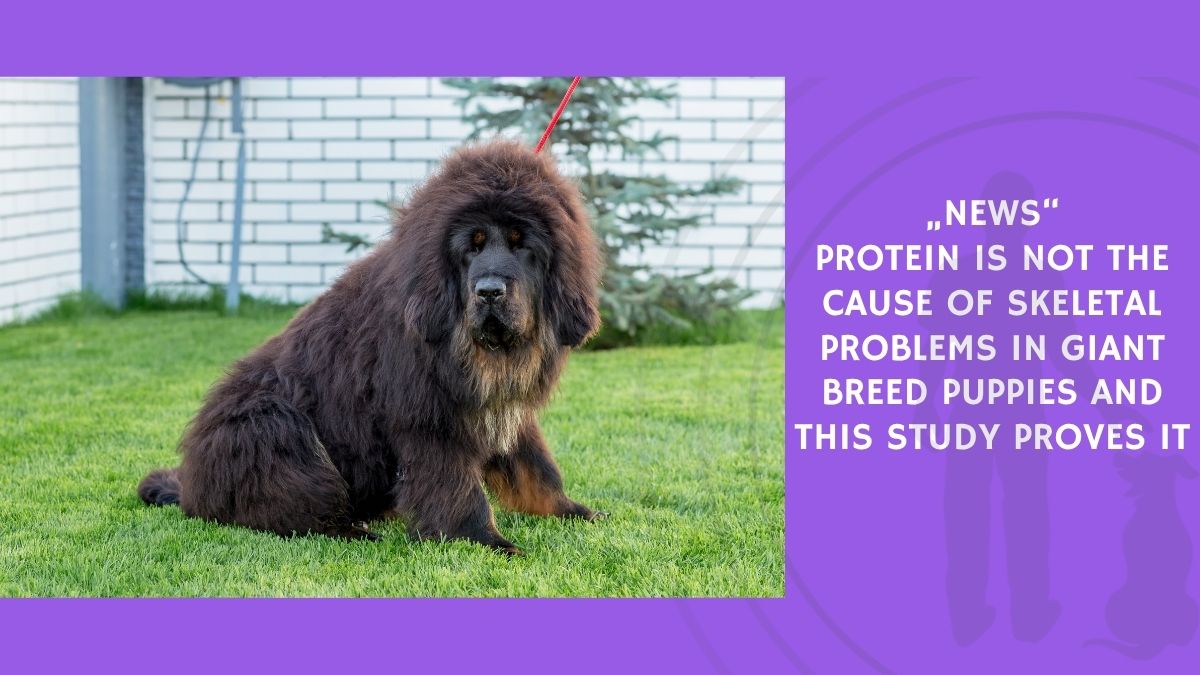
Among the persistent myths in large breed puppy nutrition is the idea that high protein diets cause skeletal developmental problems. The logic sounds plausible: rapidly growing giant breed puppies have developing bones and joints, and high protein means faster growth, so high protein must be bad for their skeletons. A controlled study in Great Dane puppies fed diets varying only in protein content has directly tested that assumption. The protein itself was not the problem. 🐾
Researchers H.A.W. Hazewinkel, G. Voorhout, R. Nap, and their team raised three groups of Great Dane pups on diets differing only in protein content — 14.6 percent, 23.1 percent, and 31.6 percent dry matter — with all other nutritional variables held constant. Clinical examination, biochemical blood panels, radiographic imaging, and histological analysis were used to assess body development, organ function, and skeletal health across the groups. The experimental design specifically isolates the protein variable from the energy, calcium, and phosphorus variables that previous research had already identified as drivers of skeletal developmental disturbance in this breed.
What the Three-Group Protein Comparison Found
Significant differences were found between groups for body weight — higher protein intake produced heavier puppies — and for plasma albumin and plasma urea concentrations, both of which reflect protein metabolism status and were higher in the higher-protein groups as expected. These are physiological adaptations to protein intake rather than pathological changes.
What the study did not find is equally important. The differences in protein intake produced no demonstrable consequences for renal development and no demonstrable consequences for skeletal development. The histological examination of bone and cartilage tissue showed no significant differences between groups. Radiographic assessment found no skeletal abnormalities attributable to protein level. Enchondral ossification — the process through which cartilage is replaced by bone during skeletal development — was not disturbed by high protein intake in any group.
The researchers’ conclusion is direct: a causative role for dietary protein in disturbed enchondral ossification in giant breed dogs is unlikely. This was not a borderline finding requiring careful statistical interpretation. The three groups showed skeletal outcomes that were not significantly different from each other despite being fed diets spanning from low to high protein across a nutritionally meaningful range.
Why This Finding Matters in Context ⚠️
This study sits in a precise relationship with the two previous large breed puppy nutrition papers covered in this series. The Dämmrich research established that overnutrition — excess energy intake from ad libitum feeding — produces the osteopenic subchondral bone weakness that drives osteochondrosis. The Dobenecker research established that excess calcium intake disrupts the mineralisation and remodelling processes in ways that large breed puppies cannot adequately regulate. Both energy excess and calcium excess have been shown to cause skeletal developmental pathology in large breeds.
What neither of those studies isolated was protein as an independent variable. Protein is often the macronutrient most owners and even some veterinary professionals focus on when reading large breed puppy food labels — and the recommendation to feed lower-protein foods to large breed puppies has circulated widely in lay dog nutrition advice, sometimes with the specific claim that high protein causes joint problems.
This study directly refutes that claim with controlled experimental data. The skeletal damage seen in rapidly growing giant breed puppies is driven by energy excess and calcium dysregulation, not by protein content within the range studied here. An owner switching their Great Dane puppy from a 30 percent protein food to a 15 percent protein food in the belief that they are protecting the puppy’s joints — while the food contains the same caloric density and the same calcium level — is making a change that the evidence does not support as beneficial for skeletal outcomes.
This matters practically because protein restriction in a growing large breed puppy has its own risks. Adequate protein is essential for muscle development, immune function, enzyme production, and the synthesis of the structural proteins that form healthy connective tissue. A puppy fed insufficient protein to avoid a problem that protein does not cause may develop the muscle mass and immune competence deficits that genuine protein inadequacy produces.
What the Three-Paper Picture Now Looks Like for Large Breed Owners 🐕
Taken together, the three large breed puppy nutrition papers now covered in this series produce a coherent and actionable picture. Energy intake matters — control portion size and avoid ad libitum feeding that allows maximum growth rate. Calcium matters — use a large breed specific puppy formula with appropriate calcium levels and do not supplement calcium on top of a complete diet. Protein content, within the range of commercial puppy foods, does not drive skeletal developmental pathology and does not need to be restricted below the levels appropriate for growth.
The nutritional variables that require active management in large breed puppy feeding are the energy density and the mineral profile of the diet — not the protein content. Owners who have been told to seek out low-protein puppy foods for their Great Dane, Saint Bernard, or Newfoundland puppy can be reassured by this research that protein is not the variable their focus should be on.
At Zoeta Dogsoul, accurate nutritional understanding is part of the physical foundation that NeuroBond is built on. Protecting a large breed puppy’s skeletal development requires knowing which variables actually matter — and the evidence is clear that protein is not one of them. Directing nutritional concern toward the variables that do matter is how care becomes genuinely protective rather than well-intentioned but misdirected. 🐾
Source: Hazewinkel, H. A. W., Voorhout, G., et al. (1993). The influence of the dietary protein content on growth in giant breed dogs. Veterinary and Comparative Orthopaedics and Traumatology. Published 1993.










