
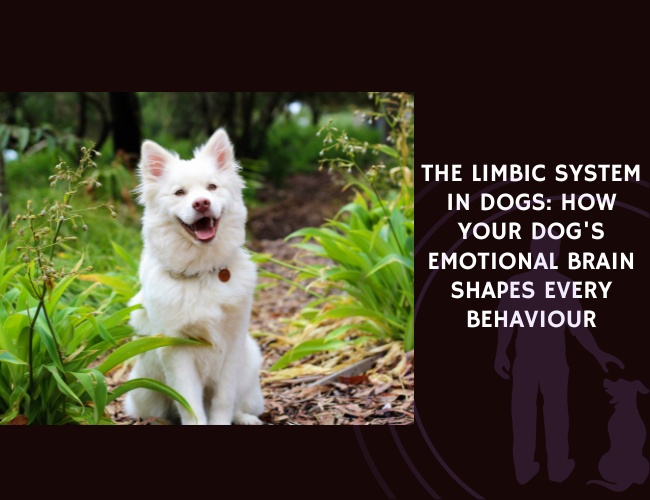
Introduction: The Hidden Architect Behind Every Wag, Whimper, and Wary Glance
Have you ever wondered why your dog freezes at the sound of thunder, even though nothing bad has ever happened during a storm? Or why that rescue dog you brought home three months ago still flinches when you move too quickly, despite your patience and gentleness every single day?
The answer lies deep within the brain, in a network of interconnected structures known as the limbic system. This ancient neural architecture is the emotional engine behind every behaviour your dog displays. It generates, integrates, and regulates emotion before your dog is even consciously aware of what is happening. It is the reason your dog greets you with joy at the door, the reason a shelter dog cowers at the back of the kennel, and the reason training sometimes “sticks” and other times seems to vanish overnight.
This comprehensive guide explores the neuroanatomical and neurophysiological foundations of the canine limbic system. We will walk through every major structure, every neural pathway, and every mechanism that shapes how your dog processes threat, reward, attachment, memory, and stress. More importantly, we will explore how these circuits can be reshaped through experience, offering real hope for dogs who carry the weight of trauma, chronic stress, or emotional dysregulation.
Understanding this system is not just an academic exercise. It is the foundation for truly understanding why your dog does what they do, and how you can support their emotional wellbeing from the inside out. 🧠
Next, let us explore where this remarkable system comes from and how it is organized in your dog’s brain.
Evolution and Functional Architecture: Why Your Dog’s Emotional Brain Looks a Lot Like Yours
An Ancient System Built for Survival
The limbic system is one of the most evolutionarily conserved neural networks across all mammalian species. What this means is remarkable: the structures and functional principles that govern emotional processing in your dog are fundamentally similar to those in humans, in cats, in horses, and in virtually every other mammal on the planet. This is not coincidence. It is the result of millions of years of shared evolutionary pressure.
The mammalian limbic system evolved to solve a specific set of survival problems that every mammal faces:
- Rapid threat detection — recognizing danger before conscious thought catches up
- Reward identification — locating food, mates, and safety
- Memory formation — remembering which contexts were dangerous and which were beneficial
- Physiological regulation during stress — coordinating the body’s resources for fight or flight
- Social bonding — supporting group living and cooperative survival
These functions operate largely outside conscious awareness. That is the key insight. Your dog does not “decide” to feel afraid or happy. These responses emerge from circuits that fire faster than deliberation. They are automatic, deeply wired, and survival-driven.
In dogs, as in all mammals, the amygdala serves as the rapid threat-detection system. The hippocampus encodes contextual memories. The hypothalamus coordinates the physiological stress response. And the anterior cingulate cortex integrates emotional conflict with behavioural flexibility. These structures are highly conserved precisely because they solve the most fundamental problems of staying alive.
What Makes Dogs Different: Domestication and the Social Brain
While the blueprint is shared across mammals, dogs have undergone something unique: domestication-driven selection that has modified their limbic responsiveness in specific and fascinating ways.
Research on canine social cognition demonstrates that dogs display heightened sensitivity to human emotional signals and social cues compared to wolves. This is not simply learned behaviour. It reflects changes at the level of limbic circuitry. Domestication has shaped the neural circuits governing social referencing and attachment, making dogs uniquely attuned to human emotional states.
Beyond social cognition, dogs show considerable individual variation in sleep macrostructure and EEG spectral characteristics. Research reveals differences across individual dogs in slow-wave sleep duration, REM sleep time, and sigma burst activity during non-REM sleep. These neurophysiological variations are not random noise. They correlate with individual differences in emotional responsiveness and social sensitivity, suggesting that limbic-mediated emotional traits have measurable neurobiological substrates. In other words, your dog’s emotional personality is reflected in measurable patterns of brain activity, even while they sleep.
The Six Core Structures of the Canine Limbic System
Your dog’s limbic system comprises several interconnected structures, each with a distinct role:
- Amygdala — rapid threat and reward evaluation
- Hippocampus — contextual memory encoding and emotional memory consolidation
- Hypothalamus — endocrine and autonomic coordination
- Anterior Cingulate Cortex — emotional conflict resolution and behavioural flexibility
- Nucleus Accumbens and Ventral Tegmental Area — reward processing and motivation
- Prefrontal Cortex — emotional regulation and inhibitory control
These structures do not function in isolation. They form integrated circuits where information flows bidirectionally, allowing emotional evaluation to influence cognition and cognitive processes to modulate emotional responses. Think of them as an orchestra rather than soloists. When the orchestra plays in harmony, your dog responds to the world with flexibility, curiosity, and resilience. When one section is out of tune, the whole emotional symphony can shift. 🐾
Next, we will dive into the first and perhaps most powerful of these structures: the amygdala.
Breed-Specific Limbic Tendencies: How Genetics Shape Your Dog’s Emotional Wiring
Before we explore each structure in detail, it is worth understanding that not all dogs come into the world with the same limbic settings. Thousands of years of selective breeding have not only shaped physical traits but have profoundly shaped emotional circuitry. Different breed groups carry distinct limbic tendencies that influence how they process threat, reward, and social connection.
Herding Breeds: Heightened Vigilance and Environmental Scanning
Breeds like Border Collies, Australian Shepherds, and German Shepherds were selected for environmental awareness, quick reactivity, and sustained attention. This means their limbic systems, particularly the amygdala and anterior cingulate cortex, tend to be highly responsive.
What this looks like in daily life:
- Higher baseline amygdala sensitivity — faster startle responses, quicker orientation to novel stimuli, and greater sensitivity to movement and sound
- Strong SEEKING drive — intense motivation to track, chase, and problem-solve, driven by robust dopamine circuitry
- Elevated ACC engagement — heightened awareness of handler cues, strong audience sensitivity, and persistent task focus
- Risk of overstimulation — because their threat-detection and reward-seeking systems both run “hot,” herding breeds are more vulnerable to anxiety and compulsive behaviours when under-stimulated or over-stressed
Guardian Breeds: Threshold-Based Threat Response
Breeds like Rottweilers, Great Pyrenees, and Mastiffs were selected for calm baseline states combined with rapid, decisive responses when a genuine threshold is crossed. Their limbic architecture reflects this.
What this looks like in daily life:
- Higher amygdala thresholds — they do not react to every noise or movement, but when the threshold is crossed, the response is powerful and fast
- Strong hippocampal contextual encoding — they tend to be excellent at distinguishing familiar from unfamiliar and safe from threatening, resulting in context-appropriate responses
- Robust prefrontal regulation at rest — calm, measured behaviour in stable environments, but reduced prefrontal override once the amygdala is fully activated
- Risk of inflexibility — once a threat assessment is made, guardian breeds may be slower to update it, reflecting strong amygdala-hippocampal encoding that resists extinction
Companion Breeds: Amplified Social Circuitry
Breeds like Cavalier King Charles Spaniels, Pugs, and Maltese were selected primarily for social bonding and proximity to humans. Their limbic systems reflect an amplification of attachment and social referencing circuits.
What this looks like in daily life:
- Highly active oxytocin system — strong bonding drive, intense attachment to owners, and high sensitivity to social separation
- Lower independent SEEKING drive — less motivation for independent exploration or problem-solving, more motivation for proximity and social reward
- Elevated separation distress — because the attachment circuitry is so dominant, separation activates the amygdala and HPA axis more intensely, making these breeds more vulnerable to separation anxiety
- Strong social referencing — they rely heavily on their owner’s emotional state to calibrate their own, which means handler stress transfers rapidly through the limbic system
Understanding these breed-level tendencies does not mean any individual dog is locked into a pattern. Neuroplasticity operates in every brain. But it does mean that your approach to enrichment, training, and emotional support should be calibrated to the limbic architecture your dog inherited. 🧠
Next, let us explore the amygdala in detail.
The Amygdala: Your Dog’s Lightning-Fast Danger Detector
How Threat Processing Works Before Conscious Awareness
The amygdala is the brain’s primary threat-detection system, and it operates at a speed that is almost difficult to comprehend. Its core function is to evaluate potential danger and initiate defensive responses before conscious awareness even occurs. This is not a design flaw. It is an evolutionary masterpiece. An organism that waits for conscious deliberation before responding to a predator is simply less likely to survive.
How fast is this system? Research in humans demonstrates that the amygdala can respond to fearful faces within just 88 milliseconds of stimulus presentation. Even more remarkable, this response occurs even when those faces are rendered invisible through backward masking, meaning the person never consciously saw the image. This subcortical pathway operates independently of cortical awareness, allowing threat detection to function without any conscious input and under minimal influence from higher cortical areas.
While direct measurement of comparable amygdala latencies in dogs is still an emerging field, the evolutionary conservation of these limbic structures strongly suggests that canine amygdalae process threat information through similarly rapid subcortical pathways. Your dog’s well-documented sensitivity to human emotional expressions and their ability to detect subtle changes in your behaviour are consistent with this kind of rapid emotional processing.
Three Pathways Into the Amygdala
The amygdala receives sensory information through multiple routes, each serving a distinct function:
- Thalamic pathway — direct, rapid sensory input, particularly for threat-relevant stimuli. This is the “fast track” that allows the amygdala to respond before the cortex has finished processing.
- Cortical pathway — processed sensory information that has been refined by higher brain regions, allowing more nuanced evaluation of the stimulus.
- Interoceptive pathway — information about internal physiological states, such as heart rate, gut tension, or muscle tone.
In dogs, the amygdala likely processes threat-relevant stimuli including unfamiliar animals, sudden movements, loud noises, and potentially threatening human behaviour through these pathways. Importantly, much of the amygdala’s responsiveness to these stimuli is not learned. It reflects innate threat-detection biases shaped by evolution. Your dog does not need to have been hurt by a loud noise to startle at one. The amygdala is pre-wired to respond.
When the Alarm System Gets Too Sensitive: Amygdala Sensitization
Repeated exposure to stress and threat does not leave the amygdala unchanged. It alters amygdala sensitivity, lowering the threshold for threat detection and increasing emotional reactivity. This process, called amygdala sensitization or hyperactivation, represents a form of maladaptive neuroplasticity where the brain becomes increasingly reactive to potential danger.
Research from the field of human trauma provides powerful evidence. A meta-analysis of studies on childhood maltreatment identified a robust cluster of hyperactivation in the right amygdala during emotional processing tasks. This hyperactivation reflects heightened threat detection and emotional reactivity in individuals with a history of early adversity.
This finding has direct relevance to understanding canine emotional dysregulation. Dogs exposed to chronic stress, abuse, or unpredictable environments likely develop very similar amygdala sensitization. The consequences are significant:
- Lower thresholds for threat perception, meaning stimuli that should be neutral become alarming
- Increased startle responses to sudden sounds or movements
- Difficulty distinguishing genuine threats from harmless stimuli
- Persistent hypervigilance even in environments that are objectively safe
At the neurobiological level, chronic stress increases amygdala dendritic spine density and synaptic connectivity, literally strengthening the threat-detection circuits. At the same time, stress reduces hippocampal volume and function, impairing the brain’s ability to contextualize threat, to remember that a particular stimulus was safe in the past. This creates a neurobiological double bind: the amygdala becomes increasingly reactive while the hippocampus becomes less able to provide reassuring contextual safety information.
This is what you see in a rescue dog that flinches at every hand movement or a dog that cannot settle in a new environment. It is not “stubbornness” or “bad behaviour.” It is a brain that has been physically reshaped by experience.
The Amygdala Does Not Work Alone: Prefrontal Regulation
The amygdala is continuously modulated by prefrontal cortical regions, particularly the ventromedial prefrontal cortex and the anterior cingulate cortex. These regions provide top-down regulation, allowing learned safety information to inhibit amygdala threat responses.
Research on threat processing demonstrates that while amygdala activity underlies core features of anxiety, such as detection of salient information, it is the prefrontal cortices, particularly the dorsomedial prefrontal and anterior cingulate cortex, that entrain the amygdala’s responsiveness. Emotional regulation depends on effective communication between limbic threat-detection systems and cortical control regions.
In dogs, this amygdala-prefrontal interaction likely underlies the difference between dogs that can learn to overcome fear through experience, where prefrontal inhibition gradually calms the amygdala, and dogs that remain persistently fearful despite repeated safe experiences. Dogs with stronger prefrontal regulation may show greater behavioural flexibility and faster fear extinction. Dogs with weaker prefrontal control may remain locked in threat-detection mode, regardless of how safe their current environment actually is. 🧠
Next, let us explore the structure that gives those emotional memories their context: the hippocampus.
The Hippocampus: Where Emotional Memories Take Root
How Your Dog Remembers What Happened and Where
The hippocampus is essential for encoding contextual memories, memories that include information about where, when, and under what circumstances events occurred. This contextual encoding is particularly important for emotional memories because it allows your dog to distinguish between situations that are genuinely dangerous and situations that merely resemble past threats.
Emotionally significant experiences undergo preferential consolidation in the hippocampus through a process called emotional tagging. When something important happens, the amygdala’s emotional evaluation enhances hippocampal encoding, essentially flagging the memory as “important, remember this.” The result is that emotionally significant memories become more persistent, more easily retrieved, and more resistant to extinction than neutral memories.
This mechanism ensures that important survival-relevant information is retained. A dog that remembers where it found food or which animal was dangerous has a clear survival advantage. However, this same mechanism means that traumatic experiences create particularly strong and persistent memories that can influence behaviour long after the original threat has passed.
Dogs demonstrate clear evidence of contextual memory formation in everyday life. A dog that was frightened by a veterinarian in a particular clinic may show fear responses specifically in that location or in similar-looking environments, while remaining perfectly calm in other contexts. This contextual specificity reflects the hippocampus doing its job, encoding the emotional experience within a specific environmental framework.
Conversely, dogs with hippocampal dysfunction or stress-induced hippocampal atrophy may show generalized fear responses that are not context-specific. They respond fearfully to any situation that even remotely resembles a past threat. This generalization reflects impaired contextual discrimination. The hippocampus can no longer say “this is different from that time.” So the amygdala treats everything as potentially dangerous.
What Chronic Stress Does to the Hippocampus
Chronic stress produces profound effects on hippocampal structure and function. Prolonged elevation of glucocorticoid stress hormones, particularly cortisol in dogs, leads to a cascade of damaging changes:
- Reduced hippocampal volume through stress-induced neuronal loss and reduced neurogenesis
- Impaired synaptic plasticity with reduced capacity for long-term potentiation (LTP), the cellular mechanism underlying learning
- Altered gene expression affecting genes that support neuronal survival and plasticity
- Reduced dendritic complexity with simplification of neuronal branching patterns
The behavioural consequences of these changes are significant and observable:
- Impaired ability to learn new information or commands
- Difficulty distinguishing safe from dangerous contexts
- Reduced capacity to form new positive memories
- Increased reliance on amygdala-driven, fear-based responses
- Generalised anxiety that extends beyond the original stressor
The hippocampus, in essence, becomes less able to do its job, leaving the amygdala as the dominant voice in the dog’s emotional processing.
Fear Extinction: Why “Getting Over It” Is Never Simple
Fear extinction, the process by which learned fear responses diminish with repeated safe exposure, depends critically on hippocampal function. During extinction learning, the hippocampus encodes new contextual information indicating that a previously threatening stimulus is now safe.
But here is the crucial insight: extinction does not erase the original fear memory. It creates a new, competing memory. The original fear memory remains stored in the amygdala. This is why fear can spontaneously recover if the dog returns to the original threat context or if stress reactivates the amygdala.
In practical terms, this explains why fear extinction training may produce temporary improvement that reverses under stress or in novel contexts. A dog trained to overcome fear of strangers in a controlled training environment may revert to fearful behaviour when stressed, moved to a new location, or exposed to a stimulus that resembles the original threat. The old fear memory has not been deleted. It has been overridden by a new memory, and under the right conditions, the old one can resurface. Moments like these reveal how memory and emotion intertwine in behaviour, a dynamic that Soul Recall helps us understand more deeply.
This is not a failure of training. It is a feature of how the mammalian brain handles survival information. It never fully discards a threat memory because, from an evolutionary perspective, it is safer to retain the warning. 🐾
Next, we will explore the hypothalamus, the structure that translates all these emotional signals into physical responses throughout the body.
The Hypothalamus: The Bridge Between Emotion and Body
How Emotional Signals Become Physical Responses
The hypothalamus is the brain’s primary interface between emotional processing and physiological regulation. While the amygdala detects danger and the hippocampus provides context, the hypothalamus translates these evaluations into coordinated physical responses. It operates across three major systems simultaneously:
- Autonomic Nervous System (ANS) — the sympathetic (fight-or-flight) and parasympathetic (rest-and-digest) branches
- Endocrine System — the Hypothalamic-Pituitary-Adrenal (HPA) axis, which releases cortisol during stress
- Behavioural Systems — motivation, feeding, sleep, reproduction, and defensive behaviour
When the amygdala detects threat, it activates the hypothalamus, which then initiates a coordinated physiological cascade:
- Immediate response (seconds): Sympathetic nervous system activation increases heart rate, blood pressure, and muscle tension. The body is prepared for action.
- Short-term response (minutes): The HPA axis releases cortisol, mobilizing energy stores and enhancing threat-relevant sensory processing. The body is fueled for sustained response.
- Behavioural response: The dog engages in defensive behaviour, whether that is fight, flight, freeze, or appeasement.
This cascade is adaptive in acute threat situations. When a dog faces a real danger, this coordinated response can save its life. The problem begins when the system is chronically activated.
Allostatic Load: The Cumulative Cost of Chronic Stress
Chronic stress produces persistent hypothalamic activation, leading to sustained elevation of cortisol and continuous sympathetic nervous system tone. This state is called allostatic load, and it represents the cumulative physiological cost of ongoing stress.
In dogs, chronic hypothalamic activation manifests in ways that you might recognize if you have ever lived with a chronically stressed dog:
- Persistent hypervigilance — continuous scanning for threat, inability to settle or relax
- Sleep disruption — difficulty achieving restorative sleep, frequent waking, restless nights
- Digestive dysfunction — stress-induced changes in gut motility and microbiota, often presenting as chronic diarrhoea, vomiting, or appetite changes
- Immune suppression — chronic cortisol elevation impairs immune function, leaving the dog more vulnerable to infections and illness
- Metabolic dysregulation — altered feeding behaviour and weight changes, either weight gain or weight loss depending on the individual
These are not merely “behavioural problems.” They are the physiological signatures of a brain that cannot turn off its alarm system.
The Gut-Brain Axis: A Two-Way Conversation Between Belly and Brain
The article has already mentioned digestive dysfunction as a consequence of chronic stress, but the relationship between the gut and the limbic system goes far deeper than a simple one-way effect. The gut-brain axis, mediated primarily by the vagus nerve, creates a bidirectional communication channel that profoundly influences emotional regulation.
The vagus nerve is the longest cranial nerve in the body, running from the brainstem directly to the gut. Approximately 80% of vagal fibres are afferent, meaning they carry information from the gut to the brain, not the other way around. This means your dog’s gut is constantly sending signals to the limbic system about its internal state.
How this affects the limbic system:
- Microbiome composition influences neurotransmitter production. The gut produces approximately 90% of the body’s serotonin and significant amounts of GABA, both of which are critical regulators of mood, anxiety, and emotional stability. An imbalanced microbiome, often caused by chronic stress, poor diet, or antibiotic use, can reduce production of these calming neurotransmitters.
- Vagal tone directly modulates the HPA axis. Strong vagal tone activates the parasympathetic nervous system, counterbalancing the sympathetic fight-or-flight response. Dogs with healthy vagal tone recover more quickly from stress. Dogs with low vagal tone remain in heightened arousal longer.
- Gut inflammation activates the amygdala. Pro-inflammatory cytokines produced in an inflamed gut travel to the brain and increase amygdala reactivity. A dog with chronic gut issues is not just physically uncomfortable. Their threat-detection system is being amplified from the inside.
- Stress disrupts the microbiome, which increases stress. Elevated cortisol alters gut permeability and microbiome composition, which reduces calming neurotransmitter production, which increases limbic reactivity, which increases cortisol. This creates a self-reinforcing loop between gut health and emotional health.
For dog owners, this means that nutrition, gut health, and probiotic support are not separate from behavioural work. They are part of the same system. A dog with chronic digestive issues may struggle with emotional regulation not because of a “behavioural problem” but because the gut-brain axis is flooding the limbic system with alarm signals. 🧠
Beyond Stress: How the Hypothalamus Regulates Daily Life
The hypothalamus also regulates fundamental homeostatic functions that shape your dog’s daily experience.
Feeding Behaviour: The hypothalamus contains distinct regions that promote and inhibit feeding. The lateral hypothalamus drives appetite, while the ventromedial hypothalamus signals satiety. These regions integrate signals from the body, including leptin, ghrelin, and glucose levels, with emotional and motivational states. This is why your dog’s appetite is not purely physiological. It is modulated by emotional state, stress level, and social context. A stressed dog that refuses food is not being “picky.” Their hypothalamus is prioritizing threat response over feeding.
Sleep Regulation: The hypothalamus contains the suprachiasmatic nucleus, which generates circadian rhythms, and the lateral hypothalamus, which promotes wakefulness. Sleep is essential for emotional regulation, memory consolidation, and immune function. Dogs exposed to chronic stress often show disrupted sleep architecture, with reduced slow-wave sleep and reduced REM sleep, both of which are critical for emotional processing and memory consolidation.
Research demonstrates that dogs display considerable individual variation in sleep macrostructure, as measured by sleep efficiency, sleep latency, sleep cycle duration, slow-wave sleep, and REM sleep time. These variations correlate with individual differences in emotional responsiveness and social sensitivity. Your dog’s sleep patterns are not just habits. They are windows into their emotional brain.
Reproduction: The hypothalamus regulates reproductive hormones (GnRH, which stimulates release of LH and FSH) and is sensitive to stress. Chronic stress suppresses reproductive function, reflecting an evolutionary prioritization of survival over reproduction during threatening conditions. A dog’s body, guided by the hypothalamus, will redirect resources away from reproduction when the limbic system signals ongoing danger.
Cortisol-to-DHEA Ratio: A More Nuanced Window Into Stress
Most discussions of canine stress focus on cortisol alone, but a more sophisticated picture emerges when we consider the cortisol-to-DHEA ratio. DHEA (dehydroepiandrosterone) is often called the “anti-stress hormone” because it counterbalances many of cortisol’s effects. Where cortisol promotes catabolism, immune suppression, and hippocampal vulnerability, DHEA promotes neuroprotection, immune function, and resilience.
What this ratio tells us:
- Healthy ratio (balanced cortisol and DHEA): The dog can mount an appropriate stress response and recover efficiently. The hippocampus is protected. Immune function is maintained. This reflects a well-regulated HPA axis.
- Elevated cortisol, depleted DHEA: This is the signature of chronic stress and allostatic load. The protective buffer is gone. The hippocampus is vulnerable to atrophy. Immune function declines. Emotional regulation becomes increasingly difficult.
- Why cortisol alone can mislead: A dog may show “normal” cortisol levels while DHEA is severely depleted, meaning the ratio is dangerously skewed even though one number looks acceptable. Conversely, a dog with elevated cortisol but strong DHEA reserves may be coping more effectively than the cortisol number suggests.
For veterinary professionals and behaviourists, this ratio provides a more accurate biomarker of limbic health than cortisol alone. For dog owners, the practical takeaway is that stress recovery capacity matters as much as stress itself. Supporting DHEA through adequate sleep, physical activity, social connection, and environmental enrichment helps maintain the resilience side of the equation. 🐾
Next, let us explore the anterior cingulate cortex, the region that helps dogs navigate emotional conflict and adjust their behaviour in real time.
The Anterior Cingulate Cortex: Navigating Emotional Conflict
The Brain’s Emotional Referee
The anterior cingulate cortex (ACC) sits at a transitional position between limbic structures and the prefrontal cortex, making it ideally positioned to integrate emotional information with cognitive control. Think of it as the referee that steps in when your dog’s emotions and their learned behaviour pull in different directions.
The ACC is activated in several critical situations:
- When emotional and cognitive demands conflict, such as a dog wanting to approach a feared stimulus but feeling afraid
- When errors occur, particularly emotionally significant errors
- When social pain or rejection is experienced
- When attention must be redirected based on emotional significance
Emotional Conflict Resolution: The ACC monitors for situations where emotional responses conflict with learned or contextually appropriate behaviour. When such conflict is detected, the ACC signals the need for increased cognitive control, recruiting prefrontal regions to override automatic emotional responses.
In dogs, this function likely underlies the ability to overcome fear through training. A dog that has learned to approach a feared stimulus, perhaps a veterinarian’s office, despite feeling afraid is engaging ACC-mediated conflict resolution. The learned behaviour (approach) is overriding the amygdala-driven fear response (avoid). This is not simply “obedience.” It is a sophisticated neural process of emotional conflict management.
Persistence, Frustration Tolerance, and Individual Differences
The ACC is implicated in persistence, the ability to continue pursuing goals despite difficulty or frustration. Dogs with robust ACC function may show greater persistence in problem-solving tasks, while dogs with ACC dysfunction may show reduced frustration tolerance and increased aggression or avoidance when faced with obstacles.
Research on dogs’ sensitivity to being observed reveals a particularly fascinating finding. A dog’s individual susceptibility to the audience effect, how much their behaviour changes when their owner is watching, is a trait-like characteristic reflected in the EEG spectral power of both REM and non-REM sleep as well as in pre-sleep drowsiness.
Dogs showing greater changes in behaviour when observed by their owners, such as increased compliance with commands and increased gazing at the owner, displayed distinct EEG patterns, including increased beta activity during sleep. This finding suggests that individual differences in social sensitivity and emotional responsiveness are not just personality quirks. They reflect underlying neurophysiological variation in limbic and cortical circuits. Your dog’s unique emotional temperament has a measurable biological basis.
Adaptive Behavioural Adjustment in Real Time
The ACC contributes to behavioural flexibility by integrating emotional significance with contextual demands. A dog that can adjust its behaviour based on the owner’s emotional state, approaching when the owner is calm and maintaining distance when the owner is agitated, is demonstrating ACC-mediated integration of social-emotional information with behavioural adjustment.
This is a form of emotional intelligence that runs deeper than learned commands. It reflects the brain’s capacity to continuously read, evaluate, and adapt to the emotional landscape of the social environment. The Invisible Leash between you and your dog is built, in part, on these ACC-mediated circuits of mutual awareness. 🐾
Next, we will explore the reward pathways that drive your dog’s motivation, curiosity, and joy.
Reward Pathways and Motivation: The SEEKING System
Dopamine, Desire, and the Drive to Explore
The limbic reward system, centered on the nucleus accumbens and ventral tegmental area (VTA), generates the motivation that drives your dog through every day. This system operates through dopamine, a neurotransmitter that signals reward prediction and motivates approach behaviour.
Affective neuroscience identifies a primary emotional system called SEEKING. This system generates the motivation to pursue goals, explore the environment, and engage with rewarding stimuli. It is dopamine-mediated and operates largely outside conscious awareness, generating the felt sense of wanting, desire, and anticipation.
In dogs, the SEEKING system drives some of the most recognizable and beloved canine behaviours:
- Exploration and play behaviour
- Food-seeking and hunting
- Social approach and interaction
- Toy play and object manipulation
- Learning and problem-solving
Reward Prediction and Anticipation: The dopamine system does not simply respond to reward when it arrives. It generates predictions about future reward. When a dog learns that a particular cue, such as the sound of a treat bag opening, predicts reward, dopamine neurons begin firing in response to the cue rather than the reward itself. This allows the dog to anticipate reward and adjust behaviour accordingly.
This predictive function is essential for learning and motivation. However, it also creates vulnerability to frustration and disappointment when predicted rewards fail to materialize. A dog that has learned to expect a treat at a certain point in training and does not receive one is not simply “disappointed.” Its dopamine prediction system has registered a prediction error, and this generates a specific form of emotional distress.
Healthy Motivation vs. Compulsive Reward Seeking
The distinction between healthy motivation and compulsive reward seeking reflects differences in how limbic circuits function.
Healthy motivation looks like this:
- Flexible: behaviour adjusts based on context and current needs
- Satiety-responsive: motivation decreases once reward is obtained
- Integrated: reward-seeking is balanced with other needs such as sleep, social interaction, and exploration
- Cortically modulated: prefrontal regions can inhibit reward-seeking when contextually inappropriate
Compulsive reward seeking looks very different:
- Rigid: behaviour persists despite changing context or negative consequences
- Satiety-insensitive: motivation does not decrease with reward
- Isolated: reward-seeking dominates other behavioural priorities
- Cortically resistant: prefrontal inhibition is ineffective
Compulsive reward seeking can develop through several mechanisms:
- Sensitization — repeated reward exposure increases dopamine responsiveness to reward-related cues
- Habit formation — reward-seeking becomes automatic and stimulus-driven rather than goal-directed
- Stress-induced dysregulation — chronic stress enhances reward-seeking as a form of self-medication
- Prefrontal dysfunction — reduced cortical control fails to regulate limbic reward circuits
In dogs, compulsive reward seeking might manifest as obsessive toy play where the dog cannot disengage, excessive food-seeking despite being well-fed, or compulsive self-directed behaviours such as excessive licking, spinning, or tail-chasing. These are not “quirky habits.” They are signs of a reward system that has lost its regulatory balance.
The Dance Between Reward and Threat
The reward and threat systems are not independent. They interact continuously and dynamically. When threat is detected, reward-seeking is suppressed, an adaptive response that prioritizes survival over pleasure. Conversely, when reward is anticipated, threat sensitivity is reduced, allowing approach to potentially rewarding but slightly risky stimuli.
In dogs, this integration allows beautifully flexible behaviour. A dog may approach a stranger (reward-seeking) if the owner is present and calm (threat reduced), but avoid the same stranger if the owner is absent or anxious (threat increased). This is not inconsistency. It is a sophisticated integration of two fundamental limbic systems, continuously recalculating the balance between opportunity and risk. 🧠
Next, let us explore how attachment and social bonding create the emotional safety that allows the entire limbic system to function at its best.
Emotional. Ancient. Adaptive.
The Limbic Leads Your dog’s emotional brain processes threat reward attachment and memory before conscious decision making creating rapid survival driven behavioural responses.
Experience Shapes Circuits Limbic pathways adapt through learning stress and relationships allowing fear trust and emotional regulation to strengthen or weaken over time.



Connection Rewires Emotion Through predictable experiences emotional safety and NeuroBond aligned interaction the brain gradually reshapes its responses building resilience confidence and lasting behavioural change. 🐾
Attachment, Social Bonding, and Emotional Safety
The Neural Architecture of Trust
Attachment, the formation of selective, enduring bonds with specific individuals, depends on limbic circuits that generate feelings of safety, trust, and affiliation. These circuits are complex and distributed across multiple brain regions:
- Oxytocin system — promotes bonding, trust, and social approach
- Amygdala — evaluates social threat and safety
- Hippocampus — encodes memories of attachment figures and safe contexts
- Anterior insula — processes interoceptive signals related to social connection
- Prefrontal cortex — integrates social information with behavioural decisions
Oxytocin, often called the “bonding hormone,” is released during positive social interactions and promotes trust, reduced fear, and increased social approach. In dogs, oxytocin levels increase during interaction with owners, particularly during petting and play.
The oxytocin system does not operate in isolation. Research suggests that progestins and glucocorticoids affect oxytocin systems, and that oxytocin may in turn affect central systems influenced by progesterone. This indicates that oxytocin’s effects on social bonding are modulated by stress hormones and reproductive hormones, creating complex interactions between attachment, stress, and reproductive state. The bond between you and your dog is not a single chemical event. It is a web of interacting hormonal systems. Through the NeuroBond lens, trust becomes visible not as a concept, but as a measurable neurobiological reality.
🧠 The Limbic System in Dogs 🐾
Neural Circuits, Emotional Processing & Behavioural Foundations — How Your Dog’s Emotional Brain Shapes Every Behaviour
Phase 1: The Ancient Blueprint
Evolutionary Architecture & Core StructuresThe canine limbic system is one of the most evolutionarily conserved neural networks across all mammals. It comprises six interconnected structures that form an emotional orchestra:
• Amygdala — rapid threat & reward evaluation
• Hippocampus — contextual memory & emotional encoding
• Hypothalamus — endocrine & autonomic coordination
• Anterior Cingulate Cortex — emotional conflict resolution
• Nucleus Accumbens & VTA — reward & motivation
• Prefrontal Cortex — emotional regulation & impulse control
Dogs display heightened sensitivity to human emotional signals compared to wolves — not just learned behaviour, but changes at the level of limbic circuitry. Individual differences in emotional responsiveness show up in measurable EEG patterns, even during sleep. Your dog’s emotional personality has a biological signature.
Phase 2: The Amygdala
Lightning-Fast Threat Detection in 88 MillisecondsThe amygdala evaluates danger before conscious awareness occurs — within 88 milliseconds. It receives input through three routes:
• Thalamic pathway — the fast track, raw sensory data
• Cortical pathway — refined, nuanced evaluation
• Interoceptive pathway — internal body states (heart rate, gut tension)
Chronic stress increases amygdala dendritic spine density while reducing hippocampal volume — creating a neurobiological double bind. The alarm system grows stronger while the “context check” grows weaker. This is what you see in rescue dogs that flinch at every hand movement. It is not stubbornness. It is a brain reshaped by experience.
The amygdala is continuously modulated by the prefrontal cortex, which provides top-down inhibition. Dogs with stronger prefrontal regulation show greater behavioural flexibility and faster fear extinction. Dogs with weaker prefrontal control remain locked in threat-detection mode regardless of actual safety.
Phase 3: The Hippocampus
Emotional Memory, Context & Fear ExtinctionThe hippocampus encodes where, when, and under what circumstances events occurred. Through “emotional tagging,” the amygdala flags important memories for preferential storage. Traumatic experiences create particularly strong, persistent memories — that is why a dog frightened at one clinic may fear all similar-looking rooms for years.
Prolonged cortisol elevation causes measurable hippocampal changes:
• Reduced hippocampal volume (neuronal loss)
• Impaired synaptic plasticity (reduced learning capacity)
• Altered gene expression (neuronal survival genes affected)
• Reduced dendritic complexity (simplified neural branching)
Extinction does not erase the original fear memory — it creates a new, competing memory. The original remains in the amygdala. That is why fear can spontaneously return under stress or in new contexts. Training did not “fail.” The old memory resurfaced. This is how Soul Recall reveals that memory and emotion are always intertwined.
Phase 4: The Hypothalamus & Gut-Brain Axis
Where Emotions Become Physical & the Belly-Brain LoopWhen the amygdala detects threat, the hypothalamus initiates a three-stage response:
• Seconds: Sympathetic activation — heart rate ↑, blood pressure ↑, muscle tension ↑
• Minutes: HPA axis releases cortisol — energy mobilised, senses sharpened
• Behavioural: Fight, flight, freeze, or appeasement engaged
Chronic hypothalamic activation creates cumulative physiological damage:
• Persistent hypervigilance — cannot settle or relax
• Sleep disruption — fragmented, non-restorative sleep
• Digestive dysfunction — chronic diarrhoea, appetite swings
• Immune suppression — recurring infections, slow healing
• Metabolic dysregulation — unexplained weight changes
The vagus nerve creates a bidirectional loop: 80% of its fibres carry information from gut to brain. The gut produces ~90% of the body’s serotonin and significant GABA. Gut inflammation directly amplifies amygdala reactivity — a dog with chronic digestive issues may struggle emotionally because the gut-brain axis is flooding the limbic system with alarm signals.
Phase 5: Reward, Motivation & the SEEKING System
Dopamine, Desire & the Drive to ExploreCentred on the nucleus accumbens and VTA, this dopamine-mediated system generates motivation, anticipation, and curiosity. Dopamine does not just respond to reward — it predicts it. When your dog hears the treat bag, dopamine fires at the cue, not the treat. This drives exploration, play, food-seeking, social approach, and problem-solving.
• Healthy: Flexible, satiety-responsive, integrated with other needs, cortically modulated
• Compulsive: Rigid, satiety-insensitive, dominates all behaviour, cortically resistant
Compulsive patterns develop through sensitization, habit formation, stress-induced self-medication, or prefrontal dysfunction. Signs include obsessive toy play, excessive licking, spinning, tail-chasing, or food obsession despite satiety.
These systems interact continuously: threat detected → reward-seeking suppressed. Reward anticipated → threat sensitivity reduced. A dog approaches a stranger when the owner is calm (threat reduced) but avoids when the owner is tense (threat increased). This is sophisticated limbic integration, not inconsistency.
Phase 6: Attachment & Emotional Contagion
Oxytocin, Mirror Neurons & Why Your Dog Feels What You Feel• Oxytocin system — bonding, trust, social approach
• Amygdala — evaluates social threat vs. safety
• Hippocampus — memories of attachment figures
• Anterior insula — interoceptive social signals
• Prefrontal cortex — social decision-making
Oxytocin is modulated by stress hormones and reproductive hormones — the bond is a web of interacting systems, not a single chemical event.
Dogs’ cortisol levels correlate with their owners’ cortisol levels over time. Your breathing rate, posture, vocal tone, and muscle tension are direct inputs to your dog’s amygdala and HPA axis. Emotional contagion is bidirectional — your calm regulates them, and their calm regulates you. This is the measurable reality behind the NeuroBond.
Secure attachment provides social buffering — a trusted owner’s presence reduces amygdala activation and cortisol levels during stress. Your presence literally changes your dog’s brain chemistry. Insecure attachment (unpredictable, inconsistent) creates chronic limbic dysregulation — the dog cannot find an anchor.
Phase 7: Stress, Trauma & Limbic Dysregulation
The Self-Perpetuating Cycle & How to Recognise It• Amygdala: Increased spine density, lower threat threshold, baseline hyperactivation
• Hippocampus: Reduced volume, impaired learning, loss of contextual discrimination
• Prefrontal Cortex: Reduced regulation, impaired impulse control, inflexible decisions
• Hypothalamus: Elevated cortisol set point, enhanced stress reactivity, slow recovery
These changes are self-perpetuating: stress → increased sensitivity → more stress vulnerability → more stress.
• Startles at sounds other dogs ignore • Cannot settle in safe environments • Fears generalise beyond original context • Struggles to learn despite consistent teaching • Chronic digestive issues without medical cause • Compulsive behaviours (spinning, licking, chasing) • Knows commands but “forgets” under mild stress • Extreme separation distress or total indifference to owner
Trauma-induced changes are not permanent. The limbic system retains capacity for reorganisation throughout life. Recovery requires sustained, repeated experiences that contradict trauma-encoded expectations: safety, predictability, secure attachment, enrichment, gradual exposure, and physiological regulation.
Phase 8: Neuroplasticity & Rehabilitation
Six Interventions That Rewire the Emotional Brain• 1. Predictable environments — reduces amygdala activation through accurate future prediction
• 2. Secure attachment — social buffering lowers cortisol and amygdala reactivity
• 3. Enrichment & exploration — activates SEEKING, promotes hippocampal neurogenesis
• 4. Gradual exposure — hippocampus encodes new safety memories
• 5. Physiological regulation — parasympathetic activation resets hypothalamic set point
• 6. Meaningful social connection — oxytocin release and reward circuit activation
• Synaptic: LTP (strengthening), LTD (weakening), dendritic spine changes
• Structural: Neurogenesis, myelination, dendritic remodelling
• Functional: Circuit recruitment and network reorganisation
Neuroplasticity requires: repeated experience, active engagement, emotional significance, reward, and time (weeks to months).
Before you change your dog’s state, regulate your own. Slow your breathing (4–6 breaths/min). Drop your shoulders. Soften your hands. Lower and slow your voice. Low-pitched, melodic speech activates vagal-parasympathetic circuits. Physical tension travels through the leash directly to the amygdala. Your calm is their permission to be calm.
🐾 Limbic Profiles: Breed Groups & Life Stages
Amygdala: High baseline sensitivity, fast startle
SEEKING: Intense drive to track and problem-solve
ACC: Strong audience sensitivity
Risk: Overstimulation → anxiety and compulsive behaviours
Amygdala: Higher threshold, powerful once crossed
Hippocampus: Strong contextual discrimination
Prefrontal: Calm baseline, reduced override once activated
Risk: Slow to update threat assessments
Oxytocin: Amplified bonding drive
SEEKING: Lower independent drive, proximity-motivated
Attachment: Intense, handler-dependent
Risk: Separation anxiety, handler stress transfer
Amygdala: Thresholds being calibrated
Hippocampus: Rapidly maturing, encoding lifelong templates
Prefrontal: Immature, impulse control building
Priority: Gentle, varied socialisation = limbic architecture
All structures: Fully developed, responsive to experience
Neuroplasticity: Active, requires repeated input
Regulation: Peak prefrontal function
Priority: Enrichment, consistency, attachment quality
Hippocampus: Volume loss → confusion, disorientation
Prefrontal: Declining → increased reactivity, irritability
Neurotransmitters: Dopamine, serotonin, acetylcholine decline
Priority: Predictability, gentle enrichment, NeuroBond presence
• 88ms Rule: The amygdala detects threat before conscious awareness — behaviour is faster than thought
• Cortisol-DHEA Balance: Cortisol alone misleads — the ratio to DHEA reveals true stress resilience
• Fear Extinction ≠ Fear Erasure: New memories override old ones but never delete them — expect relapse under stress
• 90% Serotonin: The gut produces ~90% of the body’s serotonin — gut health = emotional health
• 80% Afferent: 80% of vagus nerve fibres carry signals from gut → brain, not brain → gut
• Regulate Yourself First: Slow breathing (4–6/min), soft hands, low voice — your calm is their permission
• Weeks to Months: Neuroplastic reorganisation is real but gradual — no shortcuts, only consistency
• Socialisation Window: 3–14 weeks sets lifelong amygdala threat thresholds — gentle exposure, not volume
• First 30 Days: For rescued dogs — Week 1: safety only → Week 2: predictability → Week 3: gentle enrichment → Week 4: foundation building
The limbic system is not a mystery. It is a network of identifiable structures that shape every moment of your dog’s emotional experience. Through the NeuroBond, trust becomes visible — not as a concept, but as measurable cortisol levels, amygdala activation patterns, and hippocampal neurogenesis. The Invisible Leash reminds us that awareness, not tension, guides the path — your breathing, your posture, your emotional clarity are the signals that reshape your dog’s neural circuits in real time. And Soul Recall reveals that memory and emotion are always intertwined — the brain never fully discards a survival memory, but it can build new ones that are stronger.
Every calm interaction, every predictable routine, every moment of gentle presence is not just kindness. It is neuroscience in action. You are reshaping neural circuits with every patient, emotionally clear exchange.
That balance between science and soul — that is the essence of Zoeta Dogsoul.
© Zoeta Dogsoul – Where neuroscience meets soul in dog training
Social Referencing: Reading You to Read the World
Dogs demonstrate social referencing, the ability to use the emotional expressions and behaviour of others, particularly their owners, to evaluate ambiguous situations. When your dog encounters an unfamiliar person or object and turns to look at you, they are engaging in social referencing. They are using your emotional state to determine whether the situation is safe or threatening.
This behaviour reflects limbic integration of social information. The dog’s amygdala evaluates the unfamiliar stimulus as potentially threatening, but the hippocampus and prefrontal cortex integrate information about the owner’s emotional state, allowing the dog to adjust its threat assessment based on social context.
Research demonstrates that dogs’ human-directed behaviour, such as gazing at the human or approaching a human, is affected not only by social familiarity but by the broader social aspects of the dog-human relationship and the owner’s interaction style. The quality of the attachment relationship influences how dogs process social information and adjust their behaviour. A dog with a warm, consistent owner processes novel situations differently than a dog with an unpredictable or disengaged owner.
Mirror Neurons and Emotional Contagion: Why Your Dog Feels What You Feel
There is a neuroscientific basis for what every experienced dog owner intuitively knows: your emotional state directly shapes your dog’s emotional state. This phenomenon goes beyond social referencing. It is rooted in the mirror neuron system and the broader mechanisms of emotional contagion.
Mirror neurons fire both when an animal performs an action and when it observes the same action performed by another. While the mirror neuron system was first identified in primates, evidence suggests that similar neural mechanisms exist across social mammals, including dogs. These neurons are part of the neural architecture that allows emotional states to transmit between individuals.
How emotional contagion works through the limbic system:
- Your cortisol triggers their cortisol. Research consistently shows that dogs’ cortisol levels correlate with their owners’ cortisol levels over time. This is not mere coincidence. The dog’s limbic system is detecting and mirroring the owner’s physiological stress state through multiple channels: scent (dogs can detect cortisol in human sweat), vocal tone, posture, and breathing patterns.
- Your breathing rate sets their arousal. Rapid, shallow breathing in a handler activates the dog’s sympathetic nervous system through both auditory and olfactory detection. Slow, deep breathing activates the parasympathetic response. The hypothalamus responds to these social-physiological cues before any conscious processing occurs.
- Your muscle tension communicates through the leash. Physical contact transmits autonomic nervous system information directly. A handler with tense arms and rigid posture transmits sympathetic arousal through the leash, the hand during petting, and even proximity. The dog’s interoceptive pathway relays this information to the amygdala.
- Emotional contagion is bidirectional. Just as handler stress elevates the dog’s limbic activation, a calm, relaxed dog can reduce the handler’s cortisol and blood pressure. The NeuroBond between handler and dog is a genuine two-way physiological exchange.
This is why “calm energy” is not a vague philosophical concept. It is a measurable, transmissible physiological state that directly modulates your dog’s amygdala, hypothalamus, and HPA axis. Your emotional clarity is their neurobiological environment.
Secure Attachment as Emotional Armour
Secure attachment relationships provide social buffering, the ability of a trusted individual to reduce limbic activation during stress. A dog with a secure attachment to its owner shows reduced amygdala activation and lower cortisol levels when the owner is present during a stressful situation.
This buffering effect reflects the limbic system’s deep responsiveness to social context. The presence of a trusted attachment figure signals safety to the amygdala, reducing threat detection and allowing the dog to approach potentially rewarding or novel stimuli. Your presence literally changes your dog’s brain chemistry.
Conversely, insecure attachment relationships, characterised by unpredictability, inconsistency, or threat from the attachment figure, create a state of chronic limbic dysregulation. The dog cannot rely on the attachment figure for safety, resulting in persistent hypervigilance and reduced capacity for exploration or play. The very person who should be the dog’s safe harbour becomes a source of uncertainty, and the limbic system has no anchor. 🐾
Next, we will explore what happens when stress and trauma push the limbic system beyond its capacity to cope.
Stress, Trauma, and Limbic Dysregulation
How Chronic Stress Rewires the Emotional Brain
Chronic stress does not just cause temporary discomfort. It produces profound and often persistent changes across the entire limbic circuitry. Every major structure is affected:
Amygdala changes:
- Increased dendritic spine density and synaptic connectivity
- Enhanced responsiveness to threat-related stimuli
- Reduced threshold for threat detection
- Increased spontaneous activity (baseline hyperactivation even without real threat)
Hippocampal changes:
- Reduced volume and neurogenesis
- Impaired synaptic plasticity and contextual discrimination
- Difficulty forming new memories
- Loss of ability to signal “this is safe”
Prefrontal changes:
- Reduced volume and dendritic complexity
- Impaired inhibitory control over the amygdala
- Reduced capacity for emotional regulation
- Difficulty with flexible decision-making
Hypothalamic changes:
- Altered HPA axis set point (increased baseline cortisol)
- Enhanced stress responsiveness
- Reduced capacity for stress recovery
These changes create a self-perpetuating cycle. Chronic stress alters limbic circuits in ways that increase threat sensitivity and reduce emotional regulation capacity, making the dog more vulnerable to future stress. The brain becomes trapped in a loop where stress begets more stress vulnerability.
Trauma: When the System Is Overwhelmed
Trauma, which is exposure to overwhelming threat that exceeds the organism’s capacity to cope, creates particularly profound limbic changes. Traumatic memories are encoded differently than normal memories, with enhanced amygdala involvement and reduced hippocampal and prefrontal involvement.
This encoding pattern explains why traumatic memories have a unique character:
- Fragmented — lacking coherent narrative structure
- Intrusive — spontaneously activated by trauma-related cues
- Resistant to extinction — difficult to overcome through repeated safe exposure
- Physiologically reactive — associated with strong autonomic responses such as panting, trembling, or freezing
In dogs, trauma can result from:
- Abuse or violence
- Unpredictable or uncontrollable threat
- Separation from attachment figures during critical periods
- Overwhelming sensory experiences such as loud noises or crowded environments
- Repeated failure or frustration without resolution
Traumatised dogs often display a recognisable cluster of behaviours:
- Hypervigilance and exaggerated startle responses
- Difficulty distinguishing safe from dangerous contexts
- Reduced capacity for learning and adaptation
- Persistent fear or anxiety despite current safety
- Difficulty forming new attachments
- Shutting down or dissociative-like stillness
If you have ever worked with or adopted a dog carrying this kind of history, you know these signs. And you know how heartbreaking they can be. But the science offers genuine hope.
The Brain Can Change: Reversibility and Neuroplastic Potential
A critical question is whether trauma-induced limbic changes are permanent or reversible. The evidence is encouraging: while trauma creates profound changes, the limbic system retains capacity for reorganisation throughout life.
The limbic system is not fixed. It continuously reorganises in response to experience. This neuroplasticity provides real hope for recovery from trauma and chronic stress, but it also means that recovery requires sustained, repeated experiences that contradict the trauma-encoded threat expectations. One good day does not rewire a brain. Hundreds of good days begin to.
Key factors supporting limbic reorganisation include:
- Safety and predictability — consistent, non-threatening experiences that allow the amygdala to update threat assessments
- Secure attachment — relationships that provide social buffering and emotional support
- Positive experiences — rewarding, pleasurable interactions that activate reward circuits and promote approach behaviour
- Gradual exposure — slow, controlled exposure to trauma-related cues in safe contexts, allowing fear extinction
- Physiological regulation — practices that activate the parasympathetic nervous system and reduce baseline cortisol
- Environmental enrichment — novel, engaging experiences that promote exploration and SEEKING system activation
Recognising Limbic Dysregulation at Home: A Practical Checklist
Before we move into the science of recovery, it helps to know what you are looking at. The following checklist maps observable behaviours to the limbic structures that drive them. You do not need a brain scan to read your dog’s limbic health. You just need to know what to watch for.
Amygdala Dysregulation Signs
- Startles at sounds or movements that other dogs ignore
- Freezes, cowers, or attempts to flee in situations that are objectively safe
- Shows fear or aggression toward unfamiliar people, dogs, or objects without clear provocation
- Cannot settle in new environments, even after extended time
- Displays “whale eye” (showing the whites of the eyes), lip licking, or yawning in non-tired, non-hungry contexts
- Reacts disproportionately to minor changes in routine or environment
Hippocampal Dysregulation Signs
- Shows fear in locations or contexts where nothing negative has actually happened (generalised fear)
- Struggles to learn new commands or routines despite consistent teaching
- Fails to recognise familiar people, places, or objects after brief absences
- Cannot distinguish between safe and threatening versions of similar stimuli (e.g., all men, all loud sounds, all dogs)
- Shows no improvement or shows regression after periods of positive training
Hypothalamic and HPA Axis Dysregulation Signs
- Cannot relax or “switch off,” even in calm, safe environments
- Shows chronic digestive issues: loose stools, vomiting, appetite swings
- Has difficulty sleeping or displays restless, fragmented sleep
- Exhibits frequent panting, drooling, or trembling without physical exertion
- Shows unexplained weight loss or gain
- Experiences recurring skin issues, infections, or slow wound healing
Reward System Dysregulation Signs
- Engages in repetitive, compulsive behaviours: spinning, tail-chasing, excessive licking, shadow-chasing
- Cannot disengage from a toy, treat, or activity once started
- Shows no interest in play, exploration, or social interaction (flattened SEEKING drive)
- Eats excessively or refuses food entirely, with no medical cause
- Displays “addictive” patterns around specific stimuli (laser pointers, balls, specific toys)
Prefrontal and Regulation Signs
- Knows a command but “forgets” it under even mild stress or excitement
- Cannot inhibit impulses: jumping, mouthing, grabbing food
- Shows extreme emotional swings: from calm to frantic in seconds
- Escalates quickly from mild arousal to full panic or aggression
- Has difficulty recovering from stressful events (takes hours or days to return to baseline)
Attachment and Social Circuit Signs
- Follows owner obsessively, unable to rest when owner is in another room
- Shows extreme distress when separated, even briefly
- Is indifferent to owner’s return after separation (avoidant pattern)
- Cannot accept comfort from any human, or can only accept comfort from one specific person
- Shows aggression toward the attachment figure when stressed
If you notice clusters of these signs, not just one or two but a pattern across categories, the limbic system is telling you something. The behaviours are not the problem. They are the message. And the sections that follow will show you what to do about it. 🐾
Next, let us explore how the limbic and cortical systems work together, and what happens when they do not.
Limbic-Cortical Integration: When Emotion and Thinking Collide
A Three-Level Hierarchy of Emotional Processing
The limbic system does not operate in isolation. It is continuously integrated with cortical regions that support conscious decision-making, planning, and behavioural inhibition. This integration creates a hierarchy of emotional processing that unfolds in real time:
Level 1 — Rapid Limbic Processing (milliseconds): The amygdala detects potential threat. The hypothalamus initiates a physiological response. Automatic defensive behaviour is prepared. This all happens before your dog has any conscious awareness of what is happening.
Level 2 — Contextual Integration (seconds): The hippocampus provides contextual information. The anterior cingulate cortex detects emotional conflict. The prefrontal cortex begins evaluating the situation. The brain is now adding nuance to the initial alarm signal.
Level 3 — Conscious Decision-Making (seconds to minutes): The prefrontal cortex integrates all available information. Conscious evaluation of threat and appropriate response occurs. Deliberate behavioural choice is made.
This hierarchy explains why emotional responses often precede conscious awareness. The amygdala can initiate a fear response before the prefrontal cortex has finished evaluating whether the threat is real. Your dog jumps before they “think.
Five Conditions Where Emotion Overrides Learning
Despite training and learning, emotional responses sometimes override learned behaviour. This is not a failure of training or intelligence. It occurs under specific, predictable conditions:
- Threat is perceived as imminent: The amygdala’s rapid threat detection bypasses cortical evaluation entirely
- Stress is high: Elevated cortisol and norepinephrine enhance amygdala reactivity while simultaneously reducing prefrontal function
- The situation resembles past trauma: Trauma-encoded threat expectations are automatically activated by similarity
- The individual is in a heightened emotional state: Fear, anger, or excitement enhance limbic dominance over cortical control
- Prefrontal resources are depleted: Fatigue, cognitive load, or stress reduce prefrontal capacity for emotional regulation
In dogs, this explains everyday puzzles. Why does a dog trained to sit calmly jump on visitors when excited? Why does a dog trained to approach strangers flee when frightened? The training, which represents cortical learning, is overridden by emotional state, which represents limbic activation. The emotion is faster, older, and, in the moment, more powerful.
Regulation, Impulse Control, and What Makes the Difference
Effective emotional regulation depends on robust communication between limbic and cortical regions. The prefrontal cortex can inhibit amygdala responses through direct projections and through modulation of thalamic and hippocampal inputs to the amygdala.
Five key mechanisms of emotional regulation operate in dogs:
- Cognitive reappraisal — reinterpreting a situation in less threatening terms, reducing amygdala activation
- Attention redirection — shifting attention away from threat-related cues, reducing amygdala input
- Extinction learning — forming new memories that contradict threat expectations
- Physiological regulation — activating the parasympathetic nervous system to reduce arousal
- Social buffering — using attachment relationships to reduce limbic activation
Dogs with strong emotional regulation show:
- Flexible responses to novel situations
- Ability to overcome fear through gradual exposure
- Capacity to inhibit impulses when contextually appropriate
- Resilience to stress and quick recovery
- Ability to form new attachments and learn new behaviours
Dogs with poor emotional regulation show:
- Rigid, inflexible responses
- Difficulty overcoming fear despite repeated safe exposure
- Impulsive behaviour that ignores learned rules
- Vulnerability to stress and slow recovery
- Difficulty forming attachments or learning new behaviours
The difference is not intelligence or breed. It is the strength of the communication lines between the limbic system and the cortex. And critically, that communication can be strengthened. 🧠
Next, we will explore how environmental and relational interventions can promote the kind of neuroplastic change that leads to lasting emotional recovery.
Behavioural Rehabilitation and Neuroplasticity: Building a Better Emotional Brain
Six Interventions That Promote Limbic Reorganisation
The limbic system’s capacity for neuroplasticity means that environmental and behavioural interventions can promote adaptive reorganisation. This is the practical heart of the science, the point where understanding translates into action.
1. Predictable, Safe Environments
Predictability reduces amygdala activation by allowing the brain to accurately predict future events. Dogs in unpredictable environments show elevated baseline cortisol and amygdala hyperactivation. Creating predictable routines, consistent rules, and safe spaces allows the amygdala to gradually downregulate its threat detection. Structure is not rigidity. It is security.
2. Secure Attachment and Social Support
Secure relationships provide social buffering, reducing limbic activation during stress. Dogs with secure attachments show lower cortisol levels, reduced amygdala activation, and greater capacity for learning and adaptation. Your calm, consistent presence is not just emotionally comforting. It is neurobiologically transformative.
3. Enrichment and Exploration
Environmental enrichment activates the SEEKING system, promoting dopamine release and approach behaviour. Novel, engaging experiences promote neurogenesis in the hippocampus and strengthen reward circuits, directly counteracting the effects of chronic stress. A dog that is encouraged to explore, sniff, play, and solve problems is literally growing new neurons.
4. Gradual Exposure and Fear Extinction
Systematic desensitisation, gradual exposure to feared stimuli in safe contexts, allows the hippocampus to encode new contextual memories that contradict threat expectations. This process requires repeated, safe exposures and is most effective when combined with positive experiences and reward. Patience is not passive waiting. It is the strategic creation of new neural pathways.
5. Physiological Regulation Practices
Practices that activate the parasympathetic nervous system, such as slow breathing in the handler, gentle touch, and calm vocalisations, reduce baseline arousal and promote recovery from stress. Over time, these practices can reset the hypothalamic set point, reducing baseline cortisol and enhancing emotional regulation capacity. This is awareness, not tension, guiding the path.
6. Meaningful Social Connection
Dogs are highly social animals, and meaningful interaction with other dogs and humans promotes limbic health. Play, cooperative behaviour, and affiliative interactions activate reward circuits and promote oxytocin release, supporting emotional resilience. Isolation is not neutral for a social species. It is actively harmful to the limbic system.
Enrichment Activities Mapped to Limbic Circuits
Not all enrichment is equal. Different activities target different circuits. Here is a practical guide to matching enrichment with the limbic system it supports:
SEEKING System Activation (dopamine, motivation, curiosity):
- Scatter feeding and nose work — activates foraging circuits and sustained dopamine release
- Puzzle feeders and interactive toys — promotes problem-solving and reward prediction
- Novel walking routes — stimulates exploratory drive and environmental scanning
- Hide-and-seek games with people or toys — engages anticipation and search motivation
- Digging boxes filled with treats — taps into innate search-and-find behaviour
Hippocampal Neurogenesis (new memory formation, contextual learning):
- Exposure to safe, novel environments — the hippocampus grows new neurons when processing new contexts
- Training in varied locations — strengthens contextual discrimination and generalisation of learning
- Social play with compatible dogs — complex social interactions demand hippocampal encoding
- Free exploration of nature settings (forests, fields, water) — multimodal sensory input drives hippocampal activity
Parasympathetic Activation (calming, recovery, vagal tone):
- Slow, gentle grooming sessions — activates the parasympathetic nervous system through sustained gentle touch
- Chewing on long-lasting chews — rhythmic jaw movement activates the vagus nerve
- Calm, quiet companionship — simply being near a relaxed, breathing human reduces sympathetic tone
- Relaxed sniffing walks (no agenda, no commands) — olfactory processing is inherently calming and engages the parasympathetic system
- Appropriate music or sound environments — low-frequency, slow-tempo sound reduces arousal
Oxytocin and Attachment Circuits (bonding, trust, social safety):
- Mutual gaze — eye contact between dog and owner releases oxytocin in both
- Gentle, slow petting focused on chest and shoulders — preferred touch areas that promote bonding
- Shared calm activities (resting together, car rides) — proximity without demand strengthens attachment
- Cooperative tasks (loose-leash walking, simple training) — joint activity with clear, positive communication builds relational trust
Your Body, Their Brain: How Handler Signals Shape the Limbic System
Your dog’s limbic system does not just process the external environment. It processes you. Your breathing, your posture, your vocal tone, and your muscle tension are all direct inputs to your dog’s amygdala, hypothalamus, and HPA axis. Understanding this gives you a powerful tool for supporting your dog’s emotional regulation.
Breathing:
- Slow, diaphragmatic breathing (4-6 breaths per minute) activates your parasympathetic nervous system, lowering your cortisol, reducing your muscle tension, and shifting your scent profile. Your dog detects all of this. Slow handler breathing has been shown to reduce canine heart rate and arousal.
- Rapid, shallow, or held breathing signals sympathetic activation. Your dog’s amygdala picks up on this through auditory, olfactory, and proximity-based channels, and mirrors it.
Posture:
- Open, relaxed posture with soft knees and low shoulders communicates parasympathetic dominance. The dog’s threat-detection system registers this as “safe.”
- Rigid, forward-leaning, or looming posture communicates sympathetic activation. Even well-meaning attempts to comfort a fearful dog by bending over them can activate the amygdala because the postural signal says “threat.”
Vocal Tone:
- Low-pitched, slow, melodic speech activates the dog’s parasympathetic system through the vagus nerve’s connection to auditory processing. This is why “baby talk” or gentle sing-song tones often calm dogs — it is not the words, it is the frequency and rhythm.
- Sharp, high-pitched, or rapid speech activates the sympathetic nervous system and can spike amygdala reactivity, even when the words are positive.
Muscle Tension and Leash Pressure:
- Tension in your hands, arms, or shoulders travels directly through the leash into your dog’s body. The interoceptive pathway relays this physical tension to the amygdala as a threat signal.
- Soft hands, a relaxed grip, and a loose leash communicate safety. The absence of physical tension allows the dog’s limbic system to remain in exploratory rather than defensive mode.
The Practical Rule:
Before you try to change your dog’s emotional state, regulate your own. Slow your breathing. Drop your shoulders. Soften your hands. Lower and slow your voice. Your limbic system speaks directly to theirs. If you are calm, you give their brain permission to be calm. If you are tense, no amount of treats or commands will override the alarm signals your body is transmitting.
This is not a technique. It is the foundation of the Invisible Leash — awareness, not tension, guiding the path. 🧠
The Three Types of Neuroplasticity
Neuroplasticity, the brain’s capacity to reorganise in response to experience, operates through several distinct mechanisms:
Synaptic Plasticity:
- Long-term potentiation (LTP), the strengthening of synaptic connections through repeated activation
- Long-term depression (LTD), the weakening of synaptic connections through reduced activation
- Structural changes at the synapse, including growth or retraction of dendritic spines
Structural Plasticity:
- Neurogenesis, the generation of new neurons, particularly in the hippocampus
- Myelination, increased insulation of axons that improves signal transmission speed
- Dendritic remodelling, changes in branching patterns and connectivity
Functional Plasticity:
- Recruitment of alternative neural circuits to compensate for damage
- Reorganisation of functional networks in response to new experience
These mechanisms allow the limbic system to reorganise in response to sustained, repeated experiences. But neuroplasticity is not automatic. It requires specific conditions:
- Repeated experience: single exposures produce minimal change; sustained, repeated experiences are necessary
- Attention and engagement: passive exposure is less effective than active engagement
- Emotional significance: emotionally significant experiences produce stronger neuroplastic changes
- Reward and reinforcement: positive outcomes strengthen new neural patterns
- Time: neuroplastic changes accumulate gradually, and significant reorganisation requires weeks to months
There are no shortcuts. But there is a path, and every consistent, safe, enriching day adds another step along it.
When Medication Supports the Brain: Pharmacological Tools for Limbic Regulation
For some dogs, behavioural and environmental interventions alone are not enough. When the limbic system has been severely dysregulated by chronic stress or trauma, the neurochemical environment may be too disrupted for new learning to take hold. This is where veterinary pharmacological support can play a critical role — not as a replacement for behavioural work, but as a platform that makes behavioural work possible.
SSRIs (Selective Serotonin Reuptake Inhibitors):
SSRIs such as fluoxetine increase serotonin availability in the synaptic cleft. Serotonin is a key modulator of amygdala reactivity, and increased serotonin levels reduce the amygdala’s baseline threat sensitivity. This does not “sedate” the dog. It lowers the alarm threshold so that the prefrontal cortex and hippocampus can do their jobs. The dog can process safe experiences as safe, rather than having every input filtered through an overactive amygdala. SSRIs also support hippocampal neurogenesis, potentially reversing some stress-induced volume loss.
Tricyclic Antidepressants (TCAs):
TCAs like clomipramine affect both serotonin and norepinephrine systems. They can reduce compulsive behaviours (which are reward-circuit dysregulation), lower separation anxiety (which is attachment-circuit dysregulation), and reduce generalised anxiety (which is amygdala-HPA axis dysregulation). Their dual-action mechanism makes them useful when multiple limbic circuits are involved.
Benzodiazepines and Situational Anxiolytics:
These medications enhance GABA activity, providing rapid reduction in amygdala reactivity. They are typically used for acute, situational anxiety (thunderstorms, veterinary visits, travel) rather than daily management. They can be valuable for creating windows of reduced threat perception during which extinction learning can occur more effectively.
Key principles for understanding medication and the limbic system:
- Medication changes the neurochemical environment, not the behaviour directly. It creates conditions under which new learning and limbic reorganisation become possible.
- Medication without concurrent behavioural work and environmental modification rarely produces lasting change. The medication opens the window; the behavioural work rewires the circuits.
- Medication takes time to reach therapeutic effect. SSRIs typically require 4-8 weeks to meaningfully alter amygdala and hippocampal function. This timeline mirrors the pace of neuroplasticity itself.
- Medication decisions should always be made with a veterinarian, preferably one with behavioural specialisation. The right medication at the right dose for the right duration can be the difference between a dog that is stuck in limbic dysregulation and a dog that can finally begin to heal.
This is not about “drugging” your dog. It is about supporting the neurochemistry that allows the brain to change. 🐾
NeuroBond-Based Relational Environments and Limbic Health
The NeuroBond model proposes that optimal limbic health emerges through relational environments characterised by emotional clarity. Clear, consistent emotional communication allows dogs to accurately interpret social signals and predict outcomes. Owners who express consistent, predictable emotions create environments where the dog’s amygdala can accurately assess threat and safety.
This is the intersection of neuroscience and relationship. When you are emotionally clear and consistent, you are not just “being a good owner.” You are creating the neurobiological conditions that allow your dog’s limbic system to recalibrate, to shift from chronic threat detection to confident exploration. The trust that forms through this kind of clarity is not abstract. It is visible in cortisol levels, in amygdala activation patterns, in hippocampal neurogenesis, and in the quiet confidence of a dog that knows, at the deepest neural level, that it is safe.
The Limbic System Across a Lifetime: Puppies, Adults, and Seniors
The Developing Puppy Brain: Windows of Opportunity
The puppy limbic system is not a miniature version of the adult brain. It is a system under construction, and the sequence and timing of that construction have profound implications for lifelong emotional health.
Critical and Sensitive Periods:
- Neonatal period (0–2 weeks): The limbic system is dominated by basic hypothalamic functions — feeding, warmth regulation, and sleep. The amygdala and hippocampus are functionally immature. Sensory input is limited but already shaping neural development.
- Transitional period (2–3 weeks): Eyes and ears open. The amygdala begins processing sensory information. The first emotional memories are being formed, though without mature hippocampal context.
- Socialisation period (3–12/14 weeks): This is the most critical window for limbic development. The amygdala’s threat-detection thresholds are being calibrated. Experiences during this period disproportionately shape what the amygdala will later classify as “safe” or “threatening.” The hippocampus is rapidly maturing, encoding the foundational contextual memories that will guide behaviour for life. Positive, varied, gentle exposure to people, animals, sounds, surfaces, and environments during this window builds a limbic system calibrated for confidence rather than chronic threat detection.
- Juvenile period (3–6 months): Prefrontal cortex development accelerates. Impulse control begins to emerge. The ACC starts mediating conflict between desire and learned rules. This is when frustration tolerance is built or undermined.
- Adolescence (6–18 months): A second wave of neural reorganisation occurs. Synaptic pruning reshapes limbic circuits based on what has been used and reinforced. Emotional reactivity often temporarily increases as the prefrontal cortex undergoes remodelling. This is not regression. It is reconstruction.
What this means for puppy owners:
- Socialisation is not optional — it is limbic architecture. What your puppy experiences (and does not experience) between 3 and 14 weeks builds the threat-detection templates that will operate for the rest of their life.
- Gentle, positive exposure matters more than volume of exposure. Overwhelming a puppy with too much stimulation can sensitise the amygdala rather than calibrate it.
- Adolescent behavioural “backsliding” is neurologically normal. The prefrontal cortex is being rebuilt. Patience and consistency during this phase are literal investments in the adult brain’s emotional regulation capacity.
The Ageing Brain: What Changes in Senior Dogs
Just as the puppy brain is under construction, the senior dog brain undergoes its own changes — some of them involving the same limbic structures discussed throughout this article.
Age-related limbic changes:
- Hippocampal volume loss — the hippocampus naturally shrinks with age, reducing contextual memory encoding and discrimination. This can manifest as confusion, disorientation, or apparent “forgetting” of routines and locations.
- Reduced prefrontal function — ageing reduces prefrontal cortical volume and efficiency, weakening emotional regulation and impulse control. A previously calm dog may show increased irritability, anxiety, or reactive behaviour.
- Altered neurotransmitter levels — dopamine, serotonin, and acetylcholine decline with age, affecting motivation (SEEKING drive), mood regulation, and cognitive flexibility.
- Increased amygdala reactivity — as prefrontal regulation weakens, the amygdala may become relatively more dominant. Senior dogs may startle more easily, show increased anxiety in familiar environments, or become less tolerant of change.
- Sleep architecture changes — reduced slow-wave sleep and REM sleep impair overnight emotional processing and memory consolidation. This may contribute to “sundowning” behaviour (increased confusion or agitation in the evening).
What this means for senior dog owners:
- Behavioural changes in ageing dogs are often limbic, not “just old age.” Increased anxiety, confusion, altered sleep, or personality shifts deserve attention, not dismissal.
- Environmental predictability becomes even more important as hippocampal function declines. Reducing changes in routine, layout, and social environment helps a brain that can no longer contextualise novelty as easily.
- Enrichment should continue but adapt. Gentle nose work, soft chewing, calm social interaction, and familiar sensory experiences support the ageing limbic system without overwhelming it.
- Veterinary assessment for Canine Cognitive Dysfunction (CCD) should be considered when multiple limbic-related changes appear together. Pharmacological and nutritional interventions can support neurotransmitter function and slow cognitive decline.
- The NeuroBond relationship becomes a lifeline. As the senior dog’s internal regulatory capacity diminishes, the owner’s calm, consistent presence becomes increasingly critical for maintaining emotional stability. 🧠
The First 30 Days: A Limbic Recovery Framework for Rescue and Rehomed Dogs
If you have just brought home a dog with a suspected trauma history, the first 30 days are not about training. They are about limbic stabilisation. Every intervention in this framework is grounded in the six neuroplasticity-promoting principles discussed earlier, applied in a structured timeline that respects the pace at which the brain can change.
Days 1–7: Safety and Decompression
Primary limbic goal: Reduce amygdala hyperactivation and establish baseline safety.
- Create a single, quiet, predictable “safe zone” — a crate, a bed, a corner — that is exclusively the dog’s. No intrusions, no sudden changes.
- Establish absolute routine: feeding times, walk times, and quiet times at the same hour every day. Predictability is the fastest way to downregulate the amygdala.
- Minimise sensory input: no visitors, no new environments, no overwhelming experiences. The limbic system needs to establish “this place is not a threat.”
- Avoid direct eye contact, reaching over the dog, or hovering. These postural signals activate the amygdala in a sensitised dog.
- Regulate your own breathing and posture. Your parasympathetic state is the dog’s environmental signal.
- Feed by scattering food or placing it near the dog without requiring approach. Forced proximity activates the threat system.
- Do not attempt training, commands, or structured interaction. The prefrontal cortex cannot learn while the amygdala is in overdrive.
Days 8–14: Predictability and Connection
Primary limbic goal: Begin building attachment circuits and support hippocampal contextual encoding of safety.
- Continue all routines from week one. Consistency is cumulative.
- Begin offering food from your hand if the dog approaches voluntarily. Voluntary approach activates the SEEKING system rather than the threat system.
- Introduce calm, parallel presence: sit in the same room without demanding interaction. Read, work quietly, breathe slowly. Let the dog observe safety.
- If the dog initiates contact, respond with slow, gentle touch on the chest or shoulder. Avoid the head and back initially.
- Begin short, calm walks in quiet, low-stimulation areas. Let the dog lead the sniffing. Olfactory exploration activates the parasympathetic system and the SEEKING circuit simultaneously.
- Observe and note patterns: what triggers startle responses, what contexts produce relaxation, what times of day are most settled. You are mapping the dog’s limbic landscape.
Days 15–21: Gentle Expansion
Primary limbic goal: Activate the SEEKING system and begin enrichment-driven hippocampal neurogenesis.
- Introduce simple enrichment: scatter feeding in grass, a snuffle mat, a safe chew. These activate dopamine circuits without requiring social interaction.
- Begin varying walking routes slightly, not dramatically. Small novelty promotes hippocampal growth. Overwhelming novelty activates the amygdala.
- Introduce one new calm, positive person if the dog is ready. Keep the interaction short, handler-mediated, and pressure-free.
- Begin very simple, positive-reinforcement training: name recognition, voluntary eye contact, voluntary approach. Keep sessions under 2 minutes. The prefrontal cortex is still rebuilding its capacity.
- Monitor for signs of over-threshold activation: whale eye, lip licking, panting, freezing, avoidance. If these appear, reduce stimulation immediately. The amygdala is signalling.
Days 22–30: Foundation Building
Primary limbic goal: Strengthen prefrontal-limbic communication and establish sustainable routines for long-term neuroplastic change.
- Extend enrichment variety: puzzle feeders, novel objects to investigate, gentle social play if the dog shows interest.
- Increase training duration slightly (3–5 minutes) and complexity (sit, settle, touch). Always pair with reward. The reward system reinforces prefrontal-limbic pathways.
- Begin introducing the dog to one new environment per week, at low intensity. This is gradual exposure, not flooding. Each successful experience encodes a new safety memory in the hippocampus.
- Establish a sustainable long-term rhythm that balances rest, enrichment, social connection, and gentle challenge.
- Assess progress against the dysregulation checklist. You may not see dramatic change in 30 days, and that is neurologically normal. Limbic reorganisation takes weeks to months. What you are building is the foundation.
The first 30 days are not about fixing behaviour. They are about creating the neurobiological conditions under which a traumatised brain can begin to reorganise. Every calm moment, every predictable routine, every gentle interaction is a neural event. You are not waiting for your dog to “get better.” You are actively building the architecture of recovery. That is the essence of Zoeta Dogsoul. 🐾
Conclusion: Understanding the Emotional Brain Changes Everything
The limbic system is not a mysterious black box. It is a network of identifiable structures with measurable functions that shape every moment of your dog’s emotional experience. From the amygdala’s lightning-fast threat detection to the hippocampus’s contextual memory encoding, from the hypothalamus’s physiological orchestration to the anterior cingulate cortex’s conflict resolution, from the reward pathways that drive curiosity and joy to the attachment circuits that anchor your dog in safety, every part of this system works together to create the rich emotional life your dog leads.
What makes this knowledge transformative is the concept of neuroplasticity. The limbic system is not fixed. It reorganises throughout life in response to experience. Dogs that carry the burden of trauma, chronic stress, or emotional dysregulation are not permanently damaged. Their brains retain the capacity for change. But that change requires what the science consistently points to: safety, predictability, secure attachment, enrichment, gradual exposure, physiological regulation, meaningful social connection, and above all, time.
Your dog’s emotional brain responds to every signal you send, from your breathing rate to your posture to the tension in your hands. It is shaped by the food they eat, the sleep they get, the enrichment they experience, and the quality of the bond you share. It is influenced by their breed heritage, their early experiences, their current environment, and the consistency of their daily life.
Every calm interaction, every predictable routine, every moment of gentle touch and quiet presence is not just kindness. It is neuroscience in action. You are reshaping neural circuits with every patient, emotionally clear exchange.
That balance between science and soul — that is the essence of Zoeta Dogsoul. 🧡










