
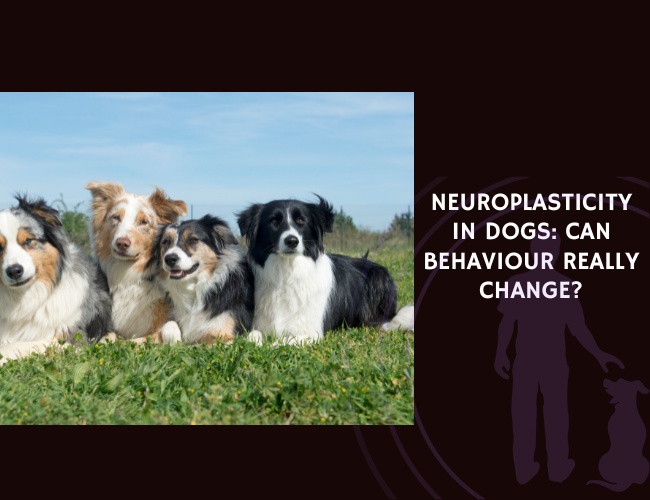
Introduction
If you’ve ever wondered whether your dog’s fearful reaction to thunder, their obsession with squirrels, or their sudden burst of confidence after weeks of gentle training is “real” change or just a temporary pause button — you’re asking one of the most fascinating questions in modern canine science. 🧠
For decades, many trainers and owners assumed behaviour was mostly fixed: a nervous dog stays nervous, a reactive dog stays reactive, and training simply teaches dogs to suppress what’s already there. But did you know? Modern neuroscience tells a very different story. Your dog’s brain is not a static machine running on factory settings — it’s a living, adapting structure that reorganises itself in response to experience, emotion, and environment, throughout every stage of life.
This is neuroplasticity: the brain’s ability to physically change its own wiring based on what it experiences. And understanding it doesn’t just satisfy curiosity — it reshapes how we think about training, healing, and the quiet, everyday moments you share with your dog. Let us guide you through what the science actually shows: what can change, what resists change, and why the relationship you build with your dog might be the single biggest factor in how far that change can go. This is a long, detailed look — because your dog’s brain deserves more than a quick summary. 🐾
1. The Mechanisms Behind a Brain That Rebuilds Itself
Every time your dog learns something — a new cue, a new fear, a new joy — their brain is physically changing. This isn’t a metaphor. It’s measurable biology, happening at the level of individual cells and the connections between them.
Synaptic Plasticity and Long-Term Potentiation (LTP)
Learning permanently changes the strength and structure of the connections between nerve cells. When a stimulus is repeatedly associated with an action or consequence — the word “sit” followed by a treat, for example — a stable trace begins to form in the brain. This process, known as long-term potentiation, is the neurobiological foundation of durable behavioural change.
Here’s the key mechanism: frequently activated neural connections get stronger through repeated pairing of stimuli with meaningful outcomes. This is not your dog “faking it” or temporarily complying. It involves measurable shifts in synaptic efficacy that persist over time — a genuine rewiring, not a performance.
Neurogenesis and Neural Circuit Expansion
Beyond simply strengthening existing pathways, the canine brain can generate entirely new neurons — particularly in the hippocampus, the region responsible for spatial memory and emotional processing. This malleability extends to building brand-new neural pathways that support behaviours your dog has never performed before. In other words, your dog isn’t limited to refining what’s already there — their brain can construct new capacity from scratch.
Myelination and Processing Speed
Experience-dependent myelination — the process of insulating neural pathways — increases the speed and efficiency with which neurons communicate. Dogs who engage in repeated, meaningful activities develop faster processing in the specific circuits supporting those behaviours. This is part of why a well-practised behaviour eventually feels effortless: the underlying wiring has become quicker and more automatic, not just more familiar.
The Neural Circuits That Show the Greatest Plasticity
Three brain regions do most of the heavy lifting in adaptive change:
- The dopaminergic reward system (especially the nucleus accumbens), which fires not just when a reward arrives, but the moment your dog expects one. This prediction-based mechanism drives continuous neural updating and strengthens the associations between context, behaviour, and reward into durable motivational structures.
- The limbic system — the amygdala, hippocampus, and hypothalamus working together. The amygdala assesses stimuli emotionally, the hippocampus handles spatial and emotional memory, and the hypothalamus bridges the nervous system and the hormonal system. This trio explains why fear, joy, or frustration have such a massive influence on learning.
- The prefrontal cortex, which — while less developed in dogs than in humans — still supports inhibitory control over limbic impulses, integration of context with emotion, and flexible adaptation of behaviour across situations.
The Physiological Conditions That Make or Break Plasticity
None of the above happens in a vacuum. Two conditions largely determine whether your dog’s brain is actually able to change in a given moment:
- Calm over chronic stress. Chronic stress leads to continuous cortisol release, which causes reduced memory performance through hippocampal damage, increased fear responses as the amygdala becomes more sensitive, and decreased problem-solving ability overall. Elevated cortisol actively impairs the brain’s capacity for adaptive change, no matter how good the training technique is.
- Emotional safety and oxytocin. Oxytocin is released during positive interactions between human and dog, and even simple eye contact raises oxytocin levels in both of you. Oxytocin reduces amygdala reactivity to threat, enhances hippocampal function for memory consolidation, and promotes social learning and relational attachment.
Through the NeuroBond approach, this is exactly why trust becomes the true foundation of learning — not compliance, but felt safety. 🧡
It’s worth pausing on why this matters so much in daily life. A dog who is mildly stressed during a training session isn’t simply “less focused” — their entire neurochemical environment has shifted in a way that makes durable learning harder to achieve. Cortisol and oxytocin behave almost like opposing forces: one narrows the brain toward threat-scanning and short-term survival, the other opens it toward curiosity, connection, and flexible problem-solving. Every walk, every training rep, every quiet evening on the couch is quietly tipping that balance one way or the other. You might notice that your dog learns fastest not on the days you push hardest, but on the days they feel most at ease with you.
2. Critical Periods vs Lifelong Learning: Is There a Window That Closes?
Here’s a question every dog owner in doubt should hear an honest answer to: does behaviour change get harder — or even impossible — after a certain age? The evidence says: harder, yes. Impossible, no.
The Sensitive Period (3–14 Weeks)
During this narrow developmental window, a puppy’s brain is extraordinarily receptive to stimuli. Experiences missed during this stage are genuinely hard to compensate for later. This period is marked by:
- Exponential synaptogenesis — the rapid creation of new synapses
- Heightened responsiveness to environmental input
- Rapid consolidation of social, environmental, and threat-related learning
- Formation of foundational emotional templates that a dog will carry for life
The critical implication here is nuanced: early deprivation during this window creates lasting constraints on behavioural flexibility, but it does not render change impossible in adulthood. It raises the difficulty level — it doesn’t close the door.
Puppy Cognition and Developmental Trajectories
Researchers have created structured cognitive test batteries for puppies as young as eight to ten weeks old, evaluating early problem-solving, memory, and social cognition. These studies reveal:
- Measurable differences in cognitive capacity emerge remarkably early
- Environmental enrichment during development produces advantages that last well into adulthood
- A mother dog’s early caregiving style appears to shape her puppies’ later cognitive trajectories
None of this means a dog’s future is decided before you ever meet them — it means early experience acts like a foundation, making some kinds of later growth easier and some requiring a little more scaffolding.
Adult Dog Neuroplasticity: Slower, But Very Real
Despite reduced plasticity compared to puppyhood, the adult canine brain remains genuinely malleable. Adult dogs demonstrate:
- The capacity to acquire entirely new behaviours and skills
- The ability to overcome established fear responses through systematic desensitisation
- The potential to develop new problem-solving strategies
- Real flexibility in adapting to environmental change
The critical distinction to hold onto: plasticity in adult dogs requires more repetition, stronger emotional salience, and longer consolidation periods than in puppies — but it remains biologically possible. An older dog isn’t a closed book. They’re simply a book that reads a little more slowly.
Cognitive Ageing and Neuroplasticity
Canine cognitive dysfunction (CCD) is a recognised neurodegenerative condition in ageing dogs, and research shows a positive association between age and CCD, even after controlling for breed type and other health factors. Dogs with a history of neurological, eye, or ear disorders show higher odds of developing CCD. But ageing doesn’t eliminate plasticity outright — and this is the encouraging part. An inverse relationship has been observed between a dog’s activity level and their risk of cognitive decline: dogs whose owners report higher activity levels over the past year show measurably better cognitive outcomes.
The likely mechanism draws on findings from both animal and human research: exercise appears to reduce pro-inflammatory processes in the brain that otherwise contribute to neural damage, while simultaneously increasing neural plasticity itself. In other words, an active 10-year-old dog is not just physically fitter — their brain is more adaptable, too. 🐾
3. Learning, Memory & Behavioural Change: What Actually Sticks?
Not all learning is created equal, and understanding the difference helps explain why some behaviours seem to vanish overnight while others seem carved permanently into stone.
Classical Conditioning: Unconscious, Rapid, Emotionally Encoded
As Pavlov first described: a neutral stimulus (a sound, a word, a location) becomes paired with a significant event until the stimulus alone triggers the response. This happens unconsciously, emotionally, and often very quickly — for example, when a dog develops fear of a particular sound, or excitement at the sight of a leash.
Classical conditioning creates particularly durable neural traces for three reasons:
- It operates at the limbic level, bypassing conscious control entirely
- Emotional significance drives especially rapid consolidation
- The resulting association becomes automatic and resistant to extinction
The critical implication is one worth sitting with — fear responses, anxiety, and excitement conditioned through classical mechanisms represent genuine neural reorganisation, not mere behavioural suppression. Your dog isn’t choosing to be afraid of the vacuum cleaner. Their limbic system encoded that fear the same way it encodes anything emotionally significant.
Operant Conditioning: Conscious, Flexible, Motivation-Dependent
Operant learning works through consequences:
- Positive reinforcement — adding something good makes a behaviour more frequent
- Negative reinforcement — removing something unpleasant relieves pressure and increases the behaviour
- Positive punishment — adding something unpleasant tends to reduce a behaviour’s frequency
- Negative punishment — removing something pleasant also tends to reduce frequency
Operant conditioning produces more flexible, context-dependent behavioural change than classical conditioning — but this flexibility has a cost: it may produce more superficial change, particularly when the dog isn’t emotionally invested in the outcome, the reward isn’t intrinsically meaningful, or the behaviour hasn’t been practised across varied contexts.
The Role of Prediction Error in Neural Updating
Learning is driven by prediction error — the gap between what your dog expected and what actually happened. Dopamine fires when your dog expects something positive is about to happen, not only when the reward is delivered. Larger prediction errors produce stronger neural updating, while repeated, entirely predictable outcomes produce weaker updating — a form of habituation.
The practical implication is genuinely useful for everyday training: durable behavioural change requires enough novelty and unpredictability to keep prediction error — and therefore neural updating — alive. Variety isn’t just for keeping things fun. It’s neurologically necessary.
Memory Consolidation and Sleep
Learning isn’t instantaneous. Breaks allow for neural consolidation — the brain continues processing learned material during rest, long after the training session has ended. Continuous training without adequate consolidation periods tends to produce diminishing returns, no matter how motivated the dog seems in the moment.
Which Learning Paradigms Produce Persistent Change?
Three factors reliably distinguish learning that lasts from learning that fades:
- Emotionally salient learning. Learning paired with strong emotional significance — joy, excitement, pride, or equally, fear and frustration — produces more durable neural traces than neutral, emotionally flat repetition.
- Contextually varied practice. Short sessions of three to five minutes, immediate rewards, and practice across multiple contexts, timings, and settings all support durable retention.
- Meaningful, self-directed learning. Dogs show greater neuroplasticity when they actively problem-solve, when the behaviour serves a genuinely meaningful function, and when the learning is intrinsically motivated rather than externally coerced.
4. Trauma, Recovery & Neural Reorganisation
Can a dog who has experienced real trauma genuinely heal — not just learn to mask distress, but rewire the underlying fear response at a neural level? The evidence says yes, though the path is neither quick nor simple.
Trauma-Induced Neural Changes
Traumatic experiences produce measurable shifts in brain function:
- Increased fear responses, as the amygdala becomes more sensitive
- Impaired hippocampal function, disrupting contextual memory and spatial awareness
- Reduced prefrontal inhibition of limbic reactivity
- Altered stress hormone regulation through HPA-axis dysregulation
These are not behavioural habits that can simply be “trained away” — they represent genuine neural reorganisation in the direction of threat sensitivity. A traumatised dog’s brain has, in a very real sense, rebuilt itself around the expectation of danger.
Recovery Through Systematic Desensitisation and Reconsolidation
Recovery from trauma depends on several converging factors working together, not any single technique in isolation:
- Repeated, safe exposure to trauma-related cues in contexts where the predicted threat does not occur — creating the prediction error needed to update the amygdala’s threat assessment
- Emotional safety and oxytocin-mediated social support, reducing amygdala reactivity during the vulnerable process of exposure
- Sufficient time for memory reconsolidation — the window in which a reactivated memory briefly becomes flexible before being re-stored
- Physiological regulation throughout, to prevent re-traumatisation during recovery
Recovery from trauma is possible, but it requires sustained, carefully structured intervention — not brief training sessions or a single breakthrough walk. This is where the Invisible Leash becomes such a fitting idea — awareness, not tension, is what actually guides a frightened dog back toward safety. Pressure rarely resolves fear; regulated presence does. And the moments when an old fear finally, visibly loosens its grip are often what we’d call Soul Recall — memory and emotion realigning into something calmer, right in front of you. 🧡
Chronic Stress and Reduced Plasticity
Chronic stress creates a genuinely vicious cycle:
- Chronic stress impairs the brain’s capacity for adaptive learning
- Reduced learning capacity allows maladaptive behaviours to persist
- Maladaptive behaviours generate further stress
- Neuroplasticity becomes increasingly constrained with each turn of the loop
The practical takeaway is significant — trauma recovery requires stress reduction as a foundational intervention, not merely more exposure-based training layered on top of an already dysregulated nervous system.
Interventions That Support Neural Recovery
- Environmental modification — removing trauma-related triggers, creating predictable routines, offering control and choice, providing meaningful activity
- Relational support — secure attachment to a consistent caregiver, predictable and attuned responses, shared positive experiences that rebuild trust
- Physiological support — sleep quality, physical activity, and nutritional support such as omega-3 fatty acids and antioxidants
5. Emotional Regulation and the Brain’s Capacity to Adapt
Emotional state isn’t just a backdrop to learning — it’s a direct switch controlling how much plasticity is actually available to your dog in any given moment.
Amygdala-Dependent Threat Processing
When a dog is in a state of fear or anxiety, several things happen at once:
- The amygdala becomes hyperactive and hypersensitive
- Threat detection becomes biased so that false alarms increase
- The prefrontal cortex loses much of its inhibitory control
- Learning becomes threat-focused rather than flexible or exploratory
A dog scanning for danger simply doesn’t have the same neural resources available for calm, open-ended learning as a dog who feels safe.
Dopamine and Motivation
Emotional states directly modulate how much dopamine is available for learning. Positive emotional states enhance dopamine release and expand learning capacity, while anxiety and fear suppress dopamine, reducing both motivation and the brain’s willingness to try something new. This is precisely why a calm, emotionally attuned approach isn’t a “nice to have” layered on top of training — it’s a genuine biological prerequisite for durable change.
6. Environmental Enrichment: Building a Brain That Wants to Adapt
A dog’s environment is not just a backdrop for behaviour — it actively shapes brain structure over time, sometimes in ways that are surprisingly measurable.
What Genuinely Produces Cognitive Change?
Meaningful enrichment strategies include:
- Cooperative problem-solving tasks
- Play and varied social interaction
- Relational engagement that supports oxytocin release
- Safe exposure to novel environments
It’s not simply “more stimulation is better” — it’s stimulation that engages the dog’s own agency and curiosity.
Case Study: What Shelter Research Tells Us
One of the clearest real-world demonstrations of environmental enrichment comes from shelter research, and it’s worth looking at closely because the findings are so concrete:
- Social stimulation led dogs to spend more time at the front of their enclosure, more time standing, and slightly more time vocalising — all signs of increased engagement rather than withdrawal
- Moving a dog’s bed toward the front of the kennel encouraged them to spend more time in that position, though it didn’t meaningfully change activity or vocalisation on its own
- Suspending a toy at the front of the pen had little direct effect on behaviour, though its presence may have shifted how visitors perceived the dog’s desirability for adoption
- Adoption rates themselves increased whenever kennels were fitted with a bed near the front, whenever dogs received more regular human contact, and whenever a toy was visible in the enclosure
This case study matters beyond the shelter environment. It shows that environmental enrichment produces measurable changes in behaviour and activity, improved social presentation that influences how a dog is perceived by others, and very likely, underlying shifts in emotional state and neural function that we can only partially observe from the outside.
Meaningful Work vs Repetitive Obedience
Structured cognitive training programmes — including those used to develop service dogs — demonstrate that systematic cognitive work produces measurable improvements in problem-solving, and that meaningful work produces greater neural engagement than obedience training alone. Dogs show greater neuroplasticity when engaged in:
- Problem-solving with real-world consequences — service tasks, scent work, search and rescue
- Self-directed exploration and play rather than repetitive command-response cycles
- Meaningful roles that provide genuine purpose and autonomy
- Varied, contextually relevant challenges rather than repetitive drills
This suggests that traditional obedience training, while certainly producing behavioural compliance, may generate less durable neuroplastic change than enrichment-based, problem-solving approaches that ask more of the dog’s mind. 🐾
Changing. Learning. Adapting.
Brains Rewire Experience Every meaningful interaction strengthens or creates neural pathways allowing your dog’s brain to physically reorganise through repeated emotionally relevant experiences.
Practice Builds Circuits Learning reinforces synaptic connections generates new neural capacity and improves processing efficiency making behaviours increasingly stable and automatic over time.


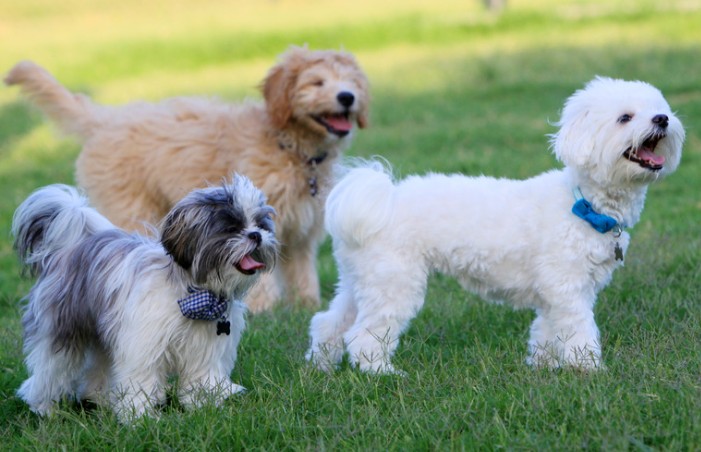
Relationships Shape Change Through consistent guidance emotional safety and NeuroBond aligned experiences neuroplasticity transforms potential into lasting behavioural resilience and confident adaptation. 🐾
7. Nutrition, Sleep & Physiological Support: The Body Behind the Brain
It’s easy to think of behaviour change as purely psychological, but the physical body sets the ceiling for what the brain can realistically achieve.
Omega-3 Fatty Acids and Neural Membrane Integrity
Omega-3 polyunsaturated fatty acids, particularly DHA and EPA, are essential for:
- Synaptic membrane fluidity and plasticity
- Myelin formation and neural insulation
- Reduction of neuroinflammation
- Support for healthy dopamine and serotonin function
Without adequate omega-3 intake, the physical substrate that plasticity depends on is simply less able to do its job.
Antioxidants and Neuroprotection
Oxidative stress impairs neuroplasticity by damaging synaptic structures, reducing mitochondrial function, promoting neuroinflammation, and impairing memory consolidation. Antioxidants — vitamins E and C, along with polyphenols — help protect neural tissue and preserve the brain’s adaptive capacity against this ongoing wear.
Amino Acids and Neurotransmitter Synthesis
Adequate protein and specific amino acids support dopamine synthesis via tyrosine, serotonin synthesis via tryptophan, GABA synthesis via glutamate, and the production of neurotrophic factors like BDNF that support the growth and survival of neurons themselves.
🧠 Neuroplasticity in Dogs: Can Behaviour Really Change? 🐾
A science-based journey through how your dog’s brain learns, heals, and adapts — from puppyhood to the senior years
Phase 1: The Brain That Rebuilds Itself
Every cue your dog learns physically reshapes their brain. This isn’t suppression or “faking it” — it’s measurable, durable rewiring at the level of individual synapses.
• Long-Term Potentiation (LTP) strengthens frequently activated connections
• Neurogenesis builds brand-new neural pathways in the hippocampus
• Myelination speeds up the circuits your dog uses most
• Excitement building before the reward arrives, not just after
• Faster, more automatic responses to well-practised cues
• A visibly calmer dog learning faster than a stressed one
• Keep sessions short (3–5 minutes) with immediate rewards
• Prioritise a calm environment over a “perfect” technique
• Build genuine eye-contact moments — oxytocin does real neurological work
Phase 2: Critical Periods vs Lifelong Learning
Puppyhood matters enormously — but it isn’t the only chapter your dog’s brain gets to write.
• The sensitive period (3–14 weeks) shows exponential synaptogenesis
• Adult dogs retain genuine plasticity — just with slower consolidation
• Active senior dogs show measurably better cognitive outcomes
• Adult dogs need more repetition and stronger emotional relevance than puppies
• Older patterns take longer to shift than fresh ones
• “Too late” is rarely biologically accurate
Missed socialisation during the sensitive period creates real constraints on flexibility later — but it does not make change impossible. It raises the difficulty level, not a permanent ceiling.
Phase 3: Learning & Memory — What Actually Sticks
Not all learning is equal. Some traces fade within days; others become nearly permanent.
• Classical conditioning bypasses conscious control — fear isn’t a choice
• Operant conditioning is flexible but can be more superficial
• Dopamine fires on expectation, driving continuous neural updating
• Practise across varied locations, not just one familiar room
• Reward immediately to maximise dopamine timing
• Let your dog problem-solve rather than only follow commands
Phase 4: Trauma, Recovery & Neural Reorganisation
Trauma leaves real fingerprints on the brain — and real recovery is possible when the process is safe and unhurried.
• Trauma increases amygdala reactivity and impairs hippocampal function
• Recovery depends on memory reconsolidation — a temporary window of flexibility
• Oxytocin-mediated safety is essential throughout
• Safe, repeated exposure where the feared outcome doesn’t occur
• Predictable routines and genuine choice within the environment
• Consistent, calm caregiving over time
Reconsolidation windows are fragile. Pushing too fast can undo progress and risks re-traumatisation — patience is not a soft option here, it’s the actual mechanism.
Phase 5: Emotional Regulation & Brain Adaptation
A dog scanning for danger and a dog feeling safe do not have access to the same learning capacity.
• Fear makes the amygdala hyperactive and biases threat detection
• The prefrontal cortex loses inhibitory control under stress
• Anxiety suppresses dopamine, reducing motivation to learn
• A regulated dog learns faster than a “well-trained but tense” one
• Emotional calm is a prerequisite, not a bonus feature of training
Phase 6: Environmental Enrichment
A dog’s environment isn’t a backdrop — it actively shapes brain structure over time.
• Social stimulation increased engagement and front-of-kennel time
• A visible bed and toy measurably improved adoption rates
• Real environmental change, real measurable behavioural shift
• Scent work, problem-solving, and service-style tasks build deeper neural engagement than obedience drills alone
• Self-directed exploration and play matter more than we often assume
Phase 7: Nutrition, Sleep & Physiological Support
Behaviour change isn’t purely psychological — it’s built on a physical foundation.
• Omega-3s (DHA/EPA) support synaptic membrane plasticity
• Sleep drives memory consolidation and synaptic pruning
• Chronic inflammation reduces BDNF and impairs neural growth
• Prioritise a nutritionally complete, antioxidant-rich diet
• Protect rest periods between training sessions — the brain works while resting
• Manage weight and inflammation as brain-health issues, not just body issues
Phase 8: Ageing & Cognitive Reserve
Ageing changes the pace of plasticity — it doesn’t switch it off.
• Activity level is inversely associated with cognitive decline risk
• Exercise reduces neuroinflammation and increases plasticity
• Cognitive reserve is built through a lifetime of engagement
• Moderate daily movement to maintain blood flow
• New puzzles and problem-solving, not just familiar routines
• Continued social engagement to sustain oxytocin and dopamine function
📊 How Long Does Real Change Take?
Timeline: New associations can form within days. Foundational emotional templates are still being laid down — this window matters enormously.
Timeline: Typically several weeks of consistent practice before a new association becomes reliable across contexts.
Timeline: Often several months of structured, consistent work, with gradual rather than linear progress.
Timeline: Often the longest path — many months to over a year, with plateaus that are a normal part of reconsolidation, not failure.
Safety + Repetition + Emotional Relevance + Time = Lasting Change
• Sessions: 3–5 minutes, reward immediately
• Vary context, timing, and location
• Regulate the nervous system before you train the behaviour
• A stressed brain cannot fully learn — calm always comes first
Real change begins with trust — through the NeuroBond approach, safety becomes the foundation that lets a dog’s nervous system actually open to learning. When fear or reactivity is in the picture, the Invisible Leash reminds us that awareness, not tension, guides the way back to calm. And in the quiet moments when an old pattern finally loosens its grip, that’s Soul Recall — memory and emotion realigning right in front of you. Your dog’s brain was built to adapt. Our work is simply to make that adaptation safe.
© Zoeta Dogsoul – Where neuroscience meets soul in dog training
Sleep Quality and Memory Consolidation
Sleep supports neuroplasticity through several parallel mechanisms:
- Memory consolidation — converting short-term learning into durable long-term memory
- Synaptic pruning — eliminating weak connections while strengthening important ones
- Glymphatic clearance — removing metabolic waste and protein build-up
- Emotional processing — integrating emotional experiences into adaptive memory rather than leaving them raw and unresolved
Dogs deprived of adequate sleep show impaired learning and memory consolidation, reduced emotional regulation, increased anxiety and reactivity, and diminished neuroplasticity overall. A tired dog isn’t just cranky — their brain is genuinely less equipped to learn or heal.
Chronic Inflammation and Neural Constraint
Chronic inflammation impairs neuroplasticity through several mechanisms:
- Microglial activation — excessive pruning of synapses and neuronal damage
- Cytokine elevation — reduced BDNF production and synaptic plasticity
- Oxidative stress — drained mitochondrial energy
- Blood-brain barrier disruption — increased neuroinflammation
Conditions that promote chronic inflammation — poor diet, obesity, chronic stress, untreated infections — quietly reduce the brain’s adaptive capacity, often long before any obvious symptoms appear.
8. Ageing & Cognitive Reserve: Change Doesn’t Retire
Neuroplasticity in Healthy vs Cognitively Impaired Ageing
Canine cognitive dysfunction is a recognised neurodegenerative condition in ageing dogs, and research shows a genuine positive association between age and CCD, even after adjusting for breed, activity level, and other characteristics. But ageing alone does not determine cognitive decline — lifestyle factors, particularly activity level, significantly influence a dog’s cognitive trajectory.
Cognitive Reserve and Lifelong Enrichment
Lifelong cognitive and physical activity builds what’s known as cognitive reserve — the brain’s capacity to maintain function despite age-related changes. The likely mechanism draws support from both rodent and human research, where exercise reduces pro-inflammatory cytokines that would otherwise contribute to neural damage, while genuinely increasing neural plasticity.
Motor Learning and Youth Neuroplasticity
Interestingly, this same principle — that early, structured, movement-based learning shapes long-term neural resilience — appears in research on young, physically developing dogs as well. Motor learning theory suggests that leveraging a young dog’s naturally heightened neuroplasticity through targeted, varied movement work can support:
- Better coordination and body awareness carried into adulthood
- Greater resistance to certain physical injuries later in life
- Stronger foundational motor pathways that later skill-building can draw on
This reinforces a theme running through the entire study: plasticity windows aren’t just about behaviour in the abstract — they apply to physical, motor, and cognitive development together, and early, well-structured movement experience pays dividends for years.
Interventions That Remain Effective in Senior Dogs
Despite reduced plasticity in ageing, meaningful interventions remain genuinely effective:
- Physical activity — moderate movement maintains neural blood flow and oxygenation, reduces inflammatory markers, and supports plasticity in the motor cortex
- Cognitive stimulation — learning new behaviours, problem-solving, puzzle engagement, social learning, and meaningful work all remain accessible to senior dogs
- Nutritional and physiological support — antioxidant-rich diets, adequate sleep, ongoing social engagement, and stress reduction round out what a senior dog’s brain still needs
A senior dog is not a finished project. Their brain is older, yes — but it is still listening, still adapting, still capable of forming new pathways when given the right conditions. 😄
9. Social Relationships: The Relationship Is the Mechanism
Perhaps the most underappreciated driver of neuroplasticity isn’t a training technique at all — it’s the quality of the relationship between dog and human.
Oxytocin-Mediated Safety
Your dog’s brain actively processes your tone of voice, facial expressions, and body language, and a close bond activates reward centres in the brain. Oxytocin, released during positive interaction, reduces amygdala reactivity to threat, enhances hippocampal function for memory consolidation, promotes social learning, and supports activation of the calming, parasympathetic nervous system.
Predictable, Attuned Caregiving
Dogs learn more effectively when their caregiver:
- Responds consistently and predictably to their signals
- Adjusts communication based on the dog’s emotional state in the moment
- Provides clear and calm leadership rather than reactive management
- Celebrates effort and progress rather than focusing solely on outcomes
Relational Safety as a Foundation for Risk-Taking
Secure attachment enables dogs to:
- Explore novel environments with genuine confidence
- Attempt challenging tasks without excessive fear of failure
- Recover quickly from setbacks rather than shutting down
- Maintain engagement even when a task becomes difficult
In many ways, security isn’t the opposite of growth — it’s the precondition for it.
Attachment Quality and Persistence of Behavioural Change
Dogs trained by caregivers with whom they share a secure attachment show:
- Greater motivation and engagement
- Faster learning and memory consolidation
- More flexible and context-appropriate behaviour
- Greater persistence in problem-solving and better emotional regulation overall
Dogs trained by unfamiliar or aversive handlers, by contrast, tend to show reduced learning efficiency, compliance that changes depending on who’s holding the leash, and ultimately reduced neuroplasticity. This is the emotional groundwork beneath every mechanism described in this article — and it’s the essence of what NeuroBond was built to describe: trust as the actual infrastructure of learning, not a pleasant bonus feature layered on top of it.
10. The Limits of Behavioural Transformation
For all its power, neuroplasticity is not limitless — and being honest about this matters just as much as celebrating what’s possible.
Which Behaviours Are Most Amenable to Change?
The table below summarises the difference between behaviours that respond well to training and those that are more biologically constrained:
| Highly Plastic Behaviours | Biologically Constrained Behaviours |
|---|---|
| Learned associations (classical conditioning) — updatable through new pairings and extinction | Predatory sequences — can be redirected, not eliminated |
| Operant behaviours — modifiable as consequences change | Territorial defence — can be modulated, not erased |
| Problem-solving strategies — refined through experience | Mating-related behaviours — hormonally driven; addressed medically, not through training alone |
| Social behaviours — adapted through relational learning | Breed-specific drives — redirected into outlets, not switched off |
| Emotional responses to novel stimuli — shaped through exposure | Core temperament traits — softened, not fundamentally transformed |
Genetic Canalisation vs Environmental Modifiability
Not all dogs learn at the same pace, and breed differences, early experience, and even epigenetic influences shape neural development before a puppy ever arrives in your home. Research suggests:
- Cognitive abilities show moderate heritability, in the region of 40–60%
- Temperament traits show moderate to high heritability, around 50–70%
- Specific individual behaviours tend to show lower heritability, closer to 20–40%
This means environmental factors significantly modulate how genetic tendencies actually express themselves in daily life.
Epigenetics and Prenatal Influence
One layer worth understanding on its own: epigenetics doesn’t change a dog’s underlying DNA, but it does change how genes are expressed — effectively turning certain genetic “volume dials” up or down in response to environment. Prenatal stress in the mother dog is one of the clearest examples of this in canine development. It can influence:
- The developing puppy’s baseline stress reactivity before birth
- How readily the HPA axis (the body’s central stress-response system) becomes activated later in life
- A puppy’s general threshold for calm versus vigilance as an adult
This is exactly why even genetically influenced traits remain open to modulation through early environmental enrichment, secure attachment, stress reduction, and meaningful engagement throughout life. The critical principle to take from all of this: genetics sets the range of possible outcomes, while environment determines where within that range your particular dog actually develops.
Realistic Biological Limits of Behavioural Rehabilitation
Dogs with long histories of maladaptive behaviour face a genuine practical constraint. They typically have:
- Strongly consolidated neural pathways supporting that behaviour
- Reduced plasticity in the circuits that would support alternative responses
- Habitual activation patterns that are genuinely difficult to interrupt
- Emotional associations that resist extinction more stubbornly than a fresh, recently formed pattern would
This doesn’t mean change is out of reach — it means change with an older, more deeply established pattern typically requires more patience, more consistency, and considerably more time than working with a new behaviour in a young dog.
Dogs and Humans: A Brief, Careful Comparison
It’s tempting to draw a straight line between canine and human neuroplasticity, and there is genuine overlap — but the comparison deserves some care rather than a sweeping claim. What the two species share:
- Both rely on the same fundamental mechanisms — synaptic strengthening, prediction-error-driven learning, and emotionally weighted memory
- Both show heightened plasticity in early development and a slower, but real, capacity for change in adulthood
- Both are measurably affected by chronic stress, sleep quality, and social bonding in similar directional ways
Where the comparison should stop short is in assuming the two brains are interchangeable. Dogs and humans differ meaningfully in prefrontal cortex development, language-based reasoning, and the relative weight placed on social versus solitary learning. The honest takeaway isn’t “dogs learn just like we do” — it’s that the underlying biological principles of adaptability are shared across mammals, even where the specifics diverge.
Putting the Science into Practice
Understanding the mechanism is one thing — knowing what to actually do with it is another. Here’s how these principles translate into everyday situations.
Leash Reactivity
Leash reactivity is often a classically conditioned response layered with operant habit, which is exactly why yelling “no” rarely resolves it on its own. A more neuroscience-aligned approach looks like:
- Working below the dog’s reactivity threshold, so the amygdala never fully hijacks the moment
- Pairing the sight of a trigger with something genuinely positive, building a new prediction rather than fighting the old one
- Practising in varied locations and distances, not just one familiar street
- Prioritising a calm, attuned handler presence over corrections — this is the Invisible Leash principle in its most literal form: awareness and regulation guiding the dog, rather than tension on the line
Separation Anxiety
Separation anxiety usually involves a genuinely dysregulated stress response, not simple disobedience. Supportive approaches include:
- Building departures gradually, in increments too small to trigger a stress spike
- Creating predictable pre-departure routines so the nervous system stops treating them as alarm signals
- Supporting the dog’s baseline regulation through exercise, sleep, and enrichment on non-training days
- Avoiding punishment for anxiety-driven behaviour, since punishment adds stress hormones to a system that’s already overloaded
Fearful or Rescue Dogs
Dogs with unknown histories or documented trauma benefit from a slower, relationship-first approach:
- Prioritising predictability and routine over rapid behavioural results
- Letting the dog have genuine choice and control wherever possible, rather than forcing exposure
- Building trust through consistent, calm presence before introducing any structured training
- Expecting a longer timeline than a typical, non-traumatised dog would need, and treating that as normal rather than a sign something is wrong
Quick Reference: Is Your Dog Ready to Learn?
Recognising your dog’s nervous system state in the moment is one of the most useful skills you can build. Signs your dog is regulated and genuinely ready to learn:
- Soft, loose body posture with weight evenly distributed
- Relaxed mouth, possibly slightly open, without tension around the eyes
- Steady, even breathing
- Willingness to take treats gently and engage voluntarily
- Quick recovery after a startle or distraction
Signs your dog is stressed or over threshold, and unlikely to retain new learning:
- Stiff, frozen, or crouched posture
- Tightly closed mouth, furrowed brow, whale-eye (visible whites of the eyes)
- Panting unrelated to heat or exercise, or held breath
- Refusing treats they’d normally take eagerly
- Fixating on a trigger and struggling to redirect attention
Realistic Timelines for Behavioural Change
One of the most common frustrations owners describe is expecting change to happen faster than biology allows. As a general guide:
- Puppies (under 14 weeks): New associations can form within days, though foundational temperament patterns are still being laid down
- Adolescent and adult dogs with fresh behaviours: Typically several weeks of consistent practice for a new association to become reliable across contexts
- Adult dogs with long-established patterns (fears, reactivity, compulsions): Often several months of consistent, structured work before durable change is visible, with gradual rather than linear progress
- Trauma recovery: Frequently the longest timeline of all, sometimes spanning many months to over a year, with periods of apparent plateau that are a normal part of reconsolidation, not a sign of failure
Myth vs Fact
Myth: “You can’t teach an old dog new tricks.” Fact: Adult and senior dogs retain genuine neuroplasticity throughout life. Learning simply requires more repetition, stronger emotional relevance, and longer consolidation time than it does in a puppy — it isn’t off the table.
Myth: “A fearful or reactive dog is just being stubborn or dominant.” Fact: Fear and reactivity conditioned through classical mechanisms are genuine neural reorganisation at the limbic level. They aren’t a choice, and they don’t respond well to being treated like one.
Myth: “If training isn’t working, you just need to correct harder.” Fact: Chronic stress and elevated cortisol actively impair the brain’s capacity for adaptive change. Escalating pressure on a dysregulated dog often reduces plasticity rather than increasing compliance.
Myth: “Once a dog is traumatised, that’s just who they are now.” Fact: Trauma creates real neural changes, but systematic, safe, well-paced recovery work can genuinely update those patterns through reconsolidation. It takes longer than ordinary training, but it isn’t permanent by default.
A Short Glossary
- Amygdala — the brain region responsible for emotional threat assessment; becomes more reactive under chronic stress or trauma
- Hippocampus — the region handling spatial and emotional memory; vulnerable to damage from prolonged cortisol exposure
- Cortisol — the primary stress hormone; chronically elevated levels impair memory, increase fear reactivity, and reduce plasticity
- Oxytocin — the bonding hormone released during positive social interaction; reduces threat reactivity and supports learning
- BDNF (brain-derived neurotrophic factor) — a protein supporting the growth and survival of neurons; reduced by chronic inflammation
- LTP (long-term potentiation) — the strengthening of synaptic connections through repeated activation; the cellular basis of durable learning
Quick Takeaways
- Neuroplasticity in dogs is real, measurable, and active throughout the entire lifespan — not just during puppyhood
- Emotional safety and low stress are biological prerequisites for learning, not optional extras
- Classical conditioning (fear, excitement) creates deeper, more automatic traces than operant conditioning
- Trauma recovery is possible but requires patience, safety, and time for memory reconsolidation
- Genetics sets the range of possible outcomes; environment decides where inside that range a dog actually lands
- Some behaviours — predatory drive, breed-specific instincts, core temperament — can be managed but not erased
- The relationship between dog and handler is one of the strongest predictors of how well learning sticks
Conclusion: So, Can Behaviour Really Change?
Yes — genuinely, measurably, and at a biological level. Your dog’s brain is not fixed at eight weeks old, nor is it sealed shut by adulthood, nor slowed to a stop by age. Synapses strengthen, new neural pathways form, and emotional circuits reorganise in response to safety, meaning, and repetition — for the entire span of a dog’s life.
But real change has conditions. It asks for emotional safety over pressure, patience over speed, and consistency over intensity. It asks for a body that’s rested, nourished, and free from chronic stress. It asks for realistic expectations about what’s deeply biological versus what’s genuinely learned. And more than any single technique, it asks for a relationship your dog can trust enough to let their nervous system finally soften.
That balance between hard science and lived, relational trust — that’s the essence of Zoeta Dogsoul. 🐾
If you’re wondering whether it’s too late for your dog, or whether a particular fear or habit is truly permanent, the honest answer is almost always: probably not, but it depends on how you build the path there. And that path always starts the same way — with a calm nervous system, a safe relationship, and enough time for the brain to do what it was built to do: adapt.
If you’re navigating a specific challenge with your own dog — reactivity, anxiety, or recovery from a difficult past — this is exactly the kind of work Zoeta Dogsoul was built around. Reach out, and let’s map out what your dog’s path forward could realistically look like.
Further Reading
This article draws on a broader internal research review covering canine neuroplasticity, developmental neuroscience, trauma recovery, and behavioural genetics. For related reading, explore:
- NeuroBond — the emotional alignment model behind trust-based training
- The Invisible Leash — the neuro-semantic model of calm, awareness-based guidance
- Soul Recall — on emotional memory and intuitive behavioural response










