
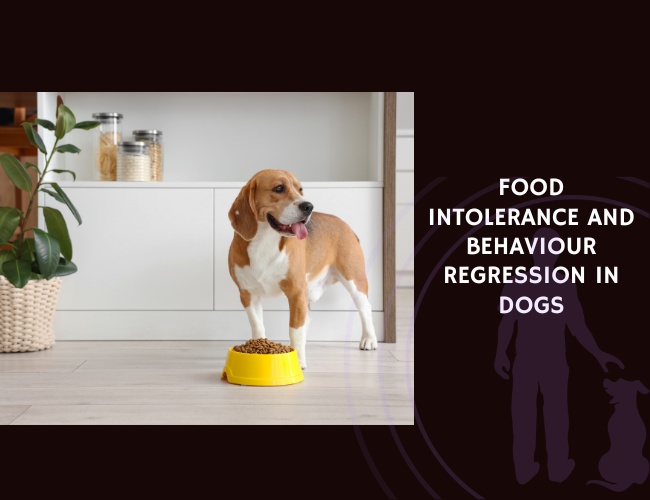
When the Problem Is in the Bowl, Not the Training
Introduction: The Behaviour That Doesn’t Make Sense
One day your dog recalls perfectly. The next, they act as though they’ve never heard the word “come” in their life. One week they’re relaxed, socially engaged, and easy to read — and the next, they’re reactive, withdrawn, and resistant to everything you’ve worked so hard to build together.
If this inconsistency sounds familiar, you might have blamed yourself, your training approach, or the environment. But there is a third possibility that far too few dog owners — and even some professionals — ever consider: what your dog is eating.
Food intolerance is one of the most underdiagnosed and widely misunderstood causes of behavioural regression in dogs. It doesn’t announce itself with dramatic, obvious symptoms. It works slowly, silently, and cumulatively — producing changes in mood, cognition, reactivity, and social behaviour that closely mimic training failures, emotional instability, or even trauma responses. And because those behavioural patterns look so familiar, the true cause remains hidden for months, or years.
Before we go further, there is something important to acknowledge. If you’ve been told by a trainer or a veterinarian that your dog’s regression is “just a training issue,” or that some dogs are “simply reactive,” or that you need to work harder on consistency — and nothing has changed — you are not alone. A significant number of dogs presenting with persistent, treatment-resistant behavioural difficulties are carrying an unidentified physiological load that no training programme can fully resolve. This guide is for you. It takes the problem seriously, and so do we.
In this guide, we’ll walk you through the science behind the gut–brain connection in dogs, explain how food intolerances create chronic physiological stress from the inside out, and offer a practical framework for identifying whether diet is the hidden driver behind your dog’s behavioural changes. Let us guide you through the evidence — and toward a clearer path forward.
Part One: Understanding the Problem
Food Intolerance vs Food Allergy — A Distinction That Changes Everything
Before we explore how diet affects behaviour, it’s important to understand what food intolerance actually is — and what it is not. These two terms are frequently used interchangeably, but they describe fundamentally different conditions with very different consequences for your dog’s day-to-day experience.
What Sets Them Apart
A food allergy is an immune-mediated reaction — typically involving IgE antibodies — that produces rapid and often dramatic responses: hives, swelling, vomiting, or even anaphylaxis. The temporal link between the food consumed and the reaction is usually clear, which makes identification considerably more straightforward.
Food intolerance, by contrast, is a broader category of adverse food reactions that does not involve the classical immune pathway. The mechanisms are more varied, and the symptoms are far more subtle. The most common mechanisms include:
- Enzyme deficiency: For example, the low lactase activity in adult dogs makes lactose difficult or impossible to digest
- Pharmacological reactions to naturally occurring compounds like histamine, tyramine, and salicylates
- Fermentation of undigested carbohydrates in the hindgut, producing gas, bloating, altered gut pH, and chronic discomfort
- Reactions to food additives including artificial colours, preservatives, flavour enhancers, and antioxidants
- Opioid peptide release from proteins like bovine milk casein, which can directly affect central nervous system chemistry
What makes food intolerance particularly difficult to detect is its temporal relationship to symptoms. Unlike allergies, intolerances frequently produce delayed reactions — sometimes appearing hours or even days after exposure. That delay makes the link between a specific food and a behavioural consequence nearly invisible. 🧠
Quick Reference — Three Presentations Compared
Not every difficult behaviour comes from the same source. This table gives you a rapid orientation across the three most commonly confused presentations, so you know where to start looking.
| Characteristic | Food Allergy | Food Intolerance | Training-Origin Issue |
|---|---|---|---|
| Onset | Rapid — minutes to hours | Delayed — hours to days | Gradual or event-triggered |
| Mechanism | IgE-mediated immune response | Enzyme, pharmacological, fermentation | Learning history, environment, socialisation |
| Physical symptoms | Obvious — hives, vomiting, swelling | Subtle or absent | None |
| Behaviour pattern | Consistent and severe | Episodic and inconsistent | Consistent and predictable |
| Response to training | Normal between episodes | Poor across all contexts | Improves with correct approach |
| Diagnosis | Blood test or skin test | Elimination diet — gold standard | Behavioural assessment |
| First intervention | Veterinary emergency or referral | Food diary then elimination diet | Behaviour consultation |
If your dog’s behaviour is episodic and inconsistent, and shows little improvement despite sustained, quality training input, food intolerance belongs on your investigation list before any other assumption is finalised. 🐾
Why Adult Dogs Are Especially Vulnerable
The activity of lactase in the small intestine of adult dogs is considerably lower than in young puppies. Sucrase levels are low throughout a dog’s life. When lactose or sucrose escapes digestion, it is fermented in the large intestine — producing gas, osmotic fluid shifts, altered gut pH, and persistent discomfort. In dogs fed high-starch commercial diets, this fermentation load can be chronically and significantly elevated.
Protein intolerance presents an equally important dimension. Beef, dairy, chicken, and wheat gluten are among the most frequently implicated proteins in adverse canine food reactions. Of particular note is the opioid peptide beta-casomorphin-7 (BCM-7), derived from bovine milk casein. Research has shown that this compound can lower levels of the antioxidant glutathione in neural tissue, alter the methyl donor S-adenosylmethionine (SAM), and directly disrupt brain chemistry in sensitive individuals. The food bowl is closer to the brain than most people realise.
The Threshold Effect — Why You Can’t Always Connect the Dots
One of the most clinically significant features of food intolerance — and one of the primary reasons it goes unidentified for so long — is what researchers call the threshold effect.
Your dog’s body can often tolerate a small amount of an offending substance with no visible response. But with repeated or combined exposure, the body reaches a cumulative tipping point beyond which symptoms emerge. This single concept explains some of the most frustrating patterns you may have observed:
- Behaviour appears normal on some days and deteriorated on others, with no apparent environmental cause
- Training responses are inconsistent — your dog recalls reliably one morning and seems entirely unreachable by Thursday
- The dietary connection remains obscured, because the reaction arrives long after the meal that triggered it
- Gradual deterioration looks like progressive training failure, when the cumulative physiological load is quietly building beneath the surface
Did you know that even foods considered healthy can contain naturally occurring compounds — salicylates, amines, and glutamate — that trigger responses in sensitive individuals? A dog’s reaction is never about the food being inherently bad. It’s about their individual physiological compatibility with specific compounds, and the total load those compounds place on the system.
The most commonly implicated dietary triggers in dogs include:
Proteins:
- Beef — the most frequently reported canine food allergen
- Dairy products — combining lactose intolerance with casein-derived opioid peptides
- Chicken
- Wheat gluten
- Soy
Carbohydrates:
- Lactose and sucrose
- Resistant starches
- Corn
Additives:
- Artificial colours including tartrazine and FD&C dyes
- Preservatives such as sulfites and benzoates
- Flavour enhancers including monosodium glutamate
- Antioxidants BHA and BHT
Natural Compounds:
- Salicylates, found in many fruits, vegetables, herbs, and spices
- Biogenic amines including histamine and tyramine
- Free glutamate
Reading the Label — How to Spot Hidden Triggers in Commercial Dog Food
Here is where many well-intentioned owners get misled. You switch to a food labelled “hypoallergenic,” “sensitive stomach,” or “limited ingredient” — and the behaviour doesn’t improve. In many cases, the reason is simple: the label doesn’t tell the full story.
Understanding how to read an ingredient panel is one of the most practical skills you can develop as a dog owner investigating food intolerance. Here’s what to look for and what to watch out for:
Ingredient order matters. Ingredients are listed by weight before cooking. Chicken” appearing first sounds reassuring, but a single ingredient can be split across multiple entries — for example, “corn flour,” “corn starch,” and “corn gluten meal” may each appear separately, collectively making corn the dominant ingredient even if none of them appears first.
“Chicken flavour” is not chicken. Flavoured products typically contain only trace amounts of the named ingredient, alongside artificial flavour compounds. If your dog is reactive to chicken, “chicken flavour” kibble or treats remain a potential trigger.
Hydrolyzed protein is not automatically safe. Hydrolyzed proteins are broken into smaller fragments to reduce immunological recognition — but they do not eliminate all reactivity in every dog, and the base protein still matters. Always check what protein was hydrolyzed.
Watch for hidden dairy and wheat. These appear under many names: whey, casein, and milk powder are all dairy. Wheat can appear as wheat starch, wheat middlings, wheat bran, or gluten.
“Natural flavours” is an umbrella term that can include animal derivatives, plant extracts, or flavour enhancers that fall under intolerance triggers. If your dog reacts to an otherwise clean-looking ingredient list, natural flavours are worth questioning with the manufacturer.
Common additives to identify and remove during investigation:
- BHA, BHT, and ethoxyquin — synthetic antioxidants with documented neurological effects
- Propylene glycol — a humectant used in semi-moist foods
- Carrageenan — a seaweed derivative used as a thickener, associated with intestinal inflammation
- Sodium nitrite — a preservative common in processed meat-based treats
- Tartrazine (Yellow 5) and other FD&C dyes — particularly implicated in pharmacological behavioural reactions
The rule of thumb during an active investigation is this: if you cannot verify every ingredient and its source, it does not belong in your dog’s bowl. Simplicity is your most reliable diagnostic tool. 🧠
Who Is Most at Risk — Breed Predispositions and Life Stage
Food intolerance does not affect all dogs equally. Certain breeds carry measurably higher predisposition to gastrointestinal sensitivity and adverse food reactions — and recognising whether your dog falls into one of these groups can be a powerful early indicator that diet deserves investigation.
Breeds With Documented Higher Sensitivity
German Shepherds are among the most commonly affected breeds, with a well-documented predisposition to exocrine pancreatic insufficiency (EPI), inflammatory bowel disease, and food sensitivities. Their gastrointestinal anatomy and enzyme production make them particularly susceptible to carbohydrate fermentation and protein intolerance.
Labradors and Golden Retrievers show high prevalence of food sensitivities alongside their general tendency toward atopic disease. Dietary triggers in these breeds frequently manifest through skin and coat changes before behavioural signs appear, which can delay dietary investigation.
Cocker Spaniels present with a characteristic combination of gastrointestinal sensitivity and skin manifestations — recurrent ear infections, paw licking, and skin irritation are often dietary in origin. When behavioural reactivity accompanies these physical signs, food intolerance should be at the top of the differential list.
West Highland White Terriers have a well-established predisposition to atopic skin disease and food sensitivity. In this breed, the combination of skin discomfort and gut irritation frequently produces a dog that appears irritable, uncomfortable, and difficult to engage — presentations routinely misread as temperament issues.
Boxers are predisposed to inflammatory bowel disease and protein-losing enteropathy, both of which can produce significant systemic inflammation with direct consequences for mood and behaviour. Boxers presenting with reactive behaviour and digestive irregularity warrant early dietary assessment.
Irish Setters carry a documented predisposition to gluten-sensitive enteropathy — one of the few canine breeds in which a specific dietary protein incompatibility has been characterised at the intestinal level. Gluten removal in affected individuals produces measurable histological improvement and — clinically — behavioural stabilisation.
Shar Peis and Dalmatians round out the higher-risk group for different reasons. Shar Peis are prone to food sensitivity alongside their unique skin fold and systemic health challenges. Dalmatians have specific purine metabolism differences that make protein source selection particularly important for this breed.
If your dog belongs to one of these groups, and is presenting with inconsistent or regressive behaviour, dietary investigation is not a long shot. It is a logical and well-supported first step. 🐾
How Intolerance Presents Differently Across Life Stages
The signs of food intolerance shift depending on where your dog is in their developmental arc. Understanding these differences helps you avoid misattributing a physiological problem to age-related behaviour or developmental stage.
In puppies, food intolerance tends to cluster around inconsistency in engagement and developmental progress rather than visible regression. A puppy who learns slowly, fails to consolidate simple behaviours, or shows erratic social confidence may be carrying a digestive burden that is consuming the attentional and neurological resources needed for learning. Because puppies are expected to be inconsistent, this presentation is almost always missed.
In adult dogs between one and seven years, regression is the dominant signal. A dog who was reliable and is no longer reliable — in any behavioural domain — without a clear environmental explanation deserves a dietary assessment. This is the life stage at which the threshold effect tends to accumulate most visibly, particularly when diet has not changed but cumulative exposure has been building.
In senior dogs, the physiological threshold for tolerating dietary stress is already lower due to reduced organ function, reduced microbiome diversity, and declining cognitive resilience. A mild food intolerance that was manageable at five may produce significant behavioural disruption at eleven or twelve. Senior dogs who develop increased reactivity, nighttime restlessness, confusion, or social withdrawal — often attributed to cognitive dysfunction syndrome — should have dietary intolerance considered as a contributing or confounding factor before a neurological diagnosis is accepted as complete.

Part Two: The Science Behind the Behaviour
The Gut–Brain Axis — Your Dog’s Second Brain
Here is where the science becomes genuinely extraordinary. The gut–brain connection is not a metaphor. It is one of the most densely studied communication systems in modern neuroscience — and it is the central mechanistic pathway through which food intolerance translates into behavioural change.
A Multi-Channel Communication System
The gut–brain axis is not a single pathway but a complex, multi-directional communication network connecting the gastrointestinal system to the central nervous system (CNS). And crucially, most of that information flows upward — from gut to brain — not the other way around.
The primary channels of this communication include:
The Vagus Nerve: The direct neural superhighway between gut and brainstem. Approximately 80–90% of vagal fibres are afferent, meaning they carry information from the gut to the brain, not the reverse. Chronic gastrointestinal inflammation generates persistent afferent signalling along this pathway that can alter limbic system function — the region of the brain responsible for emotion, threat assessment, and motivation.
The Enteric Nervous System (ENS): Sometimes called the “second brain,” this vast network of around 500 million neurons in the gut wall operates with considerable autonomy. It regulates gut motility, secretion, and blood flow, and communicates bidirectionally with the CNS. When dietary incompatibility disrupts ENS function, the quality of gut-to-brain signalling is altered in ways that directly affect mood and behaviour.
The HPA Axis: The hypothalamic-pituitary-adrenal axis mediates the stress response and is bidirectionally connected to gut function. Chronic gastrointestinal stress activates this axis, elevating cortisol. Chronically elevated cortisol has well-documented consequences for behaviour: increased anxiety, reduced learning efficiency, impaired memory consolidation, and heightened reactivity to ordinary stimuli.
Immune Signalling: The gut houses approximately 70% of the body’s immune cells. Food intolerance-driven intestinal inflammation activates these cells, producing cytokines — including IL-6, TNF-α, and IL-1β — that enter systemic circulation and can cross the blood-brain barrier, directly influencing neuroinflammation and behaviour.
Through the NeuroBond model of physiological regulation, we understand that behavioural stability is not simply a product of training — it depends on the clarity and coherence of the signals the nervous system is receiving from within the body. When chronic digestive stress floods the gut-to-brain channel with internal noise, even well-established behavioural patterns begin to lose their footing. 🧠
The Microbiome — The Chemistry of Your Dog’s Emotional Life
The gut microbiome is now recognised as one of the most significant regulators of neurotransmitter production in the body. Gut bacteria produce serotonin precursors through the conversion of tryptophan, dopamine precursors from tyrosine, GABA through specific Lactobacillus strains, and short-chain fatty acids that influence brain function in measurable ways.
When dietary incompatibility disrupts microbiome composition — a state known as dysbiosis — the downstream effects on neurotransmitter availability are profound and direct:
- Approximately 90–95% of the body’s serotonin is produced in the gut. Dysbiosis reduces serotonin production, contributing to increased anxiety, reduced impulse control, impaired social behaviour, and disrupted sleep architecture
- Altered dopamine synthesis impairs motivation, reward processing, and the capacity for learning through positive reinforcement
- Reduced populations of GABA-producing bacterial species lower inhibitory tone and increase anxiety responses
Research on the canine fecal microbiome has confirmed that diet is a primary driver of microbiome composition in dogs. Animal studies have demonstrated that high-fat, high-sucrose diets produce gut microbiota dysbiosis, decrease brain neuropeptide Y, increase neuroinflammation, and impair working memory — consequences that reversed when bioactive foods were introduced to restore microbiome balance. Diet is not merely fuel. It is the raw material of your dog’s emotional and cognitive life.
Inflammation and the Lowered Threshold
This section contains one of the most important clinical concepts in the entire article — one that fundamentally changes how we should interpret many common behaviour problems in dogs.
The Inflammatory Cascade
When a dog consumes food they are intolerant to, a predictable physiological cascade unfolds:
- Dietary incompatibility irritates the intestinal epithelium, triggering local immune activation
- Chronic irritation disrupts tight junctions between epithelial cells, increasing intestinal permeability — sometimes described as “leaky gut”
- Bacterial products (lipopolysaccharides), food antigens, and inflammatory molecules enter systemic circulation
- Systemic immune activation elevates pro-inflammatory cytokines including IL-6, TNF-α, and IL-1β
- These mediators cross the blood-brain barrier, activating microglia — the brain’s resident immune cells
- Neuroinflammation alters neurotransmitter function, disrupts synaptic plasticity, and impairs the neural circuits underlying emotional regulation, learning, and social behaviour
What emerges from this cascade is not simply a dog with a stomach problem. What emerges is a dog with a brain problem — one that traces its origin directly back to the bowl.
A Chronically Lowered Threshold
In a physiologically stable dog, a given stimulus — another dog approaching on leash, a loud sound, a frustrating training repetition — may fall well below the threshold required to trigger a reactive or dysregulated response. In a dog experiencing chronic low-grade inflammation, that same stimulus may exceed the threshold, producing a reaction that appears disproportionate, unpredictable, or completely “out of nowhere.”
This threshold-lowering effect operates through several specific mechanisms:
- Chronic inflammation sensitises the HPA axis, making the stress response more reactive to all incoming stimuli
- It “primes” microglia, leaving the brain’s immune cells in a state of heightened reactivity to subsequent inflammatory signals
- The amygdala — the brain’s emotional threat-detection centre — becomes hypersensitive, lowering the threshold for fear and threat responses
- The prefrontal cortex (PFC), which provides top-down inhibitory control over reactive behaviour, is impaired by neuroinflammation, reducing your dog’s capacity for emotional regulation and impulse control
The result is a dog who appears emotionally volatile, unpredictable, and perhaps “difficult” — when in reality, they are physiologically overwhelmed. Their behaviour is not the problem. It is the signal. 🧡
When Food Intolerance Looks Like Trauma
This is where the clinical stakes become very high. A dog experiencing chronic food intolerance may present with exactly the same behavioural profile as a traumatised or under-socialised dog:
- Increased reactivity to environmental stimuli
- Reduced frustration tolerance and rapid escalation during training
- Withdrawal from social interaction and activities previously enjoyed
- Inconsistent responses to familiar cues and commands
- Apparent regression of trained behaviours
- Heightened vigilance, scanning, and restlessness
- Reduced play behaviour and exploratory drive
Without systematic consideration of dietary factors, these presentations are routinely misattributed to psychological causes — leading to interventions that address the wrong mechanism entirely. You might spend months rehabilitating something that fundamentally requires a dietary resolution first.
Stress Stacking — When Two Pressures Become One Crisis
Understanding food intolerance in isolation only tells part of the story. In real life, dietary load does not operate in a vacuum — it sits alongside environmental stressors, social pressures, and situational demands that each add their own contribution to your dog’s total threshold load. This is the concept of stress stacking, and it explains some of the most confusing behavioural patterns that owners and trainers encounter.
How Stressors Add Up
Imagine your dog’s threshold for reactive behaviour as a container with a fixed capacity. Every stressor — whether physiological or environmental — adds volume to that container. A dog with no dietary burden might tolerate an approaching dog on leash, a car journey, a loud environment, and an unfamiliar person in the same afternoon without exceeding threshold. The container holds comfortably.
Now imagine that same dog is carrying a chronic dietary load — operating at perhaps 60% of their threshold capacity before any environmental stressor arrives. The approaching dog fills the container to 80%. The car journey tips it to 95%. The loud environment pushes it over the edge. An explosion of behaviour follows that appears entirely disproportionate to the final trigger — and it is. The final trigger wasn’t the cause. It was the last drop in an already-full container.
This is why food intolerance-related reactivity so frequently appears “random” or “unpredictable.” The dog may tolerate any one of these stressors individually. It is the accumulated total — dietary load included — that determines whether the system holds or breaks.
What This Means in Practice
Stress stacking has direct, practical implications for how you manage and interpret your dog’s behaviour:
- A dog who reacts in busy environments but not quiet ones may not be reacting to the environment — they may be reacting to the cumulative total of dietary load plus environment
- A dog who copes well on some days and poorly on others may be reflecting the variation in their daily dietary burden, not a change in training quality or environmental complexity
- Good days” and “bad days” in reactive dogs deserve a dietary log running alongside them — the correlation between dietary exposure and threshold capacity is often visible in the data before it is visible in the behaviour
Reducing dietary burden — even partially — can meaningfully restore threshold capacity, making your dog more resilient to the environmental stressors that will always be part of their life. You may not be able to control the environment. You can control the bowl. 🧠
Hidden. Internal. Disruptive.
Food Shapes Behaviour Chronic food intolerance can alter mood focus and emotional regulation creating behavioural changes that resemble training failure anxiety or trauma related responses.
Discomfort Alters Responses Ongoing digestive irritation gut inflammation and microbiome disruption increase physiological stress lowering tolerance thresholds and amplifying reactivity.

Identify The Source When diet is addressed through careful observation elimination strategies and NeuroBond aligned support behavioural stability often returns as internal stress is reduced. 🐾
Secondary Nutritional Deficiencies — The Hidden Cost of a Struggling Gut
When the gut is chronically inflamed and its absorptive function is compromised, the consequences extend well beyond the triggers themselves. A gut wall under sustained stress becomes less efficient at extracting and transporting nutrients from food — even from a diet that looks adequate on paper. The result is a set of secondary nutritional deficiencies that each carry their own specific behavioural consequences, and that can persist even after the triggering food has been identified and removed.
Key Nutrients and Their Behavioural Roles
Zinc plays a critical role in immune regulation, skin integrity, and neurological function. Deficiency is associated with increased behavioural arousal, hyperreactivity, impaired immune function, and impaired wound healing. Dogs with chronic gut inflammation frequently show subclinical zinc deficiency — presenting not with textbook deficiency signs, but with heightened reactivity and reduced tolerance to stimulation.
Magnesium is essential for nervous system regulation, muscle function, and the modulation of the stress response. Low magnesium is directly associated with increased anxiety, elevated cortisol reactivity, and reduced capacity for calm behaviour. Given that magnesium absorption depends on healthy intestinal function, chronic gut inflammation creates a reliable pathway to magnesium insufficiency — and the behavioural instability that follows.
B Vitamins — particularly B12 and B6 — are essential for neurotransmitter synthesis. B12 is required for myelin production and nerve function, and its deficiency is linked to neurological symptoms including cognitive impairment and mood instability. B6 is a cofactor in the conversion of tryptophan to serotonin and tyrosine to dopamine. A gut that cannot absorb B vitamins efficiently is a gut that is undermining neurotransmitter production at its most fundamental level.
Omega-3 fatty acids — particularly EPA and DHA — are the primary anti-inflammatory fatty acids used by the nervous system. They support brain cell membrane integrity, reduce neuroinflammation, and support the regulation of mood and stress reactivity. A gut with elevated inflammatory tone tends to metabolise omega-3s less efficiently, compounding the neuroinflammatory burden.
Vitamin D regulates immune function, neurotransmitter synthesis, and inflammatory tone throughout the body. Deficiency is associated with increased systemic inflammation, mood instability, and immune dysregulation — all of which feed directly back into the food intolerance cycle.
The practical implication is this: addressing food intolerance is not only about removing triggers. It is also about restoring absorptive capacity and — during the recovery phase — supporting the repletion of nutrients that chronic gut stress has depleted. This is where targeted supplementation under veterinary guidance becomes genuinely valuable, not as a substitute for dietary change, but as an accelerant of recovery. 🧡
🐾 Food Intolerance & Behaviour Regression in Dogs
The hidden gut–brain connection behind your dog’s inconsistent behaviour — what the science says, and how to act on it
Phase 1 — Allergy vs Intolerance
A distinction that changes the entire investigation
🧬 What Food Intolerance Actually Is
Food intolerance is not an immune reaction. It operates through enzyme deficiencies, pharmacological responses to natural compounds, fermentation of undigested carbohydrates, reactions to additives, and opioid peptide release from proteins like bovine casein. Unlike allergy, there are no hives, no swelling, no anaphylaxis — just a slow, invisible accumulation of internal pressure.
⏱️ The Delay Problem
Reactions may appear hours or even days after the triggering food is consumed. This temporal gap makes the link between diet and behaviour almost invisible — and leads owners, trainers, and vets down the wrong diagnostic path for months, sometimes years. If the behaviour doesn’t connect to anything obvious, the bowl deserves investigation.
⚠️ The Most Common Triggers
• Proteins: Beef, dairy, chicken, wheat gluten, soy
• Carbohydrates: Lactose, sucrose, resistant starches, corn
• Additives: BHA, BHT, tartrazine, sulfites, MSG, carrageenan
• Natural compounds: Salicylates, histamine, tyramine — even in “healthy” foods
Phase 2 — The Threshold & Stress Stacking
Why the behaviour seems random — and why it isn’t
🧠 Cumulative Loading
The body tolerates small amounts of a trigger without visible response. With repeated or combined exposure, it reaches a tipping point — and behavioural deterioration appears “random” because the accumulation happened invisibly over days. The same stimulus that caused no reaction on Monday produces an explosion by Thursday, because the threshold was already at capacity.
📦 The Full Container Model
Think of your dog’s threshold as a container. Dietary burden may already fill it to 60% before the day begins. An approaching dog on leash adds 20%. A car journey adds 15%. The next stimulus overflows the container — and produces a reaction that appears disproportionate. It is not a disproportionate reaction to that trigger. It is the total load, expressed through that trigger.
✅ What This Means in Practice
Reducing dietary burden — even partially — meaningfully restores threshold capacity and makes your dog more resilient to environmental stressors. You may not be able to control every situation. You can control the bowl. “Good days” and “bad days” in reactive dogs often track dietary load directly — and the data confirms this when you track both together.
Phase 3 — The Gut–Brain Axis
Your dog’s second brain is speaking through behaviour
🔗 Four Communication Channels
• Vagus nerve: 80–90% of fibres send signals gut → brain, not the reverse
• Enteric Nervous System: ~500 million gut neurons operating independently — the “second brain”
• HPA Axis: Gut stress → elevated cortisol → anxiety, reduced learning, heightened reactivity
• Immune signalling: Gut cytokines crossing the blood-brain barrier directly, triggering neuroinflammation
🧪 The Microbiome Factor
90–95% of the body’s serotonin is produced in the gut. Microbiome dysbiosis reduces serotonin, impairs dopamine synthesis, and depletes GABA — directly altering mood, motivation, impulse control, and the capacity for learning. Positive reinforcement becomes less effective not because of a training problem, but because of a biochemical one. Diet is the raw material of your dog’s emotional life.
⚠️ Secondary Nutritional Deficiencies
A chronically inflamed gut cannot absorb nutrients efficiently. Zinc deficiency raises reactivity. Magnesium insufficiency amplifies anxiety and cortisol reactivity. B12/B6 depletion undermines neurotransmitter synthesis. Omega-3 deficiency amplifies neuroinflammation. The trigger food starts the problem — but secondary deficiencies extend it far beyond the gut.
Phase 4 — Inflammation & Mimicry
When the body looks like the problem — but isn’t
🧫 The Inflammatory Cascade
Dietary incompatibility → gut irritation → increased intestinal permeability (“leaky gut”) → systemic inflammation → neuroinflammation → altered neurotransmitter function → behavioural dysregulation. Each step reinforces the next. The amygdala becomes hypersensitive. The prefrontal cortex loses inhibitory control. What emerges is not a dog with a stomach problem — it is a dog with a brain problem that began in the bowl.
⚠️ The Mimicry Problem
Chronic food intolerance produces the exact same behavioural profile as trauma, under-socialisation, or fear: heightened vigilance, social withdrawal, reactivity at threshold, inconsistent cue responses, and reduced play drive. Without dietary investigation, interventions address the wrong mechanism entirely — and the dog does not improve despite months of quality training work.
💡 The Right Order of Operations
If the behaviour is episodic, inconsistent, and resistant to training intervention — investigate diet before intensifying any behavioural programme. If the underlying physiological state is not addressed first, even the most skilful training works against the current. Restore before you retrain. Give the body what it needs to be present before asking for more.
Phase 5 — Learning, Memory & Sleep
The cognitive cost no training plan can compensate for
🧠 What Neuroinflammation Disrupts
Neuroinflammation disrupts long-term potentiation (memory formation), impairs hippocampal function (spatial and episodic memory), and reduces prefrontal cortical capacity (working memory and rule application). State-dependent learning means a behaviour built in physiological health may be genuinely less accessible in a state of gut-driven neurological disruption. This is not failure — it is physiology.
😴 The Sleep–Behaviour Spiral
GI discomfort disrupts restorative sleep → reduced physical activity → worsened sleep quality → degraded next-day cognition → increased reactivity → reduced training capacity → back to the beginning. Each link compounds the others. Without intervention at the dietary root, the spiral accelerates — and what began as inconsistency becomes entrenched behavioural dysregulation.
✅ The Four Regression Types
• Type I — Acute Reactive: Sudden onset hours after trigger, resolves in 24–48h
• Type II — Cumulative Threshold: Gradual decline over weeks — the most commonly missed
• Type III — Chronic Systemic: Long-term disruption with secondary complications
• Type IV — Psychosocial: Compounding frustration from an unidentified problem
Phase 6 — Diagnosis & The Food Diary
What tests can and cannot tell you — and what costs nothing
❌ Testing Limitations
• IgE blood panels: Only valid for immune-mediated allergy — a negative result does not rule out intolerance
• IgG sensitivity tests: Limited clinical evidence; correlate poorly with elimination diet findings
• Hair analysis / kinesiology / bioresonance: Not evidence-based — do not guide dietary decisions from these results
• Rule: No test replaces the elimination diet for identifying food intolerance
📓 The Daily Food Diary Template
Track every day: All food consumed (meals, treats, supplements, medications + brand names) · Stool quality (1–5 scale) · Energy level (1–10) · Sleep quality (1–5) · Reactivity events (yes/no + trigger description) · Training responsiveness · Physical observations (skin, ears, gut sounds, licking). Two to four weeks of consistent data reveals accumulation patterns invisible to single-day observation.
✅ Reading Commercial Labels
“Chicken flavour” ≠ chicken. “Natural flavours” = potential trigger umbrella. “Hypoallergenic” does not mean intolerance-safe. Hydrolyzed protein still has a base protein source. Split ingredients (corn flour + corn starch + corn gluten meal) can make corn the dominant ingredient while appearing nowhere near the top of the list. Simplicity is the most reliable diagnostic tool.
Phase 7 — The Elimination Diet & Recovery
Breaking the cycle — with realistic expectations
🌿 Three Levels of Intensity
• Level 1 — Simple: Remove one food group (dairy and wheat) — for clear single-trigger cases
• Level 2 — Moderate: Novel protein + carbohydrate only; remove all current proteins, grains, additives
• Level 3 — High Intensity: All common culprits removed; legumes, fats, artificial sweeteners, all additives — for persistent, treatment-resistant presentations
💊 Supporting Gut Recovery
Probiotics (Lactobacillus acidophilus, L. rhamnosus, Bifidobacterium animalis) restore microbiome diversity and reduce intestinal inflammation. Digestive enzymes (protease, amylase, lipase) reduce fermentation load and support nutrient absorption. Both are transitional support tools — not permanent additions — working best in the early weeks of the elimination protocol.
⏳ Realistic Week-by-Week Timeline
• Weeks 1–2: Possible temporary worsening — stabilisation phase, not failure
• Weeks 2–4: Digestive symptoms begin settling; first sleep improvements
• Weeks 4–6: First meaningful behavioural improvements emerge
• Weeks 6–8: Reactivity threshold rising; sleep quality stabilising
• Weeks 8–12: Full baseline established — begin systematic challenge phase
🐕 Breed & Life Stage Risk Profiles
🐾 German Shepherd
Risk: High. Predisposed to exocrine pancreatic insufficiency, IBD, and carbohydrate fermentation. Behavioural instability often has a gut origin that precedes any visible physical symptom — making early dietary investigation especially important.
🐾 Labrador & Golden Retriever
Risk: High. Food sensitivities often manifest through skin and coat changes before behavioural signs, delaying dietary investigation. Watch for combined reactivity with atopic skin signs as a dietary signature.
🐾 Cocker Spaniel
Risk: High. Recurring ear infections and paw licking alongside behavioural reactivity are a dietary signature in this breed. Skin + behaviour together = dietary investigation first, always.
🐾 West Highland Terrier & Boxer
Risk: High. Westies: skin discomfort plus gut irritation produces a dog that appears difficult “by nature.” Boxers: IBD and protein-losing enteropathy drive systemic inflammation with direct mood and behaviour consequences.
🐣 Puppy Stage
Signal: Slow learning, erratic confidence, inconsistent engagement. Intolerance in puppies consumes the neurological resources needed for development — and is almost always missed because inconsistency is expected at this stage.
🐕🦺 Senior Stage (8+ Years)
Signal: Increased reactivity, night restlessness, social withdrawal. A mild intolerance tolerated at five may produce significant disruption at eleven. Food intolerance must be considered before a cognitive dysfunction diagnosis is accepted as final.
⚡ Quick Reference — The Core Rules
Episodic + Inconsistent + Training-resistant = investigate diet before any other assumption is finalised
Dietary load + environmental stressor = combined threshold — one problem, not two
IgE negative ≠ no food intolerance — different mechanism entirely
Behaviour before digestion = common — behavioural signs often precede visible GI symptoms
Elimination protocol minimum = 8–12 weeks of clean protocol before the challenge phase
Weeks 1–2 may worsen before they improve — stay the course, this is stabilisation
Label rule: if you cannot verify every ingredient and its source, it does not belong in the bowl during investigation
🧡 The Foundation of Every Behaviour Is a Body
The NeuroBond does not begin with a technique — it begins with physiological clarity. When the gut is inflamed, when neurotransmitters are depleted, when the threshold is chronically lowered by what your dog ate this morning, trust cannot be built on that foundation. It can only be built on a nervous system that is genuinely at ease. Before you ask for connection, create the conditions that make it possible.
The Invisible Leash between you and your dog is not a tool — it is a state of mutual regulation. It requires both partners to be physiologically present. When diet creates chronic internal noise, that presence fractures. Reducing your dog’s dietary burden is not only a nutritional decision. It is a relational one, and it changes the quality of everything that follows.
Moments of Soul Recall — that spontaneous turning toward you, that unguarded readiness — are neurological events. They require a brain that is not consumed by managing chronic internal discomfort. Restore before you retrain. Look at the bowl before you look at the training plan. The answer you’ve been searching for may have been there all along.
© Zoeta Dogsoul — Where neuroscience meets soul in dog training
Pain You Cannot See — Chronic GI Discomfort and Behaviour
Chronic pain is one of the most powerful and least recognised drivers of behavioural change in dogs. And gastrointestinal discomfort — the bloating, cramping, nausea, and inflammatory pain that food intolerance produces — is a form of internal pain that, because it is invisible and non-localised, is almost universally missed.
How GI Pain Redirects Your Dog’s Behaviour
Motivational competition: Pain competes with other motivational states for behavioural priority. A dog experiencing gut discomfort has fewer motivational resources available for social engagement, play, and training. This often manifests as apparent disinterest or stubbornness — when in reality, the dog’s attentional and regulatory capacity is occupied by managing internal discomfort.
Associative learning effects: If GI discomfort consistently follows certain activities — eating, exercise, or training sessions that occur after meals — the dog may develop negative associations with those activities through classical conditioning. This can produce avoidance behaviours and apparent regression in previously reliable responses that make no sense without the physiological context.
Stress response activation: Chronic pain keeps the stress response system engaged, elevating cortisol and maintaining sympathetic nervous system arousal. This creates a state of physiological vigilance that reduces the capacity for calm, focused behaviour and amplifies reactivity to everyday stimuli.
The Invisible Leash — the thread of awareness, attunement, and quiet energy that runs between dog and handler — can only function with clarity when both members of the partnership are physiologically present. Chronic internal pain creates interference on that line. The connection is still there, but it is distorted in ways that are felt without being understood. 🐾
Social Withdrawal, Irritability, and the Frustrated Dog
Dogs experiencing chronic gastrointestinal discomfort show specific social and behavioural changes that are frequently misread by owners and trainers alike:
- Reduced social tolerance: Less capacity for engagement with other dogs or people, gradual withdrawal from situations previously enjoyed
- Increased irritability: Minor provocations produce disproportionate responses — snapping, growling, or reactive displays that appear sudden and inexplicable
- Reduced frustration tolerance: Less persistence during training tasks, more rapid escalation to displacement behaviours or frustration-driven responses, reduced capacity to hold focus
It is essential to understand that many of these behaviours represent adaptive responses to a chronically uncomfortable internal state — not pathological behaviour in the traditional sense. Interventions that attempt to override these adaptive responses through increased training pressure, without first addressing the underlying physiological cause, are at best ineffective and at worst harmful.
Part Three: What Happens to Learning
Cognitive Performance, Memory, and the Dog Who Seems to Forget
Even if you have never observed obvious digestive symptoms in your dog, food intolerance may still be quietly eroding their capacity to learn — and to retain what they have already learned.
The Neurobiological Mechanisms
Learning and memory consolidation depend on a set of neurobiological processes that are directly vulnerable to the physiological disruption caused by food intolerance:
Synaptic plasticity: Long-term potentiation — the cellular mechanism underlying memory formation — requires healthy neurotransmitter function, particularly glutamate and GABA signalling. Neuroinflammation disrupts this process, impairing the formation of new memories and the consolidation of recently learned behaviours.
Hippocampal function: The hippocampus is the primary structure for spatial and episodic memory formation, and it is also one of the brain regions most sensitive to glucocorticoids and inflammatory cytokines. Chronic cortisol elevation and neuroinflammation impair hippocampal function — reducing the capacity for new learning and making existing memories more vulnerable to disruption.
Prefrontal cortical function: Working memory — the capacity to hold information in mind and use it to guide behaviour — depends on prefrontal cortical integrity. Neuroinflammation impairs the PFC directly, reducing a dog’s ability to apply previously learned rules flexibly in new situations.
Dopaminergic reward signalling: The motivation to learn and the reinforcement of correct responses depend on intact dopaminergic signalling in the mesolimbic system. Microbiome dysbiosis that reduces dopamine precursor availability impairs reward-based learning — making positive reinforcement less effective, not because of a training issue, but because of a biochemical one.
The “Distracted” Dog — A Physiological Explanation
Food intolerance-driven physiological disruption impairs attention and concentration through multiple converging pathways:
- Chronic pain and discomfort compete with external stimuli for attentional resources, drawing focus inward
- Elevated cortisol narrows attentional focus and increases vigilance for internal and external threat signals, reducing the capacity for sustained task engagement
- Neuroinflammation disrupts the neural circuits underlying focused attention
- Sleep disruption — which we’ll explore shortly — further depletes the attentional resources available for learning and response
The dog who appears distracted, unfocused, or “not present” during training may not be unmotivated or disinterested. They may be working with a neurological system that is genuinely under-resourced — carrying a cognitive load generated entirely from within. 🧠
When Previously Learned Behaviours Begin to Disappear
One of the most striking and diagnostically important consequences of food intolerance-related physiological disruption is the deterioration of behaviours that were previously stable and reliable. Several mechanisms contribute to this phenomenon.
Neuroinflammation and elevated cortisol impair memory retrieval, making it more difficult for the dog to access behavioural patterns that were previously well-established. There is also a phenomenon known as state-dependent learning: behaviours acquired in one physiological state may be less accessible when the dog’s internal state has changed significantly. A recall trained during a period of physiological health may genuinely be harder to retrieve during a period of gut-driven neurological disruption. This is not failure. It is physiology — and the distinction matters enormously for how you respond.
Part Four: The Regression Spiral and Sleep
Sleep, Recovery, and the Self-Reinforcing Cycle
Sleep is the foundation on which all behavioural stability rests. And food intolerance has a direct, well-documented impact on sleep quality — one that creates a self-reinforcing regression spiral that can escalate significantly without deliberate intervention.
How Diet Disrupts Sleep
When gastrointestinal discomfort occurs during the night — gas, cramping, nausea, or the restlessness that accompanies chronic systemic inflammation — sleep architecture is disrupted. The dog cannot progress through the restorative sleep cycles necessary for memory consolidation, physical recovery, and emotional regulation.
There is also a sedentary behaviour feedback loop that amplifies this process in ways that are easy to overlook. When dogs experience gastrointestinal discomfort and fatigue from food intolerances, physical activity naturally decreases. Reduced movement then independently worsens sleep quality — which in turn degrades next-day behaviour and cognitive performance, creating a cycle that compounds over time without an external interruption.
The Regression Spiral — Step by Step
Research has classified food intolerance-related behavioural regression into four recognisable patterns:
Type I — Acute Reactive Regression: Occurs within hours of consuming a trigger food. Characterised by sudden irritability, brain fog, or physical distress. Typically resolves within 24–48 hours if the trigger is removed. This is the most identifiable form.
Type II — Cumulative Threshold Regression: Develops gradually over days or weeks of repeated exposure. Often misattributed to stress, environmental factors, or training inconsistency. Requires systematic dietary tracking to identify.
Type III — Chronic Systemic Regression: Results from long-term, unmanaged food intolerance. May involve secondary complications including nutritional deficiencies, persistent sleep disorders, and metabolic dysregulation. Requires comprehensive medical and dietary intervention.
Type IV — Psychosocial Regression: Driven by the compounding effects of chronic discomfort and the frustration of a problem that hasn’t been properly identified. Requires dietary support alongside behavioural understanding and patience.
What makes this model so clinically significant is its self-reinforcing nature. Each level feeds back into the others. Without deliberate intervention, the cycle accelerates — and what begins as inconsistency in training gradually becomes a much more entrenched pattern of behavioural dysregulation. 🧡
Part Five: Recognising and Addressing the Root
What to Watch For — Signals Worth Taking Seriously
You cannot diagnose food intolerance from behaviour alone. But you can learn to recognise the patterns that suggest physiology is playing a central role in what you are observing. Systematic tracking across both physical and behavioural domains is essential.
Behavioural Signals That May Indicate a Physiological Component
- Inconsistent responses to familiar cues — reliable one day, unreachable the next
- Apparent “forgetting” of behaviours that were previously stable and well-established
- Increased reactivity to stimuli that previously fell well below threshold
- Gradual withdrawal from social engagement with people or other dogs
- Reduced play drive, exploratory behaviour, and general engagement
- Disproportionate frustration or rapid shutdown during training sessions
- Heightened vigilance, unsettled resting behaviour, or excessive night restlessness
- Episodic patterns — better days and worse days — with no clear environmental explanation
Physical Signals That Often Accompany Intolerance
- Loose stools or intermittent diarrhoea
- Increased flatulence or audible gut sounds
- Intermittent vomiting or regurgitation
- Excessive grass eating or surface licking, which are common nausea signals in dogs
- Recurring ear infections or skin irritation, which can reflect systemic inflammatory activity
- Anal gland issues
- Disrupted or restless sleep
You might notice that not all dogs will show obvious physical symptoms — and this is precisely what makes food intolerance so easy to miss. Behavioural changes may precede or occur entirely in the absence of classic gastrointestinal signs. When the body struggles, it speaks through behaviour first.
Questions Worth Asking Yourself
- Did the behavioural change coincide with a change in food, treats, supplements, or feeding routine?
- Are the episodes episodic — better on some days, worse on others — without a clear environmental explanation?
- Has consistent training intervention failed to produce the expected results over a sustained period?
- Does your dog seem flat, low in motivation, or “dull” compared to their usual baseline?
- Does the behaviour appear to worsen in the hours following a meal?
If you’re finding yourself nodding at several of these questions, diet is worth investigating seriously and systematically. 🐾
Testing Options and Their Limitations
When owners first suspect food intolerance, the instinct is often to run a test. It feels like the most direct route to an answer. It’s worth understanding what the available tests can and cannot tell you — because arriving at this process with accurate expectations will save you both time and money.
What’s Available and What It Measures
IgE blood panels measure immune-mediated allergic responses — not intolerance. If your dog’s issue is non-immune in origin, as the majority of food intolerances are, IgE testing will return normal results. A negative IgE test does not rule out food intolerance. It only rules out classical IgE-mediated allergy.
IgG food sensitivity tests — frequently marketed as comprehensive food intolerance screens — measure a different class of antibody associated with normal dietary exposure. The evidence for IgG testing as a diagnostic tool for food intolerance is limited, and its results have been shown to correlate poorly with clinical elimination diet findings. Many foods your dog tolerates perfectly will appear on an IgG panel; many actual triggers will not.
Skin patch testing has some utility in identifying contact allergens but is not a validated tool for identifying food-related behavioural or gastrointestinal symptoms.
Kinesiology, hair analysis, and bioresonance testing are not evidence-based approaches for food intolerance diagnosis. They may be appealing because they are non-invasive and produce detailed-looking results — but those results have not been validated against clinical outcomes and should not guide dietary decisions.
Why the Elimination Diet Remains Irreplaceable
The elimination diet is the gold standard not because it is convenient — it is not — but because it is the only method that directly tests your dog’s physiological response to specific foods in real time. No test can replicate the diagnostic clarity of removing a food, watching the system stabilise, and then observing whether the behaviour returns upon reintroduction. That sequence of removal, stabilisation, and challenge is the only method that reliably identifies the specific compounds your dog cannot tolerate.
Before investing in commercial sensitivity testing, consider whether that time and resource would be better directed toward a well-structured elimination diet under veterinary supervision. In most cases, the diet provides more actionable information. 🧠
The Daily Food Diary — Your Most Valuable Diagnostic Tool
Before you can run an elimination diet, you need a baseline. And the most powerful baseline tool available to you costs nothing and requires only consistent daily attention: the food diary.
A well-kept food diary over two to four weeks reveals patterns that would otherwise remain invisible — correlations between specific foods and behavioural episodes, threshold accumulations across the week, and the relationship between stool quality, sleep, and next-day reactivity. It also gives your veterinarian and behaviourist the concrete data they need to design an elimination protocol that targets the most likely culprits first.
What to Track Each Day
Use the following template as a daily log. Consistency matters more than precision — fill it in at the same time each day, ideally in the evening.
Date:
Morning meal — food name/brand, exact ingredients if homemade, quantity, time fed
Evening meal — food name/brand, exact ingredients if homemade, quantity, time fed
Extras — every treat, chew, training reward, supplement, flavoured medication, and anything else consumed that day, including the brand name
Stool quality — rate on a scale of 1 to 5, where 1 is very loose or liquid, 3 is soft but formed, and 5 is firm and well-shaped
Energy level — rate on a scale of 1 to 10 compared to the dog’s normal baseline
Sleep quality (previous night) — rate on a scale of 1 to 5, where 1 is restless and broken and 5 is deep and settled
Reactivity events — yes or no; if yes, describe the trigger, the response, and the approximate time of day
Training responsiveness — brief note on engagement, focus, and willingness during any training session
Behavioural observations — anything notable about mood, social behaviour, play drive, or unusual physical signs such as licking, scooting, or excessive grass eating
Physical observations — skin condition, ear condition, coat quality, gut sounds, any vomiting or regurgitation
How to Use the Data
After two weeks, look for patterns rather than individual data points. You are asking: on the days following a specific ingredient or a higher-starch meal, does stool quality drop and reactivity rise? Do certain treat brands correlate with worse sleep? Are behavioural scores reliably lower on days three and four of a certain food cycle? The answers to these questions will point you toward the most likely trigger categories before the elimination diet begins — making the process more targeted and more likely to succeed on the first attempt. 🐾
The Elimination Diet — Breaking the Cycle
The elimination diet is the most reliable diagnostic and therapeutic tool available for identifying food intolerances and their behavioural consequences. When properly implemented, it can reveal triggers that no blood test or symptom checklist can consistently identify.
What the Process Involves
The principle is straightforward: remove all potential trigger foods from your dog’s diet, allow the body to stabilise, and then systematically reintroduce individual ingredients to identify which ones cause reactions. In practice, this means:
- Selecting a novel protein and carbohydrate — ingredients your dog has genuinely never consumed before, such as venison and sweet potato, kangaroo and quinoa, or rabbit and pea
- Removing all current foods, treats, flavoured chews, supplements with additives, and any flavoured medications
- Maintaining the elimination diet strictly for a minimum of 8–12 weeks — this is the timeframe within which cumulative inflammatory load can meaningfully clear and the gut begins to stabilise
- Observing and documenting behaviour and physical symptoms daily — both dimensions must be tracked together for the exercise to yield useful information
The challenge phase — the systematic reintroduction of individual ingredients — is equally important and must be approached with discipline. Reintroduce one food at a time, across a 7–14 day period per ingredient. Monitor closely for the return of any physical or behavioural changes. If a reaction appears, remove that ingredient and wait for full stabilisation before testing the next. Keep detailed records throughout.
Three Levels of Intensity
The elimination diet can be approached at different levels depending on your dog’s symptom profile and the complexity of their suspected intolerances:
Level 1 — Simple Elimination: Removes a single food group or the two most common culprits — typically dairy and wheat. Appropriate when one or two specific triggers are strongly suspected.
Level 2 — Moderate Elimination: Removes several food categories simultaneously, including multiple proteins, grains, and common additives. This is the most practical starting point for dogs with complex or unclear presentations.
Level 3 — High Intensity Elimination: The most comprehensive approach, removing all common culprits including dairy, wheat, eggs, legumes, most animal fats, artificial sweeteners, and all food additives. Reserved for dogs with persistent, treatment-resistant presentations.
If you make a mistake and expose your dog to an eliminated food during the assessment phase, the protocol must restart from the beginning. The data only has meaning if the elimination has been clean.
Supporting the Healing Phase — Probiotics and Digestive Enzymes
Removing the dietary trigger is the essential first step. But for many dogs — particularly those who have been carrying a dietary burden for months or years — the gut wall and the microbiome need active support to restore their function. Two categories of supplementation are well-supported for this purpose and are worth discussing with your veterinarian.
Probiotics introduce beneficial bacterial strains that help to restore microbiome diversity and reduce intestinal inflammation. The most clinically relevant strains for dogs include Lactobacillus acidophilus, Lactobacillus rhamnosus, and Bifidobacterium animalis. These strains have demonstrated effects on gut barrier integrity, inflammatory tone, and — importantly — the gut-to-brain signalling that underlies mood and behaviour. When selecting a probiotic, look for products that specify strain identity, CFU count at expiry (not at manufacture), and appropriate storage requirements. Quality varies significantly across commercial products.
Digestive enzymes support the breakdown of proteins, carbohydrates, and fats that the compromised gut may be struggling to process adequately. Broad-spectrum enzyme blends containing protease, amylase, and lipase reduce the fermentation load in the hindgut, decrease gas and bloating, and improve the absorption of the nutrients your dog needs for neurological recovery. Enzyme supplementation is particularly valuable in the early weeks of the elimination diet, when the gut is beginning to stabilise but absorption may still be compromised.
Both probiotics and digestive enzymes work best as transitional support — not permanent additions. Once the gut has stabilised and the triggering foods have been removed, many dogs no longer require supplementation. Your veterinarian can guide appropriate dosing and duration based on your dog’s specific presentation.
What to Expect — A Realistic Recovery Timeline
One of the most common reasons elimination diets fail is unrealistic expectations about the speed of improvement. Understanding the typical recovery arc helps you stay the course when progress feels slow — and helps you interpret the changes you’re observing accurately.
Weeks 1–2: This is often the most challenging phase. Some dogs experience a temporary worsening of digestive symptoms as the gut adjusts to the new diet and the microbiome begins to shift. Behavioural improvement is unlikely at this stage and should not be expected. This is a stabilisation phase, not a resolution phase.
Weeks 2–4: Digestive symptoms typically begin to settle. Stool quality should be improving. Sleep disruption may begin to ease. Behavioural changes are still subtle at this point, but you may notice small shifts — slightly less restlessness, marginally better responsiveness during training, or the early return of play behaviour that had been absent.
Weeks 4–6: This is the phase where the first meaningful behavioural improvements typically emerge, particularly in dogs whose intolerance has not been severe or long-standing. Reactivity threshold may begin to rise. Training sessions may feel more productive. Energy levels and social engagement often begin to stabilise.
Weeks 6–8: Sleep quality and nighttime restlessness are often the clearest indicators of ongoing recovery during this phase. A dog who was restless most nights may begin sleeping through. Reactivity to previously triggering stimuli may reduce noticeably. This is a meaningful window for observing the physical–behavioural relationship clearly.
Weeks 8–12: This is the target window for completing the baseline assessment. By this point, the cumulative inflammatory load should be substantially reduced, microbiome diversity should be improving, and the dog’s neurological and behavioural baseline should be clearly stabilised. This is also the appropriate point at which to begin the challenge phase — systematic reintroduction of individual ingredients.
Beyond 12 weeks: Some dogs — particularly those with long-standing intolerance, significant microbiome disruption, or secondary nutritional deficiencies — continue improving beyond twelve weeks. Individual variation is substantial. The key marker is not time alone, but the achievement of a stable, consistent behavioural baseline that allows meaningful comparison during the challenge phase.
Moments of Soul Recall — those quiet instants when your dog turns to look at you with complete presence, full attunement, and unguarded trust — are not merely emotional experiences. They are neurological ones. They require a nervous system that is clear, regulated, and physiologically at ease. When diet is disrupting that system from the inside, that quality of connection becomes harder to reach and harder to hold. 🧡
Working Collaboratively
The elimination diet process works best as a collaborative effort involving a veterinarian experienced in nutrition, a behaviourist who understands the physiology–behaviour interface, and you as the informed and observant owner. Many behaviour professionals are not trained to screen for dietary causes. Many veterinarians do not routinely consider behaviour as a symptom of food intolerance. You may need to advocate for this approach yourself.
What matters most is that dietary investigation begins before intensifying any behavioural intervention. If the underlying physiological state is not addressed first, even the most skillful training will be working against the current.
Conclusion: Is Your Dog’s Behaviour Problem in the Bowl?
If there is one central message to carry forward from this guide, it is this: behavioural regression that is episodic, inconsistent, or resistant to conventional training intervention deserves a dietary investigation before any other assumption is accepted as final.
Food intolerance is not a rare edge case. It is a common, mechanistically grounded pathway through which dietary choices shape cognitive performance, emotional regulation, sleep quality, and overall behavioural stability — in dogs just as in humans. The evidence linking gut health to brain function and behaviour is no longer speculative. It is established science, supported by research across nutritional immunology, gut–brain axis research, microbiome science, and affective neuroscience.
What remains underutilised is the clinical habit of looking there first.
Your dog cannot tell you that their stomach hurts. They cannot explain that they feel foggy, irritable, or exhausted from the inside. What they can do is show you — in the inconsistency of their responses, the narrowing of their threshold, the withdrawal from things they once loved, and the gradual fading of skills they once had. When you see those signs, remember: the training may not be the problem. The bowl might be.
Practical Next Steps
- Start the daily food diary today — two weeks of clean data is the most valuable investment you can make before beginning any elimination process
- Read ingredient panels on every food, treat, and supplement your dog currently receives and identify the most common repeated proteins and additives
- Research whether your dog’s breed carries a documented predisposition to food sensitivity and factor that into your investigation priority
- Speak with a veterinarian experienced in canine nutrition about whether an elimination diet is appropriate for your dog’s specific profile
- Consult a behaviourist who understands the physiology–behaviour interface before designing any training intervention during a suspected intolerance period
- Be patient — gut healing and behavioural recovery take time, but they are entirely achievable when the root cause is correctly identified
You are not starting over. You are finally looking in the right direction.
That convergence of scientific rigour and genuine attentiveness to what your dog is communicating — that is the essence of Zoeta Dogsoul. 🐾










