
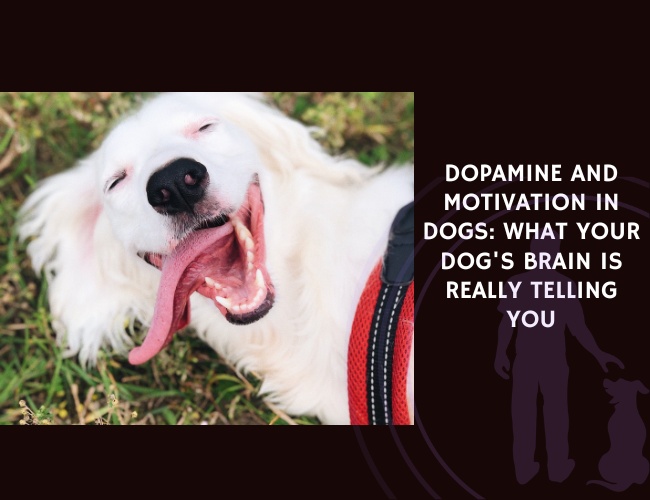
Introduction: More Than Just a “Happy Chemical”
If you’ve ever watched your dog bounce with excitement before a walk, nose-dive into a new scent trail, or work tirelessly through a training session for a single crumb of kibble — you’ve watched dopamine at work. But here is what most people don’t know: dopamine isn’t about happiness at all. It is about wanting.
That distinction changes everything about how we understand our dogs. For decades, popular science told us that dopamine is the brain’s reward chemical — the “feel good” molecule released when something pleasant happens. The truth, as modern neuroscience reveals, is far more nuanced and far more fascinating. Dopamine is the engine of motivation, the architect of learning, and the system that determines whether your dog chooses to engage with the world or quietly withdraw from it.
Understanding how your dog’s dopamine system works isn’t just intellectually interesting — it is genuinely transformative for how you live with, train, and relate to your dog. It shifts the conversation away from “is my dog stubborn?” or “does my dog want to please me?” and into a deeper, more useful question: what is actually happening inside my dog’s brain when they decide to try?
Before we go further, it helps to clear away a few common myths. Dopamine is not:
- A simple happiness signal that arrives when something good happens
- A chemical that only activates when a reward is delivered
- A single system with a single function
- Something only relevant to “high-drive” or working dogs
- A fixed trait that cannot be influenced by environment, training, or lifestyle
This guide will walk you through the full picture — the science, the life stages, the practical implications, and the patterns worth watching for. Next, we’ll explore what dopamine actually is and why the “reward chemical” story only scratches the surface.
What Dopamine Actually Does: Beyond the Reward Myth 🧠
The biggest misconception about dopamine is that it floods the brain when your dog gets a reward. Research tells a very different story — one that reframes how we think about training, engagement, and your dog’s inner life entirely.
Dopamine rises as your dog approaches a reward. It peaks during anticipation, during the search, during the chase — and then, often, it drops at the very moment the reward is delivered. This means that dopamine is not the pleasure of receiving; it is the fire of going after. Neuroscientists call this the distinction between wanting and liking, and it may be the single most important piece of knowledge any dog owner or trainer can carry into their practice.
Your dog doesn’t need to enjoy the treat as much as they need to want it. The motivation to move, to search, and to persist is dopamine’s domain — not the satisfaction that follows. This is why a dog can work through exhaustion for a reward they barely acknowledge when it finally arrives. The journey is the neurological payoff.
Dopamine’s core functions in the canine brain include:
- Encoding prediction errors — the signal that drives learning from experience
- Driving motivational intensity and the willingness to exert effort
- Regulating behavioural activation — the initiation of goal-directed action
- Supporting cost-benefit evaluation — assessing whether effort is worth the expected outcome
- Enabling learned seeking and learned avoidance through synaptic strengthening
- Modulating how stress hormones interact with reward circuits
Dopamine also plays two distinct and separable roles — one in learning, and one in motivation — that can come apart in ways that explain some of the most confusing patterns you may have seen in your own dog. Next, we’ll explore exactly how those two functions differ.
Two Systems in One: How Dopamine Splits Between Learning and Drive
Dopamine doesn’t operate as a single, uniform force. At its most fundamental level, it serves two dissociable functions — and understanding the difference helps explain why some dogs learn quickly but don’t apply what they know, and why others seem endlessly willing to try but struggle to retain new behaviours.
The broadcast burst signal handles learning. When dopamine neurons fire in bursts, they release dopamine broadly across the brain’s reward circuitry — the nucleus accumbens and striatum. These burst patterns encode what neuroscientists call prediction errors: the difference between what your dog expected and what actually happened. When reality exceeds expectation, dopamine surges. When it falls short, it drops. That signal tells the brain, clearly and immediately: remember this for next time.
The local control mechanism handles motivation. Here, dopamine release is regulated independently from the firing of dopamine cell bodies — a quieter, more targeted process that determines how much effort your dog is genuinely willing to invest in pursuing a goal. This is what gives a border collie the burning drive to work a flock for hours without external reward, and what keeps a retriever locked onto a scent trail long after a less driven dog has quit.
These two systems can come apart — and when they do, the following patterns often emerge:
- High wanting, low learning: the dog engages eagerly but doesn’t retain what they’ve been taught
- High learning, low drive: the dog knows exactly what to do but won’t initiate without significant external prompting
- Inconsistent effort: motivated in low-distraction environments, flat in real-world conditions
- Reward devaluation: previously effective reinforcers stop working without obvious explanation
- Learning plateau: rapid early progress followed by an apparent ceiling on new behaviour acquisition
Knowing which system may be underactive changes your entire approach — and opens the door to far more targeted support. 🐾
The SEEKING System: Your Dog’s Engine of Curiosity
Long before dopamine became a pop-science term, the neuroscientist Jaak Panksepp identified what he called the SEEKING system — a deep, evolutionarily ancient neural circuit that drives exploration, anticipation, and goal-directed behaviour. Dopamine is its primary fuel.
When your dog follows a scent across a field, paws at a puzzle feeder, or returns repeatedly to a spot where something interesting was last detected, that is the SEEKING system in full expression. It generates a state of energised, forward-directed curiosity — not excitement in the generic sense, but purposeful search. Critically, this state is intrinsically rewarding in itself. The looking is the reward. The engagement is the payoff.
Signs that your dog’s SEEKING system is well-activated include:
- Sustained sniffing and investigative behaviour in new environments
- Returning voluntarily to sources of previous interest
- Self-initiated problem-solving without prompting
- Persistent but calm pursuit of a scent or target
- Energised engagement that doesn’t tip into anxious or frantic behaviour
- A clear sense of directedness — the dog is going toward something, not simply moving
A dog whose SEEKING system is chronically understimulated is a dog experiencing genuine neurological deprivation. The restlessness, the destructive chewing, the obsessive barking: these are often not behaviour problems in the conventional sense. They are a deprived SEEKING system trying to point itself at anything available. Through the NeuroBond approach, purposeful engagement becomes the foundation of daily life — not just of training, but of neurological health. Next, we’ll look at why the motivation paradox may be the most misunderstood concept in canine neuroscience.
Wanting vs. Liking: The Motivation Paradox 🧡
This is where the science becomes genuinely surprising — and where many traditional training approaches quietly break down.
Dopamine is more closely associated with wanting than with liking. These are neurologically distinct states, mediated by different brain systems, and they do not always travel together. A dog can want intensely without enjoying the outcome. And a dog can enjoy something without being sufficiently motivated to pursue it. The dopamine system drives the former; opioid signalling in the brain handles the latter.
The practical distinction between wanting and liking shows up in recognisable ways:
- Your dog pulls frantically toward a treat bag, then sniffs the treat with mild disinterest once it arrives
- A dog works intensely for a ball during the chase, then drops it immediately upon catching it
- Your dog initiates play eagerly but disengages quickly once the novelty resolves
- A dog who “loves” food in general shows no motivation to work for it during training
- High arousal before a walk with low engagement once outside and moving
For training, this reframes the entire reinforcement picture. The most effective engagement with your dog’s motivation comes before the reward, in the space of effort, anticipation, and purposeful action. Variable reward timing, task completion as its own reinforcer, and genuine challenge in training produce stronger and more durable engagement than predictable treat delivery ever can. Next, we’ll look at how your dog’s brain actually encodes what it learns — and why timing is everything.
How Your Dog Learns: Prediction Errors and the Brain
Every time your dog makes an attempt at a behaviour, their brain is running a silent calculation: was the outcome better or worse than I expected?
This is the prediction error — and dopamine is the signal that carries the answer. When your dog sits on cue and receives a reward they didn’t fully expect, dopamine surges and the connection between the cue, the behaviour, and the outcome is strengthened. This is the neurological basis of learning through positive reinforcement — and it works precisely because it engages dopamine’s role as a teacher rather than simply a delivery mechanism for pleasure.
The strength of the learning signal depends on the size of the prediction error. An expected reward produces minimal dopamine and minimal new learning. An unexpected reward produces a large dopamine spike and a far stronger neural trace. This is why variable reinforcement schedules produce more persistent, deeply encoded behaviours than continuous reward schedules. The unpredictability is not a flaw in the system. It is the learning signal.
Key principles to apply from prediction error research:
- Vary your reward timing deliberately — not randomly, but strategically
- Introduce occasional “jackpot” rewards to create large, memorable prediction error signals
- Don’t reward every single repetition once a behaviour is established — it reduces the learning signal
- Allow your dog to experience mild, managed frustration — it builds prediction error and strengthens neural encoding
- Change the reward type periodically to keep anticipation and engagement alive
- Build in genuine challenge so that success remains meaningful and the prediction error remains active
Importantly, dopamine depletion removes not just pleasure but also learned seeking and learned avoidance. A dog with a hypoactive dopamine system doesn’t lose all behaviour — but they lose the ability to seek based on cues and to avoid based on experience. What remains are only unlearned reflexes. This neurological insight quietly reframes what we see in dogs described as “untrainable.” 🧠

Phasic and Tonic Dopamine: Two Speeds of Motivation
Dopamine doesn’t flow at a constant rate. It moves in two distinct temporal patterns — phasic and tonic — and each serves a fundamentally different motivational purpose.
Phasic dopamine refers to rapid, transient bursts — the sharp spikes that accompany new stimuli, reward cues, and learning signals. This is the system that lights up when your dog hears the leash being lifted off the hook, catches an unfamiliar scent on the wind, or anticipates a play session with you. Phasic dopamine drives discrete, goal-directed actions and approach behaviour.
Tonic dopamine refers to the sustained baseline of dopamine maintained across time — the constant background signal that sets your dog’s overall motivational arousal. When tonic dopamine is healthy, your dog wakes alert, engages readily, and shows appropriate persistence when tasks become challenging.
Signs of low tonic dopamine — the chronic motivational baseline:
- Slow to initiate activity in the morning or after rest
- Easily discouraged by minor setbacks or difficulty
- Low curiosity about environmental changes
- Reluctance to begin training even when the dog clearly knows what to do
- Poor persistence — disengaging from challenge after a single failed attempt
- Flat affect in contexts that previously generated engagement
The Invisible Leash principle reflects this same architecture: not a burst of control in a crisis moment, but a sustained, quiet energy that guides without tension. Healthy tonic dopamine is the neurological equivalent — a background readiness that doesn’t spike and crash but simply holds. Next, we’ll explore what happens when stress enters this picture and begins to quietly erode that foundation.
Stress, Cortisol, and the Motivation Killer
Here is something that deserves far more attention in dog training conversations: chronic stress physically suppresses your dog’s dopamine system.
Research on chronic corticosterone — the primary stress hormone in dogs — shows that sustained stress exposure increases anxiety-like behaviour, reduces food-seeking behaviour even in mildly aversive environments, and directly alters the activity of dopamine neurons in the brain’s motivational circuitry. A stressed dog is a neurologically less motivated dog. Not because they don’t want to engage with you, but because their own chemistry is working against them.
Environmental and social factors that suppress dopaminergic function include:
- Unpredictable daily schedules with no consistent rhythm
- Inconsistent handling — rules that shift without pattern
- Chronic conflict with other animals in the household
- Loud or chaotic living environments
- Lack of safe retreat space during high-stimulation periods
- Handler stress and emotional unpredictability (see the section on neurological transfer)
- Repeated exposure to situations that exceed the dog’s current coping threshold
Dogs require predictable, stable environments to maintain healthy dopaminergic regulation. Structural calm isn’t a soft training concept. It is a neurological requirement, and it comes before everything else. 🐾
High-Drive Dogs and the Shadow of Compulsion
Not all dopaminergic profiles are equal, and not all are equally uncomplicated to live with. Dogs bred for high-intensity working roles — herding breeds, hunting breeds, working retrievers, protection sports lines — often carry naturally elevated dopaminergic tone. This is a feature, not a flaw. It produces the persistence, focus, and extraordinary effort willingness that make these dogs exceptional partners in their chosen work.
But elevated dopaminergic tone also creates vulnerability. The boundary between healthy motivation and compulsive behaviour lies in three things: flexibility, inhibitory control, and outcome sensitivity.
Use this checklist to distinguish healthy motivation from early compulsive patterns:
- Flexibility: Can the dog shift focus when you ask? Or does their attention lock and resist redirection?
- Inhibitory control: Can the dog choose not to respond to a known trigger? Or does the behaviour fire automatically?
- Outcome sensitivity: Does the dog’s behaviour update when consequences change? Or does it persist regardless?
- Temporal regulation: Can the dog start and stop on request? Or does engagement escalate beyond appropriate bounds?
- Recovery: Does the dog return to baseline quickly after high arousal? Or does activation linger for hours?
- Context awareness: Does the dog’s drive adapt to the environment? Or does high drive express itself regardless of context?
A motivated dog retains all of these capacities. A dog sliding toward compulsion begins to lose them — one by one, quietly, before the pattern becomes obvious. Understanding this early is the difference between channelling and crisis. 🧠
When Dopamine Goes Wrong: Signs Worth Watching For
Dopaminergic dysregulation doesn’t always look like hyperactivity or obsessive fixation. Sometimes it looks like the opposite — a quiet withdrawal from engagement, a dog who seems reluctant to try, one who used to love training and now lies flat when you reach for the treat bag.
Research on dogs presenting ADHD-like behavioural profiles shows measurably lower concentrations of both serotonin and dopamine compared to neurologically typical dogs. A hypoactive dopamine system doesn’t necessarily produce visible distress — it produces a dog who simply doesn’t initiate.
Signs that your dog’s motivational system may need attention:
- Reduced interest in play, exploration, or training that was previously engaging
- Reluctance to exert effort on tasks they are physically capable of completing
- Strong preference for low-effort, high-reward activities with avoidance of challenge
- Loss of curiosity in new environments or with unfamiliar objects and stimuli
- Difficulty letting go of previously learned habits even when circumstances have changed
- Inconsistency between engaged behaviour at home and flat behaviour under environmental challenge
- Sudden or gradual reduction in the strength of previously reliable reinforcers
- Decreased persistence — giving up on tasks far earlier than before
Did you know that serum neurotransmitter levels in dogs can reveal subclinical dysregulation that standard behavioural observation completely misses? What looks like a personality trait — “he’s just a calm, uninterested dog” — may reflect a measurable, addressable biochemical reality. A veterinary assessment is always the right first step when motivational changes are sudden, persistent, or unexplained.
Breed Differences: Why Motivation Is Never One-Size-Fits-All
One of the most important and underappreciated truths in canine neuroscience is that different dog breeds carry genuinely different dopaminergic architectures. This isn’t a loose metaphor — it is a genetic reality shaped over generations of selective breeding.
General motivational profiles by breeding group:
- Herding breeds (Border Collie, Malinois, Kelpie): very high dopaminergic tone, extreme persistence, vulnerability to compulsive fixation if under-channelled
- Gun dog / retrieving breeds (Labrador, Golden, Spaniel): high phasic dopamine around scent and retrieve, strong social reward sensitivity
- Hunting and hound breeds (Beagle, Bloodhound, Vizsla): powerful scent-driven SEEKING activation, lower responsiveness to handler-based reward
- Working and guarding breeds (Rottweiler, GSD, Dobermann): high tonic baseline, strong executive control capacity, respond well to task completion reward
- Terrier breeds (Jack Russell, Airedale, Bull Terrier): elevated phasic reactivity, fast prediction error encoding, strong prey-circuit dopamine
- Companion breeds (Cavalier, Bichon, Maltese): social reward dominates, lower drive intensity, higher sensitivity to handler emotional state
- Sighthounds (Greyhound, Whippet, Saluki): explosive phasic dopamine around visual stimuli, low tonic engagement at rest
The dopamine D4 receptor plays a particularly interesting role in individual variation — it governs extinction learning and the ability to update old patterns when circumstances change. For trainers working with a dog who “knows better” but keeps defaulting to old responses, this genetic dimension may explain far more than training history alone. 🐾
Seeking. Driven. Engaged.
Dopamine Creates Motivation Dopamine does not generate happiness it drives anticipation exploration and the desire to pursue meaningful goals before rewards are ever received.
Wanting Powers Learning Your dog’s persistence curiosity and willingness to engage arise from dopamine driven seeking systems that shape behaviour more than the reward itself.


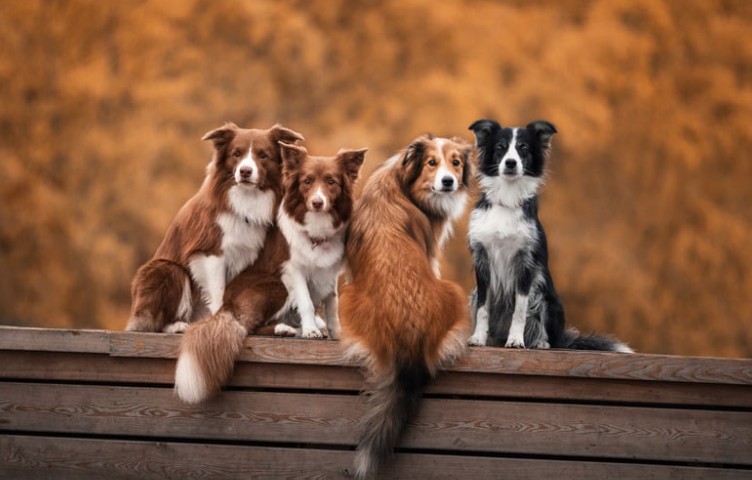
Purpose Sustains Behaviour When training builds anticipation balanced challenge and NeuroBond aligned engagement motivation becomes intrinsic creating focused resilient and enthusiastic learning. 🐾
Puppy Dopamine Development: Building the Motivational Foundation
The dopamine system is not fully formed at birth. It develops progressively through the early weeks and months of a puppy’s life — and how that development unfolds has lasting consequences for motivation, learning capacity, and emotional regulation.
In the first two to three weeks of life, the dopaminergic system is primitive and largely reflexive. As socialisation windows open — typically from three to twelve weeks — the neural architecture supporting seeking, reward prediction, and learning begins to come online rapidly. The quality of experience during this window doesn’t just shape behaviour. It shapes the neurological substrate that all future behaviour runs on.
What supports healthy dopamine development in puppies:
- Appropriate novelty exposure in graduated amounts — new textures, sounds, surfaces, and social experiences
- Consistent, warm caregiver response that builds secure early attachment
- Short, successful learning interactions that establish positive prediction error patterns early
- Play opportunities with littermates that activate SEEKING and social reward circuits simultaneously
- Exposure to mild, manageable challenge — small frustrations that build tolerance without overwhelming
- Avoidance of flooding or forced exposure that encodes fear rather than curiosity
- Predictable feeding, rest, and interaction rhythms that stabilise tonic dopamine from the start
The puppy who experiences rich, graduated novelty within a safe, consistent relational environment is building the motivational architecture they will rely on for life. The puppy who experiences either extreme — deprivation or overwhelm — may carry that neurological signature into adulthood in ways that aren’t always visible until training begins in earnest.
🧠 Dopamine & Motivation in Dogs 🐾
What your dog’s brain is really telling you — a neuroscience framework for understanding drive, learning, and behaviour across every life stage.
Phase 1: What Dopamine Really Is
Beyond the “Happy Chemical” MythDopamine is not a reward signal — it is the architecture of wanting. It rises as your dog approaches a reward, peaks during anticipation and search, then often drops the moment the reward is delivered. The journey is the neurological payoff, not the destination.
You’ve seen it in real time — your dog pulls frantically toward the treat bag, then sniffs the treat with mild interest once it arrives. The wanting was dopaminergic. The liking was not.
- • Dopamine drives seeking, anticipation, and effort
- • Pleasure and enjoyment are handled by opioid systems — a separate circuit
- • A dog can want intensely without enjoying the outcome, and enjoy without being motivated to pursue
Engage motivation before the reward — in the space of effort, anticipation, and purposeful action. Variable reward timing, genuine challenge, and task completion as its own reinforcer produce far stronger and more durable engagement than predictable treat delivery ever can.
Phase 2: The SEEKING System
Your Dog’s Engine of Curiosity & DriveNeuroscientist Jaak Panksepp identified the SEEKING system — an ancient neural circuit fuelled by dopamine that drives exploration, anticipation, and goal-directed behaviour. It generates a state of energised, forward-directed curiosity. The looking is the reward. The engagement is the payoff.
- • Sustained sniffing and investigative behaviour in new environments
- • Self-initiated problem-solving without prompting
- • Returning voluntarily to sources of previous interest
- • Energised engagement that doesn’t tip into anxious or frantic behaviour
A dog whose SEEKING system is chronically understimulated experiences genuine neurological deprivation. Destructive chewing, obsessive barking, and restlessness are not behaviour problems in the traditional sense — they are a deprived SEEKING system pointing itself at anything available.
Phase 3: How Dogs Learn
Prediction Errors, Burst Signals & the BrainDopamine serves two distinct, separable functions that can come apart — explaining why some dogs learn fast but don’t apply it, while others try endlessly but don’t retain.
- • Broadcast burst signal → handles learning via prediction error encoding
- • Local control mechanism → handles motivational drive and effort willingness
- • Vary your reward timing deliberately — unpredictability is the learning signal
- • Introduce occasional jackpot rewards to create large, memorable dopamine spikes
- • Don’t reward every repetition once a behaviour is established — it reduces the signal
- • Allow mild, managed frustration — it builds prediction error and strengthens neural encoding
- • Build in genuine challenge so success remains meaningful
Phasic dopamine fires in rapid bursts — the spike that lights up when your dog hears the leash or catches a scent. Tonic dopamine is the sustained baseline that determines your dog’s overall motivational arousal. When tonic is low, the dog wakes flat, disengages easily, and gives up early — regardless of what you offer as a reward.
Phase 4: Dopamine Across Life Stages
Puppy → Adolescent → Adult → SeniorThe dopamine system is not fully formed at birth. The 3–12 week socialisation window is a critical architectural period. Quality of experience during this phase shapes the neurological substrate that all future motivation and learning runs on.
- • Graduated novelty exposure within a safe, consistent relational environment
- • Short, successful learning interactions that establish positive prediction error patterns
- • Avoid flooding — it encodes fear rather than curiosity
During adolescence, the prefrontal cortex undergoes pruning — temporarily reducing top-down regulation of motivational circuits. The gas pedal gets heavier; the brakes get lighter. Previously solid recall, impulse control, and focus can deteriorate completely. This is neurological renovation, not regression.
- • Reduce compliance expectations — shorten sessions, increase frequency
- • Increase enrichment to channel the elevated SEEKING drive
- • Maintain structure without adding pressure — this is not the time for correction-heavy training
Dopamine synthesis slows and receptor density decreases with age. Slower cue responses, reduced food motivation, and earlier fatigue during training sessions are neurological, not attitudinal. Sudden motivational changes in seniors always warrant veterinary assessment — pain and thyroid dysfunction are common confounders.
- • Shift toward scent-based and problem-solving activities — high SEEKING activation, lower physical cost
- • Use higher-value, more varied reinforcers to compensate for reduced dopamine sensitivity
- • Maintain routine — tonic stability becomes more dependent on predictability as the system ages
Phase 5: Stress, Sleep & Recovery
The Hidden Motivation KillersSustained corticosterone (the primary stress hormone in dogs) directly alters dopamine neuron activity in motivational circuits. A stressed dog is a neurologically less motivated dog — not because they don’t want to engage with you, but because their own chemistry is working against them.
- • Unpredictable daily schedules with no consistent rhythm
- • Inconsistent handling — rules that shift without pattern
- • Chronic conflict with other animals in the household
- • Loud or chaotic living environments with no safe retreat space
- • Handler stress and emotional unpredictability
During deep sleep, the brain clears metabolic waste, consolidates prediction error learning, and restores dopamine receptor sensitivity. A chronically under-slept dog is a dog whose motivational system never fully resets.
- • Inconsistent training performance despite consistent practice → suspect sleep quality
- • Elevated reactivity or irritability compared to baseline
- • Difficulty consolidating new learning between sessions
- • Rest is not a gap between the important parts — it is where learning is filed and motivation is rebuilt
Serotonin acts as a regulatory brake on dopamine-driven motivational intensity. When serotonin is chronically low, the dopamine system loses an important moderating influence — and motivational behaviour tips toward reactivity, impulsivity, or frustration-based aggression.
- • Frustration intolerance — escalating quickly when reward is withheld
- • Impulsive behaviour — acting before the signal has resolved
- • Difficulty self-soothing after high arousal
- • Exaggerated startle responses in familiar environments
Phase 6: Handler Energy & Social Dynamics
What You Transfer Without KnowingCortisol levels in dogs mirror those of their owners over shared living periods. This is not a figure of speech — it is measurable neurochemistry. Your dog reads your attentional, postural, respiratory, and olfactory signals with extraordinary precision, and their stress-response system responds accordingly.
- • Respiratory rate — fast, shallow breathing signals threat
- • Postural tension — rigid arms and tight shoulders reads as anxious or predatory
- • Vocal tone — flat or strained voice reduces approach behaviour
- • The smell of stress — cortisol and adrenaline have detectable olfactory signatures
In households with unresolved social tension or significant drive mismatches, chronic low-grade stress can quietly erode the motivational function of individual dogs — often without any visible conflict for the owner to observe.
- • Train each dog individually in separate spaces — allow full access to their own motivational baseline
- • Ensure separate, undisturbed rest spaces where retreat is genuinely available
- • Feed separately to eliminate competition-based cortisol spikes
- • Provide individual handler time daily — one-to-one relational engagement cannot be replicated in group contexts
- • Train when you are calm and genuinely available — not distracted or emotionally charged
- • Use breath as a real-time reset: slow exhales reduce your cortisol and change your body signals
- • Build short pauses between exercises — for you as much as for your dog
- • Notice your frustration early and end the session before it reaches your dog’s perception threshold
Phase 7: Play as a Distinct Dopamine Activator
Not All Fun Activates the Same CircuitsPlay-triggered dopamine has a different neurological signature than food-reward-triggered dopamine. Play activates the SEEKING system in sustained, exploratory mode rather than producing the sharp phasic spike of food delivery. It simultaneously engages social reward circuits, novelty detection, and the motor-motivation pathway — a richer, more broadly distributed activation.
- • Chase & prey play (tug, flirt pole) → high phasic dopamine, predatory sequence completion
- • Social play (wrestling, reciprocal chase) → dopaminergic + opioid activation simultaneously
- • Object exploration (novel objects, foraging toys) → sustained SEEKING, stabilises tonic dopamine
- • Problem-solving play (puzzles, scent games) → activates prediction error — learning embedded in play
- • Handler-led interactive play (hide-and-seek, recall games) → builds dopaminergic association with handler presence
Early neglect or inconsistent caregiving doesn’t just create fearful behaviour — it alters the set points of dopaminergic regulation. The world registers as threat, not opportunity. Learning is slow because the system is dysregulated. Neuroplasticity means recovery is possible — but it requires patient, structural relational work over months, not sessions.
Phase 8: Daily Dopamine Support
Enrichment, Nutrition & Practical Protocols- • Morning → scent-based activity or free exploration on a long line
- • Midday → short problem-solving puzzle or foraging activity
- • Afternoon → physical enrichment with decision-making elements
- • Evening → calm relational time with low-demand handler contact
- • Rest → uninterrupted, quiet sleep in a consistent, familiar space
- • High-quality animal protein with complete amino acid profiles (tyrosine + phenylalanine as dopamine precursors)
- • Omega-3 fatty acids (DHA) for neuronal membrane integrity and signalling efficiency
- • Antioxidants (vitamins C & E, selenium) to protect dopamine neurons from oxidative stress
- • Probiotic and prebiotic support for the gut-brain dopamine axis
- • Adequate B6 — directly involved in dopamine synthesis pathways
A dog with healthy dopaminergic function typically shows:
- • Eager initiation of familiar activities and curiosity toward new ones
- • Willingness to exert real effort for moderate rewards
- • Behavioural flexibility — shifting between tasks without prolonged frustration
- • Appropriate persistence — trying before disengaging, without tipping into compulsion
- • Recovery from setbacks — frustration doesn’t produce prolonged shutdown
- • Voluntary engagement — seeking interaction without being prompted
🐕 Motivational Profiles by Breed Group
Different breeds carry genuinely different dopaminergic architectures — shaped by generations of selective breeding for specific roles. Understanding your dog’s likely genetic baseline changes what success looks like and which approaches are most appropriate.
Border Collie, Malinois, Kelpie. Very high dopaminergic tone. Extreme persistence and extraordinary focus. Vulnerability to compulsive fixation (shadows, light, repetitive patterns) if the SEEKING system is not channelled into meaningful work daily.
Labrador, Golden, Spaniel. High phasic dopamine around scent and retrieve. Strong social reward sensitivity — the handler relationship is a powerful reinforcer. Generally resilient motivational systems, but sensitive to handler emotional state.
Beagle, Bloodhound, Vizsla. Powerful scent-driven SEEKING activation. Lower responsiveness to handler-based reward in high-stimulation environments. Scent work and trail activities provide the most neurologically satisfying enrichment.
Rottweiler, GSD, Dobermann. High tonic baseline with strong executive control capacity. Respond well to task completion as its own reward. Require clear, consistent structure — inconsistent leadership suppresses their motivational systems more dramatically than other groups.
Jack Russell, Airedale, Bull Terrier. Elevated phasic reactivity and fast prediction error encoding. Strong prey-circuit dopamine. Quick to learn and quick to reinforce their own patterns — channel this or it channels itself.
Cavalier, Bichon, Maltese. Social reward dominates the reinforcement architecture. Lower drive intensity, higher sensitivity to handler emotional state. One-to-one relational enrichment is the most potent motivational support available.
Dopamine = Wanting, not Liking. The approach is the payoff, not the delivery.
Unpredictability = Learning. Variable reward schedules outperform fixed schedules for encoding.
Stress = Suppression. No technique overcomes neurochemistry running in the wrong direction.
Sleep = Reset. Learning consolidates during rest, not during the session itself.
Handler state = Dog state. What you carry into the interaction, your dog carries too.
Adolescence ≠ Regression. It is neurological renovation — reduce pressure, maintain structure.
Enrichment = Neurological necessity. A deprived SEEKING system finds its own outlet.
Flat dog ≠ Lazy dog. Low motivation is a signal — investigate before labelling.
The neuroscience of dopamine doesn’t just explain behaviour — it confirms what attentive, relationship-centred training has always known. Structure matters. Clarity matters. Meaningful work matters. And the bond between dog and handler carries a neurological weight that no technique can replicate.
The NeuroBond approach — built on emotional clarity and predictable leadership — aligns directly with what research reveals about how dopaminergic systems are maintained and protected. The Invisible Leash is the tonic dopamine made relational: a quiet, sustained connection that guides without tension. And Soul Recall — the moment a dog turns back not because commanded, but because they genuinely choose to return — is dopaminergic and emotional harmony expressed in a single gesture.
A life well designed for your dog — rich in purposeful seeking, stable in structure, attentive to sleep and nutrition and the quiet signals the motivational system sends — is not a luxury. It is a neurological necessity.
© Zoeta Dogsoul — Where neuroscience meets soul in dog training
The Adolescent Dopamine Surge: Why Teenage Dogs Fall Apart 🧠
If you’ve watched a previously reliable young dog suddenly seem to forget everything they knew at around six to eighteen months, you’ve witnessed the adolescent dopamine surge — one of the most neurologically significant transitions in a dog’s life, and one of the least understood by the people living through it.
During canine adolescence, the dopaminergic system undergoes substantial remodelling. Dopamine receptor densities shift, phasic dopamine responses to novelty and social stimuli increase dramatically, and the prefrontal cortex — responsible for inhibitory control and executive function — undergoes pruning that temporarily reduces top-down regulation of motivational circuits. In plain terms: the gas pedal gets heavier, and the brakes get lighter.
What this looks like in daily life:
- Recall that was solid at four months becomes unreliable or absent
- Previously disinterested dogs become highly reactive to environmental stimuli
- Impulse control behaviours deteriorate — the dog knows what to do but can’t hold it
- Reward sensitivity increases and decreases unpredictably
- Social interest in other dogs spikes, often overriding previously established handler focus
- Training sessions that worked beautifully now produce frustration and early disengagement
What helps during this period:
- Reduce expectations for sustained compliance — the hardware is genuinely reorganising
- Increase environmental enrichment to channel the elevated SEEKING drive appropriately
- Shorten training sessions and increase their frequency rather than extending duration
- Maintain structural consistency without adding training pressure — this is not the time for punishment-based correction
- Use high-value, novel reinforcers to compete with the elevated pull of environmental stimulation
- Trust the process — for most dogs, the prefrontal regulation returns and the previously trained behaviours re-emerge
The adolescent dog is not regressing on purpose. They are navigating a neurological renovation that is entirely normal — and the handler who understands this is far better positioned to support rather than fight it.
Senior Dopamine Decline: Understanding the Older Dog’s Brain
Just as the adolescent dopamine surge is rarely discussed with the depth it deserves, the gradual decline of dopaminergic function in senior dogs is even more overlooked — despite being one of the most practically significant changes in the life of a dog and their owner.
As dogs age, dopamine synthesis slows, receptor density decreases, and the efficiency of dopaminergic signalling gradually reduces. These changes don’t happen overnight, and they don’t affect all dogs equally — breed, genetics, lifetime nutritional status, and environmental history all influence the rate and pattern of decline. But the general direction is consistent.
Behavioural signs of age-related dopamine decline:
- Reduced initiation of play, exploration, or interaction that the dog previously sought actively
- Slower response to familiar cues — not disobedience, but a longer lag between signal and action
- Decreased interest in food rewards that were previously highly motivating
- Less persistence on tasks requiring sustained effort or focus
- Reduced response to novel stimuli — what once triggered curiosity now produces little reaction
- Earlier fatigue during training sessions or physical activity
- Increased sleep and reduced activity between stimulation periods
How to adapt your approach for the senior dog:
- Shorten training sessions and reduce physical demands while maintaining cognitive engagement
- Shift toward scent-based and problem-solving activities that activate the SEEKING system with lower physical cost
- Use higher-value, more varied reinforcers to compensate for reduced dopamine sensitivity
- Maintain routine — tonic dopamine stability becomes more dependent on environmental predictability as the system ages
- Support neurological health nutritionally with omega-3 fatty acids and antioxidants
- Schedule veterinary assessment for any sudden motivational change — pain and thyroid dysfunction are common confounders in senior dogs 🧡
Sleep, Recovery, and the Dopamine Reset
Here is something almost never discussed in dog training content: your dog’s dopamine system is actively regulated and restored during sleep — and sleep deprivation measurably impairs motivational function.
During deep sleep, the brain clears metabolic waste from neural tissue, consolidates learning from the day’s prediction error signals, and restores dopamine receptor sensitivity. A dog who is chronically under-slept — whether from environmental noise, social tension, inappropriate crating conditions, or simply an owner’s lifestyle — is a dog whose motivational system never fully resets.
Signs that poor sleep quality may be affecting your dog’s motivation:
- Inconsistent training performance despite consistent practice
- Elevated reactivity or irritability compared to usual baseline
- Difficulty consolidating new learning between sessions
- Increased anxiety-like behaviour without obvious environmental cause
- Flat engagement during training at times when the dog is usually most responsive
- Physical restlessness at rest times — difficulty settling fully into deep sleep
How to support healthy sleep for better dopamine regulation:
- Provide a consistent, quiet sleep location with appropriate temperature and darkness
- Ensure adequate physical and cognitive exertion during waking hours — tired dogs sleep better
- Reduce social tension in the household that may disrupt rest quality
- Maintain consistent wake and sleep rhythms — erratic schedules impair tonic dopamine stability
- Allow adequate rest between high-intensity training sessions — learning consolidates during sleep, not during the session itself
- Consider the timing of training: a well-rested dog early in the day may outperform a fatigued dog trained in the evening
Rest is not a gap between the important parts of your dog’s day. It is where learning is filed and motivation is rebuilt. 🐾
Handler Energy and Neurological Transfer
Did you know that your emotional state doesn’t just influence how you train your dog — it influences your dog’s neurochemistry directly?
Research on stress hormone transfer between humans and dogs shows that cortisol levels in dogs mirror those of their owners over shared living periods. This is not a figure of speech. Dogs read the attentional, postural, respiratory, and olfactory signals of their human handlers with extraordinary precision — and their own stress-response systems respond accordingly. A handler who is chronically anxious, emotionally unpredictable, or training from a place of frustration is creating a neurochemical environment in their dog that suppresses the very motivational circuitry they are trying to engage.
What your dog reads from you — the signals that transfer neurologically:
- Respiratory rate and depth — fast, shallow breathing signals threat
- Postural tension — tight shoulders, rigid arms, held-breath stillness reads as predatory or anxious
- Vocal tone and pitch variation — flat or strained voice reduces approach behaviour
- Handling pressure and timing — inconsistent touch creates unpredictable associative learning
- Gaze direction and duration — sustained direct eye contact increases cortisol in many dogs
- The smell of stress — cortisol and adrenaline have detectable olfactory signatures
Practical steps for managing handler energy as a training variable:
- Train when you are calm and genuinely available — not when distracted or emotionally charged
- Use breath as a real-time reset: slow exhales reduce your own cortisol and change your body signals
- Build in short pauses between exercises — for you as much as for your dog
- Practise handling without training goals periodically — low-stakes contact that builds baseline trust
- Notice your own frustration early and end the session before it reaches your dog’s perception threshold
The Invisible Leash runs in both directions. What you carry into the interaction, your dog carries too. 🧠
The Dopamine-Serotonin Balance: When the Brakes Fail
Dopamine rarely operates in isolation. In the context of motivation and impulse regulation, one of its most important relationships is with serotonin — a neurotransmitter that acts, in part, as a regulatory brake on dopamine-driven motivational intensity.
When the dopamine-serotonin balance is well-maintained, a dog can seek, pursue, and engage with full motivational drive while retaining the capacity to pause, inhibit, and self-regulate when the context requires it. When serotonin is chronically low — which can result from stress, poor nutrition, lack of social connection, or genetic predisposition — the dopamine system loses an important moderating influence, and motivational behaviour can tip toward reactivity, impulsivity, or frustration-based aggression.
Signs of a disrupted dopamine-serotonin balance:
- Reactive responses to stimuli that the dog can identify but cannot regulate
- Frustration intolerance — escalating quickly when progress is slow or reward is withheld
- Difficulty self-soothing after high arousal
- Impulsive behaviour — acting before the signal or before the full context has resolved
- Increased resource guarding or social tension, particularly in multi-dog households
- Sleep disturbance and reduced resting calm between activity periods
- Exaggerated startle responses or hyper-vigilance in familiar environments
What supports healthy serotonin alongside dopamine:
- Adequate dietary tryptophan — the amino acid precursor to serotonin — from quality protein sources
- Consistent social connection and positive relational interaction
- Natural light exposure, which influences serotonin synthesis pathways
- Predictable structure that reduces baseline anxiety and allows the serotonin system to stabilise
- Training that builds genuine competence rather than compliance under pressure — mastery supports serotonin
- Veterinary assessment when imbalance signs are persistent or severe 🐾
Play as a Distinct Dopamine Activator
Play is often treated as simply a reward — something a dog enjoys and therefore something useful to offer in training. But the neurological reality of play is considerably more interesting than that, and it matters for how we use it.
Play-triggered dopamine has a different signature than food-reward-triggered dopamine. Play activates the SEEKING system in a sustained, exploratory mode rather than producing the sharp phasic spike associated with food delivery. It also simultaneously engages social reward circuits, novelty detection systems, and the motor-motivation pathway — creating a richer, more broadly distributed neurological activation than most other reinforcement formats.
Different types of play and their primary dopamine signatures:
- Chase and prey play (flirt pole, ball, tug-and-release): high phasic dopamine, activates the predatory motor sequence through its completion, strongly satisfying for high-drive dogs
- Social play (wrestling, reciprocal chase, role-reversal): activates both dopaminergic and opioid systems simultaneously — combines wanting with genuine liking
- Object exploration play (novel objects, dissection toys, foraging): sustained SEEKING activation, lower phasic peaks, supports tonic dopamine regulation
- Problem-solving play (puzzle feeders, scent work framed as a game): activates prediction error mechanisms, strong learning signal embedded in a motivationally rewarding context
- Handler-initiated interactive play (hide-and-seek, recall games): builds association between handler presence and SEEKING activation — the most powerful relationship tool available
Using play strategically rather than simply as a reward unlocks its full neurological potential. A dog who plays with you — not just near you — is building a dopaminergic association between handler engagement and SEEKING activation that no treat can fully replicate.
Trauma and Early Adverse Experience: When the Foundation Is Disrupted
Not every dog arrives at your home with an intact motivational architecture. For dogs who experienced early neglect, inconsistent caregiving, abuse, or significant environmental deprivation during the sensitive developmental windows, the dopamine system may have been shaped by adversity in ways that create lasting patterns.
Early adverse experience doesn’t simply create fearful behaviour. It alters the set points of dopaminergic regulation — reducing baseline tonic levels, increasing sensitivity to threat signals, and changing the ratio between SEEKING activation and defensive withdrawal. A dog who spent their early weeks in a chaotic, unpredictable, or impoverished environment has a dopaminergic system that was calibrated for that environment. Bringing them into a rich, stimulating home doesn’t automatically recalibrate the system. It takes time, structure, and patient relational work.
What early adverse experience can look like in adult behaviour:
- Reduced SEEKING activation in novel environments — the world registers as threat, not opportunity
- Hypervigilance that suppresses reward-circuit engagement during training
- Difficulty forming prediction error associations — learning is slow because the system is dysregulated
- Reward devaluation under mild stress — food or toys stop working at much lower stress thresholds than in typically socialised dogs
- Oscillation between flat disengagement and excessive reactive arousal
- Strong attachment behaviour combined with difficulty trusting — wanting closeness but unable to settle into it
Can the neurological effects of early adversity be changed? The answer is carefully yes. Neuroplasticity — the brain’s capacity to reorganise in response to new experience — operates across the lifespan, though most powerfully in younger dogs. Consistent, predictable, low-pressure relational engagement over months and years can genuinely shift dopaminergic regulation toward a healthier set point. Patience, in this context, is not a soft virtue. It is a neurological strategy.
Multi-Dog Households: Social Dynamics and Dopamine Regulation
When more than one dog shares a living environment, individual dopamine regulation doesn’t exist in isolation. Social hierarchy, competition, and inter-dog dynamics create a shared neurochemical environment that can either support or suppress individual motivational health.
In well-functioning multi-dog households, social stability allows each dog to maintain healthy dopaminergic baselines. In households with unresolved tension, resource competition, or significant mismatches in drive level, the suppressive effects of chronic low-grade social stress can quietly erode motivational function in one or more dogs — often without any obvious conflict visible to the owner.
Signs that social dynamics may be affecting individual dopamine regulation:
- One dog consistently disengages from training or play when another dog is present
- A previously motivated dog begins showing flat affect primarily in multi-dog contexts
- Eating speed and food motivation shift when other dogs are nearby
- Sleep quality appears disrupted — restlessness, frequent position changes, difficulty settling
- Reactivity between dogs increases gradually without a clear trigger event
- One dog consistently defers in all resource contexts, including interaction with you
Steps to support individual motivational health in multi-dog households:
- Train each dog individually in separate spaces to allow full access to their own motivational baseline
- Ensure separate, undisturbed rest spaces for each dog where retreat is genuinely available
- Feed separately to eliminate competition-based cortisol spikes around food
- Monitor each dog’s play participation — willing, reciprocal play vs. appeasement or avoidance
- Recognise drive mismatches early — a very high-drive dog and a low-drive dog require different management approaches when sharing space
- Provide individual handler time daily — the neurological benefit of one-to-one relational engagement is significant and cannot be replicated in group contexts 🧡
Enrichment Protocols with Neurological Rationale
Not all enrichment is created equal — and not all enrichment activates the dopamine system in the same way. Understanding which activities engage which neurological mechanisms allows you to design your dog’s daily life with far more precision than a general “keep them busy” approach offers.
Scent work and olfactory enrichment is the most powerful SEEKING activator available to most dog owners. The olfactory system has direct projections into the limbic system and reward circuitry. Sustained sniffing — tracking, nosework, scatter feeding in grass — produces prolonged, stable SEEKING activation without the arousal spikes of chase-based activities. For dogs with high tonic dopamine needs, ten minutes of structured scent work may provide more genuine neurological satisfaction than an hour of ball throwing.
Scent enrichment options ranked by SEEKING activation depth:
- Scatter feeding in long grass or across varied terrain (foundational)
- Snuffle mats and foraging boxes with hidden food (intermediate)
- Handler-led track and trail games (intermediate to advanced)
- Formal nosework with defined odour targets (advanced)
- Free-range environmental exploration on a long line with minimal direction (naturally self-directed SEEKING)
Problem-solving and puzzle activities directly engage the prediction error system — making them learning tools as much as enrichment tools. The key principle is that the puzzle must be solvable but not trivial. Too easy and the prediction error signal is flat. Too difficult and frustration suppresses dopaminergic engagement. The sweet spot is a challenge the dog can solve with effort over two to five minutes.
Problem-solving enrichment options by cognitive demand:
- Licki mats and basic food puzzles (low demand, soothing tonic dopamine effect)
- Intermediate puzzle feeders with multiple steps (moderate prediction error activation)
- Hand-built foraging boxes with varied concealment (moderate to high)
- Shaping new behaviours through free-shaping sessions (high — pure prediction error training)
- Multi-step scent discrimination tasks (high — combines olfactory SEEKING with prediction error encoding)
Physical enrichment that engages dopaminergic circuits isn’t just about exercise. The form of movement matters neurologically. Activities that combine physical effort with decision-making — navigating varied terrain, swimming in natural water environments, fetch with directional variation — engage the motor-motivation pathway more fully than repetitive physical exercise alone.
Relational enrichment — time spent in calm, low-demand contact with a trusted handler — supports tonic dopamine through social reward pathways and builds the oxytocin-dopamine bridge that makes the handler a genuine source of neurological reward. This is not training. It is the relational substrate that makes training meaningful.
Daily enrichment rotation for comprehensive dopaminergic support:
- Morning: scent-based activity or free exploration on a long line
- Midday: short problem-solving puzzle or foraging activity
- Afternoon: physical enrichment with decision-making elements
- Evening: calm relational time with low-demand handler contact
- Rest: uninterrupted, quiet sleep in a consistent, familiar space
Practical Ways to Support Your Dog’s Dopamine System
Understanding the neuroscience is only valuable when it translates into something you can actually do. The encouraging news is that the dopaminergic system responds meaningfully to environmental, nutritional, and relational inputs — all of which are within your reach as a handler and companion.
Environmental enrichment is the first and most powerful lever available to you. Appropriate novelty — new routes, new textures, new objects to investigate, new problems to solve — directly engages the SEEKING system. But novelty must be embedded within a predictable, stable framework. Unpredictable chaos suppresses dopaminergic function just as reliably as chronic boredom does.
Task-based motivation over reward dependency is the second key shift. Rather than training your dog to work for treats, work toward training your dog to work toward completion — the internal satisfaction of having done the thing fully and correctly. This engages intrinsic, dopamine-driven motivation rather than creating dependency on external reinforcement that can fade or lose value.
Stress reduction as a neurological priority is the third intervention — and the most often overlooked. If your dog is experiencing chronic stress through social conflict, environmental instability, or inconsistent handling, their dopamine system is being suppressed from the inside. Structural stability is not a soft training concept. It is the neurochemical ground that everything else grows from.
Practical steps to begin supporting your dog’s motivational health today:
- Provide daily novelty within a predictable structure — new routes, new games, new challenges embedded in familiar rhythms
- Use variable reinforcement thoughtfully: reward sometimes, not always, to keep prediction error signals active and learning encoding strong
- Allow task completion to carry weight — let your dog finish things without constant interruption or redirection
- Reduce chronic environmental stressors before increasing training demands
- Build in daily self-directed exploration time — unstructured sniffing and investigating on their own terms, not yours
- Assess effort willingness periodically as a health signal: a motivated dog should be willing to work for moderate rewards on moderately challenging tasks
- Protect sleep quality as a non-negotiable part of training support
- Monitor your own emotional state as a variable in every training interaction
Nutrition, Gut Health, and the Dopamine-Food Connection
This is an emerging and genuinely fascinating area of canine neuroscience — still being actively mapped, but already offering actionable guidance for anyone thinking carefully about their dog’s long-term brain health.
Dopamine is synthesised in the body from the amino acid tyrosine, which is itself derived from dietary protein. A diet lacking in adequate protein quality or quantity may directly limit your dog’s dopamine synthesis capacity. This isn’t a dramatic clinical deficiency that announces itself. It is a quiet, chronic underperformance of the motivational system.
Nutritional supports for healthy dopaminergic function:
- High-quality animal protein with complete amino acid profiles — particularly tyrosine and phenylalanine as dopamine precursors
- Omega-3 fatty acids (DHA specifically) for neuronal membrane integrity and dopaminergic signalling efficiency
- Antioxidants — vitamins C and E, selenium — to protect dopamine neurons from oxidative stress
- Probiotic and prebiotic support for gut microbiome health and the gut-brain dopamine axis
- Adequate B vitamins, particularly B6, which is directly involved in dopamine synthesis
- Iron sufficiency — iron deficiency can impair dopamine receptor function
- Avoidance of ultra-processed ingredients that may disrupt gut microbiome diversity and neurotransmitter production
Supporting your dog’s neurochemistry through nutrition is not a fringe concept — it is part of responsible care for the system that motivation, learning, and resilience all depend on.
Is Your Dog Motivated Enough? A Practical Checklist 😄
You don’t need a laboratory or serum testing to begin assessing your dog’s motivational health. Behavioural observation, when you know precisely what to look for, is a remarkably informative tool.
A dog with healthy dopaminergic function typically shows:
- Eager initiation of familiar activities and genuine curiosity toward new ones
- Willingness to exert real physical and cognitive effort for moderate rewards
- Behavioural flexibility — able to shift between tasks, respond to changing cues, and let go of failed strategies without prolonged frustration
- Learning that transfers — behaviours acquired in one context generalise to new environments without complete breakdown
- Appropriate persistence — trying more than once before disengaging from a challenge, without tipping into frantic or compulsive repetition
- Recovery from setbacks — frustration or failure doesn’t produce prolonged shutdown or withdrawal
- Voluntary engagement — seeking out interaction and activity without being prompted
- Proportionate arousal — excitement that fits the context and returns to baseline reliably
A dog whose motivational system needs attention may show the reverse of several of these — but may equally show an excess of some rather than a deficit. Compulsive persistence, the inability to disengage from a stimulus, or escalating intensity in the absence of appropriate release are all signs of dysregulation at the other end of the spectrum. Both ends reflect a system that needs support.
Moments of Soul Recall — when a dog turns toward their handler not because they are commanded to, but because they genuinely choose to return — are among the clearest signals that the motivational system is healthy and the relational architecture is sound. That voluntary return, unprompted and unhurried, is dopaminergic and emotional harmony expressed in a single quiet gesture. 🧡
Conclusion: The Science Behind the Soul
Dopamine is not a happiness chemical. It is not a simple reward signal that arrives as a gift at the end of successful behaviour. It is the architecture of motivation itself — the system that determines whether your dog chooses to try, to seek, to learn, and to persist across a lifetime.
Understanding this changes how we see nearly every behaviour challenge. The dog who won’t engage in training is not stubborn — they may be neurologically suppressed by chronic stress, under-stimulated by a predictable environment, or carrying a motivational profile that needs a different kind of challenge than the one being offered. The high-drive dog who cannot settle is not broken — they carry elevated dopaminergic tone that has found no adequate channel. The rescue dog who seems shut down is not “just like that” — they may be working with a motivational system shaped by adversity, one that requires patient, structural support to begin reorganising toward health.
The neuroscience points consistently toward the same principles that skilled trainers and attentive companions have recognised intuitively across generations: structure matters deeply, clarity matters deeply, meaningful work matters deeply, and the relationship between dog and handler carries a weight that no technique can replicate or replace. What the science adds is the why — the precise biochemical and neurological mechanisms that explain, at the level of neurons and receptors and synaptic cascades, why these things are true.
A life well designed for your dog — rich in purposeful challenge, stable in its structure, generous in its allowance for genuine seeking, attentive to sleep and nutrition and the quiet signals that the motivational system sends — is not a luxury. It is a neurological necessity. And recognising that is the beginning of something real.
That’s the essence of Zoeta Dogsoul.










