
Barrios, Fuenzalida et al. (2019) — Diversity
The Patagonian Sheepdog: Historical Perspective on a Herding Dog in Chile
Published: August 19, 2026
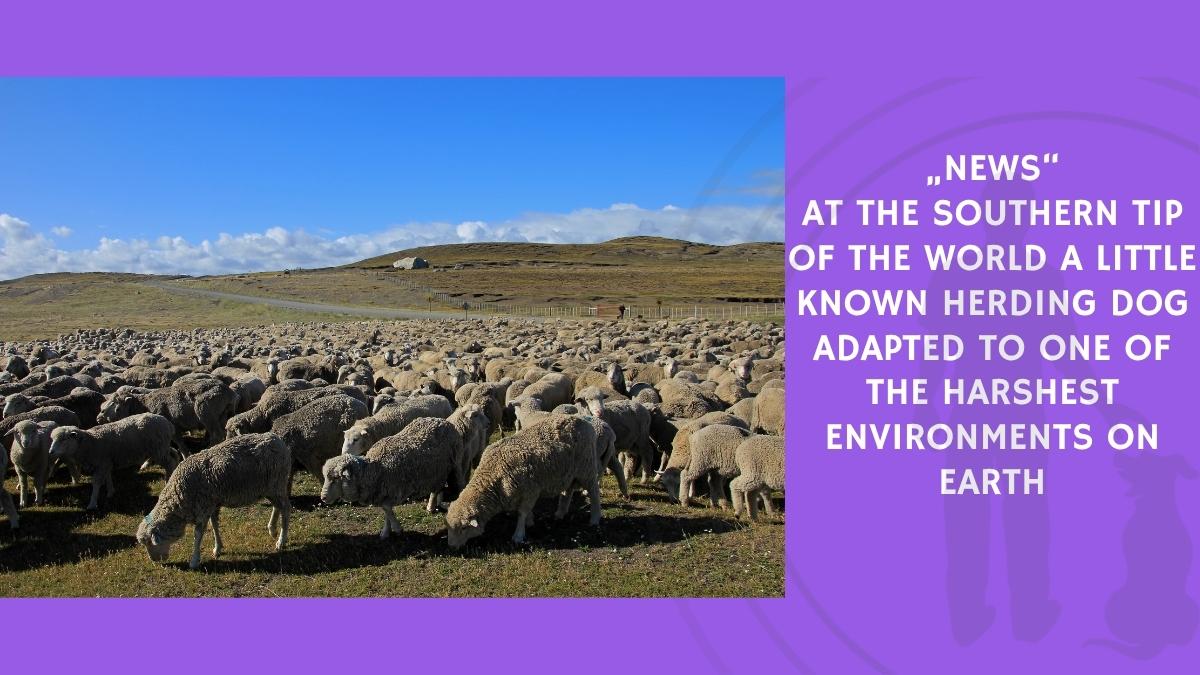
Between 43 and 56 degrees south latitude — the deep Patagonian region of southern Chile, one of the most remote and climatically demanding environments on earth — a working dog breed has been quietly developing for more than a century. The Patagonian Sheepdog is almost unknown outside its region of origin. It has no international breed recognition. And it represents one of the most compelling examples of what selective breeding by working farmers, in response to actual working conditions, produces when it operates without the interference of show ring aesthetics. 🐾
Researchers N. Barrios, Á. Fuenzalida, César González-Lagos, and their team collected historical information on the Patagonian Sheepdog — documenting the breed’s origins, morphology, behaviour, and current distribution across Chilean Patagonia. The research is explicitly framed as a conservation contribution: a dog that plays a fundamental role in the regional sheep and cattle farming economy but lacks the formal recognition and documentation that would protect its genetic heritage and working tradition.
Where This Breed Came From and How It Was Shaped
The Patagonian Sheepdog’s origins trace to the late nineteenth and early twentieth centuries — a period of significant European immigration to the Magallanes region of southern Chile, during which sheep farming was being established across the vast Patagonian steppe. The working sheepdogs that arrived with these settlers — including Old Welsh Grey and other traditional UK herding breeds — were the founding stock from which the Patagonian Sheepdog was subsequently developed by local farmers through functional selection.
The selection pressure was straightforward and uncompromising: the conditions of Chilean Patagonia. Wind, cold, vast open terrain, long working days, and sheep that need to be managed across distances and in weather that would make most purpose-bred herding dogs struggle. The farmers who worked these animals had no interest in breed standards, show records, or pedigree registrations. They had sheep to move and dogs who either performed in those conditions or did not contribute to the next generation.
What that selection produced is a dog adapted to its specific environment in ways that formal breed development rarely achieves. Medium body size — large enough to have working capacity, small enough to be agile and thermally efficient in cold conditions. Long or semi-long fur appropriate for the climate. Drooping or semi-erect ears rather than the fully erect ears that increase cold exposure. A docile character selected because aggressive or difficult-to-handle dogs create problems in close working relationships with farmers who interact with them daily across long working seasons. And a great aptitude for sheep herding — the functional trait around which everything else was secondary.
Why This Matters Beyond Regional History ⚠️
The Patagonian Sheepdog represents a type of genetic and working heritage that is disappearing across much of the world as traditional farming practices change, populations consolidate around internationally recognised breeds, and local working dog populations lose their distinctiveness through crossbreeding or abandonment. The researchers frame documentation and recognition as conservation priorities — not because the Patagonian Sheepdog is dramatically endangered, but because the genetic diversity it represents and the working knowledge embedded in its population are both assets that can be lost without deliberate effort to preserve them.
This connects to the broader conversation about canine genetic diversity that runs through multiple papers in this series. The German Shorthaired Pointer’s relatively good genetic diversity was attributed partly to functional selection that maintained diversity while optimising for working performance across varied tasks. The Doberman’s severe inbreeding reflected intensive selection that compressed the gene pool around specific traits. The Patagonian Sheepdog sits at an interesting point in this spectrum — a breed shaped entirely by functional agricultural selection in an isolated geographic context, producing adaptations that are specific, locally optimised, and irreplaceable once the population loses coherence.
The morphological documentation the study provides — body measurements, zoometric indices, coat colour and markings across the population — establishes the baseline from which future monitoring can detect genetic drift or population change. Without this baseline, there is no reference point for assessing whether the breed is maintaining its characteristic profile or diluting through unmanaged crossbreeding. Documentation is preservation in a very literal sense.
What Working Dog Diversity Reveals About Dogs and Humans 🐕
The history of the Patagonian Sheepdog is the history of the human-dog relationship in miniature: humans arriving in a new environment, bringing dogs with them, and then — through the practical demands of making a living in that environment — reshaping those dogs over generations into something specifically suited to the conditions they actually face. It is the same story as the Pacific dog dispersal research covered earlier in this series, the same story as the wolf-to-domestic-dog domestication that began the whole relationship. Dogs change when the humans they live and work with need them to be something different.
The docile character selected into the Patagonian Sheepdog is particularly worth noting. In the Kelpie personality research covered in the previous article, confidence and initiative were the strongest positive predictors of herding ability. The selection for docility in the Patagonian context does not contradict this — it reflects that in a close-quarters farming context where dogs work alongside farmers rather than ranging independently across vast paddocks, a more manageable temperament profile serves the working relationship better than maximal independence. Different working conditions select for different trait balances even within the same functional role.
At Zoeta Dogsoul, the diversity of working dog cultures and the specific adaptations they produce is part of the broader story of what dogs are and what they have become through their relationship with humans. NeuroBond is built on understanding the real animal — and the real animal is, always, the product of a specific history of selection, environment, and relationship that shaped them into who they are. In the Patagonian Sheepdog, that history stretches across a century of wind and cold and sheep, and it has produced something genuinely worth knowing about and worth preserving. 🐾
Source: Barrios, N., Fuenzalida, Á., et al. (2019). The Patagonian Sheepdog: Historical Perspective on a Herding Dog in Chile. Diversity. Published December 17, 2019.










