
Guilherme-Fernandes, Aires et al. (2024) — Frontiers in Veterinary Science
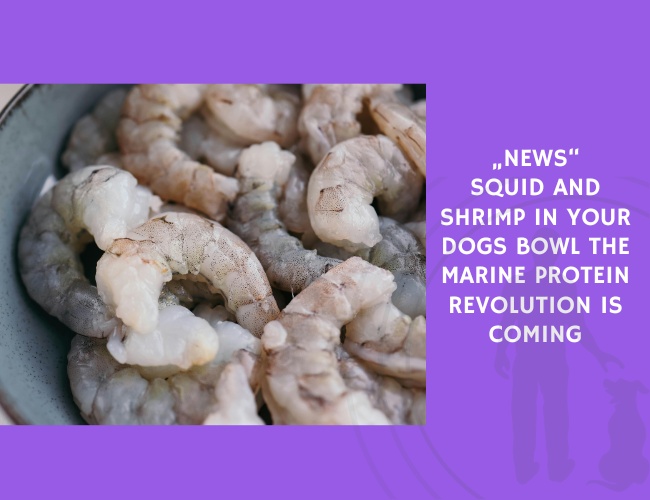
Squid Meal and Shrimp Hydrolysate as Novel Protein Sources for Dog Food
Published: July 10, 2026
The dog food industry is under pressure. A growing global pet population, sustainability concerns, and the environmental cost of conventional protein sources are pushing manufacturers — and researchers — to look beyond chicken, beef, and fish meal toward something less familiar. A new study has put two marine by-products directly to the test: squid meal and shrimp hydrolysate. The results are more promising than most owners would expect. 🐾
Researchers Joana Guilherme-Fernandes, T. Aires, and their team evaluated both protein sources across a comprehensive range of measures — chemical composition, antioxidant activity, palatability, digestibility, metabolic energy content, fecal characteristics, and gut microbiota effects — using 12 Beagle dogs across multiple experimental periods. This was not a surface-level ingredient comparison. It was a full nutritional evaluation of what these novel proteins actually do inside a dog’s body.
What the Research Found
Both squid meal and shrimp hydrolysate showed higher protein content than ingredients traditionally used in commercial dog food. Both also showed higher methionine content — an essential amino acid involved in metabolism, antioxidant defence, and coat health that is frequently a limiting factor in plant-based and some conventional protein sources.
Shrimp hydrolysate showed notably higher antioxidant activity than squid meal — a finding relevant for dogs with elevated oxidative stress loads, including older dogs, working dogs, and dogs recovering from illness or surgery.
Digestibility was the standout result. Both ingredients, when included in the diet, produced higher apparent total tract digestibility of dry matter, most nutrients, and energy compared to the basal commercial diet. In practical terms: the dog’s body extracted more usable nutrition from diets containing these novel proteins than from the standard comparison diet. That is the fundamental measure that matters in protein source evaluation — not what is in the ingredient, but what the animal actually absorbs from it.
Fecal output and characteristics were not affected by increasing inclusion levels of either protein source, which is a positive signal for gut tolerance. The microbiota picture was more differentiated: squid meal showed no significant effect on fecal microbiota, while shrimp hydrolysate at higher inclusion levels did affect the abundance of specific bacterial groups including Lactobacillus, Firmicutes, and Oscillosperaceae. Whether these microbiota shifts are beneficial, neutral, or concerning requires further research to determine — the study is honest on this point.
On palatability, both novel protein sources maintained first approach and taste response comparable to the basal diet. However, when dogs were given a direct choice, they showed a preference for the familiar commercial diet. This is not unusual with novel ingredients — dogs, like most animals, show some degree of neophobia around unfamiliar flavours — but it is a practical consideration for manufacturers and owners moving toward marine protein inclusion.
The Sustainability Dimension and What It Means for Dog Food Choices 🌊
Squid meal and shrimp hydrolysate are marine by-products — materials generated as waste during seafood processing that currently represent a significant disposal challenge and environmental cost. Using them as a high-quality protein source in dog food addresses two problems simultaneously: it reduces waste from an existing industry and decreases the demand for dedicated protein production that drives land use, water consumption, and greenhouse gas emissions.
This is where the dog food sustainability conversation gets practical. The environmental footprint of pet food is real and growing as pet populations expand globally. Novel protein sources derived from by-products that would otherwise be discarded represent one of the more credible pathways toward reducing that footprint without compromising nutritional quality — and potentially improving it, as the digestibility data here suggests.
For owners navigating an increasingly complex dog food market, the practical takeaway is this: marine by-product proteins are not a compromise or a filler. At adequate inclusion levels, they appear to deliver superior digestibility compared to conventional alternatives, with meaningful antioxidant capacity in the case of shrimp hydrolysate. The palatability preference for familiar food is a real consideration — but it is one that can shift with gradual introduction rather than abrupt dietary change.
Physical Foundation as Part of the Bond 🐕
At Zoeta Dogsoul, nutritional quality is always part of the whole picture. A dog whose diet delivers genuinely bioavailable protein — protein the body can actually absorb and use — is a dog with the physical substrate to support energy, coat quality, muscle maintenance, immune function, and neurological health. That physical foundation is not separate from the relationship. It is what makes the relationship possible at a biological level.
NeuroBond is built on the full reality of the animal in front of you — including what you are feeding them and what that food is actually doing inside their body. Choosing protein sources on the basis of digestibility data rather than marketing language is one of the most concrete ways that attentiveness translates into care. 🐾
Source: Guilherme-Fernandes, J., Aires, T., et al. (2024). Squid meal and shrimp hydrolysate as novel protein sources for dog food. Frontiers in Veterinary Science. Published February 21, 2024.










