
Hughes & Macdonald (2013) — Biological Conservation
A Review of the Interactions Between Free-Roaming Domestic Dogs and Wildlife
Published: July 27, 2026
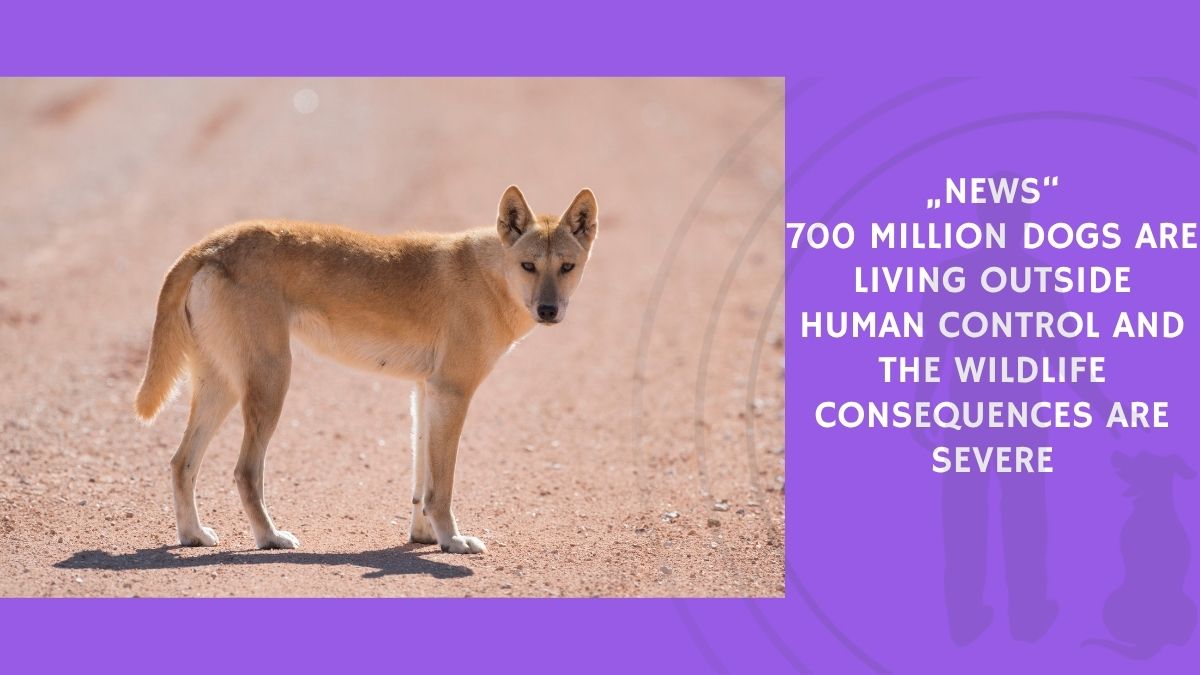
The global domestic dog population is estimated at over 700 million animals. The vast majority of those dogs are not the well-managed, home-based pets that dominate dog ownership discourse in Western countries. They are free-roaming — and a systematic review of 69 peer-reviewed studies has documented the scale and scope of what that means for biodiversity around the world. The picture is more significant than most dog owners in developed countries ever encounter. 🐾
Researchers Joelene Hughes and D. Macdonald reviewed data from seven online databases to compile the most comprehensive summary available of documented interactions between free-roaming domestic dogs and wildlife. The 69 studies identified covered interactions across both islands and continents, with mammals as the most commonly studied wildlife taxon. What the review found across all those studies was a consistent pattern of four primary interaction types — and the most common was predation.
What Free-Roaming Dogs Are Actually Doing to Wildlife
The main interaction recorded across the literature was predation by domestic dogs on wildlife — dogs killing wild animals across a wide range of species and ecosystems. This was followed by disease transmission between dog and wildlife populations, wildlife disturbance, hybridization between domestic dogs and wild canid species, and predation of dogs by wild carnivores. Each of these interaction categories carries different conservation implications, and collectively they represent a threat profile that operates at a global scale.
Predation is the most direct and most documented threat. Free-roaming dogs hunt both opportunistically and in organised packs, and their prey ranges from small mammals and birds through to larger ungulates and endangered species. On islands — where wildlife has evolved in the absence of large predators and lacks the behavioural defences that continental species develop — the impact can be catastrophic and rapid. Ground-nesting birds, reptiles, and small endemic mammals are particularly vulnerable, and island populations that have survived millions of years of natural selection can be driven to extinction within years of dog introduction.
Disease transmission represents a different but equally serious pathway of impact. Domestic dogs serve as reservoir hosts for diseases including rabies, canine distemper, and parvovirus, all of which can spill over into wild carnivore populations with devastating consequences. African wild dogs, Ethiopian wolves, and other endangered canid species have experienced population crashes linked to disease transmission from domestic dog populations living in proximity to their ranges. The same rabies control infrastructure that protects human health is also the primary tool available for protecting wild carnivore populations from this transmission pathway.
Hybridization between free-roaming domestic dogs and wild canids including wolves, coyotes, and dingoes represents a genetic threat that is particularly difficult to address once it becomes established. Introgression of domestic dog genetics into wild populations can compromise the genetic integrity of wild species and produce fertile hybrids that further blur the population boundary. The dingo in Australia is among the most documented cases of ongoing hybridization pressure from free-roaming domestic dog populations.
Why Solutions Are Harder Than They Appear ⚠️
The review is frank about the limitations of available solutions. Beyond extermination of free-roaming dogs — an approach that is both ethically contentious and practically limited by the close relationship between local people and the dogs living around their communities — the literature offers relatively few well-evidenced alternatives. Dog management programmes exist primarily through human health and welfare infrastructure focused on rabies control rather than conservation outcomes, and interdisciplinary cooperation between conservation biologists and animal welfare or veterinary public health organisations has been limited.
This interdisciplinary gap matters because the free-roaming dog problem cannot be solved by conservation biology alone. Dog population dynamics are inseparable from human population density, cultural attitudes toward dogs, economic conditions, and local governance capacity. An extermination approach that ignores human-dog relationships produces community resistance and fails to achieve lasting population reduction. A welfare-focused approach that addresses individual dog management without connecting to conservation outcomes misses the scale of what is at stake for biodiversity.
The researchers propose steps toward greater cooperation between conservation and other sectors — recognising that durable solutions will require approaches that respect the relationship between local communities and their dogs while achieving the containment and management outcomes that wildlife populations require.
What This Means for Responsible Dog Ownership Everywhere 🐕
For owners in developed countries managing well-contained pet dogs, the direct connection to this research may not be immediately obvious. But the review speaks to a responsibility that extends beyond the individual relationship. A dog that roams unsupervised — even in a suburban or peri-urban context — is a dog that can disturb nesting birds, chase and injure wildlife, and contribute to the kind of habitual predatory behaviour that becomes harder to interrupt the more it is practiced.
Leash laws, secure containment, and reliable recall are not only about public safety or social courtesy. They are about the dog’s actual impact on the non-human world around them. A dog who ranges freely through habitat edges, parks, and rural areas is operating as a predator in an ecosystem that often cannot absorb that pressure without consequences.
At Zoeta Dogsoul, the Invisible Leash is the connection between dog and owner that holds without a physical constraint. It holds the dog in relationship rather than in restraint. But it also holds the dog within the boundaries that responsible co-existence with the wider world requires — not just with other people, but with every living thing that shares the environment the dog moves through. That containment is not a limitation on the dog. It is part of what it means to own one responsibly. 🐾
Source: Hughes, J., & Macdonald, D. (2013). A review of the interactions between free-roaming domestic dogs and wildlife. Biological Conservation. Published 2013.










