
Dobson (2013) — ISRN Veterinary Science
Breed-Predispositions to Cancer in Pedigree Dogs
Published: July 27, 2026
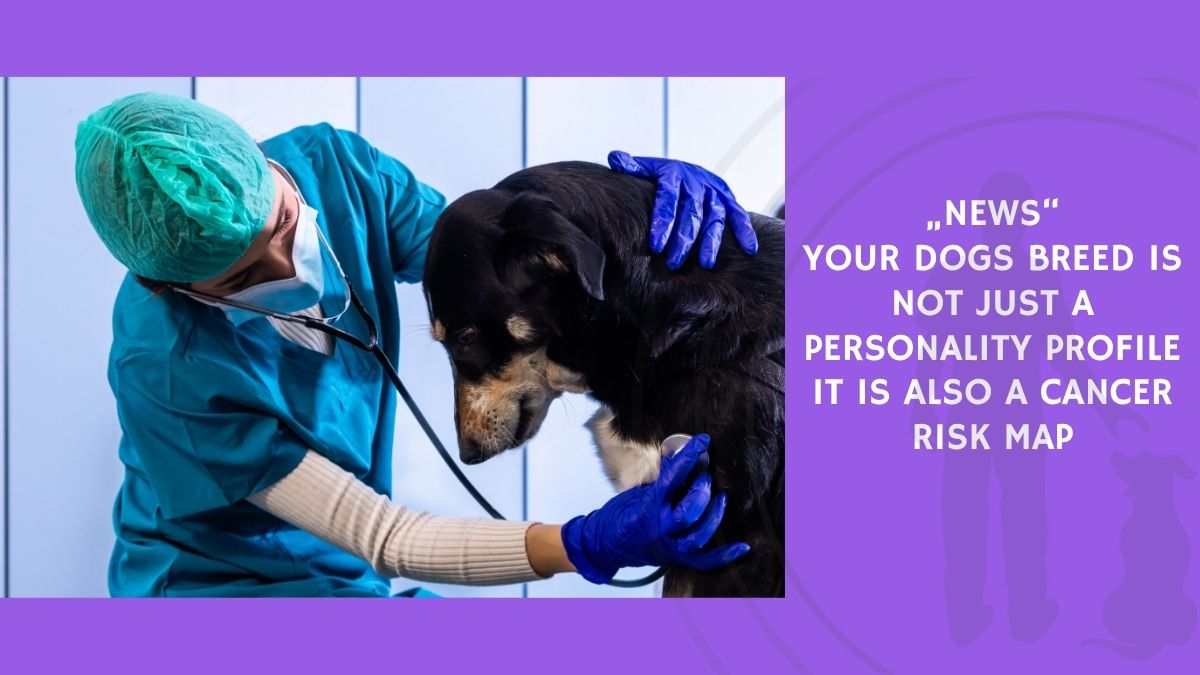
Cancer is one of the most common causes of death in adult dogs. What is less widely understood is that cancer risk is not evenly distributed across the dog population — certain pedigree breeds carry significantly elevated risk for specific cancer types, and that risk is rooted in the same genetic architecture that produces their distinctive appearance and behaviour. A review of the scientific literature on breed cancer susceptibility maps exactly which breeds are at elevated risk for which cancers and why. 🐾
Researcher J. Dobson reviewed the literature on canine breed susceptibility to seven major cancer types — histiocytic sarcoma, osteosarcoma, haemangiosarcoma, mast cell tumours, lymphoma, melanoma, and mammary tumours — including advances from molecular genetic, cytogenetic, and genome-wide association studies. The picture that emerges is one in which the limited genetic diversity within purebred dog populations, produced by selective breeding over generations, has inadvertently concentrated cancer susceptibility genes alongside the traits breeders were intentionally selecting for.
How Breed Structure Creates Cancer Risk
The genetic logic behind breed cancer predisposition follows directly from how purebred dog populations are structured. Selective breeding for specific morphological and behavioural traits requires repeated breeding within a limited gene pool. The population bottlenecks and founder effects that result reduce genetic diversity within breeds — creating populations where individuals share large portions of their genome. When a cancer susceptibility variant is present in the founder population or becomes common through selective breeding, the limited diversity means it propagates through the breed at higher frequency than it would in a genetically diverse population.
This same reduced diversity that makes breeds problematic from a cancer genetics perspective is what makes them exceptionally useful for research. Genome-wide association studies that would require tens of thousands of human participants to achieve statistical power can detect genetic associations in dog breeds with far smaller sample sizes — because the signal is amplified by the genetic homogeneity within each breed. Canine cancer genetics research is therefore advancing faster than human cancer genetics in some areas, with direct translational implications for understanding the same diseases in people.
The review covers the most significant breed-cancer associations in the literature. Bernese Mountain Dogs carry dramatically elevated risk for histiocytic sarcoma — a cancer so overrepresented in this breed that it accounts for a substantial proportion of Berner deaths. Large and giant breeds including Greyhounds, Irish Wolfhounds, and Rottweilers show elevated osteosarcoma risk, with body size itself appearing as a significant modifier of risk. Golden Retrievers and German Shepherds show elevated haemangiosarcoma rates. Boxers, Labrador Retrievers, and Golden Retrievers show elevated mast cell tumour risk. Lymphoma rates are elevated in Golden Retrievers, Boxers, and Bulldogs among others. Each of these associations has now been partially mapped to specific genomic regions through association studies enabled by the dog genome reference sequence.
What Breed Cancer Risk Means for Owners in Practice ⚠️
Knowing your dog’s breed-specific cancer risk is not cause for anxiety. It is cause for appropriate vigilance — and vigilance looks different depending on which cancer type your breed is predisposed to, because the presenting signs, the optimal screening approaches, and the treatment windows vary significantly across cancer types.
Osteosarcoma in large breeds typically presents as lameness or swelling in a limb, often initially attributed to injury or arthritis. The window between symptom onset and diagnosis significantly affects treatment options and outcomes — owners of large breed dogs who attribute persistent lameness only to joint issues without considering bone cancer risk are owners who may miss that window. Haemangiosarcoma is notoriously difficult to detect early because it often develops in internal organs with few surface signs until rupture. Mast cell tumours, by contrast, often present as visible skin lesions that owners can monitor directly and bring to veterinary attention promptly.
For breeds with elevated mammary tumour risk, the established evidence around the relationship between early spaying and reduced mammary cancer risk is an important consideration for owners making reproductive decisions — though the relationship between spaying timing and other health outcomes is complex enough to warrant individual veterinary consultation rather than a blanket rule.
The most consistent practical guidance from breed cancer research is straightforward: know your breed’s specific risk profile, establish the physical examination habits that allow you to notice changes early, and maintain the kind of regular veterinary relationship that means concerning signs are assessed promptly rather than watched for weeks.
The Owner Who Notices Early Is the Owner Who Changes the Outcome 🐕
Early detection changes outcomes across virtually all the cancer types reviewed in this paper. And early detection in dogs almost always begins with the owner — not because owners can diagnose cancer, but because owners see their dog every day and are positioned to notice the first subtle signs of something different: a lump that was not there last month, a lameness that is not resolving, a change in energy or appetite that does not correspond to any obvious cause.
At Zoeta Dogsoul, physical attunement is always part of what NeuroBond looks like in practice. A dog whose owner is genuinely present — who handles them regularly, who notices changes in body condition and energy and behaviour, who brings an accurate read of the animal to every veterinary visit — is a dog whose medical problems are more likely to be caught early. That attentiveness is not separate from the emotional relationship. It is one of the most concrete expressions of it.
Knowing your breed’s cancer risk profile is the foundation on which that attentiveness becomes most targeted and most useful. It tells you what to look for, where to look, and when a change warrants a prompt veterinary visit rather than a wait-and-see approach. That knowledge is part of what responsible breed ownership looks like — and it is available to anyone willing to learn it. 🐾
Source: Dobson, J. (2013). Breed-Predispositions to Cancer in Pedigree Dogs. ISRN Veterinary Science. Published January 17, 2013.










