
Bianco, Abood et al. (2020) — Veterinary and Comparative Oncology
Unconventional Diets and Nutritional Supplements Are More Common in Dogs with Cancer Compared to Healthy Dogs
Published: July 3, 2026
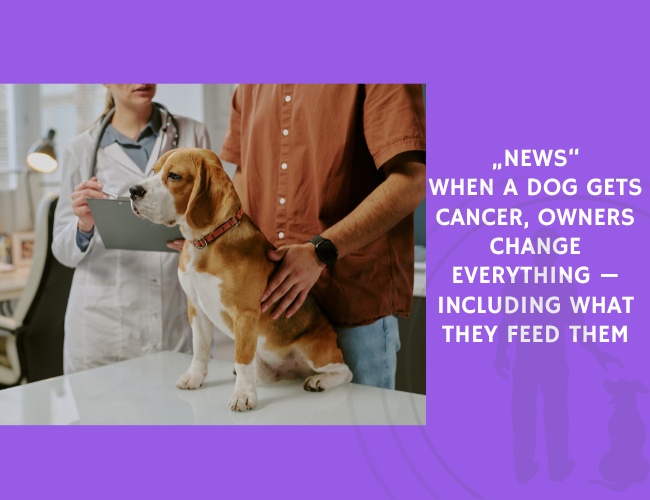
A cancer diagnosis changes everything. For dog owners, it often triggers an intense, urgent search for anything that might help — a different diet, a supplement, a protocol that feels more aligned with fighting the disease than standard dry kibble. A global survey of 345 dog owners has now mapped exactly what that shift looks like in practice — and raised important questions about where owners are getting their information. 🐾
Researchers Adriana Bianco, Sherry Abood, Anthony Mutsaers, and their team surveyed owners of 132 dogs diagnosed with cancer alongside 213 owner-reported healthy dogs. The survey captured diet type, supplement use, and — critically — the information sources owners turned to when making nutritional decisions for their animals.
The Shift in Feeding Behaviour
The differences between the two groups were statistically significant and practically striking. Healthy dogs were significantly more likely to be fed commercial dry food. Dogs with cancer were significantly more likely to be on homemade cooked diets or raw diets. Supplement use — particularly cannabidiol products, mushroom extracts, and turmeric or curcumin — was substantially higher in the cancer group.
Owners of dogs with cancer also spent significantly more time researching pet health, pet nutrition, and nutritional supplements than owners of healthy dogs. This is not surprising. A diagnosis creates urgency, and urgency drives research. What matters is where that research leads — and this is where the survey findings become more complicated.
Veterinarians were the most commonly reported information source for both groups. But owners of dogs with cancer were more likely to turn to social media groups and blogs than owners of healthy dogs, who were more likely to consult pet stores. The combination of heightened research intensity and a shift toward less regulated information sources is a pattern worth paying close attention to.
Why This Pattern Is Understandable — and Why It Carries Risk ⚠️
The instinct driving this behaviour is not irrational. When a dog receives a cancer diagnosis, the commercial dry food that felt adequate yesterday suddenly feels insufficient. Owners want to do more. They want to feel that nutrition is part of the response — that they’re not passive in the face of something serious. That impulse is human, and it reflects the depth of the bond.
But the gap between intention and outcome can be significant. Homemade and raw diets, without veterinary nutritional guidance, frequently fail to meet complete nutritional requirements — not because the ingredients are wrong, but because formulation is genuinely complex. Supplement combinations that seem individually reasonable can interact in ways that affect treatment efficacy, organ function, or drug metabolism. Cannabidiol, mushroom extracts, and curcumin all have pharmacological activity. That activity doesn’t stop being relevant because the source is natural.
Social media groups and blogs are not inherently unreliable — but they are unverified, unregulated, and driven by individual experience rather than controlled evidence. A protocol that appeared to help one dog, shared compellingly in a Facebook group, reaches owners in a moment of vulnerability with the weight of anecdote but without the context of clinical evaluation. The researchers are direct: nutritional counselling and education by veterinary professionals is not optional for this population. It is essential.
The Bond Under Pressure 🐕
What this survey captures, underneath the nutritional data, is something more fundamental about the human-dog relationship under stress. When a dog is sick, the NeuroBond between owner and animal becomes acutely felt. Owners don’t just want their dog to receive treatment. They want to be active participants in their dog’s survival — to feel that their care and attention is translated into something tangible.
Feeding is one of the most direct expressions of that care. It is daily, physical, and immediate in a way that veterinary appointments are not. When owners change what they feed, they are not simply making a nutritional decision. They are responding to the relationship — expressing through food what they cannot express through words.
Recognising that emotional dimension is not a reason to dismiss the nutritional choices owners make. It is a reason to meet those choices with informed, non-judgmental guidance rather than dismissal. The Invisible Leash between owner and dog is never more visible than in a crisis. The quality of support available to the owner in that moment — veterinary, educational, emotional — shapes what that bond produces in practice. 🐾
Source: Bianco, A. V., Abood, S., Mutsaers, A., Woods, J. P., Coe, J., & Verbrugghe, A. (2020). Unconventional diets and nutritional supplements are more common in dogs with cancer compared to healthy dogs: An online global survey of 345 dog owners. Veterinary and Comparative Oncology. Published April 17, 2020.










