
Bradshaw & Rooney (2016) — The Domestic Dog: Its Evolution, Behaviour and Interactions with People
Dog Social Behavior and Communication
Published: August 24, 2026
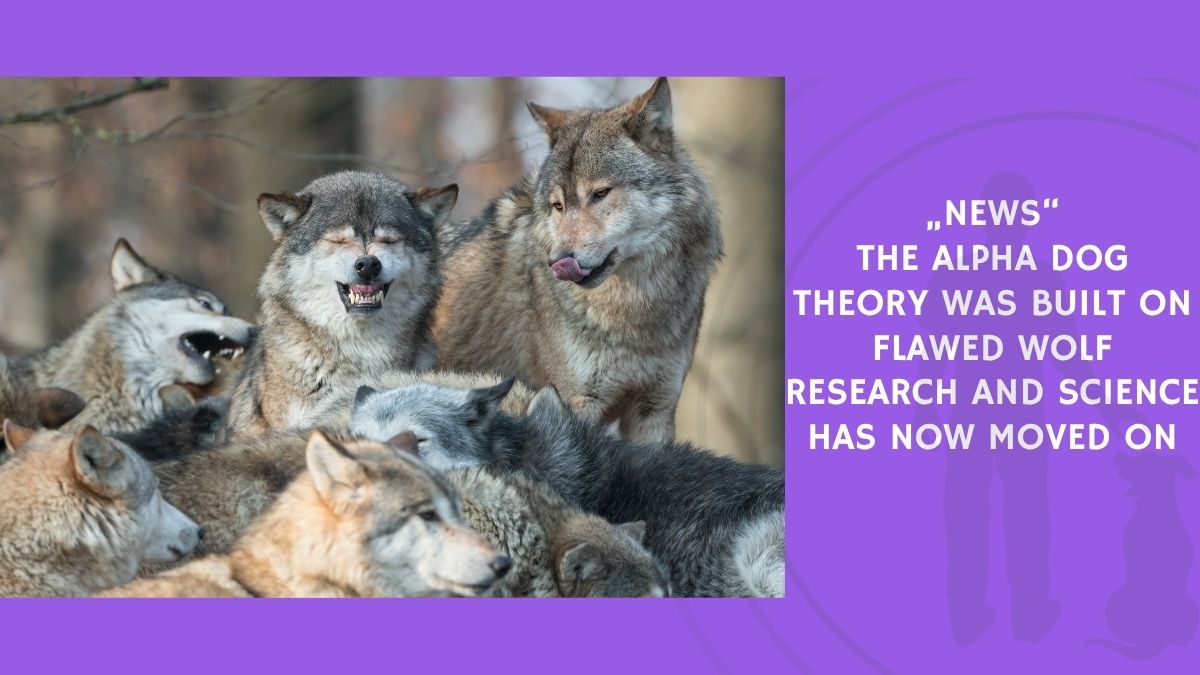
The alpha theory of dog behaviour — the idea that dogs are trying to dominate their owners, that the relationship requires the human to assert pack leadership, that submission and dominance structure the dog-human interaction — has shaped popular dog training culture for decades. A comprehensive review by John Bradshaw and Nicola Rooney dismantles the scientific foundations of that framework and replaces it with what the evidence actually shows. The shift matters for every dog owner. 🐾
The foundational problem is methodological. The dominance hierarchy model of wolf behaviour — from which the alpha dog theory was directly borrowed — was built primarily on studies of captive wolves. Those captive groups were composed of unrelated adults from different packs, unable to disperse, forced into proximity with individuals they would naturally have avoided or competed with. The social dynamics that emerged from that artificial situation — constant competition, the suppression of lower-ranking individuals by aggressive “alphas” — were then described as the natural social structure of wolves and, by extension, dogs.
What Wild Wolf Society Actually Looks Like
Field studies of wild wolf packs have produced a completely different picture. The natural unit of wolf society is the family — a breeding pair and their offspring across one or two years before the young adults disperse. The behaviour that captive wolf studies described as dominance between unrelated adults is, in natural packs, simply the behaviour between parents and their grown offspring. The so-called “alpha” wolves are the breeding pair. They are not alpha through aggressive dominance over competitors. They are the parents of the family group. As Mech stated directly in 2008, the term “alpha” is redundant — it is simply a synonym for “parent.”
Neighboring wild packs tend to avoid contact rather than compete for dominance. When they do meet, conflict is likely — but this is territorial competition between separate family units, not the internal dominance hierarchy of a single pack. The entire conceptual architecture that produced the alpha theory was constructed from observations of captive wolves in a situation that was as ecologically artificial as putting unrelated humans in a confined space and concluding that human social organisation is primarily competitive hierarchical dominance.
The second foundational problem the review addresses is the assumption that wolf social behaviour translates directly to dog social behaviour. Domestication has markedly altered the cognitive abilities of dogs — and, as the review makes clear, has altered their social orientation in fundamental ways. Dogs are not wolves who have been trained to live with humans. They are a distinct species whose social cognitive architecture evolved over thousands of years specifically in the context of living with humans. Applying wolf pack theory to dog-human relationships is not just scientifically outdated — it was never an accurate model to begin with.
What Dog Social Communication Actually Is ⚠️
Dogs have a repertoire of social signals derived from their wolf ancestry but modified through domestication. Body posture, ear position, tail carriage, facial expression, vocalisation, and the specific signals involved in greeting, appeasement, play initiation, and threat communication all function within the dog’s social cognitive architecture. What has changed through domestication is not the absence of a social signalling system but the orientation of that system — dogs are specifically calibrated to read, respond to, and communicate with humans in ways that wolves are not.
The review highlights the significance of the Wynne super-dominance research covered earlier in this series — humans occupy a position of complete resource control over dogs, which provides a structural explanation for canine cooperation that does not require dominance hierarchy theory. Dogs cooperate with humans not because they recognise a dominant alpha but because humans control every resource the dog needs and because domestication has shaped dogs to be socially responsive to humans as a distinct category of social partner.
Understanding dog communication signals accurately is what allows owners to read their dog’s social intentions, respond appropriately, and build the kind of relationship where communication flows clearly in both directions. A dog who rolls on their back is not necessarily being submissive in the way dominance theory interprets that posture. A dog who jumps up is not attempting to assert dominance over the owner. A dog who growls when touched is not challenging the owner’s alpha status — they are communicating discomfort or fear through the clearest signal available to them. Reading these signals through the correct interpretive framework changes what the appropriate response is.
Why This Still Matters in 2026 🐕
The alpha theory has been scientifically discredited for over a decade. Yet it continues to circulate in popular training culture, television programmes, online content, and the advice given by well-meaning but outdated practitioners. Its persistence has real consequences — training approaches built on establishing dominance and suppressing perceived challenges to alpha status produce fear, suppressed communication signals, and the kind of relationship that the owner mental health research covered in this series identified as a welfare and satisfaction risk for both dog and owner.
At Zoeta Dogsoul, NeuroBond is built on the accurate understanding of dog social cognition that this research represents. The relationship between dog and owner is not a dominance hierarchy requiring the human to assert rank. It is a social partnership between two species whose co-evolutionary history has produced a degree of mutual attunement that is genuinely unique in the animal kingdom. Managing that partnership through the lens of dominance theory is not just scientifically incorrect — it actively undermines the quality of attunement that makes the relationship what it can be.
The Invisible Leash is not held through dominance. It is held through the accumulated quality of a relationship built on accurate understanding of what dogs actually are, how they actually communicate, and what actually drives their social behaviour. That understanding begins with recognising that the alpha theory was never the right map for this territory. 🐾
Source: Bradshaw, J., & Rooney, N. (2016). Dog social behavior and communication. In J. Serpell (Ed.), The Domestic Dog: Its Evolution, Behaviour and Interactions with People (2nd ed.). Cambridge University Press. Published December 1, 2016.










