
Mukhopadhyay & Rana (2025) — Indian Journal of Animal Sciences
Genome Assembly of Indigenous Gaddi Dog
Published: August 20, 2026
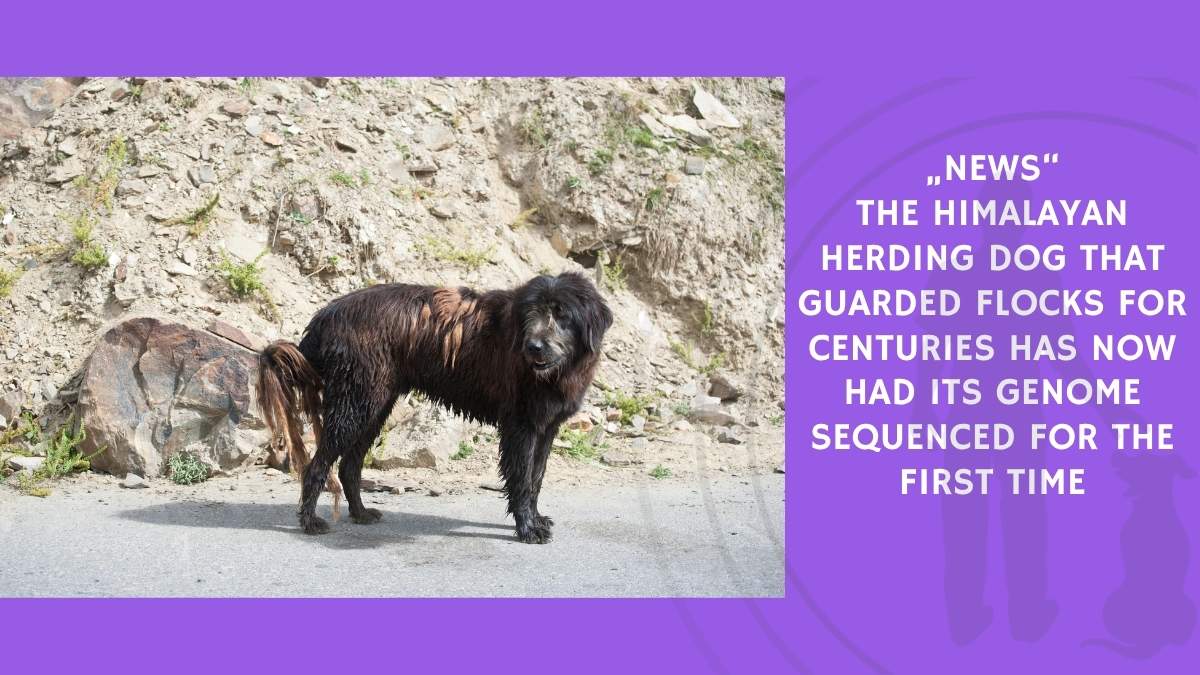
The Gaddi dog has guarded flocks and herded livestock in the Himalayan regions of Himachal Pradesh, Uttarakhand, and Punjab for centuries — a working breed so deeply embedded in the pastoral traditions of the region that it is difficult to imagine those mountain communities without it. Until now, essentially nothing was known about the genetic architecture that underlies its remarkable adaptation to high-altitude working conditions. A genome sequencing study has changed that. 🐾
Researchers C. Mukhopadhyay and Kanwaljit Rana collected blood samples from five unrelated Gaddi dogs from Punjab and Himachal Pradesh and conducted Illumina paired-end sequencing — generating 491.9 gigabytes of raw sequencing data per sample and assembling the first nuclear genome of the indigenous Gaddi dog. The raw sequence reads have been submitted to NCBI and are publicly available, meaning the data is now accessible to researchers worldwide who wish to build on this foundational assembly.
What This First Genome Assembly Establishes
Genome assembly from short-read sequencing is a technically demanding process that requires aligning billions of short DNA sequence fragments into a coherent representation of the full genome. The assembly metrics reported — contigs numbering between 437,000 and 455,000 per individual, N50 values ranging from approximately 10,000 to 10,800 bases, and average contig lengths between 5,118 and 5,344 bases — reflect a draft-level assembly that captures the majority of the genome but in fragmented form. Sequencing quality was high, with Q30 scores of 90.5 to 93.3 percent indicating that the vast majority of base calls were made with 99.9 percent confidence or better.
This is not a finished, chromosome-level genome assembly of the type used for the most precise comparative genomic analyses. It is a first-pass sequencing effort that establishes the Gaddi dog’s genetic baseline — the starting point from which annotation, comparative analysis, and targeted investigation of specific genomic regions can proceed. The researchers are explicit that enriched assembly and annotation will be required to unlock deeper insights into the breed’s adaptation biology. What the current study contributes is the foundational genetic tapestry without which no further genomic characterisation is possible.
That foundational contribution matters enormously for a breed in this situation. Before this study, the Gaddi dog had no publicly available genome data. Any researcher wishing to ask questions about the genetic basis of its altitude adaptation, its working behaviour, its immune profile in a high-pathogen pastoral environment, or its relationship to other indigenous South Asian dog populations had no reference genome to work from. That barrier has now been removed.
Why the Gaddi Dog’s Genetic Architecture Is Worth Understanding ⚠️
The Gaddi dog is adapted to conditions that represent an extreme environmental challenge for a working dog. High altitude in the Himalayas means reduced oxygen availability, dramatic temperature variation, challenging terrain, and exposure to pathogen profiles different from those of lowland environments. A breed that has maintained working capacity — robustness, health, herding and guarding aptitude — in these conditions across many generations carries genetic variants selected for precisely that adaptation.
High-altitude adaptation has been studied at the genomic level in other species including Tibetan mastiffs, yaks, and human Tibetan populations. The molecular mechanisms involved — variants in genes related to oxygen metabolism including EPAS1, haemoglobin function, and vascular regulation — represent specific biological solutions to the hypoxia challenge. Whether the Gaddi dog has developed similar or distinct genomic solutions to high-altitude working life is a question this genome assembly now makes it possible to begin answering.
Beyond altitude adaptation, the Gaddi dog’s working behavioural profile — herding and guarding functions combined, maintained across centuries of pastoral selection — represents a behavioural genetic resource. The neurological gene GWAS research covered in this series identified specific genomic regions associated with herding and temperament across modern breeds. The Gaddi dog’s genome provides a data point from a very different selective history — an indigenous population shaped by pastoral function rather than formal breed registration — that could contribute to understanding how herding and guardian behaviours are encoded across the diversity of the dog species.
Indigenous Breeds and the Genetics of Canine Diversity 🐕
The Gaddi dog research is part of a broader pattern visible across this research series: the genomic characterisation of indigenous and regional working breeds that carry unique adaptations but have received minimal scientific attention. The Patagonian Sheepdog research documented a breed shaped by a century of Andean pastoral selection. This study documents the first genomic access to a Himalayan working breed shaped by centuries of high-altitude pastoral selection. Both represent irreplaceable genetic and cultural resources — breeds whose adaptation biology and working heritage cannot be reconstructed once the populations that carry them lose coherence.
At Zoeta Dogsoul, the diversity of dogs — genetic, cultural, ecological — is part of what makes understanding any individual dog richer and more grounded. NeuroBond is built on genuine knowledge of the animal in front of you. For breeds like the Gaddi dog, that knowledge is now beginning to be built at the genomic level — a first assembly that opens the door to understanding what centuries of Himalayan pastoral life has encoded in the DNA of one of the world’s oldest working dogs. 🐾
Source: Mukhopadhyay, C., & Rana, K. (2025). Genome assembly of indigenous Gaddi dog. Indian Journal of Animal Sciences. Published February 25, 2025.










