
Korec, Ungrová et al. (2024) — Veterinary and Animal Science
Identification of Genes Associated with Longevity in Dogs: 9 Candidate Genes Described in Cavalier King Charles Spaniel
Published: August 08, 2026
Why do some dogs from the same breed live significantly longer than others? The Cavalier King Charles Spaniel has one of the more complex health profiles of any companion breed — known predispositions to mitral valve disease, syringomyelia, and hip dysplasia place meaningful constraints on lifespan across the population. Yet some individuals consistently outlive their breed average by years. A genome-wide association study has now identified 15 specific genetic variants across nine genes that appear to be associated with that longevity advantage. 🐾
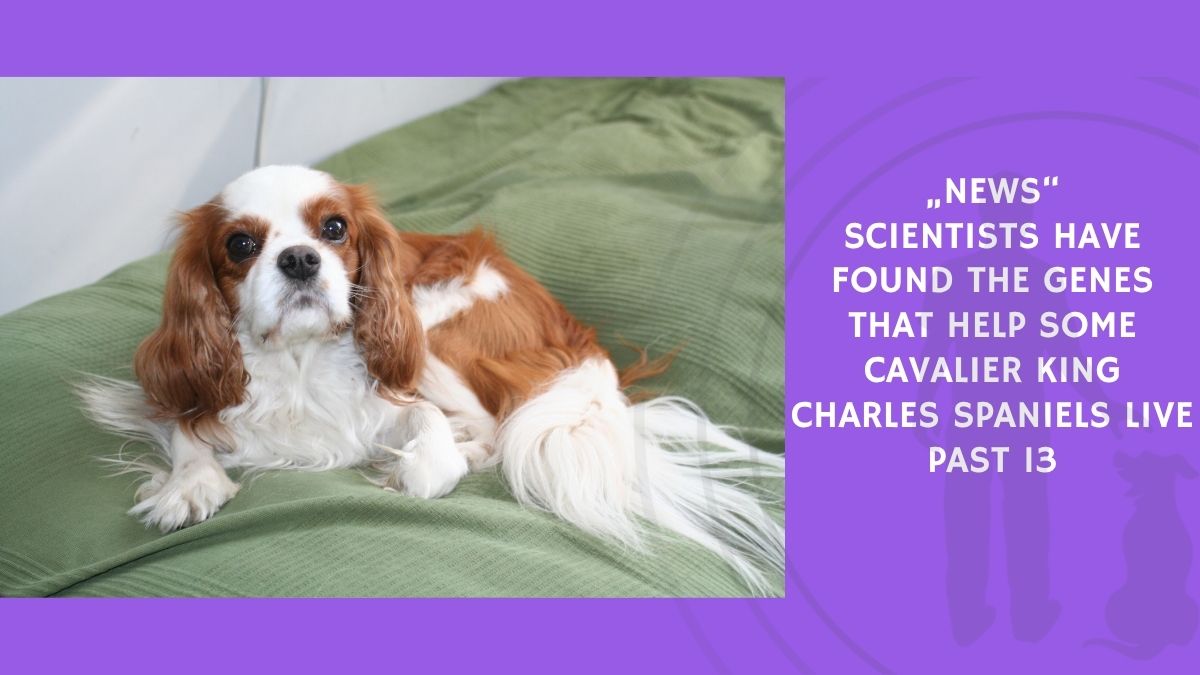
Researchers Evžen Korec, Lenka Ungrová, Josef Kalvas, and Jiří Hejnar conducted a GWAS analysis focused on Cavalier King Charles Spaniels who had reached the age of 13 or more — a threshold that places them well above the typical lifespan for this breed. The nine candidate genes identified — B3GALNT1, NLRP1-like, PARP14, IQCJ-SCHIP1, COL9A1, COL19A1, SDHAF4, B3GAT2, and DIRC2 — span a range of biological functions that together offer a preliminary picture of what the molecular architecture of canine longevity might look like.
Why Dogs Are a Valuable Model for Longevity Research
The decision to study longevity genetics in dogs rather than in humans or rodents is not arbitrary. Dogs share the human domestic environment, are exposed to similar environmental factors including diet and pollution, develop many of the same age-related diseases, and are treated with comparable medical interventions. The diseases of old age in dogs — cardiac disease, cancer, cognitive dysfunction, musculoskeletal deterioration — are biologically similar to their human equivalents and respond to many of the same pharmacological approaches.
Dogs also have a practical advantage that makes genetic longevity research achievable within reasonable timescales. Different breeds differ dramatically in average lifespan — a Great Dane may live to 8 or 9, while a Miniature Poodle may reach 15 or beyond. That inter-breed variation, combined with the reduced genetic diversity within breeds that makes association signals easier to detect, creates a natural experimental system for identifying the genomic regions that contribute to longer life. The same haplotype structure that makes dogs useful for disease genetics research makes them powerful for longevity genetics research.
The Cavalier King Charles Spaniel was a deliberate choice within that framework. As a breed with known health vulnerabilities and a well-defined normal lifespan distribution, individuals who substantially outlive their peers represent a phenotypically clear longevity signal — making it more likely that the genetic variants associated with their extended lifespan are genuinely protective rather than simply neutral.
What the Nine Candidate Genes Suggest ⚠️
The functional range of the nine identified genes offers a window into the biological processes that may underlie canine longevity. Several of the genes relate to inflammation regulation — NLRP1-like is associated with innate immune inflammasome function, and PARP14 plays roles in immune signalling and DNA damage response. Chronic low-grade inflammation is one of the most consistent biological hallmarks of ageing across species, and genetic variants that modulate inflammatory pathway activity are plausible candidates for longevity association.
The collagen-related genes COL9A1 and COL19A1 point toward connective tissue integrity as a longevity-associated dimension — consistent with evidence across species that the maintenance of extracellular matrix structure and the reduction of age-related connective tissue degradation contribute to healthy ageing trajectories. B3GALNT1 and B3GAT2 are involved in glycosyltransferase function — the modification of proteins and lipids with sugar molecules — a process increasingly implicated in ageing biology through its effects on cell surface signalling and immune regulation.
SDHAF4 is involved in mitochondrial respiratory chain function — specifically in the assembly of succinate dehydrogenase, a complex at the intersection of cellular energy metabolism and reactive oxygen species production. Mitochondrial function is central to almost every major theory of biological ageing, and variants that support more efficient mitochondrial electron transport could plausibly reduce oxidative damage accumulation across a lifespan. DIRC2 has been associated with lysosomal function, relevant to the cellular clearance mechanisms that become less efficient with age and whose decline is increasingly recognised as a driver of age-related pathology.
Taken together, the nine genes implicate inflammation regulation, connective tissue maintenance, cellular energy metabolism, immune modulation, and protein clearance as the biological domains where genetic variation appears to create longevity advantage in this breed. This is not a single pathway — it is a convergence of multiple processes that collectively determine whether the biological machinery of ageing accelerates or is slowed in individual animals.
What This Means for Dogs and Their Owners Today 🐕
The researchers are explicit that these findings represent a starting point for future research rather than an immediately applicable clinical tool. Replication in larger cohorts, functional validation of the candidate variants, and investigation of whether the same genetic signals associate with longevity in other breeds are all necessary next steps before these findings translate into anything owners can act on directly.
The longer-term possibility the research points toward is selective breeding guided by longevity genetics — identifying breeding animals who carry the protective variants and prioritising those pairings to gradually increase longevity-associated allele frequency in the breed population. This would represent a meaningful addition to the existing health screening programmes that focus on breed-specific disease risk reduction. Breeding away from disease is a different genetic strategy from breeding toward longevity, and the two are complementary rather than identical.
For current owners of Cavaliers, the research is a reminder that lifespan variation within the breed is real, substantial, and has a genetic substrate. An individual Cavalier who reaches 13 or beyond is not simply lucky. They are carrying a specific combination of genetic variants that is now beginning to be characterised — and that characterisation will, over time, give breeders and veterinary geneticists tools that did not previously exist.
At Zoeta Dogsoul, the time we have with our dogs is the most fundamental fact of the relationship. NeuroBond is built over years — through accumulated presence, through the daily consistency that creates genuine attunement, through the kind of care that sees the whole animal clearly enough to catch what is changing before it becomes crisis. Research that extends the time available for that accumulation is not a minor scientific advance. It is a direct contribution to the depth of what dog and owner can build together. 🐾
Source: Korec, E., Ungrová, L., Kalvas, J., & Hejnar, J. (2024). Identification of genes associated with longevity in dogs: 9 candidate genes described in Cavalier King Charles Spaniel. Veterinary and Animal Science. Published December 1, 2024.










