
Munoz-Prieto, Nielsen et al. (2018) — Scientific Reports
European Dog Owner Perceptions of Obesity and Factors Associated with Human and Canine Obesity
Published: July 24, 2026
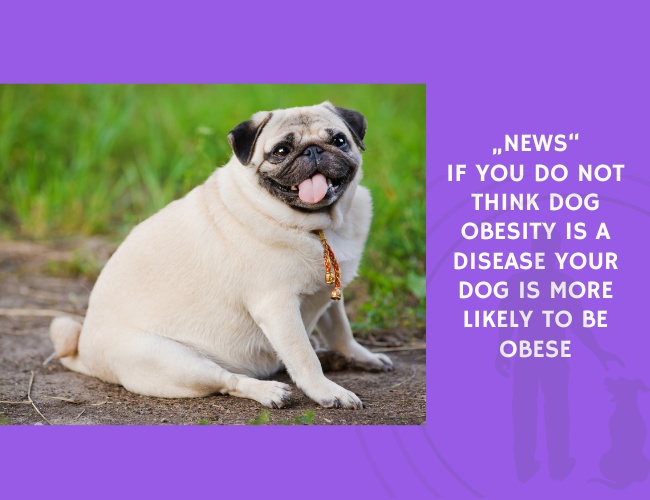
Canine obesity rates across Europe are high enough to constitute a public health concern for the pet population — and a large study of 3,185 dog owners across ten countries has identified the single most powerful predictor of whether a dog is obese. It is not the dog’s breed, age, or activity level. It is whether the owner believes obesity is a disease. 🐾
Researchers A. Munoz-Prieto, L. Nielsen, A. Tvarijonaviciute, and their team across 11 European countries collected questionnaire data from dog owners on their perceptions of obesity in themselves and their dogs, along with information on diet, physical activity, and socioeconomic factors. The dataset of over 3,000 responses allowed multivariable analysis across countries — producing one of the most comprehensive cross-European pictures of canine obesity and its drivers yet assembled.
The Numbers Behind the Problem
The prevalence figures alone justify serious attention. Between 19.1 and 48.8 percent of dog owners across the participating countries reported being overweight or obese themselves — a wide range reflecting real differences in human obesity rates across European nations. Owner-reported overweight and obesity in dogs ranged from 6.0 to 31.3 percent using body condition score charts, and rose substantially to between 31.8 and 69.4 percent when body fat index charts were used instead.
That gap between the two measurement methods is significant and reflects something documented consistently in canine obesity research: owners systematically underestimate their dog’s body condition. Body condition score charts require the owner to make a visual and tactile assessment and match it to a described category. Body fat index calculations are more objective. The distance between the two measures in this dataset — sometimes more than 30 percentage points — suggests that a substantial proportion of owners are living with overweight dogs they do not recognise as overweight.
The human-dog correlation in obesity rates is also notable. Common factors associated with obesity in owners and their dogs included age, gender, and owner attitudes toward diet and physical activity. This is not simply a coincidence of shared environment. It reflects shared habits, shared activity levels, and a shared household food culture that shapes both human and canine weight outcomes through overlapping mechanisms.
The Perception Finding That Matters Most ⚠️
The most actionable finding in the study is the direct relationship between owner perception and dog outcome. Dog owners who did not consider obesity to be a disease were significantly more likely to have obese dogs than owners who did. This is a perception variable, not a knowledge variable or an income variable or a time availability variable. It is about whether the owner frames excess body weight as a medical condition with health consequences or as a benign physical characteristic that does not require intervention.
An owner who does not regard obesity as a disease has no medical framework for the problem. There is no urgency to address it, no reason to consult a veterinarian about it, and no baseline of concern against which their dog’s gradual weight gain registers as something requiring action. A slightly overweight dog who is still active and apparently happy reads as a healthy dog to an owner whose mental model of the situation excludes disease as a relevant category.
This perception gap is not primarily a problem of information. Studies consistently show that providing owners with nutritional information does not reliably change feeding behaviour without also addressing the framing within which that information is received. An owner who receives precise calorific guidelines for their dog but does not believe excess weight is harmful has no motivation to apply them consistently. Perception precedes behaviour — and the data here shows that directly.
What an Accurate Read of Your Dog Actually Requires 🐕
The body condition scoring gap identified in this research — the consistent underestimation of dog body condition by owners using visual assessment — connects directly to the broader evidence on human perception of dog physical state. Owners are systematically less accurate about their dog’s physical condition than they believe themselves to be, and the bias runs consistently in the direction of underestimation rather than overestimation.
Learning to run a hands-on body condition assessment is one of the most concrete attunement practices available to any dog owner. On an appropriately conditioned dog, ribs should be easily felt with light finger pressure but not visibly protruding. A visible waist should be identifiable from above. An abdominal tuck should be visible from the side. These are tactile and visual assessments that cut through the perception bias the study documents — and they require the owner to be physically present with their dog’s body rather than forming impressions from a distance.
At Zoeta Dogsoul, physical foundation is always part of the full picture. NeuroBond is built on seeing the whole animal accurately — and the whole animal includes their body weight, their physical condition, and whether the care being provided supports or undermines their health. A dog carrying excess weight is a dog whose joint load is elevated, whose cardiovascular system is under additional strain, whose lifespan is statistically reduced, and whose capacity for the kind of active, engaged, physical presence that makes the relationship vital is being quietly eroded. That is not a neutral condition. It is a health problem — and the research is clear that the first step toward addressing it is recognising it as one. 🐾
Source: Munoz-Prieto, A., Nielsen, L., et al. (2018). European dog owner perceptions of obesity and factors associated with human and canine obesity. Scientific Reports. Published September 6, 2018.










