
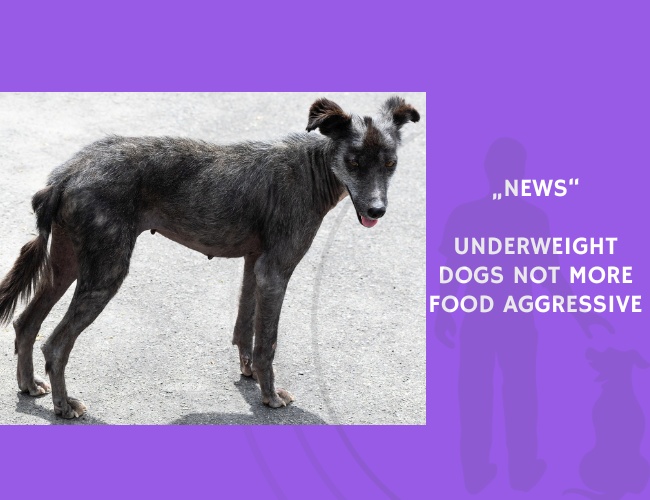
Food aggression—when a dog guards food or chews against perceived threats—is a common behavioral concern in shelters and homes. Many assume that dogs who have experienced food scarcity or starvation are more likely to display aggression during feeding. However, research published in Animals by K. Miller, E. Dolan, V. Cussen, and P. J. Reid disputes this notion through a large-scale analysis of 900 dogs rescued from cruelty cases by the American Society for the Prevention of Cruelty to Animals (ASPCA).
The study assessed each dog’s body condition score alongside behavioral tests for food and chew-item aggression directed at humans. Across all cases, only 9.2% of dogs showed aggression during feeding, a lower rate than typically reported in shelters. Surprisingly, underweight dogs were not more likely to show food-related aggression than those of normal weight. Moreover, when aggression did occur, it was not more severe in underweight dogs.
Additional findings revealed that male dogs were more likely to exhibit food or chew aggression than females, while breed type was not a significant factor. Dogs from urban cruelty cases, such as those in New York City, showed higher rates of aggression than those from large-scale neglect cases, though the reason remains unclear.
The researchers concluded that human-directed food aggression is not a behavioral marker of past deprivation. This has important implications for animal behavior experts, trainers, and legal proceedings in cruelty cases, as it undermines the assumption that aggression reflects prior hunger. Instead, food guarding may stem from innate temperament or situational stress rather than nutritional history.
By dispelling a common myth in shelter environments, this study emphasizes the importance of evidence-based behavioral assessment. Dogs should not be stigmatized for protective behaviors, and assumptions about their past experiences should be replaced with compassionate, individualized care.
Source: Miller, K., Dolan, E., Cussen, V., & Reid, P. J. (2019). Are Underweight Shelter Dogs More Likely to Display Food Aggression toward Humans? Animals, 9. Published November 27, 2019.










