
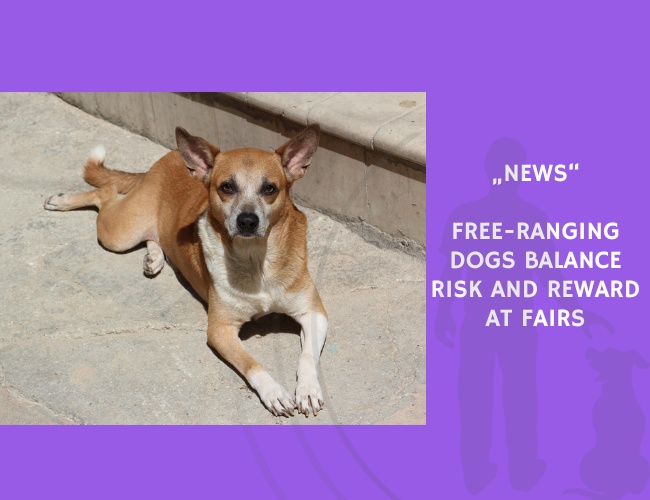
In bustling Indian fairgrounds, free-ranging dogs navigate a dynamic environment rich in food and human interaction but fraught with risk. A new study by Sourabh Biswas and colleagues, conducted across 13 fairground sites in Nadia and Bardhaman districts of West Bengal, reveals how these dogs use cognitive strategies to optimize access to resources while minimizing danger.
Researchers observed dogs during three phases of the fairs—initial, middle, and end—using spot census and scan sampling to document behaviors, sex, and location. Human footfall peaked during the middle phase, coinciding with an increase in dog abundance. Dogs were primarily engaged in foraging, gait activity, and vigilance, and their distribution was tightly linked to resource availability.
Dogs closer to the heart of the fairs displayed consistent, goal-directed behavior, suggesting the use of cognitive mapping and learned familiarity with resource hotspots. In contrast, dogs positioned farther from the fairgrounds exhibited less predictable behavior and greater aggression, likely driven by competition and reduced access to food. These behavioral variations highlight an impressive degree of behavioral flexibility and situational awareness.
The findings illustrate how free-ranging dogs, though unowned, actively interpret and adapt to human-dominated environments. Their decision-making reflects complex cognitive processes comparable to those seen in domesticated or trained dogs. The authors emphasize that such adaptive behaviors are crucial for survival in urban and peri-urban settings, where resource abundance fluctuates with human activity.
This research contributes to a deeper understanding of dog cognition and urban ecology, demonstrating how free-ranging dogs leverage intelligence and social learning to coexist with humans. It also underscores the importance of humane management strategies for urban dog populations that consider both behavioral ecology and public health.
Source: Biswas, S., Ghosh, K., Gope, H., & Bhadra, A. (2024). Fair game: Urban free-ranging dogs balance resource use and risk aversion at seasonal fairs. Published June 24, 2024.










