

Have you ever found yourself gently tugged left, then right, then left again during what you hoped would be a peaceful walk with your dog? You’re not alone. That seemingly erratic zig-zag pattern isn’t stubbornness or distraction—it’s a fascinating window into how your dog’s brain processes the world while moving through it. Let us guide you through the complex neurological dance happening beneath that wagging tail, and discover why understanding this pattern can transform your walking experience together.
Understanding the Canine Brain in Motion
How Your Dog Navigates the World
Your dog’s brain performs an extraordinary feat every single time you step out the door together. While you might think a simple walk requires simple attention, the canine brain orchestrates a symphony of sensory processing that would astound even the most advanced computer systems.
The vestibular system acts as your dog’s internal compass, managing body orientation, posture control, and spatial motion perception. Think of it as a biological GPS combined with a gyroscope, constantly feeding information about position and movement. But here’s where it gets fascinating—this system doesn’t work alone. During every moment of your walk, your dog’s brain integrates tactile sensations from their paws touching different surfaces, thermal information from temperature changes, postural feedback from muscles and tendons, and an overwhelming flood of olfactory data that we humans can barely imagine.
When you see your dog suddenly veer left toward that lamp post, their brain has just prioritized a novel or highly salient stimulus over the primary task of linear motion. This shift—what scientists call attentional drift—represents a moment where the brain’s focus literally fractures, pulled between competing sensory demands. It’s not disobedience; it’s neurology in action.
Signs Your Dog Is Experiencing Attentional Drift:
- Sudden head turns toward environmental stimuli without body following
- Pace changes from steady to erratic without clear external cause
- Dilated pupils indicating heightened arousal and sensory processing
- Ear position shifts constantly tracking different sound sources
- Body tension changes moving from relaxed to rigid as focus fragments
- Breathing pattern shifts from rhythmic to rapid or irregular
The Architecture of Attention
Your dog’s working memory during a walk resembles a juggler trying to keep multiple balls in the air while someone keeps tossing in new ones. Executive control functions must integrate your desired trajectory, interesting environmental scents, visual movements, auditory signals, and the physical feedback from the leash—all simultaneously.
The moment motion divides these cognitive resources, sustained attention becomes harder to maintain. Imagine trying to have a focused conversation while walking through a carnival—that sensory overload mirrors what your dog experiences in even moderately stimulating environments. When the working memory struggles to hold your desired trajectory in mind amidst overwhelming distractions, the result is that telltale zig-zag pattern you know so well. 🧠
The Scent-Driven Shift: When Noses Lead
Olfactory Perception as Primary Navigation
Did you know that your dog experiences the world primarily through scent in a way that’s almost incomprehensible to us visual-dominant humans? Dogs possess up to 300 million olfactory receptors compared to our mere six million. Their olfactory cortex is proportionally 40 times larger than ours. This isn’t just a difference in degree—it’s a difference in kind.
When your dog encounters what we call a “high scent zone,” their natural inclination activates deep evolutionary programming. Olfactory exploration isn’t optional for your dog’s brain; it’s fundamental to how they understand location, history, and social dynamics. That innocent-looking patch of grass? To your dog, it’s an information highway broadcasting messages about who passed by, when they passed, their emotional state, and whether they were friend or potential threat.
This intense focus on scent creates what researchers call “focus dissipation”—the integrity of the focal element (walking straight) shatters when powerful olfactory input arrives. Your dog isn’t choosing to ignore you; their brain’s priority system has temporarily reassigned resources to process critical environmental intelligence.
The Left-Right Scanning Pattern
That alternating left-right scanning you observe represents two simultaneous processes: exploratory mapping through olfactory sampling and, potentially, fragmented focus under excessive stimulus input. Watch closely next time—when your dog’s head swings left to right, they’re creating a scent map, using air currents and ground-level odors to build a three-dimensional understanding of their environment.
In rich sensory environments, this scanning intensifies. Urban environments with multiple dogs, wildlife, food sources, and human activity create olfactory layers—imagine trying to read several transparent documents stacked on top of each other, each with different information. Your dog’s brain attempts to parse these layers, leading to trajectory shifts as they follow scent trails that curve and intersect.
Research in chemosensory perception confirms that olfactory input is deeply connected to emotional reactivity and social interaction. When your dog suddenly pulls toward a particular spot, they may be responding not just to information, but to an emotional reaction triggered by that scent—excitement, curiosity, concern, or recognition. Through the NeuroBond approach, we understand that these aren’t random movements but meaningful communications about your dog’s internal experience. 🐾
Emotional States and Movement Patterns
The Arousal Connection
Your dog’s emotional state creates the foundation for everything that happens during your walk together. Arousal—mediated by neurochemicals like dopamine, norepinephrine, and cortisol—directly affects movement consistency and decision-making speed.
Picture arousal as a volume dial for your dog’s nervous system. At moderate levels, your dog is alert but focused, able to process information efficiently and respond to cues appropriately. Turn the dial too high, and you get motor impulsivity and rapid decision-switching—the nervous system equivalent of someone thinking and moving too fast for their own coordination.
Heightened excitement manifests as seeking behavior, where your dog’s brain enters exploration mode, constantly searching for novel stimuli. You might notice shorter attention spans, quicker directional changes, and an almost magnetic pull toward anything new or interesting. This isn’t hyperactivity; it’s a neurochemical state that makes sustained focus neurologically challenging.
Reading Your Dog’s Arousal Level:
- Low Arousal (Under-stimulated): Slow movements, disinterest in environment, reluctance to engage, lowered tail, minimal responsiveness
- Optimal Arousal (Learning Zone): Alert but calm, responsive to cues, controlled movements, soft body language, able to disengage from distractions
- Moderate High Arousal (Excitement): Quick movements, heightened interest, faster breathing, elevated tail, easily distracted but still responsive
- High Arousal (Over-threshold): Frantic movements, inability to respond to known cues, rapid breathing, fixed staring, pulling intensely, whining or barking
- Anxiety-Based Arousal: Constant scanning, tucked tail, tense muscles, ears back, avoidance behaviors, stress signals like lip licking or yawning
Conversely, anxiety increases vigilance and scanning behavior. An anxious dog experiences the walk as a threat assessment exercise, constantly evaluating potential dangers. This creates fragmented focus as attention jumps between potential concerns—that approaching jogger, the sudden noise, the unfamiliar dog across the street. Each assessment pulls focus away from linear movement, resulting in erratic patterns.

Calm as the Foundation
Here’s something beautiful: stable parasympathetic activation can restore linear walking focus. The parasympathetic nervous system represents your dog’s “rest and digest” mode—a state of calm alertness where learning and focus become possible.
You might wonder how to create this state during an exciting walk. This is where co-regulation becomes powerful. Your own emotional state, breathing pattern, and movement rhythm directly influence your dog’s nervous system. When you walk with calm confidence, maintaining a steady rhythm and regulated breathing, you create what we call an emotional field that your dog’s nervous system can attune to.
Rhythmic pacing serves as an anchor. Think of it like music—a steady beat helps organize movement and creates predictability. When your stride maintains consistency, when your energy stays even, you provide your dog’s brain with a stable reference point amidst environmental chaos. This external regulation gradually helps shift their internal state from sympathetic (aroused, reactive) to parasympathetic (calm, focused) dominance. 🧡
The Sensory Storm: Environmental Factors
High-Density Scent Zones
Certain environments create what we might call olfactory density hotspots—places where scent information becomes so rich and layered that your dog’s brain essentially gets overwhelmed with data. Dog parks, busy sidewalks, areas near restaurants, and natural spaces with wildlife all qualify.
In these zones, every step introduces new perceptual information that activates your dog’s consciousness and contributes to their understanding of their environment. The challenge? This information arrives faster than it can be fully processed while maintaining forward motion. The result is abrupt directional changes as your dog tries to investigate each scent source, temporarily abandoning linear movement for investigative priorities.
Common High-Density Scent Zones to Watch For:
- Dog Parks and Off-Leash Areas: Layers of territorial marking, excitement pheromones, stress signals from multiple dogs
- Urban Sidewalks: Food residue, human traffic, other dogs, wildlife passing through, garbage receptacles
- Grassy Medians and Verges: Animal traffic corridors where wildlife and dogs cross regularly
- Mailboxes and Fire Hydrants: Prime territorial marking spots creating intense olfactory information hubs
- Restaurant Districts: Food preparation smells, dropped food, grease traps, outdoor dining residue
- Apartment Building Entrances: Concentrated dog traffic from multiple residents creating scent layering
- Parks Near Water: Wildlife activity, waterfowl, fish, amphibians, plus all the regular dog and human activity
You can identify these zones by watching your dog’s behavior change. Notice when their pace suddenly shifts, when their head drops to ground level, when their entire body tenses with focus. These signals tell you their brain has just received priority information that demands attention.
Multi-Modal Sensory Overload
Now add visual and auditory complexity to olfactory richness. A busy urban environment creates a constant barrage of moving vehicles, bicycles, other dogs, children playing, construction sounds, and conversations. Each of these elements represents a potential focal point for your dog’s attention.
Research on multi-modal sensory environments demonstrates that when multiple senses receive intense input simultaneously, the brain’s capacity for singular focus diminishes. For your dog, this means attention constantly splits between competing stimuli. What was initially a simple walk—one focal element—fragments into numerous microfoci, each pulling for processing resources.
Visually dynamic environments are particularly challenging. Dogs have excellent motion detection—an evolutionary advantage for tracking prey and detecting threats. Every moving object triggers automatic attention orientation. In a busy park, this means dozens of automatic attention shifts every minute, each one potentially disrupting the walking trajectory.
The acoustic complexity adds another layer. Dogs hear frequencies we cannot and perceive sounds at distances that seem impossible to us. That distant siren, the high-pitched electronic device in a store, the ultrasonic pest deterrent in someone’s yard—all create sensory input that may cause your dog to startle, freeze, or suddenly change direction as they orient toward or away from the sound source.
Ground Texture and Environmental Unpredictability
Here’s something you might not have considered: the ground itself tells your dog a story through every step. Somatosensory perception includes tactile feedback through paw pads, as well as postural and movement information through muscle and tendon receptors. Changes from pavement to grass, concrete to gravel, or smooth surfaces to uneven terrain all provide different tactile feedback affecting gait and comfort.
Some dogs naturally prefer certain textures. A dog who finds gravel uncomfortable may zig-zag to find smoother patches. One who loves the feel of grass may pull toward it whenever possible. These aren’t stubborn choices—they’re responses to physical comfort and sensory preference.
Wind patterns carry scents unpredictably, causing your dog to shift direction to sample air currents more effectively. A strong wind from the side may cause your dog to lean or adjust trajectory simply to maintain balance while processing the olfactory information the wind delivers.
Unpredictable elements require rapid cognitive processing. When something unexpected appears—a child on a scooter, a cat darting across the path, a door suddenly opening—your dog’s brain must rapidly assess threat level, determine appropriate response, and execute a motor plan. These split-second decisions often result in sudden directional changes that look like zig-zagging but actually represent sophisticated threat assessment and avoidance behavior. 🐾
The Human Side: Handler Influence
Your Rhythm Matters More Than You Think
The Invisible Leash reminds us that awareness, not tension, guides the path. Your walking rhythm—including speed, stride length, and consistency—creates a predictable pattern that your dog’s brain can synchronize with. When you walk with steady, even steps, you essentially provide a metronome for your dog’s movement.
Think about walking with a friend who suddenly speeds up, slows down, stops without warning, or changes pace constantly. It’s frustrating and requires constant attention to avoid collisions or losing them in a crowd. Your dog experiences the same challenge when your rhythm varies unpredictably.
A consistent rhythm provides a clear signal that your dog can anticipate and align with. Their brain learns to predict your next step, your next turn, your pace changes. This predictability reduces the cognitive load required to stay coordinated with you, freeing up mental resources for maintaining focus despite environmental distractions.
Stride length also matters. If your stride is too long or your pace too fast for your dog’s natural gait, they must work harder physically and mentally to keep up. This extra effort depletes the energy available for self-regulation and focus maintenance. Matching your pace to your dog’s natural, comfortable stride creates ease in the system, making synchrony effortless rather than effortful.
Leash Communication: The Feedback Loop
Your leash is a communication line—a direct neurological link between you and your dog. Unfortunately, it’s also often a source of confusion. Inconsistent leash signals create feedback confusion that can actually reinforce zig-zag behavior rather than correcting it.
Variable tension teaches your dog that leash pressure doesn’t carry reliable information. Sometimes tension means “slow down,” sometimes it appears randomly when they’re doing nothing wrong, sometimes it’s followed by release, sometimes by increased pressure. This inconsistency prevents learning because the signal-to-noise ratio is too low—there’s no clear pattern to understand.
Unpredictable release timing creates similar confusion. If leash pressure releases at random intervals unrelated to your dog’s behavior, they can’t learn which actions earn freedom and which earn restriction. The leash becomes just ambient noise rather than meaningful communication.
Think of leash communication like a conversation. If someone’s words don’t match their tone, if they say one thing but mean another, if their responses to your actions seem random, can you learn from them? Your dog faces the same challenge with inconsistent leash feedback.
Clear, consistent leash communication means:
- Gentle, steady contact when walking together properly
- Brief, immediate feedback for pulling or deviating
- Instant release and praise when they self-correct
- No constant nagging tension that becomes background noise
- Directional information given through subtle body turns and pressure changes rather than jerking
This clarity allows your dog’s brain to build a reliable mental model of what’s expected, making compliance easier and reducing the need for constant corrections.
Emotional Synchrony: The NeuroBond Principle
Here’s where something truly beautiful happens. The NeuroBond principle recognizes that emotional synchrony precedes mechanical control—that connection creates cooperation more effectively than correction. Research on emotional body language demonstrates that complex signals consisting of coarticulated movements convey internal states that others perceive and respond to.
Your emotional state broadcasts through your body language, breathing, muscle tension, and energy. Your dog, as a social being finely tuned to reading mammalian emotional signals, perceives these broadcasts constantly. When you’re calm and confident, this emotional coherence creates what we might call a stabilizing field—an environmental factor that helps your dog feel secure and focused.
Imagine walking beside someone who radiates anxiety and tension. Their nervousness becomes contagious, making you scan for threats and feel unsettled. Now imagine walking with someone who’s calm and assured. Their confidence becomes grounding, helping you feel safe and present. Your dog experiences this same emotional contagion with you.
When handler and dog achieve emotional alignment, something remarkable emerges: rhythmic synchrony. Your movements naturally coordinate, your breathing patterns align, even your heart rates can begin to synchronize during connected movement. This synchrony facilitates shared trajectory focus—you’re not just walking near each other, you’re moving together as a coordinated unit.
Handler Behaviors That Promote Emotional Synchrony:
- Breathe Deeply and Regularly: Your breathing pattern influences your dog’s nervous system through proximity and energy
- Maintain Steady Pace: Consistent speed and stride length create predictability your dog can match
- Soften Your Body: Released tension in shoulders, arms, and core signals safety to your dog
- Use Calm Verbal Tones: Low, slow speech patterns activate parasympathetic responses
- Make Brief, Warm Eye Contact: Connection through gaze reinforces bond without creating pressure
- Smile Genuinely: Dogs read facial expressions; your relaxed face helps them relax
- Move With Confidence: Assured movement without hesitation signals leadership and security
- Stay Present: Mental focus on the shared experience rather than distraction creates energetic connection
This connection makes mechanical corrections less necessary because the dog naturally wants to maintain the pleasant state of synchrony. When corrections are needed, they’re more effective because they occur within a foundation of trust and connection rather than as isolated commands from a disconnected authority. That balance between awareness and attunement—that’s the essence of Zoeta Dogsoul. 🧡
Training Strategies That Work With the Brain
Structured Rhythmic Walking
Understanding the neuroscience of zig-zag walking opens doors to training approaches that work with your dog’s brain rather than against it. Structured rhythmic walking involves creating predictable patterns of movement that help reduce attentional fragmentation.
The practice is simple but powerful. Choose a consistent pace that feels comfortable for both you and your dog—not rushed, not dawdling, but a steady, sustainable rhythm. Begin in a low-distraction environment where your dog can focus more easily. Walk in straight lines with deliberate, even steps. At turns, use clear body orientation and gentle leash guidance rather than pulling.
Add metered turns—predictable direction changes at set intervals. Perhaps every 20 steps, you turn right. Another 20 steps, you turn left. This creates a rhythm not just in pace but in directional changes, helping your dog’s brain anticipate and prepare for transitions rather than being surprised by them.
This structured approach helps develop new neural pathways that prioritize linear motion and handler focus over environmental distractions. You’re essentially teaching your dog’s brain a new default pattern through repetition and predictability. The rhythm itself becomes calming, helping regulate arousal and maintain that parasympathetic state where learning and focus thrive.
Think of it as learning a dance. At first, every step requires conscious attention. With practice, the pattern becomes automatic, freeing up cognitive resources for refinement and expression. Your dog’s brain undergoes the same process, gradually automating the “walk calmly with human” pattern until it requires less active cognitive management.
Motion. Overload. Drift.
Movement fractures focus. Each step floods the brain with scent, sound, and sensation—attention splinters as instinct outruns intention.
The leash records confusion. Every zig and zag marks a shift between curiosity and command, where exploration overrides direction.
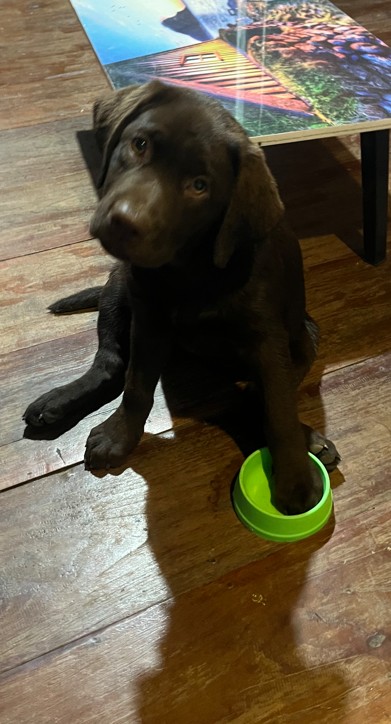
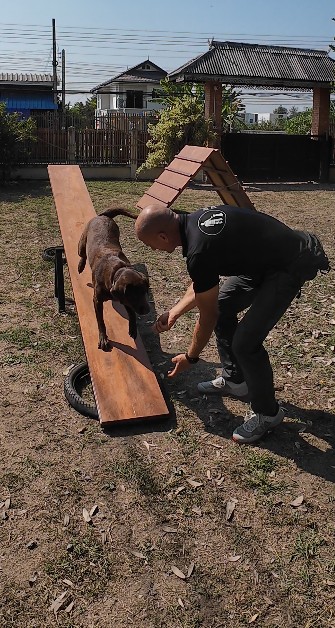

Calm restores coherence. Slow your pace, match rhythm, re-engage eye contact. When motion meets mindfulness, alignment returns.
State Before Structure: The Foundation
Perhaps the most crucial principle for addressing zig-zag walking is this: achieve calm alertness before attempting leash correction. This concept of “state before structure” recognizes that emotional regulation is key to behavioral change.
A dog in a high-arousal state—whether excited or anxious—experiences reduced executive function. Their prefrontal cortex, responsible for impulse control and decision-making, becomes less influential while emotional and instinctive brain regions dominate. Attempting to enforce structural rules (like “walk straight”) when the neurological capacity for compliance is impaired rarely succeeds and often increases frustration for both of you.
Instead, focus first on shifting the internal state. This might involve:
- Pausing the walk when you notice arousal climbing
- Using calm breathing and grounding exercises
- Allowing a brief period of stationary sniffing to satisfy curiosity
- Practicing simple, already-mastered cues to rebuild focus
- Physical contact like gentle pressure or calm stroking if your dog finds this regulating
Quick Regulation Techniques During Walks:
- The Tree Stand: Stop moving completely, become still and calm, wait for your dog to orient back to you
- Pattern Interrupt: Change direction 180 degrees, creating a novel stimulus that resets attention
- Sniff Break Protocol: Allow 30-60 seconds of free sniffing, then calmly resume walking
- Touch Grounding: Place gentle hand on your dog’s shoulder or chest, providing physical anchor
- Slow Breathing Sync: Stand still, take 5 deep breaths, allowing your dog to sense your calm
- Name Game: Softly say your dog’s name, reward eye contact, repeat 3-5 times
- Step Back Reset: Take 3-5 steps backward together, creating coordination opportunity
- Sit-Release Cycle: Cue sit, brief pause, release with “okay,” creating mental reset
- Ground Sniff Circle: Allow your dog to sniff in a small circle around you before continuing
Once you see signs of returning calm—softer body language, slower breathing, ability to respond to cues, willingness to make eye contact—then you can reintroduce the walking structure. The correction occurs in a neurological context where your dog can actually process and learn from it.
This approach aligns with therapeutic principles used in human contexts: addressing the underlying emotional or arousal state before attempting behavioral modification yields more sustainable change. For your dog, this means becoming a partner in regulation rather than an enforcer of rules, which ultimately creates deeper cooperation.
🐕 The Zig-Zag Walker 🧠
Understanding When Focus Collapses in Motion: A Neuroscience-Based Journey to Calm Walking
Phase 1: Recognition
Understanding the Pattern
🧠 The Neuroscience
Your dog’s brain juggles multiple sensory inputs during walks: vestibular balance, proprioceptive feedback, olfactory floods, visual motion tracking, and auditory signals. When this cognitive load exceeds processing capacity, attentional drift occurs—focus literally fractures between competing demands.
🎯 What You’ll See
• Sudden head turns without body following
• Erratic pace changes from steady to chaotic
• Constant left-right scanning patterns
• Body tension shifts as focus fragments
• Dilated pupils indicating sensory overload
✅ Your First Step
Spend one week observing without judgment. Note when zig-zagging intensifies, which environments trigger it most, and your dog’s emotional state during these moments. This baseline data reveals the pattern you’re working with.
Phase 2: Scent Awareness
Respecting the Olfactory World
🔬 Olfactory Dominance
Dogs possess up to 300 million olfactory receptors compared to our 6 million. Their olfactory cortex is 40 times larger proportionally. High-density scent zones don’t just distract—they overwhelm the navigation system, causing focus dissipation where linear walking fragments into investigative priority.
🗺️ High-Density Zones
• Dog parks (territorial marking layers)
• Urban sidewalks (food, traffic, waste)
• Mailboxes and fire hydrants (information hubs)
• Restaurant districts (cooking smells, residue)
• Grassy medians (wildlife corridors)
🎓 Training Response
Implement structured sniff breaks. Allow 30-60 seconds of free investigation in controlled spots, then calmly resume walking. This satisfies the olfactory drive without creating constant pulling, teaching your dog that investigation happens at designated times.
Phase 3: State Management
Arousal Before Structure
⚖️ The Arousal Spectrum
Arousal functions like a volume dial. Moderate levels enable focus; too high creates motor impulsivity and rapid decision-switching; too low causes disengagement. The sweet spot—calm alertness—is where learning and linear motion become possible. Neurochemicals like dopamine, norepinephrine, and cortisol mediate these shifts.
🎭 Reading the Signs
Optimal Zone: Alert but calm, responsive to cues, controlled movements, soft body language
Over-Threshold: Frantic movements, inability to respond, rapid breathing, fixed staring, intense pulling
Anxiety-Based: Constant scanning, tucked tail, tense muscles, ears back, stress signals
🧘 Pre-Walk Calming
Start regulation before leaving home: gentle massage along the spine, brief nose work games, calm sit-stay at the door, slow deliberate leash attachment, three deep breaths together. Begin the walk from a parasympathetic state rather than sympathetic arousal.
Phase 4: Emotional Synchrony
The NeuroBond Connection
🌊 The Invisible Leash Principle
Through the NeuroBond approach, emotional synchrony precedes mechanical control. Your calm confidence creates a stabilizing field that your dog’s nervous system attunes to. When handler and dog achieve emotional alignment, rhythmic synchrony emerges naturally—coordinated movement, aligned breathing, even heart rate synchronization.
🎵 Your Rhythm Matters
• Maintain steady pace and consistent stride
• Breathe deeply and regularly
• Soften body tension in shoulders and core
• Use low, slow vocal tones
• Move with quiet confidence
• Stay mentally present in the shared experience
📡 Clear Leash Communication
Inconsistent leash signals create confusion. Practice: gentle steady contact during proper walking, brief immediate feedback for pulling, instant release when self-correcting, no constant nagging tension. The leash becomes a communication line, not a control tool.
Phase 5: Context Control
Strategic Environment Selection
🎯 Multi-Modal Overload
Visually dynamic or acoustically complex environments split attention into microfoci. Busy urban areas with moving vehicles, bicycles, children, construction sounds create constant barrage. Each stimulus triggers automatic attention orientation, disrupting trajectory. Dogs’ superior motion detection and frequency range compound this challenge.
🗓️ Progressive Exposure
Weeks 1-2: Familiar, low-distraction routes only
Weeks 3-4: Same routes, different times of day
Weeks 5-6: Introduce moderate complexity
Weeks 7-8: Practice near challenging areas without entering
🛠️ Tactical Choices
Use 6-foot leash for balance of freedom and control. Choose times when activity matches your dog’s regulation capacity. Select routes with natural break points for sniffing. Build environmental predictability to reduce cognitive load and preserve executive function.
Phase 6: Rhythmic Training
Building New Neural Pathways
🧠 Neuroplasticity in Action
Structured rhythmic walking creates predictable movement patterns that reduce attentional fragmentation. Through repetition, the brain develops automated neural pathways prioritizing linear motion over environmental distractions. Each successful practice strengthens synaptic connections, making calm walking increasingly automatic.
🏃 The Practice Protocol
Choose consistent pace comfortable for both. Walk straight lines with deliberate, even steps. Add metered turns—every 20 steps turn right, next 20 turn left. Use clear body orientation and gentle guidance. The rhythm itself becomes calming, promoting parasympathetic activation where focus thrives.
⏱️ Realistic Timeline
Some dogs show improvement within days, others require weeks or months. Factors include age (younger = faster plasticity), training history, emotional baggage, and consistency. Celebrate 30-second stretches of focus—neural pathways are forming, they need strengthening through continued practice.
Phase 7: Real-Time Resets
Quick Regulation Techniques
🛑 State Before Structure
When arousal climbs, attempting corrections while executive function is impaired rarely succeeds. Shift internal state first. A dog in high-arousal experiences reduced prefrontal cortex influence—emotional and instinctive regions dominate. Address the state, then reintroduce structure.
🔄 Instant Interventions
• Tree Stand: Stop completely, stay calm, wait for reorientation
• Pattern Interrupt: 180° turn creating reset stimulus
• Sniff Break: 30-60 seconds free investigation
• Touch Ground: Gentle hand on shoulder as anchor
• Breathing Sync: Five deep breaths standing still
• Name Game: Say name, reward eye contact, repeat
👀 Return Signs
Watch for softer body language, slower breathing, ability to respond to cues, willingness for eye contact. These signals indicate readiness to resume structured walking. The nervous system has shifted back toward regulation.
Phase 8: Soul Recall Integration
Emotional Memory and Location
💭 Context-Dependent Memory
Soul Recall moments reveal how memory and emotion intertwine in behavior. Your dog’s brain stores emotional associations with locations—not just information. That corner where they saw a friendly dog? Excitement activates automatically. The spot where a truck startled them? Anxiety rises unbidden. These operate below conscious control.
🗺️ Strategic Route Building
Locations with positive walking history build associations promoting regulated states. Their nervous system learns “this path = safety and connection.” Emphasize these routes while gradually desensitizing negative-association areas. Build new positive memories that outweigh old fearful ones.
🌱 Growing New Patterns
Each successful calm walk strengthens neural circuits underlying focused behavior. Consistency matters—repetition creates synaptic strengthening. The zig-zag walker transforms into steady walker through patient practice building new pathways and positive emotional associations in memory.
🔍 Zig-Zag Patterns: Understanding Different Manifestations
🐕 Young Dogs (Under 2 Years)
Pattern: High-energy seeking behavior, rapid attention shifts, enthusiasm-driven pulling
Cause: Developing executive function, intense SEEKING system activation, learning phase
Approach: Short frequent training, high reward rate, patience with developmental timeline
🧓 Senior Dogs (8+ Years)
Pattern: New zig-zagging in previously steady walker, confusion, potential pain-avoidance
Cause: Cognitive decline, arthritis affecting gait, sensory deterioration, anxiety from changes
Approach: Veterinary assessment first, gentler expectations, shorter routes, more support
😰 Anxiety-Based Zig-Zagging
Pattern: Vigilant scanning, escape attempts, stress signals, reactivity to triggers
Cause: Sympathetic nervous system dominance, perceived lack of safety, trauma history
Approach: Focus on safety building, very gradual exposure, professional support may be needed
🎯 Scent-Hound Breeds
Pattern: Intense nose-down tracking, following scent trails, complete environmental absorption
Cause: Breed-specific olfactory dominance, genetic tracking drive, sensory prioritization
Approach: Scheduled scent work, designated investigation times, harness vs collar consideration
⚡ High-Drive Working Dogs
Pattern: Motion-reactive pulling, herding behavior on walks, constant environmental monitoring
Cause: Heightened arousal baseline, movement sensitivity, under-exercised mental capacity
Approach: Pre-walk physical exercise, mental enrichment, job-oriented training during walks
🏙️ Urban vs Rural Dogs
Urban: Multi-modal overload, constant novelty, higher baseline arousal from complexity
Rural: Wildlife scent intensity, less human habituation, wider sensory scanning needs
Adaptation: Train in your actual environment type, gradually build tolerance to complexity
⚡ Quick Reference: The Focus Formula
Calm State + Clear Communication + Appropriate Challenge = Focused Walking
The 3-Breath Rule: When focus collapses, stop and take three deep breaths. If your dog doesn’t reorient, they’re over-threshold—reduce complexity immediately.
The 30-Second Victory: Celebrate every 30 seconds of calm focus. Neural pathways strengthen with recognition and reward.
The Rhythm Ratio: For every 1 minute of structured walking, allow 15-20 seconds of free sniffing. This satisfies investigation drive while maintaining overall structure.
Environment Formula: Start at 30% of your dog’s distraction tolerance, not 80%. Build gradually. Success breeds success; overwhelm breeds chaos.
🧡 The Zoeta Dogsoul Perspective
The zig-zag walker isn’t broken—they’re a sentient being navigating overwhelming sensory complexity while trying to meet your expectations. Through the NeuroBond approach, we recognize that emotional connection precedes obedience. The Invisible Leash teaches us that true guidance flows through awareness and attunement, not tension and force. When we honor Soul Recall—the emotional memories embedded in every path you walk together—we transform training from correction to connection.
Each walk becomes an opportunity for co-regulation, for building trust, for strengthening the bond that makes cooperation natural rather than coerced. The journey from chaos to calm isn’t about dominance or perfect heeling. It’s about understanding your dog’s internal experience, supporting their nervous system regulation, and moving together in rhythmic harmony.
That balance between neuroscience and compassion, between structure and soul, between understanding biology and honoring emotion—that’s the essence of Zoeta Dogsoul. Your dog doesn’t need a stricter handler. They need a partner who sees them, understands them, and walks beside them with patient wisdom.
© Zoeta Dogsoul – Where neuroscience meets soul in dog training
Environmental Management and Preparation
Smart training considers environmental factors as tools rather than obstacles. Leash length, route selection, and pre-walk rituals all contribute to trajectory stability.
Leash length creates interesting dynamics. A longer leash offers freedom but also more opportunity for deviation and momentum buildup before you can provide feedback. A shorter leash gives immediate control but can increase tension and reduce your dog’s sense of autonomy. Many handlers find a six-foot leash offers the best balance—enough freedom for comfort while maintaining manageable control.
Consider starting training sessions with shorter leashes in lower-distraction environments, gradually increasing length and environmental complexity as skills develop. This progressive approach builds confidence and capacity systematically rather than overwhelming your dog with too much freedom in too challenging a context.
Environmental predictability reduces cognitive load. When choosing routes, consider:
- Familiar paths where your dog knows what to expect
- Times of day when activity levels match your dog’s regulation capacity
- Routes that allow you to control approach speed to high-stimulus areas
- Paths with natural breaks where brief sniffing or rest is appropriate
Pre-walk arousal management sets the stage for success. Many zig-zag patterns begin at the door, with the dog already over-aroused before the walk begins. Consider implementing a pre-walk routine that promotes calm:
- Requiring a calm sit-stay at the door before opening it
- Using slow, deliberate movements while putting on the leash
- Taking three deep breaths together before stepping outside
- Walking calmly to a designated “walk begins here” spot before allowing increased excitement
Effective Pre-Walk Calming Activities:
- Gentle Massage: 2-3 minutes of slow, firm pressure along the spine and shoulders
- Nose Work Games: Brief indoor scent games that satisfy seeking drive before the walk
- Basic Obedience Review: Running through simple, well-known cues to engage the thinking brain
- Calm Eye Contact: Sitting together quietly, rewarding soft attention without excitement
- Rhythmic Breathing Exercise: Encouraging your dog to settle beside you while you breathe slowly
- Light Stretching: Gentle physical manipulation that promotes body awareness and calm
- Feeding Puzzle: Using a slow-feeder or puzzle toy to provide satisfaction before departure
- Quiet Music: Playing calming frequencies designed for canine nervous system regulation
This preparation helps your dog start the walk in a regulated state, making maintenance of that state throughout the walk much more achievable. 🐾
The Science Behind the Behavior
Affective Neuroscience: The Emotional Systems
Understanding why your dog zig-zags requires looking at primal emotional systems that drive behavior. Affective neuroscience research identifies core emotional systems that all mammals share. Two systems particularly relevant to zig-zag walking are SEEKING and CARE.
The SEEKING system drives exploration, anticipation, and investigation. It’s the neurological substrate of curiosity and motivation. When activated strongly, your dog feels compelled to explore, investigate scents, check out novel objects, and follow interesting trails. This system is essential for survival—it motivates foraging, learning about the environment, and gathering information.
During walks, the SEEKING system often runs high. Everything is interesting! Every smell tells a story! Every sight could be important! This heightened seeking creates the pull toward investigation that manifests as directional changes and erratic movement.
The CARE system, conversely, relates to nurturing, safety, and social bonding. When balanced with SEEKING, it provides regulation—a sense that exploration can pause because safety and connection are maintained. The handler’s role includes activating this CARE system through their presence, consistent support, and emotional availability.
When SEEKING operates without sufficient CARE regulation, erratic exploration and focus instability result. Your dog chases every curiosity without the balancing influence of “I’m safe with my person, I don’t need to investigate everything urgently.” Through the NeuroBond approach, the handler becomes a source of that CARE regulation, providing an emotional anchor that helps modulate the intensity of the SEEKING system.
Polyvagal Theory: The Safety Connection
Polyvagal theory, developed by Dr. Stephen Porges, offers profound insights into how your dog’s nervous system responds to environmental factors during walks. The theory describes three neurological states: social engagement (ventral vagal), mobilization (sympathetic), and immobilization (dorsal vagal).
In the social engagement state, your dog feels safe and connected. Their nervous system supports calm alertness, focus on you, ability to learn, and coordinated movement. This is the ideal state for walking together—present, attentive, but not anxious.
When perceived safety decreases, the nervous system shifts to mobilization—the sympathetic “fight or flight” response. In this state, your dog becomes hypervigilant, scanning for threats, ready to react quickly. Linear motion becomes impaired because the brain prioritizes threat assessment over coordinated movement with you. The zig-zag pattern here represents constant orientation to potential dangers and an inability to settle into sustained focus.
If overwhelm continues, some dogs shift to immobilization—a shutdown state where they may freeze, refuse to move, or show extreme stress signals. This is less common during walks but can occur in dogs with significant anxiety or trauma history.
The key insight? These state changes happen below the level of conscious control. Your dog isn’t choosing to be reactive or distracted—their autonomic nervous system is responding to safety cues in the environment. Your role as handler includes being a cue of safety yourself. Your calm presence, predictable behavior, and emotional regulation can signal to your dog’s nervous system that the ventral vagal social engagement state can be maintained even when the environment is stimulating.
Executive Function and Cognitive Load
Executive functions represent the brain’s management system—the cognitive processes that plan, focus attention, remember instructions, and juggle multiple tasks. During walking, your dog’s executive functions must:
- Maintain the goal of walking with you
- Inhibit impulses to investigate every interesting thing
- Switch attention between environmental monitoring and handler focus
- Hold in working memory where they’re going and how you want them to behave
- Adjust motor output based on terrain, speed, and handler feedback
Motion itself consumes executive function resources. The brain must process proprioceptive feedback about body position, visual input about terrain and obstacles, vestibular information about balance, and motor planning for coordinated movement. This baseline cognitive load is significant before adding environmental distractions.
When rich sensory environments add olfactory complexity, visual motion, and acoustic input, the executive function system can become overloaded. Capacity for sustained attention and directional consistency reduces because the processing demands exceed available resources.
Think of executive function like a smartphone battery. Basic operations drain it slowly. Add multiple apps running, GPS navigation, video streaming, and downloads simultaneously, and the battery depletes rapidly. Your dog’s cognitive battery during a stimulating walk faces similar depletion. The zig-zag pattern often represents moments when the executive function battery is running low, making sustained focus neurologically difficult.
Training that reduces cognitive load—through environmental simplification, clearer communication, emotional regulation, and practiced patterns—helps preserve executive function capacity. The more automatic the walking pattern becomes through practice, the less executive function it requires, leaving more capacity for managing distractions without focus collapse.
Olfactory Dominance: Following the Invisible
Perhaps nothing influences zig-zag walking more than the simple fact that dogs live in an olfactory world we can barely imagine. The olfactory dominance model recognizes that dogs’ sensory priorities constantly shift between olfactory, visual, and proprioceptive input, with olfaction frequently taking precedence.
Your dog’s nose delivers information continuously. Unlike vision, which requires directional orientation, or hearing, which depends on sound occurrence, olfaction provides constant input with every breath. Each inhalation brings data about the environment’s composition, recent visitors, emotional states of other animals, food sources, and potential threats.
This constant olfactory information stream can overload navigation control. Imagine trying to walk in a straight line while someone continuously shows you fascinating photos, whispers interesting news, and hands you objects to examine. Each piece of information demands attention, making sustained focus on the simple act of walking forward extremely challenging. That’s your dog’s experience in a scent-rich environment.
The olfactory cortex connects directly to the limbic system—the brain’s emotional center—meaning scents trigger immediate emotional responses. A particular scent might instantly spark excitement, anxiety, curiosity, or comfort. These emotional reactions drive behavior more directly than cognitive decisions, explaining why your dog might suddenly lunge toward or away from something they’ve smelled before you’ve noticed any change.
Understanding olfactory dominance shifts our perspective on zig-zag walking from “my dog isn’t listening” to “my dog’s primary sense is overwhelming their capacity for linear focus.” This understanding opens doors to compassionate, effective interventions that honor their sensory experience while gradually building the capacity to maintain trajectory despite olfactory interest. 🧠
Moments of Soul Recall: Memory and Walking
When Past Experiences Shape Present Paths
Have you noticed that your dog’s walking behavior differs on familiar routes versus new ones? Or that certain locations trigger stronger zig-zag patterns? These observations point to the role of emotional memory in movement consistency.
Soul Recall moments reveal how memory and emotion intertwine in behavior. Your dog’s brain stores not just information about locations but emotional associations with them. That corner where they once saw a friendly dog? Excitement and anticipation activate as they approach, potentially increasing arousal and disrupting trajectory. The spot where a loud truck startled them months ago? Anxiety rises, triggering vigilance and scanning behavior.
These emotional memories operate largely outside conscious control. Your dog isn’t deliberately remembering past events—their nervous system automatically activates emotional states associated with location-based memories. This phenomenon, called context-dependent memory, means the environment itself triggers internal states that influence behavior.
Positive emotional memories can work in your favor. Locations where your dog has consistently experienced calm, pleasant walks build associations that promote regulated states. Their nervous system learns “this path = safety and connection,” making focus easier to maintain. Strategic route selection that emphasizes these positive associations can gradually build your dog’s capacity for regulated walking.
Conversely, locations with negative associations require patience and potentially systematic desensitization. Pushing through anxiety-triggering environments without addressing the underlying emotional response reinforces the pattern. Instead, consider whether those routes are necessary, and if so, work gradually to build new, positive associations that can outweigh old fearful ones.
Building New Neural Pathways
The beautiful truth about brains—both human and canine—is their neuroplasticity. The zig-zag walker can become the steady walker through consistent, patient practice that builds new neural pathways and emotional associations.
Each time you and your dog successfully navigate a walk with improved focus and reduced zig-zagging, you strengthen the neural circuits underlying that behavior. Repetition matters because learning happens through synaptic strengthening. The connections between neurons that fire together during calm, focused walking become stronger and more automatic with each successful repetition.
This learning requires:
- Consistency – practicing the same approach repeatedly so the brain can identify the pattern
- Appropriate challenge – not so easy it requires no effort, not so hard it causes overwhelming stress
- Positive reinforcement – rewards that mark successful behavior and create positive emotional associations
- Patience – understanding that neural pathway development takes time and proceeds gradually
The timeline varies by dog. Some show noticeable improvement within days, others require weeks or months. Factors affecting the timeline include age (younger brains show faster plasticity), prior training history, emotional baggage from past experiences, and consistency of practice.
Celebrate small improvements. The dog who used to zig-zag constantly but now maintains focus for 30-second stretches is showing real progress. The neural pathways are forming; they simply need more strengthening through continued practice. 🧡
Creating Your Action Plan
Assessing Your Starting Point
Before implementing changes, take time to truly understand your dog’s current patterns. For one week, observe and note:
- Times of day when walking is calmest vs most chaotic
- Environmental features that trigger increased zig-zagging
- Your dog’s emotional state at walk beginning vs end
- The relationship between pre-walk activities and walk quality
- Your own emotional state and how it correlates with your dog’s behavior
This assessment provides baseline data and helps identify specific intervention points. You might discover that morning walks after breakfast are significantly calmer than evening walks before dinner, suggesting arousal and hunger play roles. You might notice zig-zagging intensifies near the dog park but remains minimal in the residential neighborhood, indicating environmental complexity matters.
Document honestly without judgment. This isn’t about identifying failures but understanding current reality so you can create an effective improvement plan.
Implementing Progressive Change
Armed with assessment insights, create a progressive training plan:
Week 1-2: Foundation Building
- Focus exclusively on achieving calm before walks
- Practice the pre-walk routine until it becomes habit
- Choose the lowest-distraction route available
- Prioritize connection over distance
- Celebrate every moment of calm focus, however brief
Week 3-4: Rhythmic Practice
- Introduce structured rhythmic walking in the familiar, calm environment
- Practice straight lines with metered turns
- Use consistent pace and stride
- Add gentle leash communication practice
- Continue emphasizing state before structure
Week 5-6: Gradual Challenge
- Slowly increase environmental complexity
- Introduce slightly higher-distraction routes
- Practice in different times of day
- Begin working near (but not in) more stimulating environments
- Maintain your calm, regulated presence as the anchor
Week 7-8: Generalization
- Practice in varied environments
- Test skills in previously challenging locations
- Reduce support gradually as independence grows
- Fine-tune leash communication
- Build confidence in both you and your dog
This timeline is approximate—adjust based on your dog’s response. Some dogs progress faster, others need more time at each stage. The key is ensuring solid foundation at each level before adding complexity.
Tools for Success
Certain tools can support your training efforts:
Physical Tools:
- A well-fitted harness that doesn’t restrict movement or cause discomfort
- A six-foot leash that offers balance between freedom and control
- High-value treats for rewarding calm, focused moments
- A treat pouch for convenient reward delivery
Mental Tools:
- Patience and realistic expectations
- Ability to read your dog’s emotional state accurately
- Commitment to your own emotional regulation
- Willingness to adjust plans based on daily variation
- Celebration of small progress rather than fixation on perfection
Knowledge Tools:
- Understanding of canine neuroscience and sensory processing
- Recognition of when your dog is over-threshold
- Appreciation for how environment affects behavior
- Awareness of your own influence through emotional synchrony
When to Seek Professional Help
Some zig-zag walking patterns indicate issues that benefit from professional assessment:
- Extreme anxiety or fear-based behavior during walks
- Aggressive reactions to environmental triggers
- Complete inability to focus despite patient, consistent training
- Signs of pain or physical discomfort affecting gait
- Regression in previously established skills
Red Flags That Indicate Professional Support Is Needed:
- Escalating Reactivity: Reactions to triggers becoming more intense rather than improving over time
- Panic Responses: Full panic attacks, attempts to flee, or complete shutdowns during walks
- Physical Symptoms: Limping, favoring legs, reluctance to walk on certain surfaces, yelping when moving
- Aggressive Displays: Lunging, snapping, or aggressive posturing toward people, dogs, or environmental elements
- Extreme Avoidance: Refusal to leave home, freezing completely, or attempting to return home immediately
- Self-Harm Behaviors: Excessive paw licking, tail chasing, or other compulsive behaviors triggered by walks
- No Progress After 8-12 Weeks: Consistent training showing zero improvement or worsening patterns
- Handler Stress Impact: Your own anxiety or frustration escalating to levels affecting wellbeing
- Age-Related Changes: Sudden behavior changes in senior dogs that may indicate cognitive decline or pain
A certified professional dog trainer or veterinary behaviorist can provide individualized assessment and intervention plans. They might identify contributing factors you’ve missed or suggest approaches specifically tailored to your dog’s unique needs. There’s no shame in seeking help—it’s a sign of commitment to your dog’s wellbeing. 🐾
Living With Understanding: A New Perspective
The zig-zag walker isn’t a broken walker—they’re a dog whose remarkable sensory capacities sometimes overwhelm their ability to maintain human-preferred linear motion. This understanding transforms frustration into compassion, allowing you to become a patient guide rather than an annoyed enforcer.
Every walk becomes an opportunity to support your dog’s nervous system regulation, to practice emotional synchrony, to build those neural pathways for calm focus. The goal isn’t perfection—it’s progress. It’s the gradual strengthening of your dog’s capacity to maintain trajectory despite living in a sensory world we can barely imagine.
You might find that as you implement these principles, something unexpected happens: the walks become more enjoyable for you too. When you release the expectation of perfect heeling and instead focus on connection and gradual improvement, the pressure lifts. You notice your dog’s communication more clearly. You feel the moments of synchrony when you’re truly moving together rather than just being connected by a leash.
The Invisible Leash teaches us that the most powerful connection isn’t physical—it’s emotional and energetic. As you develop this connection through patient practice and emotional attunement, the physical leash becomes almost unnecessary, a safety backup rather than a primary control tool.
Your dog’s zig-zag pattern tells a story about their internal experience—their sensory priorities, emotional state, and cognitive capacity in that moment. Learning to read this story with compassion and respond with appropriate support strengthens your bond and creates a foundation for genuine cooperation.
The Journey Forward: Walking Together
Understanding the neuroscience behind zig-zag walking empowers you to address it effectively while honoring your dog’s experience. The principles we’ve explored—state before structure, emotional synchrony, environmental management, progressive training, and compassionate patience—work together to create sustainable change.
Remember that development isn’t linear. You’ll have excellent walks and challenging ones, moments of beautiful synchrony and moments of complete chaos. This variation is normal. What matters is the overall trajectory of improvement and the deepening trust between you and your dog.
As you practice these approaches, you’re doing more than training better walking behavior. You’re learning to see the world through your dog’s experience, to regulate your own emotional states, to communicate more clearly, and to become a source of safety and stability for your companion. These skills extend far beyond walking, enriching every aspect of your relationship.
The zig-zag walker can become the focused walker. The overwhelmed dog can develop regulation capacity. The handler-dog pair walking in tension can transform into a synchronized team moving through the world together. It requires understanding, patience, consistent practice, and compassionate persistence.
But here’s the truth: the journey itself—the process of learning together, growing together, becoming more attuned to each other—matters as much as the destination. Each walk is a chance to practice presence, to support regulation, to celebrate small victories, and to simply be together in motion.
That balance between science and soul, between understanding neurology and honoring emotion, between structure and connection—that’s the essence of Zoeta Dogsoul. And that’s what transforms a frustrating zig-zag walk into a beautiful journey of mutual learning and deepening bond. 🧡
Your dog isn’t broken. They’re not stubborn. They’re not trying to frustrate you. They’re a remarkable being with sensory capacities and emotional needs navigating a complex world, doing their best to meet your expectations while managing their own internal experience. Your job is simply to understand, support, guide, and walk beside them with patience and love.
The path to focused walking begins with a single calm step. Then another. And another. With understanding, consistency, and compassionate persistence, those steps accumulate into something beautiful: a dog who walks with you not because they must, but because moving together in harmony feels better than moving alone.
May your walks together become moments of connection, opportunities for growth, and celebrations of the extraordinary bond between human and dog. One step at a time, you’re building not just better walking behavior, but a deeper, more meaningful relationship built on mutual understanding and trust.
That’s the real destination worth walking toward. 🐾🧡










