

Introduction: When “Come!” Feels Like a Suggestion
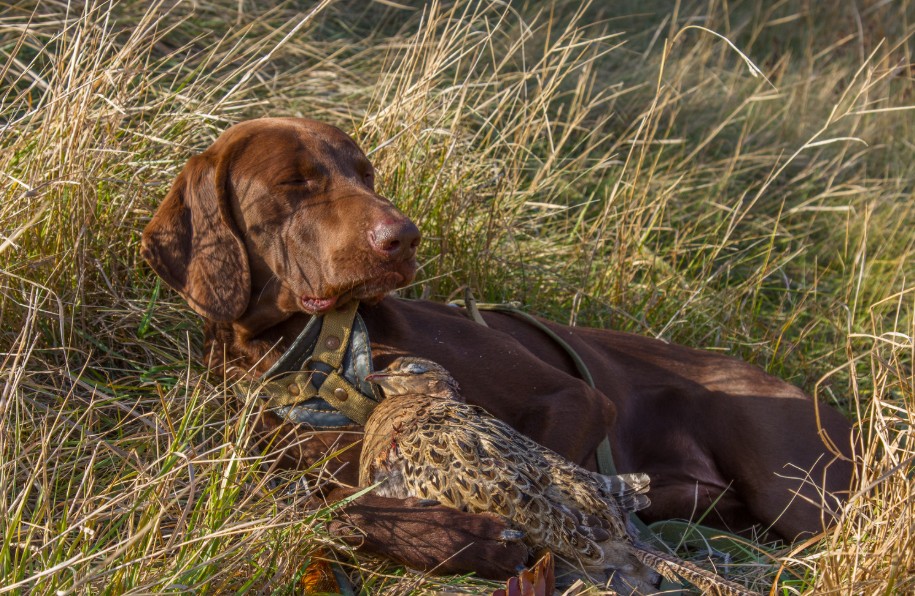
You’ve trained the cue. You’ve practised in the garden. Your dog looked you right in the eye, tail wagging, and trotted back to you perfectly — indoors. Then you took your Beagle, Pointer, or Jack Russell to a field, called “Come!” — and watched them disappear into the tall grass, nose down, ears off, as if you didn’t exist.
If this sounds familiar, you’re not alone. And here is the most important thing you’ll read today: your dog is not being disobedient. What looks like defiance is, in fact, a deeply rooted neurobiological response shaped by centuries of selective breeding, reward competition, and attentional capture.
This guide takes you on a comprehensive journey through the science of why hunting and gundog breeds struggle with recall — not because they don’t understand the cue, but because their inherited behavioural systems create powerful motivational competition with your voice, your treats, and your expectations. Understanding this distinction is essential for developing training approaches that work with your dog’s brain, not against it.
We’ll cover everything from evolutionary predatory sequences and dopamine neuroscience to practical whistle protocols and long-line techniques — because real understanding demands both depth and application.
Let’s explore what’s really happening when your hunting breed “forgets” to come back — and how that knowledge changes everything about the way you train. 🐾
The Predatory Sequence: Your Dog’s Built-In Behavioural Blueprint
What “Prey Drive” Actually Means (and Doesn’t Mean)
One of the most common terms you’ll hear in dog training circles is “prey drive.” But from a behavioural science perspective, the term is actually misleading. Hunting behaviour in canids is not one single, monolithic urge. It is a sequence of partially independent motor patterns that have been selectively modified across different breeds over hundreds of years.
The concept of “drive” was introduced by psychologist Robert Woodworth in 1918 as an intervening variable — a way to explain why an animal’s response to a given stimulus will vary when all apparent conditions seem constant. Drive distinguishes between the energising aspects and the directing aspects of motivation. Critically, prey itself is not a drive — it is an object of predation. What we call “predatory behaviour” is better understood as a secondary drive, derived from learned habits and selective breeding. It is activated by specific environmental stimuli such as movement, scent, and sound, and modulated by internal states like hunger, arousal, and learned associations.
The Steps in the Predatory Sequence
The full predatory sequence in canids typically includes several distinct stages:
- Orientation — detecting and locating prey through sensory scanning
- Eye-stalk — focused visual attention and deliberate, controlled approach
- Chase — pursuit of moving targets with increasing arousal
- Search — systematic investigation of environments using scent, sight, and sound
- Capture — physical contact, restraint, and securing of prey
- Retrieve — transport of prey or objects back to a location or handler
Here is where it gets truly interesting. Different hunting breeds have been selectively bred to emphasise, modify, or suppress specific components of this sequence:
- Retrievers — strong retrieve, moderate search, cooperative orientation toward the handler
- Spaniels — flushing (chase initiation), moderate distance work, handler proximity
- Pointers and Setters — extended search, eye-stalk, inhibited chase (pointing), distance work
- Scent Hounds — intense search, persistence, independent navigation, reduced handler orientation
- Terriers — chase, capture, persistence, independent problem-solving
This selective modification means that recall reliability simply cannot be uniform across breeds. Training approaches must account for each breed’s specific motivational architecture — the unique combination of motor patterns that centuries of breeding have hardwired into their behaviour. 🧠
Selection for Independence: When “Working at Distance” Meets “Come Back Here”
Why Some Breeds Were Built to Think for Themselves
A critical factor in understanding recall challenges is that many hunting breeds were deliberately selected for independent searching and distance work. These are traits that are fundamentally at odds with continuous human direction.
Breeds such as English Pointers, English Setters, and many scent hounds were historically selected for a very specific set of working capabilities:
- Working at distances of 100 meters or more from the handler
- Making independent decisions about search patterns and direction
- Persisting in searching even when the handler is not visible
- Responding to environmental information — scent, terrain, wind direction — rather than constant handler cues
- Maintaining focus on the task even when distracted by handler movement or calls
This selection history creates a neurobiological predisposition toward environmental responsiveness that can directly conflict with recall training. Recall, by its very nature, demands immediate disengagement from environmental stimuli and reorientation toward the handler — the exact opposite of what these dogs were bred to do.
Cooperative, Independent, and Semi-Independent Hunters
Hunting breeds fall broadly into three categories based on their historical working role, and each category presents different recall dynamics.
Cooperative Hunters — breeds like Labrador Retrievers and Springer Spaniels — show these characteristics:
- Selected to work in close proximity to the handler
- Responsive to frequent cues and direction changes
- Dependent on the handler for task initiation and completion
- Naturally oriented toward human communication
Independent Hunters — breeds like English Pointers, Beagles, and Basset Hounds — show a very different profile:
- Selected to work at distance with minimal handler input
- Responsive primarily to environmental information rather than handler cues
- Capable of autonomous decision-making over extended periods
- Less naturally oriented toward continuous human direction
Semi-Independent Hunters — breeds like Cocker Spaniels and Brittany Spaniels — sit in the middle:
- Selected for moderate distance work with periodic handler contact
- Responsive to both environmental and human cues
- Capable of independent searching and handler cooperation alike
Recall reliability is not equally achievable across these categories without accounting for their different selection histories. A breed selected for independent distance work will require fundamentally different training approaches than a breed selected for close cooperation. Understanding where your dog falls on this spectrum is one of the first steps toward building realistic expectations and effective strategies.
Beyond “Prey Drive”: Predatory Motivation, Arousal, and Attentional Capture
Why the Term “Prey Drive” Misleads Us
Let’s return to that problematic term. Behavioural science tells us that labelling every high-energy, focused behaviour as “prey drive” conflates predatory motivation — hunger-driven predation — with other high-arousal behaviours that have nothing to do with predation or hunger.
Consider these examples: a Terrier running a flyball course is not hunting prey. A police dog engaging a suspect is not hunting prey. A well-fed Pointer coursing a bird field is not hunting prey. These behaviours are better understood as enthusiasm, arousal, or engagement with specific motor patterns — not as “prey drive.”
However, this does not mean that predatory motivation is irrelevant to recall. Rather, it means that multiple distinct motivational systems can produce high-arousal, focused behaviour, and each one competes with recall in its own way:
- Hunger-driven predation — actual predatory hunting when the dog is food-deprived
- Learned predatory sequences — motor patterns reinforced through training or play
- SEEKING activation — dopamine-mediated exploration and investigation
- Play-based chase — social or object-directed pursuit without predatory intent
- Scent-driven investigation — olfactory-motivated searching and tracking
Each of these operates through different neurobiological mechanisms and responds to different training approaches. Recognising which system is driving your dog’s behaviour at any given moment is key to knowing how to respond.
Attentional Capture: The Brain’s Automatic Priority System
Attentional capture occurs when biologically significant stimuli automatically dominate conscious attention, reducing the processing of competing information. In hunting breeds, these specific stimuli produce particularly strong attentional capture:
- Movement — rapid or erratic motion activates chase-related motor patterns
- Scent — novel or intense odours activate search and investigation circuits
- Sound — high-pitched or sudden sounds trigger orientation and alertness
- Visual contrast — prey-like visual patterns such as small, fast-moving objects capture attention powerfully
- Distance — stimuli at moderate to far distances may actually activate search behaviour more strongly than nearby stimuli
The key insight is this: attentional capture is not a choice or a failure of training. It is an automatic neurobiological response to stimuli that have been evolutionarily or developmentally significant. When a dog is engaged in active searching or tracking and a novel scent or movement appears, the dog’s attention is automatically redirected to the new stimulus. The dog does not consciously “decide” to ignore the recall cue. Rather, the new stimulus has captured attention at a level that makes processing the recall cue difficult — or even impossible.
Attentional capture becomes particularly overwhelming when:
- Arousal is already elevated — the dog is already engaged in searching or play
- The stimulus is novel or intense — a new scent, a fleeing animal, a sudden sound
- The dog is at distance — the handler’s voice is quieter relative to environmental stimuli
- The olfactory or visual system is already engaged — scent or movement has already captured attention
Motivational Competition: The Brain’s Reward Calculation
Recall failure in hunting breeds often reflects motivational competition rather than disobedience or lack of training.
Imagine this scenario: a Pointer is engaged in active searching in a field. The dog’s dopamine-mediated SEEKING system is highly activated. The dog detects a novel scent and begins tracking. At this moment, the handler calls “Recall!”
The dog now faces a neurobiological conflict:
- Current activity — tracking a scent, with high reward anticipation and active motor engagement
- Recall demand — disengage from tracking, return to handler, accept an uncertain reward that requires inhibiting the current activity
If the dog has been trained with food rewards, the recall cue may have acquired some reward value. However, the anticipated reward of completing the track — finding the source of the scent — may be substantially higher than the anticipated reward of returning to the handler. This is not disobedience. It is rational behavioural prioritisation based on the relative reward values of competing activities.
The dog’s brain is essentially asking: “Which activity is more rewarding right now?” If the answer is “continuing to track,” the dog will continue tracking, even if it understands the recall cue perfectly. Through the NeuroBond approach, building a deep reservoir of shared positive experiences is what gradually tips this internal balance back toward you — the handler — even in the most stimulating environments.
The Canine Nose: Olfactory Processing and Why Scent Trumps Your Voice
300 Million Reasons Your Dog Can’t “Just Listen”
The canine olfactory system is extraordinarily sensitive. Dogs possess approximately 300 million olfactory receptors compared to a human’s roughly 6 million. This sensory capability has profound implications for behavioural prioritisation and recall reliability.
Scent information can maintain behavioural engagement even when the dog cannot visually identify the source of the scent, when the scent is faint or dispersed, when the dog is at considerable distance from the source, or when the scent is mixed with other environmental odours.
This happens because olfactory processing engages multiple brain systems simultaneously:
- Sensory processing — detection and discrimination of odour molecules
- Memory retrieval — association of scents with past experiences and outcomes
- Spatial navigation — tracking scent gradients to locate sources
- Reward anticipation — dopamine activation in response to biologically significant scents
- Motor planning — initiation of search or tracking behaviour
When a dog is engaged in scent-driven behaviour, attention is distributed across all these systems at once. Calling the dog’s name or using a recall cue competes for attention against this multi-system engagement.
Scent-Rich Environments and the Recall Performance Gap
Observation consistently shows that recall performance drops dramatically in scent-rich environments compared with low-distraction settings. This is not because the dog has “forgotten” the recall cue. It is because the olfactory landscape creates a set of conditions that structurally overpower the recall signal:
- Olfactory stimulation is continuous — new scents are constantly being detected
- Scent-driven behaviour is self-reinforcing — each successful track or investigation provides immediate reward
- Scent information is persistent — unlike visual or auditory stimuli, scents remain present even after the dog has moved away
- Olfactory processing is automatic — the dog literally cannot “turn off” scent detection even if attempting to focus on the handler
In contrast, in low-distraction environments — a quiet room or an empty field — olfactory stimulation is minimal, the handler’s voice is the most salient auditory stimulus, visual attention is not competing with movement or prey-like stimuli, and the dog can more easily redirect attention to the handler.
This tells us something essential about training: recall training must include systematic exposure to increasingly scent-rich environments, rather than expecting immediate generalisation from a quiet living room to a forest full of wildlife. That gap is not a training failure — it is a neurobiological reality.
Olfactory Sensitisation: Why Some Scents Pull Harder
Dogs can become habituated to familiar scents, meaning they show a reduced response over time. But they can also become sensitised to novel or significant scents, showing an increased response. In hunting breeds, selective breeding has likely amplified sensitisation to prey-related scents:
- Novel scents produce stronger behavioural responses than familiar ones
- Scents associated with past successful hunts produce stronger responses
- Scents indicating the presence of game produce stronger responses than neutral scents
This sensitisation is perfectly adaptive for hunting — but it creates real challenges for recall training, as the dog’s olfactory system is essentially “tuned” to detect and respond to hunting-relevant scents with heightened urgency.
Dopamine, the SEEKING System, and the Neuroscience of “Not Coming Back”
The SEEKING System: Your Dog’s Exploration Engine
Affective neuroscience research, particularly the work of Jaak Panksepp, has identified a SEEKING system in mammalian brains. This system is mediated by dopamine and promotes exploration, investigation, anticipation, and goal-directed behaviour.
The SEEKING system is activated by:
- Novel environmental stimuli that the dog has not encountered before
- Uncertainty — not knowing what will be found around the next corner or beneath the next bush
- Potential rewards such as food, mates, or territory resources
- Exploration of new or changing territories
In hunting breeds, the SEEKING system is likely particularly robust and easily activated, given that selective breeding has favoured dogs that actively search and explore, successful hunting depends on sustained exploration and investigation, and the reward history of hunting breeds includes frequent reinforcement for searching behaviour across many generations.
When a dog is engaged in active searching or tracking, the SEEKING system is highly activated. This produces a distinct set of neurobiological effects:
- Elevated dopamine levels throughout the mesolimbic pathway
- Sustained attention to environmental stimuli
- Reduced responsiveness to competing stimuli — including recall cues
- Increased motor activity and arousal
Anticipation vs. Consumption: Where the Dopamine Really Flows
A critical distinction in reward neuroscience is between dopamine release during anticipation and dopamine release during actual reward consumption. Research suggests that dopamine is more strongly associated with anticipation and goal-directed behaviour than with the actual receipt of reward.
What this means in practice is powerful: a dog tracking a scent experiences dopamine elevation due to the anticipation of finding the source. The actual discovery of the scent source may produce less dopamine elevation than the anticipation itself. The dog is therefore highly motivated to continue searching even if previous searches have not resulted in finding prey. The search itself is the reward.
This has profound implications for recall training. If a dog is engaged in tracking and the handler calls “Recall!” the dog faces a choice between continuing to track — with high dopamine from anticipation of finding the source — and returning to the handler, which represents an uncertain reward and lower dopamine. The dog’s brain is essentially “locked” into the tracking behaviour by dopamine-mediated anticipation.
Reward Value Isn’t Fixed — It Shifts with Context
The reward value of a given activity is not constant. It varies based on context, arousal, and recent experience. In a low-arousal environment, food rewards may have high value and the dog may readily respond to recall for a treat. However, in a high-arousal environment where the dog is already engaged in searching, the anticipated reward of completing the search may exceed the value of the food reward.
This is especially true when:
- The dog has recently experienced successful hunts or finds
- The dog is in a location with high scent density
- The dog is already in a state of elevated arousal
- The food reward is not substantially more valuable than the anticipated reward of searching
This tells us that recall training must include strategies to increase the reward value of recall in high-arousal contexts: using higher-value rewards such as access to hunting rather than just food, pairing recall with the opportunity to continue searching, and building strong positive associations between the handler and rewarding activities. 🧠
Executive Function: Why Your Dog’s Brain Can’t Just “Switch Off”
Inhibitory Control and the Challenge of Disengagement
Inhibitory control refers to the ability to suppress a prepotent — automatic or dominant — response in favour of a less dominant response. In the context of recall, inhibitory control determines whether a dog can:
- Stop an ongoing behaviour such as tracking or chasing
- Redirect attention away from a salient stimulus such as a scent or moving animal
- Initiate a competing behaviour such as turning and returning to the handler
Inhibitory control is mediated by prefrontal cortex function and is developmentally dependent — it improves with age and experience but is also subject to disruption by high arousal or stress.
In hunting breeds, inhibitory control may be naturally lower for hunting-related behaviours, given that selective breeding has favoured persistence and sustained engagement with hunting tasks, that inhibiting hunting behaviour would be maladaptive in a working hunting dog, and that the neurobiological systems supporting hunting behaviour may be more robust than those supporting inhibition. This does not mean that hunting breeds cannot develop strong inhibitory control, but rather that inhibitory control for hunting-related behaviours may require more intensive training than in breeds not selected for hunting.
Arousal and the Yerkes-Dodson Curve
Arousal refers to the overall level of nervous system activation. Moderate arousal can enhance task engagement and performance, but excessive arousal impairs executive function. The functions most impacted include:
- Attention shifting — the ability to move focus from one stimulus to another
- Working memory — holding and processing information in the moment
- Cognitive flexibility — switching between different mental tasks or strategies
- Inhibitory control — suppressing a dominant response in favour of an alternative
This relationship is described by the Yerkes-Dodson law, which posits an inverted-U relationship between arousal and performance: performance improves with arousal up to an optimal point, then declines as arousal becomes excessive.
In hunting breeds in stimulating environments, arousal often exceeds the optimal level for recall performance. At high arousal levels, the dog’s attention becomes narrowly focused on the arousing stimulus, the ability to shift attention to the handler is reduced, response latency increases, and behavioural flexibility decreases. The dog isn’t choosing to ignore you — the arousal state has physically impaired the brain’s ability to shift gears.
Cognitive Flexibility: Switching Between Modes
Cognitive flexibility refers to the ability to shift between different mental sets or behavioural strategies based on changing environmental demands. In the context of recall, cognitive flexibility determines whether a dog can shift from “searching mode” to “returning to handler mode,” adapt to changing handler cues, or respond appropriately to different contexts.
Cognitive flexibility is mediated by prefrontal cortex function and can be enhanced through training that involves:
- Frequent context changes during training sessions
- Variable reinforcement schedules that keep the dog engaged and flexible
- Exposure to novel situations and environments in a controlled way
- Practice switching between different behavioural tasks — sit, search, recall, search again
In hunting breeds, cognitive flexibility for hunting-related behaviours may actually be quite high — the dog can flexibly switch between different search strategies. But cognitive flexibility for disengaging from hunting may be significantly lower. The Invisible Leash is not a physical tool but an awareness — a connection built through training and relationship that gradually teaches a dog that returning to you is not the end of the fun, but a different kind of it.
The Nervous System Under Pressure: Arousal, Regulation, and Recall
The Autonomic Nervous System and Behavioural States
The autonomic nervous system (ANS) regulates arousal through two primary branches. The sympathetic nervous system activates “fight or flight” responses and increases arousal. The parasympathetic nervous system activates “rest and digest” responses and decreases arousal.
In hunting breeds engaged in searching or tracking, the sympathetic nervous system is highly activated. This produces a cascade of physiological effects:
- Increased heart rate and respiration
- Pupil dilation for enhanced visual processing
- Reduced digestive activity as blood is redirected to muscles
- Enhanced sensory processing — heightened hearing, scent detection, and visual acuity
- Reduced prefrontal cortex function — executive function and decision-making capacity drop
At this level of sympathetic activation, recall performance is substantially impaired. The dog’s attention is narrowly focused on the hunting-related stimulus. Executive function is reduced, impairing inhibitory control. The dog’s response to the handler’s voice is reduced because auditory processing is being filtered. Behavioural flexibility is reduced.
Why Your Dog Can’t Hear You (Even When You’re Shouting)
At high arousal levels, auditory processing is selectively filtered to prioritise hunting-relevant sounds — prey sounds, rustling, scent-related sounds — over other sounds, including the handler’s voice. This is an adaptive response in hunting contexts — the dog needs to focus on sounds that indicate the presence of prey. But it creates very real challenges for recall, as the handler’s voice becomes a lower-priority auditory stimulus.
This tells us that recall training must include strategies to increase the salience of the recall cue:
- Using a distinctive sound — such as a whistle — that is less likely to be filtered by the arousal state
- Training the dog to respond to the recall cue even at high arousal levels through progressive desensitisation
- Using multiple sensory modalities — visual, auditory, and even olfactory — to signal recall, giving the dog more channels through which to receive the message
Teaching Self-Regulation: The Missing Piece
Dogs can be trained to self-regulate arousal through techniques such as:
- Controlled breathing patterns — encouraging slow, deep breaths through calm handler presence
- Progressive muscle relaxation — settling exercises that teach the dog to release physical tension
- Grounding techniques — focusing on tactile sensations such as handler touch or ground contact
- Mindfulness-based approaches — structured pauses where the dog practises “just being” in stimulating environments
Training a dog to self-regulate arousal can improve recall performance by reducing overall arousal to a level where executive function is optimal, increasing the dog’s capacity to shift attention to the handler, and improving the dog’s ability to inhibit hunting-related behaviours. This tells us something profound: recall training should include arousal management as a core component, rather than focusing solely on the recall cue itself. 🐾
Hunting. Drives. Compete.
Your Dog Understands The cue has been trained and rehearsed but when your Beagle Pointer or Jack Russell enters a field powerful inherited behavioural systems can suddenly compete with your recall signal making the environment far more rewarding than your voice.
Predatory Systems Activate Hunting behaviour is not one simple drive but a sequence of partially independent behavioural patterns shaped by selective breeding and triggered by movement scent and sound with orientation eye stalking chase search capture and retrieve each representing different stages.
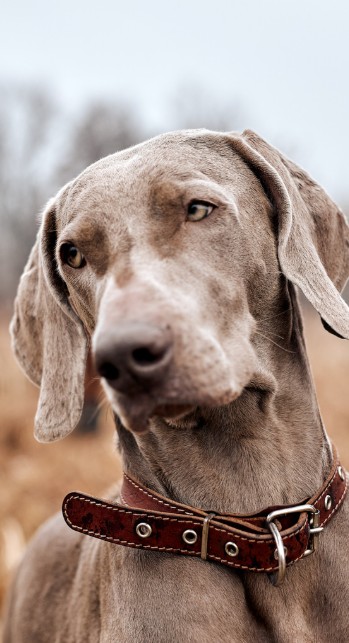
Motivation Changes Context What appears to be disobedience is often motivational competition your dog has not forgotten the cue but is allocating attention toward a highly salient behavioural opportunity which means effective recall must work with these inherited systems rather than simply demanding that they disappear. 🐾
Developmental Windows and Age: When the Brain Is Ready to Learn Recall
Critical Periods and Inhibitory Control Maturation
Not all recall training is created equal — and when you start matters as much as how you train. The canine brain develops through distinct stages, and the capacity for impulse control, attention regulation, and contextual learning changes dramatically between puppyhood and adulthood.
Here is what each developmental stage means for recall:
- 8–12 weeks (Early Socialisation Window) — The puppy brain is maximally open to new associations. This is the ideal time to build a positive emotional response to the recall cue — not reliability, but joy. Pair the cue with food, play, and excitement. Do not test the cue in distracting environments yet. The goal is association, not obedience.
- 12–16 weeks (Late Socialisation Window) — Environmental curiosity peaks. The puppy begins exploring further from the handler. This is a critical window for teaching the puppy that returning to the handler is part of the adventure, not the end of it. Short-distance recall games in novel but manageable environments build the right foundation.
- 4–6 months (Juvenile Exploration Phase) — Independence increases. The puppy starts making autonomous decisions about what is interesting. Recall success may dip — this is normal, not regression. Continue building cue value with high-reward payoffs and avoid testing recall in environments where failure is likely.
- 6–12 months (Adolescent Reorganisation) — Prefrontal cortex development is incomplete. Inhibitory control is biologically immature. Hormonal shifts increase arousal and distractibility. This is the age where most recall “problems” surface — but they are developmental, not behavioural. Patience and management (long-lines, enclosed spaces) protect the cue’s value during this phase.
- 12–24 months (Young Adult Consolidation) — Inhibitory control matures. The prefrontal cortex completes its major developmental phase. The dog can now begin to reliably inhibit prepotent responses in moderate-distraction environments. This is when progressive generalisation to more challenging environments becomes realistic.
- 24+ months (Full Maturity) — The neurobiological architecture is fully in place. Training investments made earlier now pay compound returns. However, a recall cue that was damaged through overuse, punishment associations, or inconsistent reinforcement during adolescence may still carry that history and require rebuilding with a fresh cue.
Understanding these windows prevents one of the most common mistakes: expecting adult-level recall performance from a brain that is not yet neurologically capable of delivering it. 🧠
Why Starting at 8 Weeks Looks Different Than Starting at 18 Months
Starting recall training with a puppy at 8 weeks is fundamentally about emotional conditioning. You are not teaching the dog to “obey” — you are creating a Pavlovian association between the recall sound and intense pleasure. The puppy doesn’t need to understand the cue conceptually; it needs to feel excitement when it hears it.
Starting recall training with an adolescent or adult dog at 18 months is fundamentally about competing with an already-established motivational architecture. The dog has months of reinforcement history for independent exploration. The SEEKING system is fully online. The predatory motor patterns are well-practised. Training now is not about building a blank-slate association — it is about creating a recall reward that can realistically compete with deeply entrenched environmental rewards. This requires higher-value rewards, more structured progression, more management tools like long-lines, and more realistic expectations about the timeline.
🐕 Hunting Breeds & Recall Challenges 🧠
Why your hunting dog isn’t ignoring you — and how neuroscience, genetics, and breed history explain what’s really happening when “Come!” falls on deaf ears
Phase 1: The Predatory Blueprint
Selective breeding shaped behaviour — not disobedienceHunting behaviour is a chain of independent motor patterns — Orientation → Eye-Stalk → Chase → Search → Capture → Retrieve — selectively amplified or suppressed across breeds. Robert Woodworth (1918) defined “drive” as an intervening variable, not a fixed instinct. Prey is the object, not the drive itself.
• Retrievers: Strong retrieve + cooperative handler orientation
• Spaniels: Flushing (chase initiation) + moderate distance work
• Pointers/Setters: Extended search + eye-stalk + inhibited chase at 100m+
• Scent Hounds: Intense search + persistence + independent navigation
• Terriers: Chase + capture + independent problem-solving
Recall reliability cannot be uniform across breeds. A breed selected for independent distance work (100m+, autonomous decisions, handler-invisible persistence) is wired for the opposite of what recall demands: immediate disengagement and reorientation toward the handler.
Phase 2: Attentional Capture & Motivational Competition
Your dog’s brain runs an automatic priority system“Prey drive” conflates multiple distinct systems that each compete with recall differently:
• Hunger-driven predation — actual hunting when food-deprived
• Learned predatory sequences — motor patterns reinforced through play/training
• SEEKING activation — dopamine-mediated exploration
• Play-based chase — social pursuit without predatory intent
• Scent-driven investigation — olfactory-motivated searching
Attentional capture is automatic, not a choice. Movement, scent, sound, visual contrast, and distance stimuli hijack conscious attention at a neurobiological level. The dog doesn’t “decide” to ignore you — the competing stimulus makes processing the recall cue difficult or impossible, especially when arousal is already elevated.
Your dog’s brain asks: “Which activity is more rewarding right now?” If tracking a scent offers higher reward anticipation than returning to the handler, the dog continues tracking. This is rational behavioural prioritisation, not disobedience — the dog may understand the cue perfectly.
Phase 3: The Power of the Nose
300 million olfactory receptors vs. your voiceScent processing simultaneously engages five brain systems: sensory detection, memory retrieval, spatial navigation, reward anticipation (dopamine), and motor planning. Your recall cue competes against all five at once. Dogs have ~300 million olfactory receptors vs. our ~6 million.
• Olfactory stimulation is continuous — new scents arrive constantly
• Scent-driven behaviour is self-reinforcing — each track provides immediate reward
• Scent information is persistent — unlike sound, it stays after the dog moves
• Olfactory processing is automatic — the dog cannot turn it off
Hunting breeds are selectively sensitised (not habituated) to prey-related scents — novel and game-associated scents produce increasingly stronger responses. The dog’s nose is literally tuned to override your voice.
Phase 4: Dopamine, SEEKING & the Anticipation Trap
The search itself is the reward — Jaak Panksepp’s SEEKING systemPanksepp identified a dopamine-mediated SEEKING system that drives exploration, investigation, and goal-directed behaviour. In hunting breeds, this system is particularly robust — producing elevated dopamine, sustained environmental attention, reduced responsiveness to handler cues, and increased motor activity.
Dopamine fires more strongly during anticipation than during actual reward receipt. A tracking dog is neurochemically “locked” into searching by the anticipation of finding the source — even if past searches found nothing. The brain is essentially saying: “Keep going, you might find it.”
Reward value is not fixed — it shifts with arousal, location, and experience. A treat that works indoors may be worthless against a fresh scent trail. Training must increase recall’s reward value in high-arousal contexts: use access to hunting as reward, pair recall with continued searching, build handler = gateway to fun.
Phase 5: Executive Function, Arousal & the Nervous System
The Yerkes-Dodson curve and why arousal breaks the brainRecall requires the dog to stop an ongoing behaviour, redirect attention from a salient stimulus, and initiate a competing action. All three depend on prefrontal cortex function — which is impaired by high arousal. Hunting breeds were selected for persistence, not inhibition.
Performance improves with arousal up to an optimal point, then collapses. At high arousal: attention narrows, working memory drops, cognitive flexibility disappears, auditory processing filters out the handler’s voice. The sympathetic nervous system floods the body — heart rate spikes, prefrontal function drops.
Dogs can learn to self-regulate arousal through controlled breathing, progressive relaxation, grounding techniques, and structured pauses. Arousal management should be a core component of recall training — not an afterthought. Use whistles and multi-sensory cues to cut through the arousal filter.
Phase 6: Developmental Windows & Genetics
Age, DRD4 polymorphisms, and when the brain is ready• 8–12 weeks: Build positive emotional association — not reliability
• 12–16 weeks: Returning = part of the adventure, short-distance games
• 4–6 months: Independence rises, recall may dip — this is normal
• 6–12 months: Prefrontal cortex immature — manage, don’t test
• 12–24 months: Inhibitory control matures — real generalisation begins
• 24+ months: Full neurological maturity — compound training returns
Polymorphisms in the DRD4 dopamine receptor gene influence novelty-seeking, impulsivity, persistence, and activity levels. Two dogs from the same litter can have dramatically different recall profiles based on which variants they carry. Genetics sets the starting point — not the ceiling.
Starting recall at 8 weeks = emotional conditioning (Pavlovian association with pleasure). Starting at 18 months = competing with established motivational architecture (SEEKING system online, predatory patterns practised, higher-value rewards and more management needed).
Phase 7: Cortisol, Oxytocin & the Bond Factor
Stress loops destroy recall — attachment quality rebuilds itRecall failure → handler frustration → dog detects stress → dog’s cortisol rises → return becomes aversive → cortisol impairs hippocampal learning → future recall associations turn negative → failure increases. Each failed, stressed recall makes the next one harder.
Mutual gaze between dogs and handlers raises oxytocin in both species. Higher oxytocin = increased social orientation, reduced stress response, enhanced social reward value, and greater willingness to disengage from non-social stimuli. The bond is not abstract — it is a measurable neurochemical reality.
• Never punish a return — even if it took 10 minutes
• Manage your own stress before the dog reaches you
• Avoid testing recall where failure is likely
• Use management tools (long-lines, enclosed fields) to prevent the loop
• Rebuild with short, easy, high-reward recalls in low-distraction settings
Phase 8: The Practical Recall Protocol
Premack Principle, whistle training, long-line, and staged setupsAccess to the high-value behaviour (hunting/searching) becomes the reward for the low-value behaviour (recall). Recall → reward → release to continue. The dog learns: recall doesn’t end the fun — recall IS the gateway to continued fun. This directly solves the motivational competition problem.
Whistles produce consistent frequency (no emotional variation), carry further than voice, are emotionally neutral (no frustration tone), and are acoustically distinctive. Protocol: Indoor association (20–30 reps) → short-distance recall → increasing distance → adding distractions → field generalisation → maintenance.
• Long-line (5–15m, on harness): prevents failure, protects cue value, fades gradually
• 6-stage environment progression: Low/enclosed → Low/open → Moderate/enclosed with planted distractions → Moderate/open → High/managed → High/real-world
• Master each stage at 80%+ reliability before advancing
🐕 Breed Group Recall Profiles at a Glance
Distance: 50–150m
Orientation: Handler-focused
Primary Trigger: Active retrieving, water
Recall Reward: Ball/dummy throw
Recall Difficulty: Low–Moderate
Distance: 30–100m
Orientation: Semi-cooperative
Primary Trigger: Flushed game, chase
Recall Reward: Release to new area
Recall Difficulty: Moderate
Distance: 100m+
Orientation: Environment-focused
Primary Trigger: Scent + independent search
Recall Reward: New search quadrant
Recall Difficulty: High
Distance: Unlimited
Orientation: Scent-focused
Primary Trigger: Any novel scent trail
Recall Reward: New scent article/trail
Recall Difficulty: Very High
Distance: Variable
Orientation: Self-directed
Primary Trigger: Prey in cover, problem-solving
Recall Reward: New terrain to investigate
Recall Difficulty: High–Very High
Distance: Unpredictable
Orientation: Context-dependent
Primary Trigger: Varies by individual
Recall Reward: Observe and adapt
Recall Difficulty: Varies — train the dog, not the label
Rule 1: Never call unless you can ensure the outcome — use a long-line or enclosed space
Rule 2: Every unanswered recall degrades the cue — protect it like currency
Rule 3: Recall should open doors, not close them — Premack Principle (recall → release to continue)
Rule 4: Master 80% reliability at each stage before advancing to more distraction
Rule 5: Use a whistle — it cuts through arousal, carries no frustration, and stays consistent
Rule 6: Manage your cortisol — your stress teaches your dog that returning is unsafe
Rule 7: Match the reward to the competition — treats may not outweigh a fresh scent trail, but access to the next search might
Your hunting dog was built to explore — to search, track, and persist beyond the reach of your voice. That is not a flaw. It is centuries of purpose, encoded in dopamine, shaped by scent, and driven by a SEEKING system that was never meant to be switched off. Through the NeuroBond approach, we don’t fight that architecture — we build a connection powerful enough to compete with it. The Invisible Leash reminds us that awareness, not tension, guides the path — that a dog can choose to return not because it must, but because the bond itself has become rewarding. And in those moments of Soul Recall, when emotional memory and trust pull your dog back to you across an open field, you witness something no treat can buy: a relationship that runs deeper than instinct.
© Zoeta Dogsoul – Where neuroscience meets soul in dog training
Genetics Beyond Breeding History: The Molecular Level of Recall Behaviour
DRD4 and the Dopamine Receptor Connection
Selective breeding shaped hunting breeds at the population level, but individual variation within breeds is also partly genetic. Emerging research in canine behavioural genetics has begun to identify specific gene variants that influence traits directly relevant to recall performance.
One of the most studied is the DRD4 gene — the dopamine receptor D4 gene. Polymorphisms in this gene have been associated with:
- Novelty-seeking behaviour — dogs with certain DRD4 variants show stronger orientation toward novel stimuli and greater exploratory drive
- Impulsivity — reduced inhibitory control and faster engagement with new stimuli before processing consequences
- Persistence — sustained engagement with a task or stimulus even when outcomes are uncertain
- Activity levels — higher baseline motor activity and restlessness in understimulating environments
These traits are not “disorders.” In a hunting context, they are precisely what was selected for. But in a recall context, a dog with high novelty-seeking, high persistence, and reduced inhibitory control is neurologically predisposed to find environmental stimuli more compelling than a handler’s cue.
What This Means for Individual Variation
Even within a single breed, individual dogs may carry different combinations of these genetic variants. This helps explain why two Beagles from the same litter can have dramatically different recall profiles — one may respond reasonably well to standard training, while the other may be nearly impossible to recall from a scent trail.
Key implications for training include:
- Genetic predisposition is not destiny — it sets the starting point, not the ceiling
- Dogs with high-novelty-seeking variants may need higher-value rewards and more structured environmental management
- Dogs with high-persistence variants may need more intensive inhibitory control training and longer training timelines
- Understanding your individual dog’s genetic tendencies (through behaviour observation, not necessarily DNA testing) allows you to calibrate expectations and methods realistically
Cortisol and Stress Physiology: The Hidden Cost of Repeated Recall Failure
The Stress Loop That Makes Everything Worse
When recall fails repeatedly — the handler calls, the dog doesn’t come, the handler gets frustrated, the dog eventually returns to tension or punishment — a stress physiology cycle begins that actively degrades future recall performance.
Here is how the cortisol loop works:
- Recall failure triggers handler frustration — body language tightens, voice tone sharpens, emotional energy shifts from invitation to demand
- The dog detects the handler’s stress — dogs are exquisitely sensitive to human cortisol levels, body posture, and vocal tension
- The dog’s own cortisol rises — the return to the handler is now associated with a stressed, unpredictable social partner
- Cortisol impairs learning and memory consolidation — elevated cortisol reduces hippocampal function, making it harder for the dog to form positive associations with the recall cue
- Future recall attempts carry a negative emotional charge — the dog anticipates stress upon return, making it even less likely to disengage from the rewarding environmental activity
Over time, this loop creates a situation where recall is not only unrewarding but actively aversive. The dog has learned — correctly, from its perspective — that coming back leads to an unpleasant emotional experience. This is the opposite of what effective recall training requires.
Breaking the Cortisol Cycle
Breaking this cycle requires conscious emotional management from the handler. Regardless of how frustrated you feel, the dog’s return must always — without exception — be met with warmth, reward, and emotional safety. Key strategies include:
- Never punish a dog for returning — even if it took ten minutes. The dog is learning about the moment of return, not the delay that preceded it
- Manage your own stress response — take a breath before the dog reaches you, relax your shoulders, soften your voice
- Avoid testing recall in situations where failure is likely — every failed recall without positive resolution adds cortisol to the association
- Use management tools (long-lines, enclosed fields) to prevent the failure-frustration-cortisol loop from occurring in the first place
- Rebuild the emotional association gradually — short, easy, high-reward recalls in low-distraction settings reset the dog’s expectation of what “coming back” feels like
The goal is to create a neurochemical environment where recall is associated with safety, pleasure, and connection — not with stress, unpredictability, and punishment. 🐾
Oxytocin and the Bond Factor: Why Attachment Quality Shapes Recall
The Neurochemistry of Trust
Oxytocin — often called the “bonding hormone” — plays a significant role in the dog-handler relationship and has direct implications for recall performance. Research has demonstrated that mutual gaze between dogs and their handlers increases oxytocin levels in both species, creating a positive feedback loop of social bonding.
What makes oxytocin relevant to recall is its effect on motivational prioritisation. Higher oxytocin levels are associated with:
- Increased social orientation — the dog attends more to the handler’s face, voice, and body language
- Reduced stress response — oxytocin buffers cortisol, making the handler’s presence calming rather than neutral
- Enhanced social reward value — the handler becomes intrinsically rewarding, not just a food-delivery system
- Greater willingness to disengage from non-social stimuli — the pull of the handler competes more effectively with environmental rewards
This means that the quality of your relationship with your dog is not a soft, abstract concept — it is a measurable neurochemical reality that directly modulates recall performance.
Building the Bond That Supports Recall
Attachment quality is built through consistent, predictable, positive interactions over time. Dogs with secure attachment to their handlers show greater willingness to check in, return voluntarily, and orient toward the handler in uncertain situations.
Practical ways to strengthen the oxytocin-mediated bond include:
- Spending quiet, low-demand time together — not just training, but companionship
- Using calm touch and physical proximity as part of daily interaction
- Engaging in cooperative play where both handler and dog are active participants
- Maintaining emotional consistency — being a predictable, safe social partner
- Avoiding interactions that create unpredictability, fear, or conflict
Moments of Soul Recall — when emotional memory and relational trust become part of the learning equation — are built on this oxytocin foundation. A dog that feels neurochemically bonded to its handler has a genuine internal reason to return, one that goes beyond treats and competes at a deeper level with environmental rewards.
Breed Mixes and Crossbreeds: When Selection Histories Collide
The Unpredictable Recall Profile
Purebred hunting dogs have relatively predictable recall challenges because their selection history is known and documented. But what happens when you cross a Beagle with a Labrador? Or a Pointer with a Spaniel? Or a Terrier with a scent hound?
Crossbreeds inherit genetic material from both parent breeds, but the combination is not always a clean average. A Beagle-Lab mix might inherit:
- The Labrador’s cooperative orientation — which would support recall
- The Beagle’s scent obsession and independence — which would undermine it
- Some unpredictable combination of both — where the dog is cooperative in low-distraction settings but completely scent-locked in stimulating environments
What Crossbreed Owners Need to Know
The key challenges for crossbreed owners include:
- Unpredictable trait expression — you cannot assume which parent breed’s tendencies will dominate in any given context
- Context-dependent behaviour — a crossbreed may show strong handler orientation at home but complete independence in a scent-rich field, or vice versa
- Mixed signals — the dog may show body language from one breed’s repertoire while operating on the other breed’s motivational system, making behaviour harder to read
- Training approach uncertainty — the “right” training approach depends on which behavioural traits the individual dog expresses, not which breeds are in the mix
For crossbreed owners, the most effective approach is to observe your individual dog’s behaviour across multiple contexts and identify which motivational patterns dominate. Watch for these indicators:
- Does the dog naturally check in with you during off-leash time, or does it move steadily away? (Cooperative vs. independent orientation)
- What captures the dog’s attention most powerfully — scent, movement, sound, or social interaction? (Primary attentional trigger)
- How quickly does the dog disengage from an interesting stimulus when you offer an alternative? (Inhibitory control baseline)
- How far does the dog range before losing awareness of your position? (Natural working distance)
These observations tell you more about your dog’s recall profile than any breed label ever could. Train the dog in front of you, not the breed on the certificate. 😄
Breed by Breed: How Selection History Shapes Recall Challenges
Retriever Breeds and Cooperative Hunting
Retriever breeds — Labrador Retrievers, Golden Retrievers, Chesapeake Bay Retrievers — were historically selected for:
- Close cooperation with the handler at moderate distances of 50 to 150 meters
- Responsiveness to frequent cues and direction changes
- Dependence on the handler for task initiation and completion
- Strong retrieve drive with a natural return-to-handler tendency
These selection pressures have produced dogs that are naturally oriented toward the handler, responsive to human communication, capable of sustained attention to the handler even in stimulating environments, and relatively easy to train for reliable recall.
However, even retriever breeds can exhibit recall challenges when arousal is extremely high — for example during active retrieving — when competing rewards are very high, such as access to water or other dogs, or when the dog has learned that ignoring recall has no consequences.
Spaniel Breeds and Flushing Behaviour
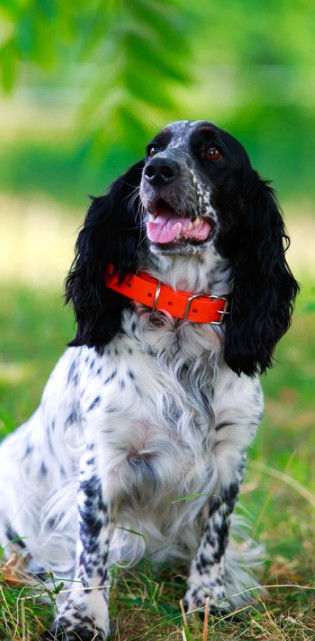
Spaniel breeds — Cocker Spaniels, Springer Spaniels, English Spaniels — were historically selected for:
- Flushing game and initiating chase at moderate distances of 30 to 100 meters
- Responsiveness to handler cues for direction changes
- Cooperation with the handler during field work
- Moderate independence with frequent check-ins
These selection pressures have produced dogs that are moderately oriented toward the handler, responsive to cues but also capable of independent searching, prone to chase-related behaviours when game is flushed, and capable of reliable recall in most contexts but potentially challenging in high-arousal situations.
Spaniel breeds may exhibit particular recall challenges when:
- Game is flushed and the chase instinct is triggered
- Multiple dogs are present and social competition is high
- The dog is in a highly arousing environment such as a field with many birds
Pointer and Setter Breeds: Masters of Independence
Pointer and Setter breeds — English Pointers, English Setters, Irish Setters, Brittany Spaniels — were historically selected for:
- Extended independent searching, often at 100 meters or more from the handler
- Responsiveness to environmental information such as scent and terrain
- Persistence in searching even when the handler is not visible
- Inhibition of chase through the pointing behaviour rather than flushing
These selection pressures have produced dogs that are naturally oriented toward environmental stimuli rather than the handler, capable of independent decision-making, persistent in searching even when the handler calls, and potentially the most challenging of all hunting breeds to train for reliable recall.
Pointer and Setter breeds may exhibit particular recall challenges because:
- They were selected for independence from the handler rather than cooperation
- They were selected to respond to environmental information rather than human cues
- They were selected for persistence, which can manifest as ignoring recall cues
- Their natural search distance — 100 meters or more — means the handler’s voice is quieter relative to environmental stimuli
Scent Hound Breeds: When Noses Rule
Scent hound breeds — Beagles, Basset Hounds, Bloodhounds, Coonhounds — were historically selected for:
- Intense, unwavering focus on scent above all other stimuli
- Persistence in tracking even over very long distances and extended time periods
- Full independence from the handler during the tracking process
- Responsiveness to scent rather than human cues
These selection pressures have produced dogs that are extremely focused on olfactory information, capable of sustained tracking over hours or even days, highly independent and resistant to handler direction, and potentially very challenging to train for reliable recall.
Scent hound breeds may exhibit extreme recall challenges because they were selected for extreme independence from the handler, for intense focus on scent that can completely override handler cues, and for persistence that can result in the dog continuing to track even when the handler calls repeatedly. Their olfactory sensitivity also means they can detect scents that the handler is completely unaware of, making the dog’s behaviour appear “disobedient” when it is actually responding to environmental information that is invisible to us.
Terrier Breeds: Bold, Independent, and Determined
Terrier breeds — Jack Russell Terriers, Parson Russell Terriers, Border Terriers — were historically selected for:
- Independent problem-solving in confined, underground environments
- Persistence in pursuing prey into burrows or difficult terrain
- Courage and willingness to engage with dangerous prey
- Full operational independence from the handler
These selection pressures have produced dogs that are highly independent and resistant to handler direction, capable of sustained engagement with challenging tasks, persistent and determined far beyond what their size might suggest, and potentially very challenging to train for reliable recall.
Terrier breeds may exhibit recall challenges because:
- They were selected for extreme independence and self-reliance
- They were selected for persistence that can result in the dog continuing to pursue prey even when the handler calls
- They were selected for problem-solving, which can result in the dog ignoring the handler’s cues in favour of its own assessment of the situation
What This Means for Your Training
The breed-specific differences in selection history have profound implications for recall training:
- Retriever breeds may respond well to standard recall training with food rewards and handler-oriented games
- Spaniel breeds may require training that specifically accounts for flushing and chase behaviours with impulse-control exercises
- Pointer and Setter breeds may require training that heavily emphasises the value of cooperation with the handler and uses very high-value environmental rewards
- Scent hound breeds may require training that incorporates scent-based rewards or that limits access to scent-rich environments during early training phases
- Terrier breeds may require training that emphasises choice and autonomy rather than strict obedience, respecting their problem-solving nature
One-size-fits-all recall training is unlikely to be effective across all breeds. Instead, training should be tailored to the breed’s selection history and natural motivational architecture. 🐾
Reinforcement History: Why Centuries of Breeding Outweigh Weeks of Training
Cue Value and the Weight of History
The value of a recall cue is determined by its reinforcement history — the frequency, magnitude, and timing of rewards that have followed the cue. A recall cue that has been consistently reinforced with high-value rewards will acquire strong reward value and will be more likely to compete successfully with environmental rewards.
However, in hunting breeds, the reinforcement history of hunting-related behaviours is often immensely stronger than the reinforcement history of recall:
- Hunting behaviours have been reinforced over centuries of selective breeding at the population level
- They are reinforced by intrinsic rewards — dopamine from the SEEKING system, satisfaction of predatory motor patterns
- They are reinforced by extrinsic rewards — finding prey, successful hunts, scent discoveries
- Recall, in contrast, is often reinforced only by food rewards, which may be less valuable than the intrinsic rewards of hunting
This creates a fundamental asymmetry in reinforcement history that makes recall inherently less rewarding than hunting-related behaviours. Moments of Soul Recall — when emotional memory and relational trust become part of the learning equation — are what begin to close that gap between centuries of instinct and the depth of your bond.
Extinction and Cue Habituation: How We Accidentally Un-Train Recall
Extinction occurs when a previously reinforced cue is no longer followed by reward, leading to a decrease in the response to that cue. Cue habituation occurs when a cue is presented repeatedly without meaningful consequences, leading to a decrease in attention.
In many cases, recall training inadvertently produces cue habituation through common handler mistakes:
- Calling the dog’s name repeatedly throughout the day without meaningful consequences
- Calling “Recall!” when the dog is already returning — so the cue has no instructional value
- Calling the dog away from rewarding activities without providing an alternative reward
- Using the recall cue in contexts where the dog has learned that recall is not rewarded
Over time, the dog’s response to the recall cue decreases through extinction. The dog learns three things: the recall cue does not reliably predict reward, ignoring the recall cue does not result in negative consequences, and continuing to search is more rewarding than responding to recall. The dog becomes less likely to respond to recall even in low-distraction contexts — not because it is stubborn, but because the cue has lost its meaning.
Reinforcement Schedules: Building Long-Term Reliability
Reinforcement schedules refer to the pattern of reinforcement — how often and under what conditions a behaviour is rewarded. Research in learning theory suggests that variable reinforcement schedules, where the behaviour is rewarded unpredictably, produce more persistent and resistant-to-extinction responses than fixed reinforcement schedules, where the behaviour is rewarded predictably.
For recall training, the optimal progression looks like this:
- Phase 1: Continuous reinforcement — reward every single recall during initial learning to establish a strong, clear cue association
- Phase 2: Variable reinforcement — reward some recalls but not others once the cue is established, building persistence and resistance to extinction
- Phase 3: Context-specific reinforcement — reward recalls selectively in high-distraction contexts, ensuring reliability where it matters most
However, variable reinforcement schedules also have a downside: they can produce unpredictable behaviour, where the dog sometimes responds and sometimes does not. This is less desirable for safety-critical behaviours like recall. A more nuanced approach involves maintaining continuous reinforcement in high-distraction environments even while using variable reinforcement in easier contexts.
Competing Rewards: When Treats Can’t Compete with Tracking
Recall failure often occurs not because the dog has not learned the recall cue, but because competing rewards are simply more valuable than the recall reward.
A dog may reliably respond to recall for a treat in a quiet room. The same dog may fail to respond to recall when engaged in tracking, because the anticipated reward of completing the track is more valuable than the treat. This is not a failure of learning — it is a rational behavioural choice based on reward value.
To improve recall reliability in high-distraction contexts, training must address the reward imbalance:
- Increase the value of the recall reward — use higher-value treats, play, or access to the hunting activity itself
- Decrease the value of competing rewards — limit access to hunting without recall, so recall becomes the gateway to the desired activity
- Build recall-reward associations — make recall the thing that leads to continued searching, not the thing that ends it
Human Mistakes: How We Accidentally Sabotage Recall
Cue Clarity and Timing
Many recall failures are caused by unclear cues, poor timing, or inconsistent reinforcement — human errors rather than canine stubbornness. The most common handler mistakes include:
- Unclear cue — the recall cue is not distinctive or is easily confused with other commands the dog hears daily
- Poor timing — the reward is not delivered immediately after the dog responds, making the association between cue and reward blurry
- Inconsistent reinforcement — the dog is sometimes rewarded for recall and sometimes not, making the cue’s predictive value uncertain
- Repeated calling — calling the dog multiple times without meaningful consequences, which teaches the dog that the cue does not require an immediate response
- Calling away from rewards — calling the dog away from highly rewarding activities without providing an alternative reward, which teaches the dog that recall is actually punishing
How We Create Cue Habituation
Handlers inadvertently produce cue habituation in several common ways:
- Calling the dog’s name repeatedly throughout the day without any meaningful follow-through
- Calling “Recall!” when the dog is already returning — so the cue carries no instructional value
- Calling the dog away from rewarding activities without providing an alternative reward
- Using the recall cue in contexts where the dog has learned through experience that recall is not rewarded
Over time, the dog learns three things: the recall cue does not reliably predict reward, ignoring the recall cue does not result in negative consequences, and continuing to search is more rewarding than responding to recall. The cue gradually loses its meaning through extinction, and the dog becomes less likely to respond even in low-distraction contexts.
Inconsistent Reinforcement and Frustration
Inconsistent reinforcement — where a behaviour is sometimes rewarded and sometimes not, or where the reward is unpredictable — can produce three problematic outcomes:
- Unpredictable behaviour — the dog sometimes responds and sometimes does not, without a clear pattern
- Increased persistence in the wrong direction — the dog continues to try alternative behaviours rather than the desired one, similar to gambling behaviour
- Frustration and stress — the dog becomes frustrated by the unpredictability, which elevates cortisol and further impairs learning
In recall training, inconsistent reinforcement occurs when the handler sometimes rewards recall and sometimes does not, when the reward is sometimes food and sometimes just verbal praise, or when the reward is sometimes immediate and sometimes delayed. The dog cannot predict what will happen when it responds to recall, which creates uncertainty and — over time — disengagement.
Practical Training: The Recall Protocol — What to Do Monday Morning
The Premack Principle: Using Hunting as the Reward for Recall
One of the most powerful and underused tools in recall training for hunting breeds is the Premack Principle — the idea that access to a high-probability behaviour (the thing the dog wants to do) can be used to reinforce a low-probability behaviour (the thing you want the dog to do).
For hunting breeds, this means that access to hunting, tracking, or searching itself becomes the reward for recalling. The structure looks like this:
- Dog is searching in a field → handler calls recall
- Dog returns to handler → handler rewards with food AND releases the dog to continue searching
- Dog learns: Recall does not end the fun — recall is the gateway to continued fun
Over time, this creates a powerful association:
- Recall = brief check-in + high-value reward + immediate release to do what I love
- Ignoring recall = handler puts me on the long-line, and the fun pauses
The Premack Principle works because it does not ask the dog to choose between recall and hunting — it makes recall the key that unlocks hunting. This directly addresses the motivational competition problem at its root.
Practical Premack Applications by Breed Group
- Retrievers: Recall → reward → throw the ball or dummy. The retrieve itself becomes the recall reward
- Spaniels: Recall → reward → release to flush and search a new area. Redirect the flushing energy rather than suppress it
- Pointers and Setters: Recall → reward → release to search a new quadrant. Use the recall as a “direction change” cue rather than a “stop everything” cue
- Scent Hounds: Recall → reward → present a new scent article or trail. Make recall the gateway to the next olfactory adventure
- Terriers: Recall → reward → release to investigate a new hole, bush, or terrain feature. Honour their need for independent exploration
Whistle Training: Cutting Through the Arousal Filter
As we explored in the nervous system section, high arousal selectively filters auditory stimuli, and the human voice is often deprioritised. A whistle overcomes this limitation because of its unique acoustic properties:
- Consistent frequency and volume — unlike the human voice, which changes with emotion, distance, and fatigue, a whistle produces the same sound every time
- High-frequency penetration — whistle sounds carry further and cut through ambient noise more effectively than speech
- Emotional neutrality — the whistle carries no frustration, anger, or desperation in its tone, which means the dog never learns to associate it with negative emotions
- Distinctiveness — the whistle sound is unlike anything else in the dog’s auditory environment, making it highly salient even at high arousal
Setting up whistle training follows a clear progression:
- Phase 1: Indoor Association — blow the whistle, immediately deliver a high-value reward. Repeat 20–30 times over several days until the whistle reliably produces an excited orientation response
- Phase 2: Short-Distance Recall — use the whistle for recall at short distances (2–5 meters) in low-distraction environments. Reward every response with high-value food
- Phase 3: Increasing Distance — gradually increase the distance between handler and dog, maintaining a high reinforcement rate
- Phase 4: Adding Distractions — introduce mild distractions while using the whistle recall, rewarding generously for successful responses
- Phase 5: Field Generalisation — begin using the whistle in real-world environments, starting with moderate-distraction settings and progressing to high-distraction ones
- Phase 6: Maintenance — continue rewarding whistle recalls with high-value rewards intermittently to maintain the cue’s value long-term
The critical rule with whistle training: never blow the whistle unless you are confident the dog will respond, or unless you have a long-line to ensure compliance. Every unanswered whistle degrades the cue.
Long-Line Management: The Safety Bridge
The long-line — typically 5 to 15 meters of lightweight biothane or rope attached to a harness — is one of the most important management tools during the recall generalisation phase. It serves a specific purpose: preventing recall failure from occurring in the first place, thereby protecting the cue’s value.
Key principles for effective long-line use:
- Attach to a harness, never a collar — sudden stops on a collar can cause neck injury and create negative associations with the recall context
- Let the line drag — the handler should not hold the line taut. It trails behind the dog, allowing natural movement and exploration
- Use the line to prevent, not to punish — if the dog does not respond to recall, calmly step on or pick up the line and gently guide the dog back, then reward
- Fade the line gradually — as recall reliability improves, transition to a shorter line, then a light drag-line, then no line
- Avoid creating line-dependence — vary between on-line and off-line practice in enclosed spaces so the dog does not learn to only recall when the line is present
The long-line is not a failure — it is a bridge between training and real-world reliability. It prevents the cortisol loop, protects the cue, and gives both dog and handler confidence during the messy middle phase of generalisation. 🐾
Environmental Management and Staged Setups
Effective recall training for hunting breeds requires more than just practising in random environments and hoping for the best. Deliberate environmental design — creating training setups with controlled variables — dramatically accelerates progress.
A staged training progression might look like this:
- Stage 1: Low distraction, enclosed — an empty garden or fenced field with minimal scent or visual stimulation. Build cue reliability here first
- Stage 2: Low distraction, open — an open field with minimal wildlife or scent trails. Introduce the idea of recalling at distance
- Stage 3: Moderate distraction, enclosed — a fenced area with planted scent trails (drag a scent rag through the grass) or placed distractions (a toy at a distance). Practise recall against known, controlled competing stimuli
- Stage 4: Moderate distraction, open — a park or field with moderate wildlife activity. Use the long-line for safety. Begin real-world generalisation
- Stage 5: High distraction, managed — a scent-rich environment with wildlife activity, but at times and locations where you can predict the distraction level. Reward heavily for recall success
- Stage 6: High distraction, real-world — the full, uncontrolled environment. At this stage, recall should be well-established with a strong reinforcement history, and the dog should have demonstrated reliability at Stages 1–5
Each stage should be mastered — with at least 80% recall reliability — before moving to the next. Moving too quickly is one of the most common training errors and leads directly to the cue habituation and cortisol loops described earlier.
Controlled scent trail setups are particularly valuable for scent hound breeds. By laying scent trails of known location and intensity, you can practise recall at precise distraction levels, observe your dog’s threshold, and gradually increase difficulty in a structured way.
Conclusion: Is a Hunting Breed Right for You?
If you share your life with a hunting breed, understanding the neurobiological, evolutionary, and behavioural foundations of recall challenges is not optional — it is essential. These dogs are not being defiant when they fail to come back. They are running the behavioural software that centuries of selective breeding installed in them. Their brains are doing exactly what they were designed to do.
The path forward lies not in shouting louder, using harsher corrections, or labelling your dog as disobedient. It lies in understanding that recall difficulties reflect motivational competition between human-directed tasks and inherited behavioural systems. It lies in recognising that training must work with the dog’s neurobiological architecture — including its dopamine systems, cortisol sensitivities, oxytocin pathways, developmental timeline, and individual genetic profile. It lies in tailoring your approach to your breed’s specific selection history, managing arousal, building cue value through consistent and high-value reinforcement, and accepting that generalisation from low-distraction to high-distraction environments requires patient, systematic, progressive work.
The practical tools are clear: use the Premack Principle to make recall the gateway to hunting rather than the end of it. Train with a whistle to cut through the arousal filter. Use a long-line to protect your cue during the generalisation phase. Design staged environments that set your dog up for success. Manage your own cortisol so your dog’s return is always met with warmth. And invest in the bond — because oxytocin is not a soft concept but a neurochemical reality that competes with dopamine at the level of the brain itself.
The science is clear: when you understand what your dog’s brain is actually doing in those moments when they seem to “forget” your recall cue, frustration transforms into compassion — and compassion, combined with knowledge, transforms into effective training.
That balance between science and soul — that’s the essence of Zoeta Dogsoul. 🧡










