
Abhijith, Abdul Kalam et al. (2026) — International Journal of Current Microbiology and Applied Sciences
Acute Kidney Injury Following Viper Envenomation in One-Year-Old Doberman Pinscher: Clinical Features and Management
Published: August 16, 2026
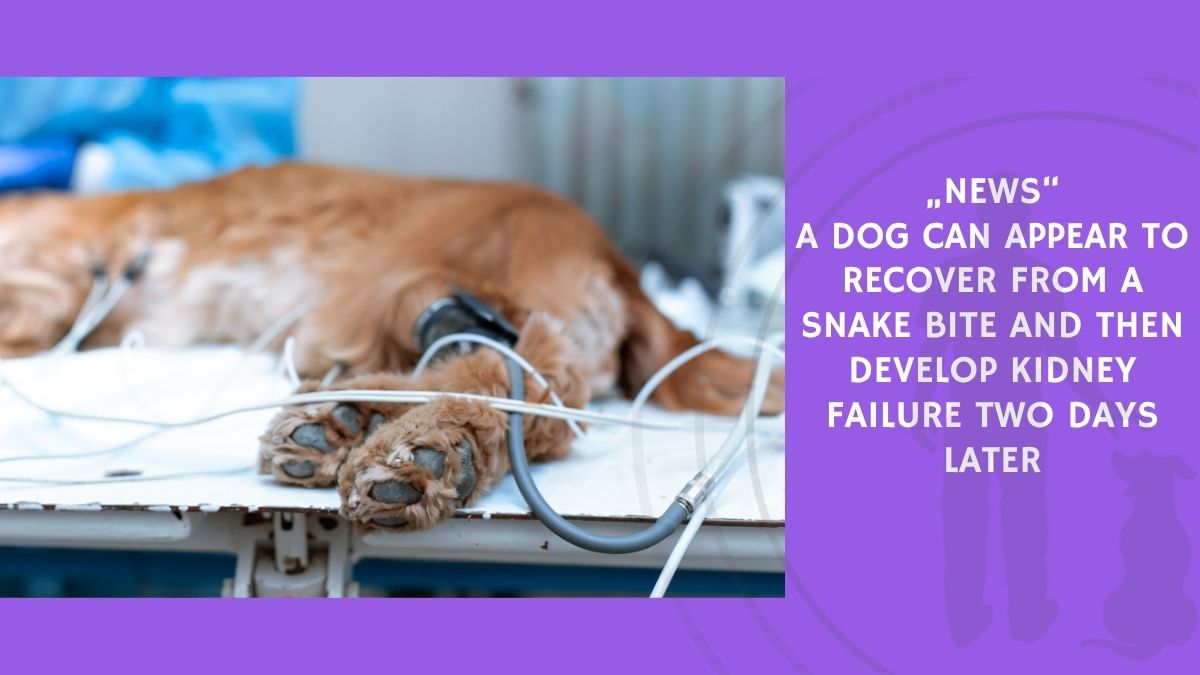
Snake envenomation is a genuine veterinary emergency in tropical countries — and a case report documenting a Doberman Pinscher’s recovery from viper bite contains a finding that every owner in a snake-active region needs to understand: even after apparent initial stabilisation, delayed organ damage can develop and become life-threatening. The kidneys, in particular, can fail several days after a bite that initially appeared to be resolving. 🐾
Researchers S. Abhijith, A.A. Abdul Kalam, H.J. Apoorva, D. Chandrakumar, and H.V. Sanjay documented the clinical course of a one-year-old male Doberman Pinscher presented following a confirmed viper bite — the owner had retrieved the dead snake, allowing species confirmation. Fang marks were visible on the lateral facial region with localised swelling and mild haemorrhage. The case was managed with prompt anti-snake venom administration and intensive supportive therapy. What followed across the next ten days illustrates why snakebite monitoring cannot stop once the obvious early signs begin to resolve.
What the Initial Blood Work Showed
The laboratory picture on day zero reflected classic viper envenomation haemotoxicity. Whole blood clotting time was prolonged at 25 minutes. Prothrombin time and activated partial thromboplastin time were both elevated — markers of coagulopathy reflecting the venom’s interference with the clotting cascade. Thrombocytopenia was present. Mild anaemia had developed. Hepatic enzymes AST and ALT were markedly elevated, indicating early liver involvement from systemic venom action.
Critically, serum creatinine — the primary clinical marker of kidney function — was within normal limits on day zero. The kidneys appeared unaffected in the initial assessment.
Anti-snake venom was administered promptly alongside supportive care. By day two, the picture appeared to be improving. Platelet count showed slight recovery. Anaemia was modestly improving. Hepatic enzyme levels were trending downward. The coagulation parameters were stabilising. The clinical picture suggested a dog moving in the right direction.
The Day Two Finding That Changed Everything ⚠️
Despite the apparent improvement across haematological and hepatic parameters by day two, serum creatinine rose sharply — to 4.2 mg per decilitre. This is a level approximately three to four times the upper limit of the normal reference range for dogs, indicating acute kidney injury of significant severity. The coagulation parameters that had initially been most abnormal were improving. The kidney function that had appeared normal on admission was now in crisis.
This delayed renal involvement is the central clinical message of the case. The mechanisms driving it are well described in the snakebite literature: viper venom contains components that cause direct nephrotoxicity through tubular damage, indirect renal damage through haemolysis and haemoglobin deposition in the kidney, ischaemic renal injury from hypotension during the acute envenomation phase, and coagulopathy-related microvascular damage within the kidney itself. These mechanisms do not necessarily produce immediate biochemical evidence of renal dysfunction — they may require hours to days to produce the tubular damage and reduced glomerular filtration rate that registers as elevated creatinine on a blood panel.
The case resolved with continued intensive monitoring and supportive care. Creatinine and BUN returned to normal levels by day ten — a recovery that reflects the reversibility of acute kidney injury when it is detected and supported before irreversible structural damage occurs. The recovery depended entirely on continuous monitoring having detected the creatinine rise on day two rather than waiting until clinical signs of renal failure became obvious.
What Every Dog Owner in a Snake-Active Region Needs to Know 🐕
The practical message from this case is direct and potentially life-saving. A dog bitten by a viper who receives prompt anti-venom treatment and appears to stabilise in the first 24 to 48 hours is not a dog who can be sent home with simple observation. The period of greatest renal risk may begin precisely when other parameters are improving — and the only way to detect delayed kidney injury before it becomes irreversible is through continued biochemical monitoring of renal function for at least several days post-envenomation.
This is not a resource-intensive recommendation in relative terms — serum creatinine and BUN measurement are routine laboratory tests. The cost of missing the delayed kidney injury window, as this case demonstrates, is the difference between a dog who recovers completely by day ten and a dog who develops permanent renal failure or dies from an injury that appeared to be resolving.
For owners whose dogs are bitten by any snake in a viper-endemic region — Southeast Asia, South Asia, Africa, parts of Australia and the Americas — the immediate priority is anti-venom administration and emergency veterinary care. The secondary priority, less intuitive but equally critical, is insisting on continued renal function monitoring even when the dog appears to be improving. An improving platelet count and normalising clotting times are not evidence that the kidneys are safe.
At Zoeta Dogsoul, attentiveness to the physical reality of the animal is always part of what NeuroBond asks of owners. In a medical emergency, that attentiveness means staying informed, asking the right questions, and not accepting apparent recovery as the end of monitoring. A dog who looks better may still be carrying an organ injury that has not yet declared itself in behaviour — and the creatinine that rises on day two is the signal that only gets caught if someone was still looking. 🐾
Source: Abhijith, S., Abdul Kalam, A. A., Apoorva, H. J., Chandrakumar, D., & Sanjay, H. V. (2026). Acute Kidney Injury Following Viper Envenomation in One-Year-Old Doberman Pinscher: Clinical Features and Management: A Case Report. International Journal of Current Microbiology and Applied Sciences. Published February 10, 2026.










