Introduction: The Silent Language Written on Your Dog’s Face
Every time your dog looks up at you with those wide, soft eyes, something remarkable is happening. Behind that gaze lies millions of years of evolution, a complex web of neural circuits, and a deeply wired need to connect with you. Facial expressions in dogs are far more than fleeting movements of muscle and skin. They are a sophisticated communication system shaped by evolutionary pressures, domestication, and individual learning experiences.
For a long time, we assumed that a wagging tail or a bark told us everything we needed to know about how a dog was feeling. But science is now showing us that the face is where the real conversation happens. From the muscles that create those irresistible “puppy dog eyes” to the autonomic nervous system that tightens a dog’s jaw when stress takes over, your dog’s face is a window into their emotional and physiological world.
In this in-depth guide, we will walk through the latest research on canine facial communication. We will explore how evolution crafted these expressions, what is happening inside the brain and nervous system when your dog’s face changes, and how you can learn to read these signals with more accuracy and empathy. Whether you are a dedicated dog owner, a trainer, or simply fascinated by the bond between humans and dogs, this guide will deepen your understanding of what your dog’s face is really telling you. 🐾
The Evolutionary Roots of Canine Facial Communication
How Facial Muscles Evolved Across Canids
To understand your dog’s facial expressions, we need to zoom out and look at the bigger evolutionary picture. Domestic dogs (Canis familiaris) belong to a broader family that includes gray wolves (Canis lupus) and coyotes (Canis latrans). And the facial muscles that allow your dog to communicate so effectively with you did not appear out of nowhere.
One of the most fascinating recent findings involves a small muscle called the levator anguli oculi medialis, or LAOM. This is the muscle responsible for raising the inner eyebrow, creating the wide-eyed, soft look we call “puppy dog eyes.” For years, researchers believed this muscle was unique to domestic dogs and evolved specifically because humans preferred dogs that looked appealing or vulnerable.
But comparative anatomical research has challenged that assumption. The LAOM is not exclusively present in domestic dogs. Coyotes also possess a well-developed version of this muscle, one that closely resembles what we see in dogs. Gray wolves, on the other hand, have a modified or even absent version of this muscle. This is a critical finding because it shifts our understanding of how “puppy dog eyes” came to be.
Rather than being a brand-new invention of domestication, the LAOM appears to be an ancestral trait that was already present in the broader Canis genus. Wolves may have lost or modified this muscle over time, while dogs and coyotes retained it. This means domestication likely enhanced and refined an existing capacity for facial communication rather than creating something entirely new.
The presence of the LAOM in coyotes, a species that has not undergone the intensive domestication process dogs have, tells us that the evolution of human-directed facial communication cannot be attributed solely to artificial selection for “cute” expressions. Natural selection or genetic drift may have also played a role in preserving this muscle across canid lineages.
Key takeaways from the LAOM research:
- The LAOM is present in domestic dogs and coyotes but modified or absent in gray wolves
- “Puppy dog eyes” is likely an ancestral trait, not a domestication invention
- Domestication refined existing facial communication rather than creating it from scratch
- Natural selection and genetic drift, not only artificial selection, played a role in preserving this muscle
How Breed Diversity Shapes Facial Expression
Even though all domestic dogs share the same basic set of facial muscles, how they use those muscles varies enormously across breeds. Consider the relaxed open mouth (ROM), a conserved playful signal that dogs use to communicate friendliness and readiness to play. Research shows that ROM execution differs significantly from breed to breed, and these differences do not simply mirror how genetically close a breed is to wolves.
Here is something that might surprise you: brachycephalic breeds (flat-faced dogs like Bulldogs and Pugs) do not recruit fewer facial muscles than medium-faced or long-faced breeds when producing the ROM expression. The maximum number of facial action units recruited during ROM execution reaches seven across different breed types. Skull shape influences how a dog expresses itself, but it does not limit the complexity of that expression.
This has important implications. If you live with a flat-faced breed, their facial communication is not “simpler” than that of a Labrador or a German Shepherd. Neural control, muscular development, and learned social experience all contribute to how expressively any individual dog communicates through their face.
These breed-specific variations in expression may also influence how well dogs of different breeds understand one another. A Pug’s version of a play face looks different from a Greyhound’s, and this could create communication gaps during interspecific interaction.
Dogs vs. Wolves: A Fundamental Shift in Facial Communication
When researchers compare facial signalling between domestic dogs and wolves, they find something profound. Wolves and dogs use their faces for fundamentally different purposes.
The first quantitative, preliminary evidence shows that wolf facial expressions convey social status. This is a function that has never been demonstrated in any other non-human animal. Wolves use their faces primarily for hierarchical signalling within pack structures, communicating dominance, submission, and social rank.
Dogs, by contrast, have shifted toward using facial expressions for attachment and cooperative communication with humans. This evolutionary shift did not happen overnight. Dogs have also evolved compensatory mechanisms, particularly through vocalizations, suggesting that facial expressions alone may not be sufficient for complete emotional communication. Your dog’s bark, whine, and grumble all work alongside facial movements to paint a full emotional picture.
How facial communication differs between wolves and dogs:
- Wolves use facial expressions primarily for social hierarchy and rank signalling within the pack
- Dogs use facial expressions primarily for attachment, bonding, and cooperative communication with humans
- Dogs have evolved compensatory vocalizations to supplement facial expression
- Wolf facial status signalling has never been quantitatively demonstrated in any other non-human animal
This transition from hierarchical signalling to cooperative communication reflects one of the most remarkable transformations in the animal kingdom. Your dog’s face is not just a remnant of wolf ancestry. It is a refined tool for connecting with you. 🧡
The Neurobiology Behind Your Dog’s Facial Expressions
The Limbic System: Where Emotions Meet the Face
Deep inside your dog’s brain, the limbic system forms the neurobiological foundation for emotional facial expression. This network includes the amygdala, hippocampus, hypothalamus, and associated structures that process emotion, memory, and motivation.
While direct neuroimaging data on canine facial expression processing remains limited, research on human facial expression gives us valuable insight into the neural mechanisms likely shared across mammals. In humans, observing and understanding another’s emotional facial expression activates a widespread observation/execution matching network that spans the neocortex, limbic system, basal ganglia, cerebellum, and brainstem.
What does this mean for your dog? The same neural circuits involved in producing a facial expression are likely activated when a dog observes that expression in someone else. This motor synchronization of emotional facial expressions is a mechanism that facilitates emotional contagion, the ability to “catch” another’s emotional state. It is a key driver of social bonding, and it helps explain why your dog seems to mirror your emotions so naturally.
The brain regions involved in facial expression processing include:
- Amygdala: Processes emotional significance and threat detection
- Hippocampus: Links facial expressions to memory and context
- Hypothalamus: Regulates autonomic responses that accompany facial expression
- Neocortex: Handles voluntary control and social modulation of expression
- Basal ganglia: Coordinates the motor sequences of facial movement
- Cerebellum: Fine-tunes the timing and smoothness of expression
- Brainstem: Contains the motor nuclei that directly drive facial muscles
Facial expression in dogs is not controlled by one isolated brain region. It emerges from coordinated activity across multiple neural systems, integrating limbic emotional processing, motor planning, autonomic regulation, and learned social experience. When your dog’s face softens as you speak gently, that response reflects an entire orchestra of neural activity working in harmony.
Emotional Contagion: How Dogs Catch Your Feelings Through the Face
The observation/execution matching system has a remarkable real-world consequence: emotional contagion across species. Research demonstrates that dogs do not just observe human facial expressions. They mirror them. When a dog sees a human face expressing joy, the dog’s own facial musculature shifts toward a relaxed, open configuration. When a dog detects fear or tension in a human face, the dog’s face tightens in response.
This cross-species emotional mirroring works through several pathways:
- Motor mimicry: The same circuits that produce a facial expression activate when observing it, creating automatic micro-movements in the observer’s face
- Autonomic synchronization: Observing emotional expressions in others triggers corresponding autonomic changes in the observer, altering heart rate, breathing, and facial muscle tone
- Learned association: Through repeated social experience, dogs learn to associate specific human facial configurations with emotional outcomes
This is not projection or wishful thinking. It is a neurobiologically grounded phenomenon that underpins the depth of the human-dog emotional bond. When you feel stressed and your dog’s face changes, they are not just reading the room. They are feeling it with you. 🐾
The Autonomic Nervous System: Stress, Relaxation, and Facial Tone
The autonomic nervous system (ANS) has two primary branches: the sympathetic branch (associated with arousal, fear, and aggression) and the parasympathetic branch (associated with relaxation and social engagement). Both exert a continuous and profound influence over your dog’s facial muscle tone, eye aperture, ear position, and overall expression.
When the sympathetic system activates, you will see increased muscle tension, dilated pupils, and a general tightening of facial features. This is the face of a dog that is aroused, fearful, or preparing for conflict. When the parasympathetic system dominates, muscle tension decreases, facial features soften, and your dog displays the relaxed, open expression we associate with contentment and trust.
Signs of sympathetic activation (arousal/stress) on the face:
- Dilated pupils
- Increased muscle tension across the muzzle and forehead
- Ears pulled back or pinned
- Tightened lips and jaw
- Widened eye aperture showing more white (whale eye)
Signs of parasympathetic activation (calm/engagement) on the face:
- Normal or slightly constricted pupils
- Relaxed facial muscles with soft contours
- Ears in neutral or gently forward position
- Loose, relaxed mouth, possibly slightly open
- Soft, gentle eye expression with relaxed lids
Acute psychological stress activates specific brain regions involved in regulating the stress response and visceral functions. These stress-responsive neural systems directly influence facial musculature through autonomic pathways, producing characteristic changes in facial tension, ear position, and eye expression during fear or anxiety states.
The vagus nerve (cranial nerve X) plays an especially important role. It provides both sensory and parasympathetic motor innervation to visceral organs and is critical for homeostatic and defensive regulation. In dogs, vagal tone influences the muscles of facial expression through parasympathetic pathways. Higher vagal tone is associated with relaxed facial features and greater social engagement. Reduced vagal tone during stress or threat perception produces facial tension and withdrawal.
Understanding vagal regulation helps explain why a calm, emotionally secure dog has a noticeably different facial presence than one living with chronic stress. The face does not lie about what the nervous system is doing. Through what Zoeta Dogsoul calls the Invisible Leash, it is that awareness of your dog’s inner state, not physical control, that truly guides the relationship.
Brainstem Control: When Facial Movements Are Not What They Seem
The brainstem contains motor nuclei that directly control facial muscles through the facial nerve (cranial nerve VII). Most of the time, facial movements reflect genuine emotional states. But abnormal brainstem activation can produce involuntary facial movements that look like emotions but are actually neurological artifacts.
Research on populations with Rett syndrome has demonstrated that facial action coding systems (FACS) can differentiate between expressions stemming from emotions and those caused by abnormal brainstem activation. This distinction has clinical significance: a facial movement that appears to indicate emotion may actually reflect neurological dysfunction if it occurs without corresponding emotional context or autonomic changes.
For dog owners and trainers, this is a valuable reminder. Not every facial movement tells an emotional story. Sudden, context-inappropriate facial changes, especially repetitive or asymmetrical movements, may warrant veterinary evaluation rather than behavioral interpretation.
The Muscles That Shape Your Dog’s Face
The LAOM and Beyond
The levator anguli oculi medialis (LAOM) deserves special attention because of its role in producing “puppy dog eyes.” This small muscle raises the inner eyebrow, creating a facial configuration that humans instinctively interpret as appealing, vulnerable, or emotionally expressive.
As discussed earlier, the LAOM is not unique to domestic dogs. It is present in coyotes and absent or modified in gray wolves. But its role in human-directed communication is undeniable. Research indicates that this muscle is particularly important for communication between dogs and humans, as it produces a look that triggers caregiving responses in people.
Beyond the LAOM, research on facial muscle morphology across canid species shows that the muscles previously thought to be unique to domesticated dogs for human-directed communication are actually more widely distributed. The basic anatomical substrate for facial expression is conserved across canids. The differences we see in expression arise not from the presence or absence of specific muscles but from variation in neural control, muscular development, and learned social experience.
How Breed Anatomy Creates Expression Diversity
Skull morphology influences facial expressiveness, but it does not dictate it. Brachycephalic breeds, despite having significantly altered skull structures, recruit comparable numbers of facial muscles as other breeds during expression. This tells us several important things:
- Anatomical constraints are not absolute. Even dogs with flattened facial structures produce complex expressions.
- Neural control compensates for morphological variation. Dogs with different skull shapes may use different muscle combinations to achieve similar communicative effects.
- Breed-specific expression patterns have been shaped by selective breeding. The way a Bulldog expresses playfulness is different from a Collie, but neither is “less” expressive.
This is important for anyone living with or working with flat-faced breeds. Their faces are telling you just as much as any other dog’s face. You just need to learn their specific dialect.
Your Dog’s Facial Expression Decoder: A Visual Reference Guide
Understanding canine facial expressions becomes much easier when you know exactly where to look and what changes to notice. Think of your dog’s face as having five key zones, each carrying specific emotional information. The following reference guide translates scientific facial action units into everyday language you can use right away.
🐾 Canine Facial Expression Decoder
Five zones to watch — and what changes in each one mean
👁️ Zone 1: The Eyes
The eyes are the most expressive region of your dog’s face. Look for changes in how wide the eye opens, how much white is visible, and whether the inner brow is raised.
Soft, almond-shaped eyes. Lids slightly relaxed. Gentle, steady gaze without fixation. Inner brow neutral.
Wide eyes showing white at edges (whale eye). Dilated pupils. Averted or darting gaze. Brow furrowed or tense.
Bright, wide eyes with engaged focus. Pupils moderately dilated. Direct but soft eye contact. Brow lifted.
Squinting or partially closed eyes. Tightened muscles around the eye socket. Avoidance of eye contact. Dull, unfocused gaze.
👂 Zone 2: The Ears
Ear position changes rapidly with emotional shifts. Note the direction (forward, sideways, back) and how tightly they are held.
Ears in neutral breed-typical position. Loosely held, may move gently to track sounds. No tension at the base.
Ears pinned flat against the skull or pulled sharply back. Tight at the base. May flicker rapidly between positions.
Ears pricked forward and alert. Rotating actively to follow stimuli. Held high with energized (not tense) muscle tone.
Ears pulled back and low, similar to fear but often combined with stillness rather than scanning. Reduced ear movement overall.
👄 Zone 3: The Mouth
Watch for how open or closed the mouth is, lip tension, tongue visibility, and commissure (lip corner) position.
Mouth loosely closed or slightly open. Lips soft and loose. Tongue may be visible and relaxed. Commissures (lip corners) neutral or slightly back.
Mouth tightly closed. Lips pulled back (long lip). Possible lip licking or yawning. Commissures retracted far back exposing molars.
Wide open mouth (relaxed open mouth / ROM). Tongue loose and possibly hanging. Commissures soft and wide. Resembles a broad, open “grin.”
Mouth held tightly shut or open with panting unrelated to heat. Jaw clenched. Lips tense. Dog may pull away from facial touch.
🧠 Zone 4: The Forehead and Brow
The brow region is where the famous LAOM muscle creates “puppy dog eyes.” Forehead tension changes reflect arousal and emotional state.
Smooth forehead. Brow neutral, no visible ridges or furrows. Skin above the eyes rests naturally.
Furrowed brow with visible tension lines. Skin above the eyes pulled tight. Forehead ridged, especially in short-coated breeds.
Brow slightly raised and open. Forehead smooth but engaged. Inner brow may lift (LAOM activation) creating a bright, alert look.
Brow tightly contracted. Deep furrows between the eyes. Persistent tension even when the dog is resting or lying still.
✨ Zone 5: Overall Facial Tone
Step back and read the face as a whole. The overall impression — soft vs. tight, open vs. closed, symmetrical vs. uneven — often tells you more than any single zone.
Face appears soft and loose. All zones are in a low-tension state. Features look open and approachable. Symmetrical.
Face looks “tight” or “frozen.” Multiple zones show tension simultaneously. Features appear pulled inward or back. Possible asymmetry.
Face appears animated and dynamic. Rapid movement between expressions. Overall muscle tone is energized but not rigid. Open, forward posture.
Face looks “flat” or “dull.” Reduced overall expressiveness. Features seem guarded. Dog may turn face away or tuck chin down.
When using this decoder, remember that no single zone tells the whole story. Always read multiple zones together and consider what is happening in the dog’s environment. A dog whose ears are pinned back but whose mouth is open and relaxed may simply be reacting to a loud sound rather than experiencing deep fear. Context always matters. 🧠
Reading Emotion in Your Dog’s Face
Involuntary vs. Voluntary Facial Movements
A critical distinction in understanding canine facial expression is the difference between involuntary emotional expressions and voluntary communicative signals.
Involuntary facial movements are driven directly by emotional states and autonomic activation. Your dog does not “choose” to dilate their pupils when frightened or retract their ears during anxiety. These are reflexive responses that include:
- Pupil dilation during arousal or fear
- Ear retraction during anxiety or submission
- Lip tension during stress or aggression
- Eye aperture changes that reflect arousal level
Voluntary facial signals, on the other hand, are learned and modulated based on social experience and expected outcomes. Over time, dogs learn which expressions get results in specific social contexts. These include:
- Sustained eye contact during cooperative interaction
- Softening of facial features during greeting
- Exaggerated facial movements during play solicitation
The interplay between involuntary and voluntary components creates the richness of canine facial communication. Your dog’s face is simultaneously reflecting their genuine emotional state and actively communicating with you, sometimes doing both in the same moment.
What Each Emotional State Looks Like
While no two dogs express emotions in exactly the same way, research gives us a framework for understanding the facial patterns associated with different emotional states.
Fear and Anxiety bring increased muscle tension throughout the face. You may notice ear retraction, where the ears pull back or flatten against the head. The eyes may narrow or the gaze may avert. The lips tighten or the mouth closes firmly. The overall impression is one of withdrawal and self-protection.
Relaxation and Contentment look very different. Muscle tension decreases noticeably. The ears sit in a neutral or forward position. The eyes have a soft, open expression. The mouth may be relaxed, possibly in a gentle relaxed open mouth (ROM) position. This is the face of a dog that feels safe and at ease.
Excitement and Play bring increased muscle tone, though this is energized tension rather than defensive tension. Ears move forward. Eyes widen. The mouth opens broadly in the classic play face (ROM). The entire facial configuration communicates energy, invitation, and joy.
Pain and Discomfort produce their own distinct facial signature. Facial tension increases, particularly around the eyes and muzzle. The eyes narrow. Ears retract. There is tightness around the mouth, and the dog may actively avoid facial contact. Learning to recognize these patterns is essential for any dog owner because dogs often mask pain, and the face may be one of the earliest and most reliable indicators. 😄
Common Misinterpretations: What Humans Get Wrong
Even experienced dog owners frequently misread canine facial expressions. One of the biggest misconceptions is the “guilty look.” When your dog knocks over the trash and greets you with lowered head, flattened ears, averted eyes, and a tucked body, it feels like guilt. But research consistently shows that this facial configuration is actually an appeasement or fear response, not remorse. Dogs display this expression in response to your body language and vocal tone, not because they understand they did something wrong hours ago.
Here are the most common facial expression misinterpretations and their corrections:
- “Guilty face” (lowered head, ears back, averted gaze) → actually an appeasement or fear response to your displeasure, not an admission of wrongdoing
- “Smiling” (lips pulled back showing teeth) → can be a submissive grin or a stress signal, not necessarily happiness. Context determines meaning.
- “Sad eyes” (LAOM-activated brow raise) → often an attention-seeking or communication signal, not necessarily sadness. Dogs have learned this expression gets a caregiving response.
- “Aggressive snarl” (lip retraction showing teeth with wrinkled muzzle) → sometimes a fear-based defensive display rather than confident aggression. A fearful dog may snarl precisely because they feel trapped, not because they want conflict.
- “Relaxed and happy” (panting with open mouth) → can indicate thermal regulation, stress panting, or pain rather than happiness. Look at the eyes and ears for confirmation.
- “Bored or disinterested” (eyes half-closed, ears neutral) → may actually indicate deep relaxation, contentment, or even the onset of pain. The difference lies in the overall muscle tone.
- “Alert and fine” (forward ears, wide eyes, closed mouth) → can also indicate freeze response, vigilance before a fear reaction, or overstimulation. Check for body tension to distinguish.
Learning to override these intuitive but incorrect interpretations is one of the most valuable skills a dog owner can develop. The key is always to read the entire face in context rather than projecting human emotional categories onto isolated features. 🐾
How Facial Expression Changes Across Your Dog’s Life
Puppies: Developing the Facial Toolkit
Puppies are not born with a fully developed repertoire of facial expressions. In the earliest weeks of life, facial movements are primarily reflexive, driven by basic autonomic responses rather than emotional communication. As the puppy’s nervous system matures, the range and subtlety of facial expression expands.
Key stages in puppy facial expression development:
- 0 to 3 weeks: Facial movements are largely reflexive. Eyes are closed for the first 10 to 14 days. No voluntary facial communication.
- 3 to 8 weeks: Eyes open and ear canals develop. Early social facial expressions emerge, including play face (ROM) and appeasement signals. This is when puppies begin learning which expressions elicit responses from littermates and mother.
- 8 to 16 weeks (critical socialization window): Facial expression repertoire expands rapidly. Puppies exposed to diverse social experiences during this period develop a richer, more nuanced set of facial communications. Puppies with limited social exposure may develop a more restricted range.
- 4 to 12 months: Adolescent dogs refine their expressions through social feedback. Voluntary, audience-directed expressions become more prominent. Breed-specific expression patterns begin to solidify.
The socialization window between 8 and 16 weeks is especially important for facial communication development. Puppies who experience positive, varied social interactions during this period, with different people, dogs, and environments, tend to develop a broader, more flexible facial expression repertoire that serves them well throughout life. Puppies who miss this window may display more rigid, less readable facial patterns as adults.
Adult Dogs: The Full Communicative Palette
Adult dogs display the most complex and varied facial expressions. By adulthood, the interplay between involuntary emotional expressions and learned voluntary signals is fully developed. The face becomes a sophisticated instrument for communicating both internal states and social intentions.
What distinguishes adult facial expression from puppy expression:
- Greater range and subtlety of muscle recruitment
- More context-appropriate modulation of expression intensity
- Refined audience awareness, adjusting expressions based on who is watching
- Integration of facial expression with vocal and body language signals
- Individual expression “personality” shaped by temperament and experience
Senior Dogs: When the Face Changes Again
As dogs age, facial expressiveness may change in ways that are important to recognize. Some changes reflect normal aging, while others may indicate developing health problems.
Facial changes commonly seen in aging dogs:
- Reduced overall expressiveness: Facial muscles may lose some tone and responsiveness, making expressions subtler and harder to read
- Slower transitions: The face may take longer to shift between emotional states
- Increased baseline tension: Chronic pain from arthritis or dental disease can create persistent facial tension that becomes the “new normal”
- Cognitive changes: Dogs with canine cognitive dysfunction may display expressions that seem disconnected from context, such as a blank stare or repetitive facial movements
- Decreased LAOM activation: The “puppy dog eyes” expression may become less frequent or less pronounced
Recognizing these age-related changes helps you adapt your observation and care as your dog moves through the senior years. A face that has become flatter or less expressive than it used to be is not a dog that has stopped feeling. It may be a dog that needs you to look more carefully. 🧡
Expressing. Feeling. Connecting.
Faces Reveal Emotion Your dog’s facial expressions reflect emotional and physiological states shaped by the brain nervous system and millions of years of social evolution.
Signals Need Context Eye movements ear position muscle tension and facial softness gain meaning only when interpreted alongside posture environment and the individual dog’s history.
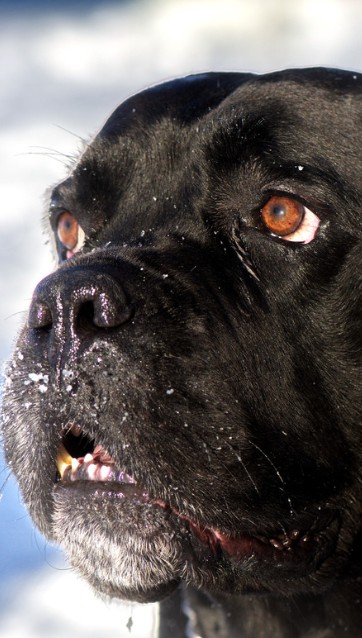
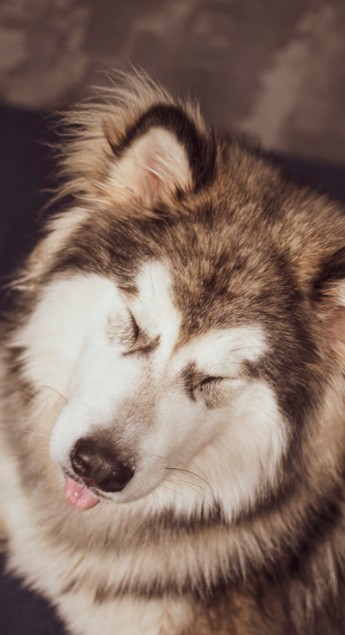
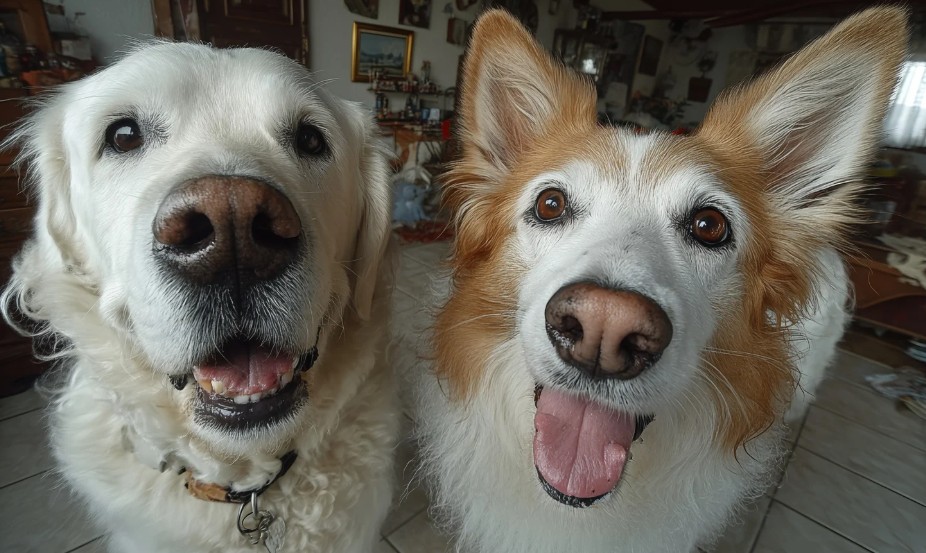
Understanding Builds Trust Careful observation emotional safety and NeuroBond aligned interaction strengthen communication helping dogs feel understood secure and better able to express themselves. 🐾
Emotional Regulation and What Chronic Stress Does to the Face
How the Nervous System Shapes Facial Behavior Over Time
The autonomic nervous system does not just influence individual moments of facial expression. It shapes the baseline quality of your dog’s facial presence over time. Dogs with well-developed parasympathetic tone, meaning those with good emotional regulation capacity, typically display softer, more varied, and more relaxed facial features in daily life.
Dogs living under chronic stress tell a different story through their faces. Sustained elevation of sympathetic tone and reduced parasympathetic regulation would be expected to produce:
- Persistent facial tension that does not fully relax even in safe environments
- Reduced variation in facial expression, as if the face has become “stuck”
- Increased ear retraction as a default position
- Narrowed eye aperture, giving the dog a perpetually guarded look
If you notice these patterns in your dog, it is worth considering whether something in their environment or experience is keeping their nervous system in a state of sustained alert. The face is often the first place chronic stress becomes visible.
🐾 Facial Expression in Dogs: The Complete Science Guide 🧠
From evolutionary roots to practical reading skills — understanding the silent language written on your dog’s face
Phase 1: Evolutionary Origins
How facial communication evolved across canidsThe levator anguli oculi medialis (LAOM) — the muscle behind “puppy dog eyes” — is not unique to domestic dogs. Coyotes possess a well-developed version too, while wolves have a modified or absent form. This means domestication refined existing facial communication rather than inventing it from scratch.
Wolves use facial expressions primarily for social hierarchy and rank signalling — the first quantitative evidence of this function in any non-human animal. Dogs shifted toward attachment and cooperative communication with humans, supplementing facial signals with compensatory vocalizations.
Even flat-faced breeds recruit up to seven facial action units during the relaxed open mouth (ROM) expression — comparable to long-faced breeds. Skull shape constrains but does not limit the complexity of facial signalling.
Phase 2: Neurobiology of Expression
What happens inside the brain when the face changesFacial expression emerges from coordinated activity across seven+ brain regions: the amygdala (threat detection), hippocampus (memory context), hypothalamus (autonomic regulation), neocortex (voluntary control), basal ganglia (motor sequences), cerebellum (timing), and brainstem (direct muscle command).
The same neural circuits that produce a facial expression activate when observing it — driving cross-species emotional mirroring. Dogs don’t just read your face. They feel it through motor mimicry, autonomic synchronization, and learned emotional association.
Higher vagal tone produces relaxed, socially engaged facial features. Lower vagal tone during stress creates facial tension and withdrawal. The vagus nerve is the bridge between internal regulation and the face your dog shows the world.
Phase 3: Sympathetic vs. Parasympathetic
The two nervous system branches that shape every expression• Dilated pupils
• Increased muzzle and forehead tension
• Ears pinned back or pulled tight
• Tightened lips and clenched jaw
• Widened eyes showing sclera (whale eye)
• Normal or slightly constricted pupils
• Relaxed facial muscles with soft contours
• Ears neutral or gently forward
• Loose, relaxed mouth — possibly slightly open
• Soft, gentle eye expression with relaxed lids
Sustained sympathetic dominance creates a persistent facial pattern: tension that never fully releases, reduced expression variety, default ear retraction, and a perpetually guarded eye. The face is often the first place chronic stress becomes visible.
Phase 4: The Five-Zone Decoder
Where to look and what changes meanMost expressive region. Watch for aperture width, sclera visibility, pupil size, inner brow lift (LAOM), and gaze quality — steady vs. darting vs. averted.
Fastest-changing zone. Track direction (forward, sideways, back), tension at the base, and movement speed. Pinned flat = fear. Pricked forward = alert engagement.
Watch openness, lip tension, tongue position, and commissure (lip corner) placement. Relaxed open mouth (ROM) = play. Tightly closed with retracted commissures = stress.
Home of the LAOM. Smooth forehead = relaxed. Furrowed brow with tension ridges = stress or pain. Lifted inner brow = engagement or attention-seeking.
Step back and read the whole face. Soft and loose vs. tight and frozen. Open and forward vs. closed and withdrawn. Symmetrical vs. uneven. The global impression often tells you more than any single zone.
Phase 5: What Humans Get Wrong
The most common misinterpretations — and what’s really happeningLowered head, ears back, averted gaze ≠ guilt. This is an appeasement or fear response to your displeasure — not remorse. Dogs react to your tone and body language, not to an understanding of past wrongdoing.
Lips pulled back showing teeth can be a submissive grin or stress signal, not necessarily happiness. Context determines meaning — check the eyes and ears for confirmation before assuming joy.
The LAOM-activated brow raise often functions as an attention-seeking or communication signal, not sadness. Dogs have learned this expression triggers caregiving — it’s communication, not suffering.
Never read a single facial feature in isolation. Always check multiple zones + body posture + context. A panting open mouth with soft eyes and forward ears = happy. The same mouth with whale eyes and pinned ears = stressed.
Phase 6: The Oxytocin Bond & Genetics
The biochemistry of mutual gaze and the DNA of social connectionWhen dogs gaze at their owners, both species’ oxytocin levels rise — creating a self-reinforcing bonding loop identical to the mother-infant attachment mechanism. Wolves raised by humans did not show this loop, confirming it is specific to domesticated dogs.
Structural variants on canine chromosome 6 (GTF2I gene region) are linked to hyper-sociability. Remarkably, the same genes produce Williams Beuren Syndrome in humans — a condition of extreme friendliness. The capacity for facial bonding may be written into your dog’s DNA.
Dogs display a left gaze bias when looking at human faces — scanning the more emotionally expressive side first. This bias is specific to human faces and does not appear when dogs look at objects, suggesting a specialized perceptual strategy for reading human emotion.
Phase 7: Pain, Welfare & Clinical Tools
Using the face to detect discomfort, monitor treatment, and protect welfare• Sudden pronounced facial tension
• Dramatic eye squinting or closing
• Rapid ear retraction
• Vocalization-accompanied grimacing
• Clear before-and-after contrast with baseline
• Gradual increase in baseline facial tension
• “Flat” face with narrowed emotional range
• Persistent low-level eye tension without dramatic squinting
• Decreased play face and ROM frequency
• Reduced social facial engagement
Glasgow Composite Pain Scale (GCPS): Assesses facial expression alongside posture, response to touch, and behavioral indicators.
Canine Grimace Scale (CGS): Focuses specifically on facial action units including ear position, eye opening, muzzle tension, and whisker pad position.
DogFACS: Objective framework coding individual muscle movements for systematic comparison.
Watch for facial tension softening, return of play face, ears returning to neutral, increased willingness for facial contact, and expanded expression variety. If no visible facial changes emerge after appropriate time, the face can guide dosage adjustments.
Phase 8: Training & The NeuroBond Model
Emotional observation before behavioral intervention• Baseline establishment: Know your dog’s relaxed face
• Change detection: Spot deviations that signal emotional shifts
• Context integration: Read faces within the full environment
• Timing optimization: Use facial shifts to time interventions precisely
Subtle facial expression changes precede overt behavioral changes. A dog’s face shifts before the body follows. Recognizing these early indicators lets you intervene before escalation, deliver rewards at peak receptivity, and ensure the dog understands what’s being reinforced.
• Assess emotional state before addressing behavior
• Recognize that behavioral problems often reflect nervous system dysregulation
• Evaluate the holistic context — not isolated facial movements
• Build secure attachment first, behavior modification second
• Understand how autonomic activation influences both expression and action
• Early phase: Guarded face, appeasement-dominated, no play face
• Emerging safety: Brief softening — a flicker of ROM, a moment of soft gaze
• Growing trust: Sustained relaxation, eye contact offered, play face emerges
• Integration: Expression richness approaches secure-history dogs
🐕 How the Same Emotion Looks Different Across Breeds
Fear signals are subtle. Ear pinning is less dramatic. Existing facial folds mask forehead tension. Look for jaw tension and eye orbit tightening rather than muzzle changes. Up to 7 AUs during ROM.
Most readable skull type. Moderate muzzle allows visible lip changes. Forward-hanging ears show clear retraction during stress. Expression sits in the middle of the readability spectrum.
Most visually dramatic expressions. Long muzzle makes lip retraction clearly visible. Visible forehead ridges during tension. Each feature change is distinct and easy to spot.
Expressions are developing and unstable. Early weeks are reflexive only. Socialization window (8–16 weeks) shapes lifelong expression repertoire. Adolescent dogs refine through social feedback loops.
Full communicative palette. Greatest range and subtlety. Audience-sensitive modulation is fully developed. Individual expression “personality” reflects temperament and learning history.
Expressions may become subtler and slower. Muscle tone decreases. Chronic pain can create persistent baseline tension. Cognitive changes may produce context-disconnected expressions.
The 5-Zone Rule: Never interpret a single zone in isolation — always cross-check eyes + ears + mouth + forehead + overall tone.
The Baseline Principle: You can’t spot a change if you don’t know the starting point. Establish and document your dog’s relaxed face.
The Context Filter: The same expression means different things in different environments. Panting at the park ≠ panting at the vet.
The Asymmetry Alert: If the two sides of the face tell different stories, consider emotional conflict or — if sudden onset — seek veterinary evaluation.
The Prediction Test: If you can predict the next behavior from the face alone, you are reading expressions accurately.
The Bidirectional Rule: Your face shapes your dog’s face. Carry a soft expression to promote parasympathetic activation in your dog.
Every facial expression your dog offers is both a biological signal and an emotional invitation. Through the NeuroBond approach, we learn to read those signals before reaching for behavioral solutions — because the face reveals the nervous system, and the nervous system reveals the truth. The Invisible Leash reminds us that awareness, not correction, is what guides the relationship forward. And in those quiet moments of mutual gaze — where oxytocin flows and trust deepens — that is Soul Recall at work: emotional memory and present connection intertwining across species. Your dog’s face is always speaking. Learning to listen is the foundation of everything that follows.
© Zoeta Dogsoul — Where neuroscience meets soul in dog training
Shelter Dogs vs. Family-Raised Dogs: How Early Life Shapes the Face
The impact of early life experience on facial expressiveness is especially visible when comparing shelter or rescue dogs with dogs raised in stable family environments from puppyhood. Dogs who have experienced abandonment, neglect, prolonged kennel confinement, or inconsistent human interaction often display distinct facial characteristics that reflect their history.
Facial expression patterns commonly observed in shelter and rescue dogs:
- Reduced facial expressiveness: A “flat” or guarded face with less variation, reflecting a nervous system that has learned to conserve energy and minimize social risk
- Hypervigilant eye scanning: Rapid darting of the eyes without sustained gaze, indicating a state of chronic environmental monitoring
- Appeasement-dominated expression: An over-reliance on appeasing facial signals (ears back, eyes averted, brow furrowed) rather than a balanced mix of expressions
- Slow trust-building in facial engagement: Delayed development of soft eye contact, relaxed mouth, and forward ear engagement with new humans
- Exaggerated startle response: Rapid shifts from neutral to full sympathetic facial activation in response to minor stimuli
By contrast, dogs raised in stable, enriched home environments from puppyhood typically show:
- Rich expressive variety: A wide range of facial configurations used flexibly across contexts
- Confident social gaze: Comfortable sustained eye contact with familiar humans
- Quick emotional recovery: Faster return to relaxed facial baseline after brief stress
- Audience-sensitive expression: Clear differences in facial expression depending on whether a human is watching
- Balanced expression repertoire: A healthy mix of play signals, affection signals, attention signals, and calm neutral expressions
These differences are not permanent. With patient, consistent care and an approach grounded in emotional security, many rescue dogs gradually expand their facial expression repertoire as their nervous system begins to regulate more effectively. Watching a once-guarded face soften over weeks and months is one of the most rewarding experiences in dog rescue.
Facial Asymmetry: When the Two Sides Tell Different Stories
Facial asymmetry, where the left and right sides of the face display different expressions, may indicate emotional conflict or neurological dysfunction. In humans, research suggests that the left side of the face (controlled by the right hemisphere, which processes emotional information) tends to be more emotionally expressive than the right side.
Similar asymmetries might occur in dogs during moments of emotional conflict, such as when a dog simultaneously feels drawn toward something and afraid of it. While this area has not been extensively studied in dogs, it opens a fascinating window into the complexity of canine emotional experience. A face that looks “confused” or uneven may be reflecting a genuine internal conflict between competing emotional states.
The Left Gaze Bias: What Your Dog’s Eyes Reveal About Emotional Processing
Research has uncovered a fascinating detail about how dogs look at human faces. Dogs display a left gaze bias when viewing human faces, meaning they tend to look first at the right side of the human’s face (which appears on the dog’s left). This is significant because it mirrors a pattern seen in humans looking at other human faces.
The left gaze bias matters because:
- The right side of the human face (controlled by the left hemisphere) tends to express emotion slightly differently than the left side
- Dogs may be preferentially scanning the more emotionally expressive side of the human face
- This bias appears to be specific to human faces and is not consistently observed when dogs look at other dogs’ faces or at objects
- It suggests that dogs have developed specialized perceptual strategies for reading human emotional states
This left gaze bias provides further evidence that the dog’s brain has adapted specifically for interpreting human facial emotion, reinforcing the idea that centuries of co-evolution have wired dogs to attend to human communicative signals with remarkable sensitivity.
How Humans Read (and Misread) Canine Facial Expressions
Are We Good at Understanding What Dogs Feel?
The ability of humans to accurately interpret canine facial expressions varies considerably. Some expressions are consistently recognized across observers, while others are frequently misinterpreted. The research framework suggests several patterns:
Expressions with clear autonomic components, such as the facial tension associated with fear, are likely more accurately interpreted by humans. These expressions involve dramatic and visible changes that are hard to miss.
Expressions that resemble human emotional expressions, such as the “puppy dog eyes” produced by the LAOM, are more readily recognized because they map onto our own emotional vocabulary. We see something that looks like sadness or vulnerability, and our empathy responds.
Breed-specific variations create the biggest risk of misinterpretation. Humans who are unfamiliar with a particular breed may misread expressions simply because the facial structure and expression patterns differ from what they are used to seeing. A Shar-Pei’s relaxed face looks very different from a Border Collie’s, and without breed-specific knowledge, it is easy to project the wrong emotion onto the wrong face.
Breed Case Studies: How the Same Emotion Looks Different Across Skull Types
To understand how dramatically skull morphology changes the visible expression of the same internal state, consider how fear looks across different breed types.
Fear expression in a Whippet (dolichocephalic / long-faced):
- Ears fold tightly against the long, narrow skull, creating a dramatic visual change
- The long muzzle allows for clearly visible lip retraction
- Wide eyes with visible sclera (white) are easy to spot on the narrow face
- Overall facial tension creates visible ridges along the elongated forehead
- The expression is highly readable because each feature change is visually distinct
Fear expression in a Pug (brachycephalic / flat-faced):
- Ears may pin back, but the change is subtler due to the compact skull shape
- The shortened muzzle limits visible lip retraction; mouth tension shows more around the jaw
- Already prominent eyes make sclera visibility less diagnostic; look instead for tension around the eye orbits
- Forehead wrinkling is harder to detect beneath existing facial folds
- The expression requires closer observation and breed-specific knowledge to read accurately
Fear expression in a Labrador (mesocephalic / medium-faced):
- Ears pull back noticeably from their naturally forward-hanging position
- Moderate muzzle length allows visible lip changes
- Eyes widen with clear sclera exposure
- Forehead shows moderate tension that is visible but not as dramatic as in dolichocephalic breeds
- The expression sits in the middle of the readability spectrum
These differences explain why many people are better at reading the emotions of breeds they live with. Familiarity breeds accuracy. If you work with or care for multiple breeds, investing time in learning each breed’s facial dialect will significantly improve your ability to respond appropriately to their emotional states.
Dogs Adjust Their Expressions Based on Who Is Watching
Here is something remarkable: dogs modify their facial expressions depending on whether humans are paying attention. This is powerful evidence that facial expressions are not purely involuntary reflections of internal state. Dogs are social communicators who actively manage their expressive output.
Research shows that dogs may:
- Exaggerate facial expressions when they perceive that a human is watching
- Suppress certain expressions in contexts where they have learned those expressions are ineffective
- Combine facial expressions with vocalizations and body posture to enhance communicative clarity
This context-dependent modification tells us that your dog is not just feeling things at you. They are communicating with intention and adapting to their social environment. That capacity for social modulation is part of what makes the human-dog bond so uniquely responsive.
Attachment, Bonding, and the Genetics of Social Connection
The Oxytocin Feedback Loop: The Chemistry of Mutual Gaze
One of the most groundbreaking discoveries in human-dog bonding research comes from the work of Nagasawa and colleagues (2015), who demonstrated that mutual gaze between dogs and their owners triggers an oxytocin feedback loop in both species. When a dog gazes into their owner’s eyes, the owner’s oxytocin levels rise. This increase in oxytocin makes the owner behave more warmly toward the dog, which in turn increases the dog’s oxytocin levels, prompting more eye contact and further deepening the bond.
Key findings from the oxytocin-gaze research:
- Dogs who gazed at their owners for longer durations triggered significantly higher urinary oxytocin increases in their owners
- Owners who experienced higher oxytocin increases subsequently spent more time touching and talking to their dogs
- This oxytocin loop closely mirrors the bonding mechanism between human mothers and infants
- Wolves raised by humans did not show the same gaze-mediated oxytocin increase, suggesting this loop is specific to domesticated dogs
- The mechanism provides a neurochemical explanation for the intensity of the human-dog bond
This research reveals that the “puppy dog eyes” expression is not just emotionally effective. It is biochemically effective. When your dog looks at you with soft, sustained eye contact, both of your nervous systems are being bathed in the bonding hormone that also drives human parent-child attachment.
The Genetic Architecture of Canine Hyper-Sociability
Recent genetic research has identified structural variants associated with altered three-dimensional chromatin state that are linked to heightened human-directed hyper-sociability in domesticated dogs. These variants are found within non-coding sites along a region on canine chromosome 6, including polymorphic transposable elements within the canine GTF2I gene.
What makes this finding extraordinary is the molecular convergence it reveals. The same genes that produce human Williams Beuren Syndrome, a condition characterized by extreme sociability, friendliness, and reduced social inhibition, appear to be involved in the emergence of hypersocial behaviors in dogs. This emphasizes the potential role of chromatin architecture in social evolution.
For facial expression, this genetic foundation is significant. Dogs with genetic variants promoting hyper-sociability may be more motivated to engage in facial communication with humans and more responsive to human facial expressions. The capacity for rich, emotionally attuned facial communication may literally be written into your dog’s DNA.
Eye Contact as Emotional Connection
Eye contact sits at the heart of canine-human communication. During cooperative interactions, sustained eye contact alters facial signalling, with dogs displaying softer facial features and increased LAOM activation. Eye contact serves multiple functions simultaneously:
- Attention direction: Signaling that the dog is focused on the human
- Emotional synchronization: Creating a sense of shared emotional state between dog and person
- Reassurance: Communicating trust and willingness to cooperate
This is where the concept of Soul Recall comes alive. Those moments of quiet, sustained eye contact between you and your dog are not empty pauses. They are moments of deep relational bonding, where emotional memory and present connection intertwine.
Facial Cues That Build Trust
Specific facial cues promote trust and reassurance during human-dog interaction:
- Soft eye expression: Reduced eye aperture and gentle gaze
- Relaxed mouth: An open mouth (ROM) or gentle mouth closure
- Forward ear position: Indicating positive attention and engagement
- Reduced facial tension: Overall softness of facial features
Together, these cues communicate emotional availability and willingness to engage cooperatively. When your dog shows you this face, they are telling you they feel safe with you. That is a profound gift.
The Bidirectional Nature of Facial Communication
Facial communication between dogs and humans is not a one-way street. Just as your dog reads your face, your facial expressions directly influence your dog’s emotional state and facial expression in return.
How your face affects your dog:
- Smiling and soft expressions promote parasympathetic activation in your dog, encouraging relaxed facial features, approach behavior, and social engagement
- Frowning, tension, and hard stares can trigger sympathetic activation, producing facial tension, gaze aversion, and appeasement signals in your dog
- Neutral or flat expressions may create uncertainty, leading to increased scanning behavior and attentiveness as your dog tries to read the ambiguous signal
- Exaggerated positive expressions (playful, animated) can elicit play face and excitement signals
- Sustained calm expressions tend to promote calm facial states in the dog through emotional contagion
This bidirectional dynamic means that your own facial awareness is part of your dog’s emotional environment. When you approach your dog with a soft face, you are actively contributing to their nervous system regulation. When you carry tension or frustration on your face, even unintentionally, your dog feels it and their face reflects it back.
How Your Stress Shapes Your Dog’s Face
The impact of owner emotional state on canine facial expression goes deeper than moment-to-moment interactions. Research on emotional contagion suggests that dogs living with chronically stressed owners may display:
- Higher baseline facial tension
- More frequent appeasement signals
- Reduced play face frequency
- Increased hypervigilance in eye scanning
- More rapid shifts between neutral and stress expressions
This is not about guilt. It is about understanding that the emotional ecosystem you create is one your dog inhabits with you. Your face is part of their world. Managing your own stress is not just good for you. It is good for the relationship and for your dog’s emotional regulation.
Pain, Welfare, and Clinical Assessment Through Facial Expression
Your Dog’s Face as a Pain Indicator
Facial expressions provide valuable, often underutilized, information about acute and chronic pain in dogs. Because dogs instinctively mask pain, the face can be one of the earliest warning signs that something is wrong. Pain-related facial expressions typically include:
- Facial tension: Increased muscle tone around the eyes, muzzle, and jaw
- Eye narrowing: Reduced eye aperture, sometimes described as “squinting”
- Ear retraction: Ears pulled back or flattened to the sides
- Mouth tension: Tightness around the mouth or active avoidance of facial contact
Learning to recognize these patterns empowers you to seek veterinary attention before pain escalates to a point where it becomes obvious through limping, whimpering, or behavioral shutdown.
How Chronic Pain and Acute Pain Differ on the Face
The facial presentation of pain changes depending on whether the pain is acute (sudden, short-term) or chronic (persistent, long-term), and recognizing the difference matters for both owners and clinicians.
Acute pain facial markers:
- Sudden onset of pronounced facial tension
- Dramatic eye squinting or closing
- Rapid ear retraction
- Vocalization-accompanied facial grimacing (yelping, whining)
- Rapid withdrawal from facial touch
- Clear before-and-after contrast with the dog’s baseline expression
Chronic pain facial markers:
- Gradual, subtle increase in baseline facial tension that may be hard to notice day-to-day
- “Flat” or reduced facial expressiveness, as if the dog’s emotional range has narrowed
- Persistent low-level eye tension without the dramatic squinting seen in acute pain
- Ears that sit slightly back as a new default position
- Decreased frequency of play face and relaxed open mouth expressions
- Reduced social facial engagement, fewer “puppy dog eyes” moments
The challenge with chronic pain is that it becomes the “new normal.” Because the changes happen gradually, owners often do not notice the shift until it is pointed out or until the pain is treated and the face visibly relaxes. This is why establishing a facial baseline for your dog and revisiting it periodically is so valuable.
Validated Pain Scales That Use Facial Coding
Veterinary science has developed several validated tools that use facial expression as a component of pain assessment:
- The Glasgow Composite Pain Scale (GCPS): One of the most widely used pain assessment tools in veterinary practice. It includes observation of facial expression alongside body posture, response to touch, and behavioral indicators. The facial component assesses ear position, eye expression, and muzzle tension as part of a composite score.
- The Canine Grimace Scale (CGS): A more recent tool that focuses specifically on facial expression for pain detection. It evaluates specific facial action units including ear position, eye opening, muzzle tension, and the position of the whisker pad. It was designed for use in clinical settings and has been validated against other pain indicators.
Both scales demonstrate that systematic facial observation outperforms casual assessment in detecting pain, especially subtle or chronic pain that dogs may be masking.
DogFACS: An Objective Framework for Discomfort Assessment
The Canine Facial Action Coding System (DogFACS) provides an objective, systematic framework for identifying specific facial action units (AUs) associated with discomfort. Rather than relying on subjective impressions, DogFACS codes individual muscle movements that can be measured and compared.
Pain-related expressions identified through DogFACS would involve:
- Increased tension in periocular muscles (the muscles surrounding the eyes)
- Ear retraction or flattening
- Mouth tension or avoidance
- Reduced overall facial expressiveness, as pain may suppress other expressions
This objective approach is especially valuable in clinical and shelter settings where subjective assessments may be influenced by breed familiarity, individual bias, or the observer’s emotional state.
Red Flags: When a Facial Expression Means “See the Vet Now”
Certain facial expression patterns should prompt an immediate veterinary consultation rather than behavioral interpretation:
Seek veterinary attention promptly if you observe:
- Sudden facial asymmetry: One side of the face drooping, one ear falling, or one eye unable to close normally (may indicate facial nerve paralysis or stroke)
- Rapid-onset head tilt combined with facial changes: Especially with eye flickering (nystagmus), may indicate vestibular disease
- Persistent facial tension unrelated to environmental context: The dog appears in discomfort despite being in a safe, familiar environment with no apparent stressors
- Inability to close the mouth or abnormal jaw position: May indicate jaw injury, dental abscess, or neurological issue
- Sudden loss of facial expressiveness: A previously expressive dog whose face becomes “flat” or unresponsive may be experiencing a neurological event or severe pain
- Repetitive, involuntary facial movements: Twitching, lip-smacking, or jaw chattering without emotional context may indicate seizure activity or neurological dysfunction
Situations better addressed through behavioral consultation:
- Consistent appeasement face in specific contexts (e.g., when visitors arrive)
- Increased stress expression during particular activities (car rides, grooming)
- Gradual reduction in facial expressiveness over weeks or months without acute onset
- Context-dependent aggression signals (resource guarding, fear-based reactivity)
- Expression changes linked to household changes (new pet, new schedule, move)
When in doubt, start with the vet. A neurological cause ruled out gives you confidence that behavioral approaches are appropriate.
How Medication Changes the Face
When a dog begins medication for anxiety, pain, or other conditions, facial expression can serve as a valuable monitoring tool.
What to watch for with anxiety medication:
- Decrease in baseline facial tension
- Gradual increase in relaxed open mouth (ROM) frequency
- Ears returning to a more neutral resting position
- Softer eye expression with less hypervigilant scanning
- More variation in facial expression, suggesting a wider emotional range is accessible
What to watch for with pain medication:
- Rapid softening of facial tension, especially around the eyes and muzzle
- Return of play face and social facial engagement
- Ears returning to breed-typical neutral position
- Decrease in eye squinting or narrowing
- Increased willingness for facial touch and contact
If medication does not produce visible changes in facial expression after an appropriate period, this feedback can help your veterinarian adjust dosage or approach. The face becomes a real-time indicator of whether the treatment is reaching the emotional and physiological systems it needs to.
Why Breed Matters in Welfare Assessment
Breed-specific facial structures influence how pain is both expressed and perceived. A Bulldog in pain may display very different facial patterns than a Greyhound in pain, simply because their facial anatomy differs so dramatically.
Welfare assessments based on facial expression must account for these breed-specific variations. Without this awareness, there is a real risk of systematic misinterpretation, either failing to recognize pain in a breed whose expression patterns are unfamiliar, or incorrectly attributing distress to a breed whose resting face simply looks “concerned” to the human eye.
Breed Differences and the Role of Skull Morphology
Three Skull Types, Three Expression Profiles
Dogs are classified into three primary skull morphology categories:
- Brachycephalic (flat-faced): Bulldogs, Pugs, Boxers
- Mesocephalic (medium-faced): Labrador Retrievers, Golden Retrievers
- Dolichocephalic (long-faced): Greyhounds, Collies, German Shepherds
Each skull type creates a different canvas for facial expression. Brachycephalic breeds face anatomical constraints that might be expected to limit their expressive range. But as research consistently demonstrates, these breeds recruit comparable numbers of facial muscles as other types during expression. Skull morphology constrains but does not eliminate facial expressiveness. Neural control mechanisms compensate for anatomical variation, and breed-specific selection has shaped how dogs execute expressions within their anatomical framework.
Expression Diversity Across Breeds
Different breeds demonstrate varying levels of facial expression diversity. The relaxed open mouth (ROM), for example, shows significant variation across breeds that does not systematically reflect genetic closeness to wolves. This pattern suggests that:
- Breed-specific selection has actively shaped facial expressiveness over generations
- Learned social experience within breed-specific contexts plays a role in expression development
- Anatomical variation creates distinct breed-specific expression signatures
Understanding your specific breed’s expression style helps you become a more accurate reader of your dog’s emotional state.
How Multi-Dog Households Shape Facial Communication
Dogs living with other dogs develop and refine their facial expression skills differently than single-dog households. The social learning opportunities in multi-dog environments are significant.
How multi-dog households influence facial expression development:
- Social rehearsal: Dogs practice and refine facial signals through repeated interaction with housemates, building a more nuanced expressive repertoire
- Cross-breed learning: Dogs in multi-breed households may develop the ability to read a wider variety of facial expression styles
- Play face calibration: ROM and play solicitation expressions become more refined through daily social feedback
- Appeasement skill development: Dogs learn nuanced appeasement signalling through interactions with different temperaments and social styles
- Facial expression suppression learning: Dogs in multi-dog households learn when to suppress certain expressions to avoid conflict, demonstrating the voluntary component of facial communication
A single-dog household can compensate for this through regular, positive social interactions with other dogs during walks, play dates, and group training.
Genetic Diversity and How Breeds Evolved
Research integrating genetic data from 263 dogs representing 23 closed dog populations from Italy, seven Apennine gray wolves, and 161 globally recognized dog breeds reveals that domestic breeds have evolved through multiple, distinct developmental routes. Different breeds have diverged from common populations for specific purposes, and the genetic diversity within each breed reflects its unique evolutionary history.
This research underscores that breed differences in facial expression are not random variation. They are the product of specific evolutionary and selective pressures that have shaped each breed’s communicative toolkit over hundreds or thousands of years.
Artificial Intelligence and the Future of Canine Facial Analysis
Machine Learning for Emotional State Classification
The theoretical framework emerging from facial expression research suggests that artificial intelligence could reliably classify canine emotional states from facial expressions. For this to work, AI systems would need to be trained on:
- Facial action units identified through DogFACS
- Autonomic indicators such as pupil dilation, ear position, and mouth tension
- Contextual information including environmental conditions, recent events, and social context
The advantages of AI-based assessment are significant:
- Objectivity: Removes the subjective interpretation bias that affects human observers
- Consistency: Applies identical criteria across every assessment
- Speed: Analyzes facial expressions in real-time
- Scalability: Can process large numbers of assessments efficiently
The Facial Landmarks That Matter Most
For AI systems to accurately classify emotional states, they need to focus on the most informative facial landmarks. Research points to five key regions:
- Eye region: Pupil dilation, eye aperture, and LAOM activation
- Ear position: Whether the ears are forward, neutral, or retracted
- Mouth configuration: Open (ROM), closed, or tense
- Facial tension: Overall muscle tone across the face
- Asymmetry: Differences between the left and right sides of the face
These landmarks, when analyzed together, create a comprehensive picture of the dog’s emotional state that goes beyond what any single feature can reveal.
Clinical and Training Applications
AI-based facial expression analysis has the potential to transform several areas of canine care:
- Behavioral assessment: Identifying emotional states during behavioral consultations with greater accuracy
- Welfare monitoring: Detecting signs of stress, pain, or illness in shelter and kennel environments
- Early disease detection: Identifying subtle changes in facial expression that may indicate developing health problems
- Training optimization: Timing reinforcement based on the dog’s emotional state rather than external behavior alone
Training, Behavior, and the Power of Facial Observation
Using Facial Expression in Behavioral Assessment
Trainers and behaviorists can enhance their effectiveness by systematically observing and interpreting canine facial expressions. Four key practices form the foundation of this approach:
- Baseline establishment: Observing the dog’s typical facial expression when relaxed to create a reference point
- Change detection: Identifying deviations from baseline that signal emotional shifts
- Context integration: Interpreting facial expressions within the broader behavioral and environmental picture
- Timing optimization: Using facial expression changes to precisely time interventions and reinforcement
Why Subtle Facial Changes Precede Behavior
One of the most practical insights from this research is that subtle facial expression changes often precede overt behavioral changes. A dog’s face shifts before the body follows. By recognizing these early indicators, trainers and owners can:
- Intervene before escalation: Addressing emotional shifts before they manifest as problematic behavior like reactivity, avoidance, or aggression
- Optimize reinforcement timing: Delivering rewards at moments of maximum receptivity, when the dog’s face shows openness and engagement
- Enhance communication clarity: Ensuring the dog clearly understands what behavior is being reinforced
This is where training becomes less about commands and more about conversation. When you learn to read the face, you learn to work with your dog’s emotional reality rather than against it.
The NeuroBond Model: Emotional Observation Before Behavioral Intervention
The NeuroBond approach represents an integrated model for canine behavior and training that prioritizes observation of emotional regulation before any behavioral intervention begins. It is built on the principle that facial expressions are external indicators of internal nervous system regulation.
Core Principles:
- Emotional state assessment: Before addressing behavior, assess the dog’s emotional state through facial expression, posture, movement, and autonomic indicators
- Nervous system regulation: Recognize that many behavioral problems reflect dysregulation of the nervous system rather than intentional misbehavior
- Holistic context evaluation: Evaluate the entire behavioral context, including emotional regulation, posture, movement, social engagement, and environmental conditions, rather than interpreting isolated facial movements
- Relationship-centered approach: Prioritize building a secure attachment and emotional connection before implementing behavior modification techniques
- Autonomic awareness: Understand how sympathetic and parasympathetic activation influence both facial expression and behavior
Practical Implementation:
When applying the NeuroBond model, trainers should:
- Observe facial expressions to assess emotional state before each training session
- Modify training intensity and approach based on the dog’s current emotional regulation capacity
- Use facial expression changes as real-time feedback about whether the dog is in an optimal learning state
- Prioritize activities that promote parasympathetic activation and emotional regulation
- Recognize that behavioral change is more sustainable when built on a foundation of emotional security
Expected Outcomes:
Dogs trained through this emotionally attuned approach would be expected to demonstrate:
- Greater emotional stability and resilience across situations
- More reliable behavioral responses that generalize across different contexts
- Reduced anxiety and stress-related behaviors
- Enhanced human-dog bonding and attachment security
- Improved generalization of learned behaviors to new environments and situations
Trauma Recovery: When Facial Expressiveness Returns
For dogs recovering from trauma, neglect, or prolonged stress, the return of facial expressiveness is one of the most meaningful markers of emotional healing. Trauma compresses the face. It narrows the range of expression, locks the muscles into defensive patterns, and reduces the voluntary, socially directed signals that indicate trust and engagement.
As healing progresses through patient, relationship-centered care, the face tells the story:
Stages of facial expression recovery in trauma-affected dogs:
- Early phase: The face remains guarded. Expression is dominated by appeasement signals and hypervigilance. Play face is absent. Sustained eye contact is avoided.
- Emerging safety phase: Brief moments of relaxation appear in the face — a softening of the eyes, a momentary ear release, a flicker of ROM. These moments are short-lived but significant.
- Growing trust phase: Relaxed facial expression begins to persist for longer periods. The dog begins to offer sustained eye contact. Play face emerges during safe interactions. The range of expression visibly widens.
- Integration phase: Facial expressiveness approaches the richness seen in dogs with secure early histories. The face becomes a flexible, nuanced communicative instrument. Appeasement signals become context-appropriate rather than default.
This recovery trajectory is not linear. There will be setbacks and regression. But the face remains a reliable indicator of where the dog is in their emotional healing journey. Watching facial expression return is watching the nervous system learn that safety is real. That is the NeuroBond approach in action. 🧡
A Step-by-Step Guide to Establishing Your Dog’s Facial Baseline
Understanding what is “normal” for your individual dog is the foundation for detecting meaningful changes. Here is a practical guide to creating your dog’s facial baseline.
Step 1: Choose the right moment. Observe your dog when they are calm and relaxed in a familiar environment. After a meal, during a quiet evening, or when they are resting comfortably are ideal times. Avoid baseline observation when the dog is excited, hungry, or recently stressed.
Step 2: Observe each facial zone systematically. Go through the five zones from the decoder guide: eyes, ears, mouth, forehead, and overall facial tone. Note the resting position and quality of each.
Baseline observation checklist:
- Eyes: What is the default eye aperture? How much lid is visible? What is the resting pupil size? How does the gaze move — steady, scanning, unfocused?
- Ears: Where do the ears naturally sit? How tightly or loosely are they held? Do they move frequently or stay still?
- Mouth: Is the mouth typically open or closed at rest? How tight or loose are the lips? Is the tongue visible? Where do the commissures (lip corners) sit?
- Forehead: Is the brow smooth or furrowed at rest? Are there habitual tension lines?
- Overall tone: Does the face look soft and loose or tight and held? Is there asymmetry?
Step 3: Document across multiple sessions. One observation is not a baseline. Observe your dog over several days and in different relaxed contexts. Look for the consistent patterns that appear regardless of specific circumstances.
Step 4: Photograph your baseline. Take several photos of your dog’s relaxed face from the front and from a slight angle. These reference photos become invaluable when you are trying to determine whether something has changed gradually over time.
Step 5: Re-establish periodically. Update your baseline observation every few months, especially as your dog ages, after significant life changes (new home, new family member, loss of a companion animal), or after medical events. What was normal six months ago may not be normal today.
Step 6: Compare against baseline when concerned. Whenever you notice something “off” about your dog’s face, pull up your baseline observations and photos. The ability to compare against a documented reference point is far more reliable than relying on memory alone.
Five Practical Exercises to Improve Your Facial Expression Reading Skills
Becoming a better reader of your dog’s face is a skill that improves with deliberate practice. Here are five exercises you can incorporate into your daily routine.
Exercise 1: The 30-Second Scan (Daily Practice)
Choose one moment each day to silently observe your dog’s face for 30 uninterrupted seconds. Do not talk to them or interact. Simply observe. Mentally note what you see in each of the five zones. Over time, this trains your eye to detect subtle changes you would normally miss.
Exercise 2: The Context Contrast (Weekly Practice)
Deliberately observe your dog’s face in two contrasting contexts on the same day: once in a calm environment and once during mild arousal (a walk, a visitor arriving, feeding time). Notice the specific differences zone by zone. Write down three things that changed between the two contexts.
Exercise 3: The Photo Journal (Ongoing)
Take one photo of your dog’s face each day, in whatever state you find them. After a month, review the collection. You will begin to see patterns in expression that you did not notice in real time. This exercise builds long-term pattern recognition.
Exercise 4: The Mute Walk (Monthly Practice)
Go on one walk per month where you focus entirely on your dog’s face rather than on direction, destination, or your phone. Observe how their face changes as you pass other dogs, encounter new smells, approach intersections, or enter new environments. This builds your ability to read facial changes in dynamic, real-world conditions.
Exercise 5: The Prediction Game (Advanced)
When your dog is about to encounter a stimulus (another dog, a food bowl being filled, a doorbell ringing), observe their face and predict what will happen next based on the facial expression you see. Then observe the behavioral outcome. Over time, this calibrates your ability to read the face as a leading indicator of behavior. 🐾
Bringing It All Together: The Multilayered Nature of Canine Facial Expression
The Face as a Window Into Emotional State
Facial expressions in dogs serve as a direct window into their internal emotional and physiological state. The integration of multiple neural systems, including limbic emotional processing, autonomic regulation, motor control, and learned social experience, produces the observable facial movements that carry emotional information to other dogs and to us.
This communication is multilayered:
- Involuntary emotional components: Driven by limbic system activation and autonomic changes, these are the raw, unfiltered expressions of genuine feeling
- Learned communicative signals: Modified and refined through social experience and based on expected outcomes
- Breed-specific variations: Shaped by centuries of selective breeding and anatomical constraints
- Individual differences: Reflecting each dog’s unique personality, temperament, and personal learning history
From Wolves to Dogs: A Transformation in Purpose
The evolution of facial communication from wolves to domestic dogs reflects a fundamental shift in what facial expressions are for:
- Wolves use facial expressions primarily to communicate social status within hierarchical pack structures
- Dogs use facial expressions primarily to facilitate attachment and cooperative communication with humans
This transformation was enabled by:
- Retention of ancestral facial muscles like the LAOM from the broader Canis genus
- Enhanced neural control systems refined through domestication
- Artificial selection that favored dogs whose facial expressions effectively reached human hearts
- Genetic changes in sociability linked to chromatin architecture on chromosome 6
The Dual Function of Every Expression
Every canine facial expression serves two functions simultaneously:
- Emotional communication: Conveying internal emotional states to facilitate understanding and empathy
- Social signaling: Communicating intentions, requests, and social information to support cooperation
These functions are not in competition. They work together to produce the complex, nuanced facial communication that makes the human-dog relationship so uniquely rich and responsive.
What We Still Do Not Know: Limitations and Future Directions
Gaps in Current Understanding
Despite the progress outlined in this guide, several important gaps remain:
- Limited neuroimaging data: While we understand human facial expression neurobiology well, direct neuroimaging of canine facial expression processing remains limited
- Incomplete breed-specific catalogs: Some breed differences are documented, but comprehensive catalogs of breed-specific facial expression patterns are still lacking
- Few longitudinal studies: We need more research tracking how facial expressiveness changes across a dog’s lifespan and in response to training or environmental changes
- Individual differences: Limited research exists on how personality, temperament, and learning history influence facial expressiveness at the individual level
- Pain assessment validation: While facial expressions clearly indicate pain, validation studies comparing facial expression to other pain indicators are still needed
Where Research Is Headed
The future of canine facial expression research includes several promising directions:
- Neuroimaging studies using fMRI or other techniques to identify the brain regions involved in facial expression production and perception in dogs
- Longitudinal studies tracking how facial expressiveness develops and changes across a dog’s lifetime
- Breed-specific DogFACS catalogs that document the full range of facial expressions for different breeds
- AI model validation testing machine learning classifiers for canine emotional state against behavioral and physiological measures
- Clinical tool development creating and validating facial-expression-based assessment tools for pain, welfare, and behavioral evaluation
- Individual difference research investigating how personality, temperament, and lived experience shape a dog’s facial expressiveness
Conclusion: Why Your Dog’s Face Matters More Than You Think
The science is clear. Facial expressions in dogs represent a sophisticated system of emotional communication shaped by evolutionary pressures, domestication, and individual learning. Here is what the evidence tells us:
Facial expressions genuinely reflect emotional state. They are driven by limbic system activation and autonomic changes, making them reliable indicators of what your dog is feeling inside.
Facial expressions are also learned social signals. Dogs modify their expressions based on social context and expected outcomes, demonstrating that facial communication is subject to learning and intentional modulation.
Domestication enhanced existing facial communication. While the basic facial musculature is conserved across canids, domestication refined the neural systems controlling expression and selected for signals that effectively reach humans.
Breed-specific variations matter. Different breeds display characteristic expression patterns shaped by both anatomical constraints and selective breeding. Learning your breed’s facial dialect makes you a better communicator.
Facial expressions strengthen the human-dog bond. Specific cues, particularly “puppy dog eyes,” trigger caregiving responses and oxytocin feedback loops that create deepening cycles of attachment and trust.
Facial expressions have clinical value. They provide essential information about pain, welfare, and emotional state, with validated tools like the Glasgow Pain Scale and Canine Grimace Scale bringing scientific rigor to facial assessment.
Your own face matters too. Facial communication is bidirectional. Your emotional state, your stress level, and the expressions you carry directly influence your dog’s facial expression and emotional regulation.
Emotionally attuned training works better. By prioritizing observation of emotional regulation through facial expression before behavioral intervention, trainers build more sustainable, compassionate, and effective programs.
That balance between science and soul, between understanding the neurobiology and honoring the emotional depth of the relationship, that is the essence of Zoeta Dogsoul. Your dog’s face is always speaking. Learning to listen is one of the most meaningful things you can do. 🐾