
Bir, Widmar & Croney (2017) — Animals (MDPI)
Stated Preferences for Dog Characteristics and Sources of Acquisition
Published: July 26, 2026
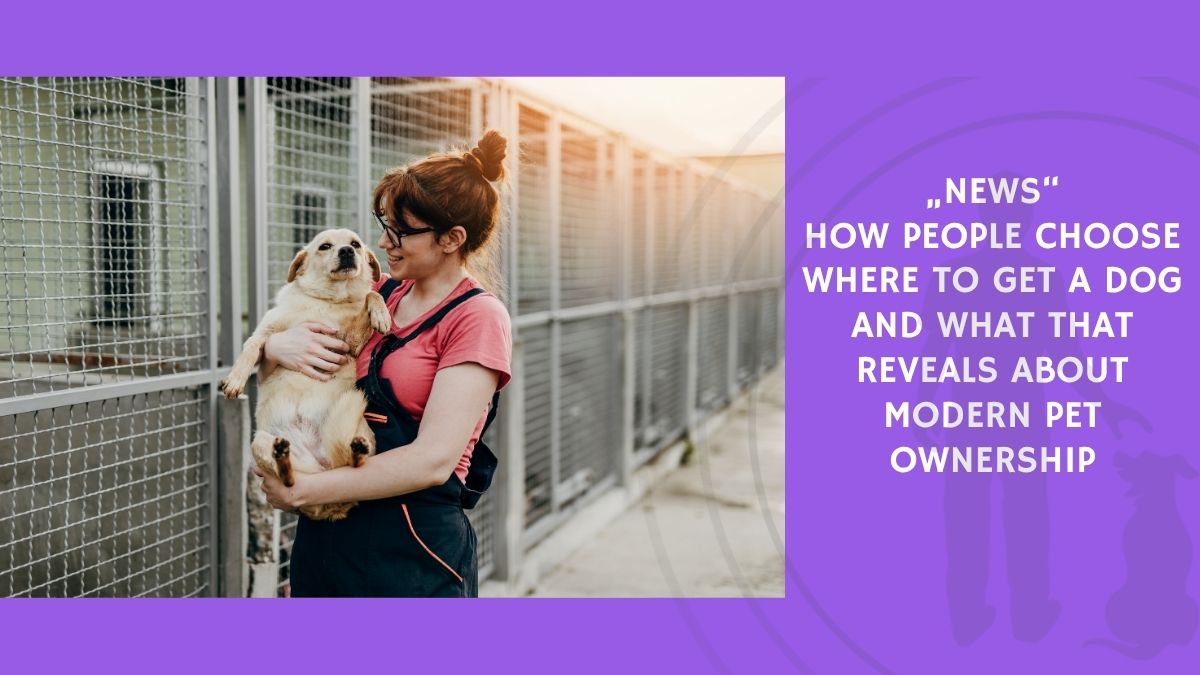
Where you get your dog is the first decision you make as a dog owner — and it shapes everything that follows. A survey of 1,523 US residents has mapped the full landscape of how people think about dog acquisition: what characteristics they prioritise, which sources they consider ethical, and how those preferences break down across demographic groups. The findings reflect a companion animal culture in significant transition. 🐾
Researchers C. Bir, N. Widmar, and C. Croney analysed public perceptions of dog acquisition across a nationally representative online survey, using both Likert-scale agreement questions and best-worst methodology to capture not just what people say they prefer but how strongly they prefer it relative to alternatives. The result is one of the more methodologically detailed pictures available of how US dog owners and prospective owners actually think about the first decision in dog ownership.
What People Say They Look For in a Dog
Appearance, compatibility with owner lifestyle, previous experience with the breed or type, and cost were confirmed as the primary factors informing dog acquisition decisions across the sample. These findings are consistent with existing research and reflect the reality that most people approach dog acquisition as a personal and practical decision rather than a welfare or ethics calculation first.
The relative importance of these criteria varied meaningfully across demographic groups. This variation matters because it suggests that the companion animal industry, rescue organisations, and welfare advocates are not communicating with a homogeneous audience. Different segments weight the same decision criteria differently — and messaging designed around one segment’s priorities will fail to connect with another’s.
The cost finding is worth examining beyond its surface value. Cost as a factor in acquisition does not simply mean that lower cost sources are preferred. It means that perceived value relative to cost is part of the decision architecture — and that the framing of what is being purchased, adopted, or rescued influences how cost is weighed against other considerations. A rescue dog at low monetary cost but high perceived adjustment burden may not be experienced as cheaper in practice by an owner who accounts for all dimensions of what acquisition involves.
The Ethics Dimension and the Adoption Shift ⚠️
The ethical ranking component of the study produced the most striking result. Three distinct subgroups emerged from the best-worst analysis. One subgroup showed an overwhelmingly large preference share — 96 percent — for adoption as the most ethical acquisition method. A second group showed more evenly distributed preferences across acquisition methods. A third indicated a preference specifically for dogs described as homeless. No subgroup showed a dominant preference for commercial breeders or pet stores as the most ethical option.
The gender differences were statistically significant and practically substantial. Women were significantly more likely than men to agree that shelter or rescue adoption was the only responsible acquisition method — 39.6 percent of women versus 31.7 percent of men. Women were also more likely to identify source as an important factor overall, as were higher income households. The growing appeal of shelter and rescue adoption as both an ethical stance and a practical choice is a consistent finding across demographic groups — though the strength of that preference varies considerably.
The researchers note that even people who do not intend to acquire a dog hold perceptions about acquisition methods — and those perceptions influence their views on pet industry regulation and animal welfare policy more broadly. Dog acquisition is not only a personal consumer decision. It is a value statement that shapes voting behaviour and regulatory attitudes in ways that extend well beyond the individual household making the choice.
What Acquisition Choice Means for the Relationship That Follows 🐕
The research this study cannot address — and does not attempt to — is whether the source of acquisition predicts the quality of the owner-dog relationship, the dog’s behavioural outcomes, or the owner’s long-term satisfaction with ownership. Those questions require different designs. What this study establishes is that the decision architecture leading to acquisition is driven by a combination of personal compatibility factors and ethical values that operate differently across demographic segments.
What every acquisition pathway has in common is that it is only the beginning. A dog from a carefully selected ethical breeder can develop severe behavioural problems without appropriate rearing, socialisation, and relationship building. A dog rescued from a shelter background of early adversity can become one of the most rewarding relationships an owner has ever experienced — given the right approach and the right quality of presence from the person who chose them.
At Zoeta Dogsoul, the starting point of the relationship matters — but it does not determine its destination. NeuroBond is built in the time after acquisition, through the accumulated quality of daily interaction, through the attunement that develops when an owner pays genuine attention to who their specific dog actually is. Where the dog came from is one chapter of the story. What is built in every chapter after that is what the relationship becomes. 🐾
Source: Bir, C., Widmar, N., & Croney, C. (2017). Stated Preferences for Dog Characteristics and Sources of Acquisition. Animals. Published August 1, 2017.










