
Ferres, Schloesser & Gloor (2022) — Future Internet
Predicting Dog Emotions Based on Posture Analysis Using DeepLabCut
Published: July 14, 2026
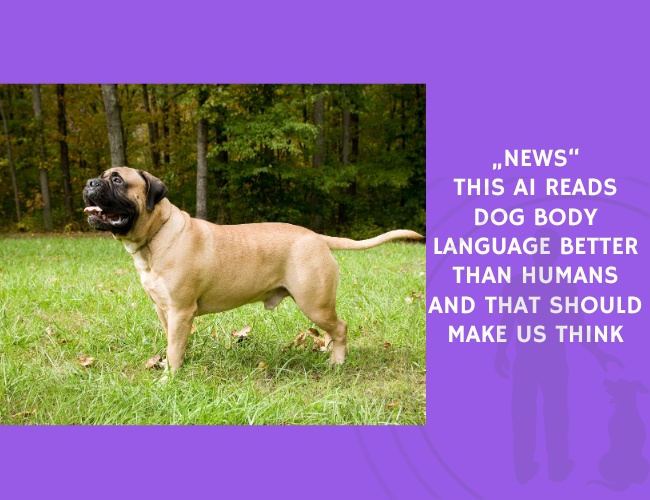
The previous AI emotion classifier we covered here relied on facial and coat features in photographs. This one works differently — and the difference matters. Instead of reading surface visual patterns, it reads body posture through 24 precisely mapped keypoints across the dog’s entire body. The result is an emotion recognition system that outperforms human accuracy. That finding deserves careful attention. 🐾
Researchers Kim Ferres, T. Schloesser, and P. Gloor built their system using DeepLabCut, a well-established machine learning framework originally developed for animal pose estimation in research contexts. A keypoint detection model was trained on 13,809 annotated dog images, learning to estimate the coordinates of 24 body part keypoints across the full canine form. That model was then used as the foundation for an emotion classifier, tested against a library of 400 images across four emotional states: anger, fear, happiness, and relaxation.
What Makes This Approach Different
The distinction between this method and facial expression classification is structural. Facial expression models read what the face looks like. Pose estimation models read how the body is positioned — the geometry of the animal in space. Ear angle, tail height and position, weight distribution across limbs, the curve of the spine, the degree of muscle tension visible through body silhouette — these are the signals the model is extracting and classifying.
This matters because canine emotional communication is primarily postural. A dog communicates far more through whole body posture than through facial expression alone. A lowered head, a tucked tail, a weight shift backward, a stiffened topline — these are the signals that experienced trainers and behaviourists read first, and they are signals that the full-body keypoint approach is specifically designed to capture.
The system achieved classification accuracy between 60 and 70 percent across the four emotional states. That figure is lower than the 99.60 percent reported in the CNN facial classifier we previously covered — but it is a more honest number for a harder problem. Full-body pose in uncontrolled images is a more variable and more challenging input than curated facial photographs. And crucially, the researchers compared their system directly against human performance on the same task — and the AI exceeded it.
Humans Are Not as Good at This as We Think ⚠️
This finding lands harder when placed alongside recent research we have covered on human perception of dog emotions. Two studies by Molinaro and Wynne demonstrated that human reading of dog emotional states is systematically distorted by background context and by the observer’s own mood. This study adds a third data point: when tested against the same image set under controlled conditions, humans score lower than a pose-estimation algorithm on emotion classification accuracy.
The combined picture from these three studies is not flattering for human confidence in reading dog emotions. Context biases us. Mood biases us in unexpected directions. And even when those variables are controlled, an algorithm trained on body keypoints outperforms us at the classification task itself.
None of this means human attunement is worthless or that owners cannot develop genuine skill in reading their dogs. It does mean that the confidence many owners carry about their ability to accurately read their dog’s emotional state is not always supported by the evidence — and that tools designed to assist rather than replace human perception are filling a gap that is real and measurable.
Where Technology and Relationship Meet 🐕
At Zoeta Dogsoul, this research sits at an interesting intersection. NeuroBond is built on accurate attunement — reading the real dog rather than the dog you project or assume. A tool that helps owners see postural signals they consistently miss is not undermining that attunement. It is supporting the accuracy it depends on.
The 24 keypoints this system tracks — ears, tail, limbs, spine, weight distribution — are the same signals that the Invisible Leash runs through. They are the physical vocabulary of the dog’s internal state. An owner who learns to read those signals more accurately — whether through experience, through education, or through the assistance of tools like this — is an owner whose connection with their dog becomes more grounded in what is actually happening rather than what feels like it should be happening. 🐾
Source: Ferres, K., Schloesser, T., & Gloor, P. (2022). Predicting Dog Emotions Based on Posture Analysis Using DeepLabCut. Future Internet. Published March 22, 2022.










