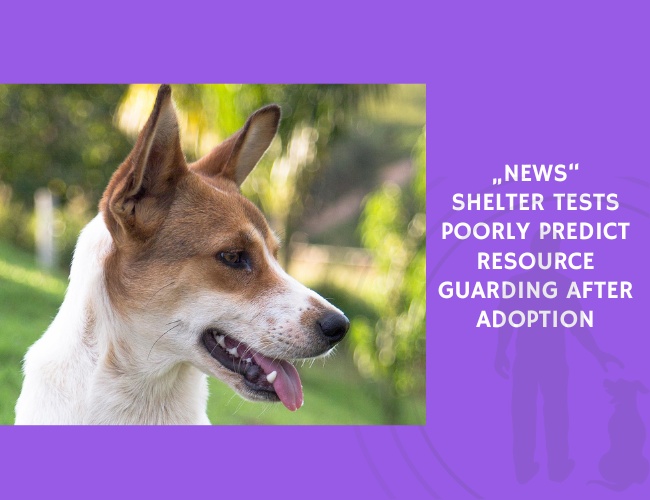
Resource guarding, defined as growling, snarling, or biting to retain access to valued items, is a frequent concern in animal shelters. Many shelters routinely test for food-related aggression, and in some cases, dogs identified as guarding are deemed unadoptable. This study critically examined whether those assessments accurately predict behavior in real-world adoptive settings.
The researchers surveyed adopters of 139 dogs from a New York shelter. Of these, 20 dogs were identified as resource guarding during shelter behavioral evaluations, while 119 dogs were not. In addition, surrendering owners had previously completed intake profiles that sometimes included reports of guarding behavior. The study compared these two information sources with post-adoption behavior reported by adopters.
Statistical analyses showed that both shelter assessments and owner surrender reports were significantly associated with guarding behavior in adoptive homes across several situations, including removal of food, toys, or other valued objects. However, the positive predictive value of both methods was low.
Crucially, more than half of the dogs identified as resource guarding—either by shelter staff or by surrendering owners—did not display guarding behavior after adoption. When data from all three sources (surrender profiles, shelter evaluations, and adopter reports) were available, agreement among them was only in the fair range.
These findings indicate that resource guarding is highly context-dependent. The shelter environment, often characterized by stress, confinement, and unfamiliar handling, may elicit behaviors that do not persist once dogs are placed in stable homes. Similarly, owner-reported histories may reflect circumstances that no longer apply in a new environment.
The authors emphasize that labeling dogs as unadoptable based solely on shelter evaluations or surrender profiles may unnecessarily limit adoption opportunities. Instead, the results support a more nuanced, welfare-oriented approach that recognizes behavioral plasticity and the powerful influence of post-adoption environments.
Source: McGuire, B., Orantes, D., Xue, S., & Parry, S. A. (2020). Abilities of Canine Shelter Behavioral Evaluations and Owner Surrender Profiles to Predict Resource Guarding in Adoptive Homes. :contentReference[oaicite:1]{index=1}.