
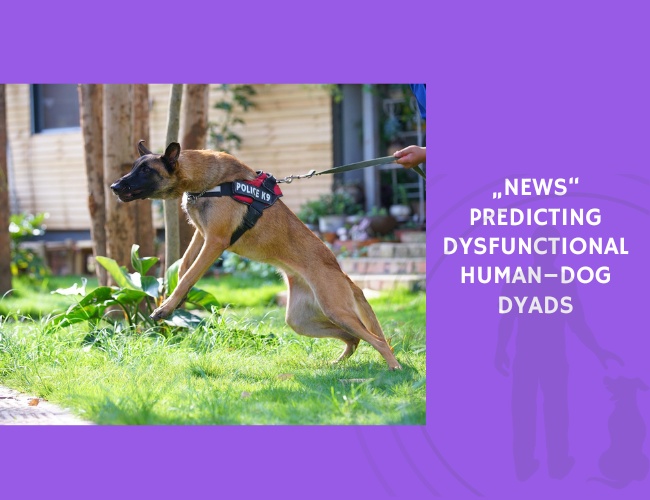
This study examined why some human–dog relationships become dysfunctional despite the species’ long history of mutual benefit spanning approximately 16,000 years. Dysfunctional dyads can have serious consequences, including canine behavioral problems, increased risk of aggression, and broader public health concerns when dogs are poorly managed or allowed to roam.
The authors approached dysfunction as a multifactorial phenomenon, shaped by interactions between human personality, canine temperament, and everyday management decisions. To test this framework, 255 dog owners completed a series of questionnaires about themselves and their dogs.
Dog-related data included general characteristics and the Canine Behavioral Assessment and Research Questionnaire (C-BARQ), while human-related data captured demographics, education, family structure, husbandry practices, and personality traits measured using the Eysenck Personality Questionnaire–Revised.
Comparisons between functional and dysfunctional dyads revealed significant differences in husbandry choices as well as in both human and canine personality profiles. These findings suggest that dysfunction is not attributable to the dog alone, but rather emerges from the interaction between both partners and their shared environment.
Using these variables, the authors applied logistic regression analysis and developed two predictive models capable of identifying dysfunctional dyads at an early stage. These models demonstrated potential for distinguishing at-risk pairings before severe behavioral or welfare problems develop.
The study concludes that early identification of dysfunctional human–dog dyads could support preventive intervention strategies, including targeted owner education, improved dog–owner matching in shelters, and more personalized approaches in veterinary and behavioral clinical practice. Such applications may reduce relinquishment, improve welfare, and strengthen long-term human–dog relationships.
Source: Canejo-Teixeira, R., Almiro, P., Baptista, L. V., & Niza, M. M. (2020). Predicting Dysfunctional Human–Dog Dyads. Published November 1, 2020.










