
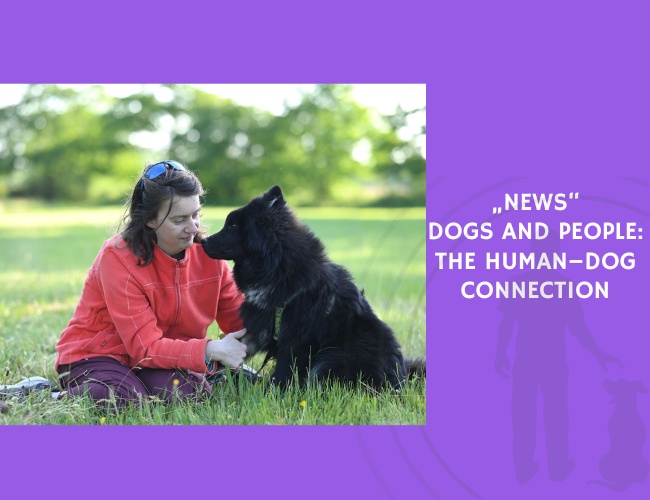
Published in the Journal of Ethnobiology, this article situates dogs within a long anthropological and ethnobiological history of human–canine relationships. Drawing on archaeological, historical, and biological literature, the authors describe how humans have integrated dogs into social, spiritual, and economic life across cultures.
The study highlights that dogs have served diverse roles in human societies, including hunting, herding, guarding, burden carrying, ritual practices, and companionship. Through these roles, humans have intentionally and unintentionally shaped canine form, morphology, and behavior, giving rise to hundreds of breeds and thousands of phenotypic traits.
A central theme is the extraordinary phenotypic variability of dogs, which exceeds that of any other mammal. The authors illustrate how even a single trait—such as coat type—can vary dramatically due to selective breeding, encompassing differences in length, texture, curl, coloration, and even the absence of hair.
While acknowledging the powerful role of human selection, Cunningham-Smith and Emery stress that dogs are not merely shaped objects of human culture. Instead, dogs are described as active participants in shared social worlds. They possess individual temperaments, behavioral flexibility, and social agency that influence how relationships with humans unfold.
This perspective reframes domestication as a mutual process rather than a one-sided human endeavor. Dogs adapted to human environments and expectations, but they also shaped human practices, emotions, and cultural meanings through their behavior and presence.
The article concludes by emphasizing the importance of recognizing dogs as non-human social actors with lives of their own. Understanding the human–dog connection requires integrating biological diversity, cultural context, and canine agency into a unified framework.
Source: Cunningham-Smith, P., & Emery, K. (2020). Dogs and People: Exploring the Human-Dog Connection. Journal of Ethnobiology. Published December 1, 2020.










