
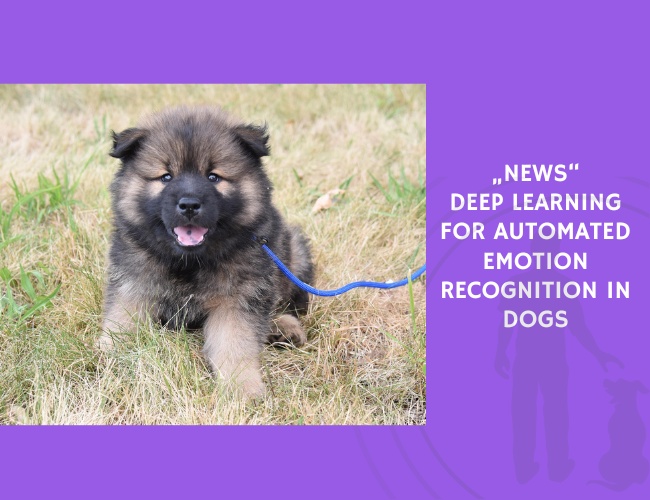
Published in Neural Computing & Applications, this study addresses the growing interest in automated canine emotion recognition as a tool to support safer and more empathetic interactions between humans and dogs. The authors frame canine emotion recognition within the broader context of inter-species social cognition, noting shared mammalian neural mechanisms such as mirror neurons that underpin empathy and social behavior.
The research explored whether deep-learning artificial intelligence systems can reliably distinguish between pleasant and unpleasant emotional states in dogs across general, real-world environments. A central goal was to assist individuals without formal training in animal behavior to better interpret dog signals, particularly those related to aggression, discomfort, or friendliness.
Using the Dog Clips dataset, the authors evaluated multiple advanced neural network architectures through knowledge transfer and fine-tuning. Performance was tested on both original and transformed video frames, allowing the researchers to examine how different visual representations influence emotion recognition accuracy.
A key component of the study involved assessing whether incorporating DogFACS action codes—which describe anatomically based facial and body movements in dogs—could improve classification performance. To address known challenges and biases in visual recognition, the authors implemented several preprocessing strategies, including face bounding boxes, facial or body segmentation, background blurring, and isolating dogs against uniform backgrounds.
The results showed that bias-aware preprocessing significantly improved model robustness and generalization. Across systematic experiments, the deep-learning systems demonstrated a strong ability to detect canine emotional states and to identify situations associated with potential danger or discomfort during human–dog interactions.
The authors conclude that while technical and ethical challenges remain, advanced deep-learning approaches represent a promising tool for applied animal welfare. Such systems could support education, public safety, and early detection of stress or aggression, complementing—rather than replacing—expert human judgment.
Source: Franzoni, V., Biondi, G., & Milani, A. (2024). Advanced techniques for automated emotion recognition in dogs from video data through deep learning. Neural Computing & Applications. Published July 4, 2024.










