
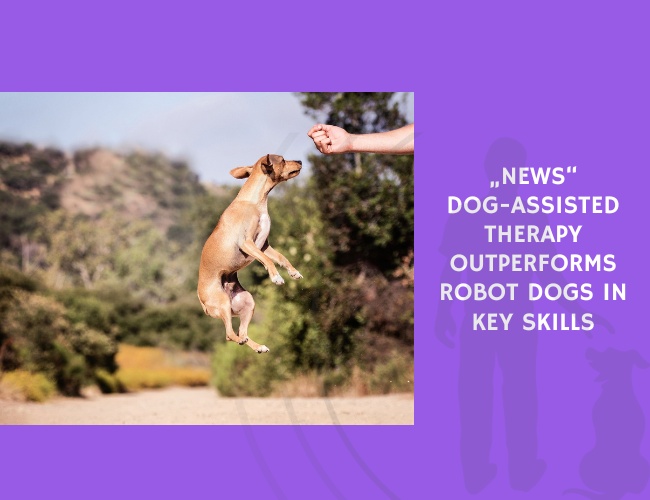
Published in PLoS ONE, S. van der Steen and colleagues conducted a rigorous randomized controlled trial to address a key methodological gap in animal-assisted therapy research: the lack of active control groups. By including both a robot dog therapy condition and a no-treatment condition, the authors were able to isolate the specific contribution of real canine interactions to therapeutic outcomes.
The study involved 65 children aged 7–16 years with either autism or Down syndrome, who were assigned to five sessions of dog-assisted therapy, robot dog-assisted therapy, or a waiting period. The robot dog was equipped with autonomous behaviors and responsive actions, providing a dynamic but non-biological interaction partner.
Using standardized parental questionnaires administered pre- and post-intervention, as well as at 4–6-week follow-up, the researchers measured changes in emotional and social functioning. Multilevel analyses revealed that dog-assisted therapy led to significantly greater improvements in emotional attunement and emotion regulation than either robot-assisted or no-treatment conditions. Other domains—such as conversational attunement, social cognition, and social motivation—showed no significant differences between groups.
On an individual level, the Reliable Change Index (RCI) analysis further underscored the impact of real-dog intervention. The highest RCIs, indicating substantial improvement, were primarily found among children receiving dog-assisted therapy, whereas the lowest RCIs were concentrated in the robot-assisted group. This contrast emphasizes the unique emotional and regulatory influence of genuine human–dog interaction.
The authors propose that future research may benefit from an interaction dynamics approach, acknowledging that therapeutic effects arise not simply from the presence of a dog but from the reciprocal, adaptive, and emotionally rich exchanges between child and animal.
Source: van der Steen, S., Kamphorst, E., & Griffioen, R. (2025). A randomized controlled trial of the effects of dog-assisted versus robot dog-assisted therapy for children with autism or Down syndrome. PLoS ONE. Published March 19, 2025.










