
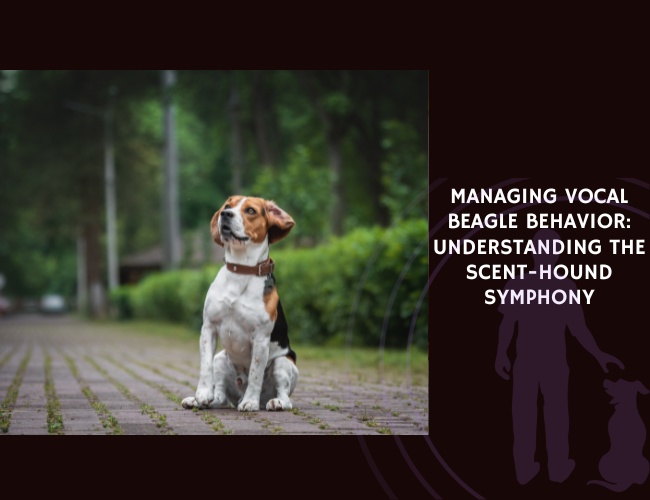
If you share your life with a Beagle, you already know that silence is rarely part of the package. That distinctive bay echoing through the house, the melodic howl when someone arrives home, the insistent whining by the door—these sounds are as much a part of Beagle ownership as those soulful brown eyes and relentless nose-to-ground adventures. But have you ever wondered why your Beagle is so remarkably vocal, or whether there’s a way to guide this behavior without silencing their essential nature?
The truth is, your Beagle’s vocal repertoire tells a story that stretches back centuries, rooted in misty English fields where packs of these determined hounds worked together to track rabbits across challenging terrain. Their voices weren’t a nuisance then—they were a sophisticated communication system, a social GPS that kept pack members connected and informed hunters of progress on the trail. Understanding this heritage is the first step toward building a more harmonious relationship with your talkative companion.
In this comprehensive guide, we’ll explore the fascinating world of Beagle vocalization from multiple perspectives—evolutionary, neurological, emotional, and practical. You’ll discover why that nose-to-the-ground intensity so often translates into sound, how your own responses might be accidentally teaching your Beagle to vocalize more, and most importantly, how to shape vocal behavior in ways that honor your dog’s instincts while creating a peaceful household. Let us guide you through the science and soul of Beagle communication. 🧡
The Working Origins of Beagle Vocalization
To truly understand why your Beagle seems compelled to announce every discovery, every emotion, and every moment of anticipation, we need to step back into history. Beagles were purpose-bred for pack hunting, developed over centuries to work cooperatively with other dogs and human handlers in pursuit of small game. In this context, their voices weren’t just allowed—they were essential.
Pack Hunting and the Social GPS System
Imagine a pack of Beagles working through dense English countryside, following the intricate scent trail left by a rabbit. The vegetation is thick, visibility is limited, and pack members can easily become separated. In this scenario, vocalization becomes a lifeline—an auditory beacon that serves multiple critical functions simultaneously.
When a Beagle picks up a strong scent trail, that distinctive bay serves as a broadcast: “I’ve found something worth pursuing!” This allows other pack members to converge on the trail, creating coordinated pursuit. The tracking call maintains pack cohesion even when visual contact is lost, letting every member know where the action is happening. Alert signaling communicates changes in the hunt’s dynamics—perhaps the scent has gone cold, or the prey has changed direction, or there’s been a significant find.
This wasn’t casual communication. This was survival, purpose, and identity wrapped into sound. For generations, the most vocal Beagles were likely the most successful hunters, and their genes—along with their tendency toward vocalization—were passed down through breeding programs. Your modern Beagle carries this legacy in every cell, and that ancient impulse to broadcast information through sound remains remarkably intact, even when the “hunt” is simply tracking the neighborhood cat’s path through your backyard.
Historical Functions of Beagle Vocalization:
- Scent Trail Location Broadcasting: Announcing “I’ve found a hot trail here” to coordinate pack convergence on promising scent paths
- Orientation Maintenance: Keeping pack members aware of each other’s locations even when dense vegetation prevents visual contact
- Progress Updates: Communicating changes in scent intensity, trail direction, or pursuit status to both dogs and human handlers
- Quarry Location Signaling: Indicating when prey has been located, cornered, or the trail has reached a critical point
- Pack Cohesion Reinforcement: Maintaining social bonds and group identity through shared vocal expressions during pursuit
- Handler Communication: Providing auditory information to hunters who couldn’t see the dogs but needed to know where the action was happening
Multiple Functions of Historical Vocalization
Research into animal communication reveals that vocalizations in social species serve multiple overlapping functions. While we don’t have studies specific to Beagle hunting practices, we can draw parallels from what we know about social communication in other pack animals. Ultrasonic vocalizations in mice, for instance, influence mate choice and facilitate parental cooperation. Distress calls in young mammals are crucial for mother-offspring communication and survival. The Eurasian griffon vulture, a highly social species, is believed to have developed complex vocal language precisely because of its social habits.
The pattern is clear: social animals living and working in groups develop sophisticated vocal communication systems. For Beagles, these vocalizations likely served to signal scent availability, maintain pack cohesion across challenging terrain, and request collaborative pursuit from pack members and human handlers. Each function reinforced the others, creating a breed with an remarkably rich vocal repertoire.
When you hear your Beagle bay at a squirrel in the yard or howl when left alone, you’re witnessing behaviors that were once essential to their survival and purpose. This doesn’t mean you have to accept constant vocalization in your modern home, but it does mean that any approach to managing vocal behavior must respect and work with these deep-rooted instincts rather than against them. Through the NeuroBond approach, we learn that trust and understanding become the foundation for shaping behavior—not suppression, but guidance.
Olfactory Activation and the Neurological Drive to Vocalize
Your Beagle’s powerful sense of smell isn’t just a physical trait—it’s intrinsically linked to their vocal drive through fascinating neurological pathways. When that nose locks onto an intriguing scent, a cascade of brain activity begins that naturally culminates in vocal expression. Understanding this connection helps explain why trying to “quiet” a scent-aroused Beagle with verbal commands so often fails.
The SEEKING System and Scent Arousal
According to Affective Neuroscience research by Jaak Panksepp, one of the fundamental emotional systems in all mammalian brains is the SEEKING system. This neural network is associated with appetitive motivation, exploration, curiosity, and the anticipation of reward. When activated, it creates a state of enthusiastic engagement with the environment—a feeling of “I need to investigate this!” that drives exploration and pursuit.
For a Beagle, olfactory stimulation powerfully activates this SEEKING system. The moment an interesting scent enters their awareness, dopamine begins flooding their brain, creating feelings of excitement, anticipation, and pleasure. This isn’t anxiety or stress—it’s pure, joyful arousal driven by the prospect of following the scent to its source. The internal state becomes so heightened, so energized, that it naturally seeks outward expression.
And that’s where vocalization enters the picture. The sound isn’t separate from the scent experience—it’s part of it. The bay or howl becomes an overflow of that internal excitement, an audible manifestation of the dopamine-fueled enthusiasm coursing through your Beagle’s system. You might notice that the vocalizations during scent tracking have a particular quality—often more melodic, sustained, and rhythmic than other types of barking or whining. That’s the sound of pure SEEKING system activation.
Signs Your Beagle’s SEEKING System Is Activated:
- Intense Forward Focus: Head lowered, nose to ground or air, body oriented toward scent source with complete attention absorption
- Tail Position Changes: Typically held in a characteristic elevated or rigid position, often with slight quivering indicating high arousal
- Increased Movement Pace: Quickened gait, excited trotting, or pulling toward the scent with obvious eagerness
- Melodic Vocalizations: Bay-howls with sustained, rhythmic quality rather than sharp, aggressive barking
- Body Tension Combined with Joy: Muscular engagement throughout the body but with loose, happy rather than fearful or aggressive energy
- Selective Attention: Reduced responsiveness to normal cues as cognitive resources focus almost entirely on scent investigation
Excitement Versus Anxiety: Reading the Emotional State
This distinction is crucial for effective behavior management. Many owners assume that vocal behavior during scent arousal indicates anxiety or distress, and they respond accordingly—offering comfort, reassurance, or attempting to redirect away from the scent source. But this fundamentally misreads the emotional state driving the behavior.
Distinguishing Excitement from Anxiety in Vocal Behavior:
Excitement-Driven Vocalization:
- Body language shows forward movement, loose muscles, and approach behavior toward the stimulus
- Tail typically wagging or held high with confident carriage
- Eyes bright and focused with soft facial expression
- Vocalizations have melodic, sustained quality with rhythmic patterns
- Readily redirectable to other activities with enthusiasm
- Returns quickly to normal state when stimulus is removed
Anxiety-Driven Vocalization:
- Body language shows withdrawal, tension, or conflict between approach and avoidance
- Tail lowered, tucked, or held rigidly without natural movement
- Eyes showing whale eye (whites visible), hard stare, or avoidance of looking directly at stimulus
- Vocalizations have higher pitch, repetitive quality, or desperate intensity
- Difficult to redirect; remains fixated even when offered alternatives
- Takes extended time to return to baseline calm after stimulus removal
When your Beagle is baying at a scent trail in the yard, they’re typically experiencing dopamine-linked excitement, not anxiety. The vocalization expresses enthusiastic engagement and the rewarding experience of doing what they were born to do. Responding to this with anxious energy or attempts to comfort can actually confuse your Beagle or even increase arousal, because your response doesn’t match the emotional reality they’re experiencing.
However—and this is important—if scent pursuit becomes blocked or frustrated, that excitement can quickly transform into genuine distress. If your Beagle picks up a tantalizing scent but cannot access the source because they’re on leash, behind a fence, or otherwise prevented from investigation, the SEEKING system activation that started as pleasure can shift into frustration. At that point, other emotional systems may activate, and vocalization may indeed become an expression of distress or a behavioral release valve for mounting emotional pressure. 🧠
Scent Frustration and Vocal Escalation
Scent frustration is one of the most common triggers for problematic vocal behavior in Beagles. When an animal is motivated by a strong drive but prevented from achieving its goal, this creates internal tension that must find release somehow. For a scent-driven breed, being unable to follow a compelling scent trail can be genuinely distressing.
Research on young mammals shows that distress calls are closely associated with emotional state and serve as significant elements of survival communication. The neural control of vocalization is intimately connected to emotional regulation. When your Beagle experiences scent frustration—perhaps locked inside while fascinating scents waft through an open window, or confined to the yard while neighborhood cats leave their scent signatures just out of reach—the resulting vocalizations may become more insistent, higher-pitched, and repetitive.
Common Scent Frustration Triggers:
- Window Confinement: Being inside while detecting compelling outdoor scents from wildlife, other dogs, or interesting environmental changes
- Fence Barriers: Detecting scent trails just beyond accessible yard boundaries, particularly from cats, rabbits, or other dogs
- Leash Restrictions: Being prevented from investigating scent trails during walks when the human wants to continue moving
- Car Travel: Detecting fascinating scents through windows while unable to investigate or follow them to their source
- Indoor Detection: Picking up scent traces of visitors, delivery people, or animals that have been present but have since left
- Time Delays: Knowing from experience that a walk or outdoor access is coming but experiencing waiting time before access is granted
This is why environmental management is so crucial for managing Beagle vocalization. It’s not about denying your dog access to their nose—that would be denying their essential nature. Rather, it’s about providing appropriate outlets for scent investigation while minimizing situations that create frustration without resolution. Structured scent work, controlled tracking exercises, and sniff-focused walks allow your Beagle to engage their SEEKING system fully, experience the satisfaction of investigation, and reduce the pressure that builds when natural drives are repeatedly blocked.
Emotional Broadcasting Versus Intentional Communication
One of the most enlightening frameworks for understanding Beagle vocalization is the distinction between “emotional broadcasting” and intentional communication. Not all sounds your Beagle makes carry the same purpose, and recognizing these differences helps you respond more appropriately to each situation.
Broadcasting Feelings: The Pressure Valve Effect
A significant portion of Beagle vocalization might best be understood as “broadcasting a feeling”—an outward expression of internal emotional states like high energy, tension, excitement, or frustration. This isn’t necessarily an attempt to convey specific information to you or to other dogs. Rather, it’s a release of emotional pressure, similar to how humans might sigh deeply when stressed or laugh spontaneously when delighted.
Think of it as a pressure valve. When emotional arousal reaches a certain threshold, the energy needs somewhere to go. For many Beagles, that outlet is sound. The vocalization serves to dissipate internal tension, to externalize what’s happening internally. You might notice this type of vocalization when your Beagle is over-excited—perhaps when you’re preparing for a walk, when visitors arrive, or when they’re engaged in vigorous play. The sound seems to pour out of them almost involuntarily.
Indicators of Emotional Broadcasting (vs. Intentional Communication):
- Context-Independent Quality: The vocalization seems to occur regardless of whether anyone is present or paying attention
- Overflow Timing: Sound emerges during peak arousal moments—during excitement build-up, play intensity, or frustration escalation
- Lack of Directional Focus: The Beagle isn’t oriented toward a specific person or object; the sound seems generalized
- Reduced Response to Feedback: The vocalization continues even when acknowledged or responded to, suggesting it’s not seeking a response
- Physical Release Patterns: Often accompanied by other physical expressions like spinning, jumping, or whole-body tension release
- Post-Vocalization Settling: The dog often appears calmer after vocalizing, as if pressure has been released
- Situational Consistency: Occurs predictably in high-arousal situations regardless of whether it previously “worked” to get anything
This “behavioral leakage” of emotion through vocalization is a normal and natural process. Research on vocal emotion recognition suggests that vocalizations carry significant emotional information across species. Domestic horses, for instance, can discriminate between negative and positive human nonverbal vocalizations, indicating that animals both produce and interpret emotional vocal cues. Your Beagle’s broadcasts are real expressions of genuine emotional states, even if they’re not deliberate attempts at communication.
Understanding this helps you avoid the common mistake of treating all vocalization as “demanding” or “attention-seeking.” Sometimes your Beagle is simply experiencing feelings that are too big to be contained silently. Punishing or attempting to suppress this type of vocalization can actually increase emotional pressure, potentially leading to other stress-related behaviors.
Intentional Communication: Purposeful Signals
In contrast to emotional broadcasting, some Beagle vocalizations clearly function as intentional communication—purposeful signals meant to convey specific information or to elicit particular responses from others. These vocalizations tend to be more context-specific and consistent in their acoustic properties.
An alert bark, for instance, is typically sharp, sudden, and repeated when your Beagle perceives something new or potentially threatening in their environment. This is information-sharing: “Something’s different here—pay attention!” A social greeting howl when you return home carries a different quality—often more melodic, sustained, and accompanied by other affiliative body language like tail wagging and approach behavior. This communicates recognition and pleasure at reunion.
The acoustic properties differ because the purposes differ. Frustration vocalizations tend to be repetitive and insistent, with a quality that seems to increase in intensity if ignored. Anticipation whining is softer and more continuous, often paired with obvious body language indicating eagerness like pacing or fixating on a specific location or object. Each type of vocalization occupies a different place in your Beagle’s communication toolkit, developed for different situations and goals.
Acoustic and Contextual Differences in Beagle Vocalizations:
Frustration Vocalization:
- Repetitive, insistent quality with increasing intensity if unresolved
- Often higher-pitched than other vocalization types
- Accompanied by pacing, scratching, or barrier-directed behavior
- Occurs when a desired goal is blocked or delayed
- May include mixed whining, barking, and howling elements
Alert Barking:
- Sharp, sudden, staccato bursts typically repeated in quick succession
- Medium to loud volume with urgent quality
- Oriented toward the source of novelty or perceived threat
- Body stance typically alert, forward-focused, sometimes with raised hackles
- Ceases when the novel stimulus is resolved or removed
Anticipation Whining:
- Softer, continuous, often ascending in pitch
- Accompanied by eager body language—tail wagging, pacing, fixating on expected source
- Occurs during waiting periods before positive events (meals, walks, reunions)
- May include vocalized sighs or soft whimpers
- Increases in intensity as the anticipated event approaches
Social Greeting Howls:
- Elongated, melodic quality with rhythmic or harmonic patterns
- Often triggered by arrival of familiar people or other dogs vocalizing
- Accompanied by affiliative body language—loose tail wagging, approach behavior, soft eyes
- Communicates recognition, pleasure, and social connection
- May develop into “conversation” patterns when reinforced socially
For owners, accurately interpreting these distinctions is valuable. Responding to an alert bark by investigating what caught your Beagle’s attention reinforces useful communication. Responding to anticipation whining by immediately providing the anticipated reward teaches your Beagle that whining speeds up desired outcomes. Recognizing frustration vocalizations helps you address the underlying blocked goal rather than just the noise itself. The Invisible Leash reminds us that awareness, not tension, guides the path—and awareness includes truly hearing what our dogs are telling us.
Over-Vocalization and Emotional Overload
When vocalization becomes excessive, persistent, or seems disproportionate to the situation, it often indicates emotional overload. Just as a cup running over spills water, a Beagle experiencing intense emotional arousal—whether from excitement, frustration, stress, or overstimulation—may vocalize excessively as that emotional energy seeks release.
This is especially common in Beagles who lack sufficient physical exercise, mental stimulation, or clear behavioral structure in their daily lives. The emotional pressure builds without adequate outlets, and vocalization becomes the default release mechanism. You might notice that your Beagle vocalizes more on days when routines are disrupted, when exercise is missed, or during periods of household stress. The vocalization isn’t the problem—it’s a symptom of an internal state that needs addressing.
Signs Your Beagle May Be Experiencing Emotional Overload:
- Increased Vocalization Frequency: More frequent bouts of barking, whining, or howling throughout the day compared to normal baseline
- Reduced Settling Ability: Difficulty calming down even in typically relaxing situations or after usual calming activities
- Reactive Threshold Lowering: Responding vocally to stimuli that previously didn’t trigger vocalization
- Prolonged Recovery: Taking longer to return to calm after arousing events
- Sleep Disruption: Restless sleep, more nighttime activity, or difficulty settling at usual sleep times
- Attention-Seeking Escalation: Increasing intensity of bids for attention, unable to self-occupy even briefly
- Physical Tension: Overall body carries more muscular tension, reduced ability to relax into rest positions
- Reduced Appetite or Food Obsession: Either showing less interest in food or becoming overly focused on food as a stress outlet
Moments of Soul Recall reveal how memory and emotion intertwine in behavior. A Beagle who has learned that emotional states are regularly resolved through vocalization will return to that pattern whenever arousal builds. The vocal behavior becomes a conditioned response to feeling too much, creating a cycle where emotional arousal triggers vocalization, which may temporarily relieve pressure but doesn’t address the underlying cause, leading to repeated patterns of excessive sound.
Categories of Beagle Vocal Behavior
Understanding the specific categories of vocal behavior helps you interpret what your Beagle is actually expressing and respond in ways that address the underlying motivation rather than just suppressing the sound.
Scent Broadcast: “Come Join Me—I’ve Found Something”
This is perhaps the most classic Beagle vocalization, deeply rooted in their pack hunting heritage. When your Beagle picks up a particularly interesting or strong scent trail, they may emit a bay or howl that serves as an invitation for others to join the pursuit or investigation. In a pack hunting context, this vocalization would have drawn other pack members and handlers to the location, coordinating group effort.
In modern life, you’ll typically hear this vocalization when your Beagle is in the yard and has detected a scent trail from wildlife, when they’re on a walk and pick up an especially intriguing smell, or even inside when an interesting scent wafts through a window. The acoustic quality is often sustained, melodic, and carries a sense of excitement rather than distress. Your Beagle’s body language will typically show forward orientation toward the scent source, an engaged tail position, and intense focus.
Body Language Accompanying Scent Broadcast Vocalization:
- Nose Position: Actively working—either pressed to ground tracking or raised in air scenting, nostrils flaring with rapid sniffing
- Head Carriage: Often lowered when ground tracking or raised when air scenting, maintaining strong orientation toward scent source
- Body Orientation: Entire body aligned with scent trail direction, showing clear forward intention
- Tail: Typically elevated and may show slight vibration or quivering indicating high arousal and engagement
- Muscle Tension: Engaged but not fearful—ready-to-pursue tension rather than defensive or anxious rigidity
- Eye Focus: Intense concentration, often with soft focus beyond immediate surroundings as olfactory processing dominates
- Ear Position: Forward or mobile, tracking any auditory information that might complement the scent investigation
This type of vocalization isn’t problematic in itself—it’s your Beagle doing exactly what they were bred to do. The challenge comes when the expression is inappropriate for the context, such as baying at 2 AM because nocturnal wildlife left a scent trail in your yard, or howling continuously when a neighbor walks their dog past your house.

Frustration Release: “I Can’t Reach What I Want”
Frustration vocalization occurs when your Beagle is motivated toward a goal but encounters a barrier that prevents achievement. This might be a physical barrier—a fence preventing access to an interesting scent or animal, a closed door blocking access to a room where someone is, a leash preventing pursuit of a squirrel. It can also be a temporal barrier, as when they know dinner time is approaching but it hasn’t arrived yet.
These vocalizations tend to be insistent, repetitive, and may escalate in intensity if the barrier remains. The acoustic quality often includes whining, demanding barks, or frustrated bays. Body language typically shows agitation—pacing, jumping at barriers, pawing at doors, or fixating intensely on the blocked goal. Unlike the excited quality of scent broadcast, frustration vocalizations carry a quality of distress and urgency.
Body Language Indicators of Frustration Vocalization:
- Barrier-Directed Behavior: Jumping at fences, pawing at doors, scratching at windows, or attempting to push through obstacles
- Pacing Patterns: Repetitive back-and-forth movement along the barrier or in the space between self and desired goal
- Fixated Staring: Intense, unblinking focus on the blocked goal with reduced responsiveness to other stimuli
- Tension Escalation: Progressively increasing muscular tension, sometimes trembling with frustration
- Mouth Tension: Tight lips, possible teeth chattering, or mouthing behaviors directed at barriers
- Tail Position: May be elevated but stiff rather than loose, or held in conflicted positions showing inner tension
- Displacement Behaviors: May include sudden scratching, floor sniffing, or other behaviors that seem out of context as frustration seeks outlet
Frustration tolerance is something that can be developed through training, but it requires a gradual approach that respects your Beagle’s threshold. Repeatedly forcing your dog into situations where they experience intense frustration without resolution doesn’t teach patience—it teaches that frustration is an inevitable part of life and may actually increase overall reactivity. Instead, building frustration tolerance involves creating situations where small amounts of frustration can be experienced and resolved, gradually increasing the challenge as your Beagle’s capacity grows. 🐾
Attention Demand: “I Want Your Focus Now”
Beagles are social creatures who evolved to work cooperatively with humans, and many develop learned vocal behaviors specifically designed to capture and maintain human attention. These attention-demand vocalizations are typically shorter, more varied, and delivered while making direct eye contact with the target person. Your Beagle has learned through experience that these sounds effectively engage you.
You might hear these vocalizations when your Beagle wants dinner, when they want to go outside, when they want to play, or sometimes simply when they want interaction and you’re focused on something else. The sound might be a single sharp bark, repetitive short barks, insistent whining, or even a combination that seems to escalate until you respond.
Common Attention-Demand Vocalization Patterns:
- The Single Sharp Bark: One loud “Hey!” bark designed to interrupt your focus and direct attention to the dog
- The Escalating Series: Starting with soft sounds that progressively increase in volume and frequency if ignored
- The Persistent Whine: Continuous soft whining maintained until acknowledgment or desired outcome achieved
- The Dramatic Crescendo: Beginning with subtle sounds and building to full bays or howls for maximum impact
- The Targeted Performance: Vocalizing while maintaining direct eye contact with specific person, clearly seeking their response
- The Variety Approach: Cycling through different sound types—whine, then bark, then howl—testing which gets results
- The Proximity Vocalization: Making sounds while physically close to or touching the target person for combined sensory impact
The crucial factor with attention-demand vocalization is that it’s entirely learned and maintained through reinforcement. Unlike scent-driven vocalizations that have strong genetic and neurological roots, attention-demand sounds exist because they work. Every time your Beagle vocalizes and you respond—even if your response is to say “quiet” or “stop that”—you’ve provided attention, which is often exactly what was being requested. The content of the attention matters less than the fact that attention was given.
Social Contact Seeking: “Where Is Everyone?”
This category includes vocalizations driven by social motivation and attachment—sounds your Beagle makes when separated from their social group or when seeking connection. The most common expression is the howl or whine that occurs when left alone, but it can also include the excited howling when someone returns home or the melodic baying that some Beagles produce when they hear other dogs vocalizing in the distance.
These vocalizations tap into deep evolutionary roots. In pack-living species, maintaining contact with group members is essential for survival. Young mammals produce distress calls when separated from their mothers, and these calls have strong implications for survival. Adult pack animals maintain contact through vocalizations even when visual contact is lost. Your Beagle’s social contact seeking sounds are expressions of this fundamental drive for connection and group cohesion.
Distinguishing Normal Social Contact Vocalization from Separation Anxiety:
Normal Social Contact Vocalization:
- Brief duration—typically subsides within 5-15 minutes after departure or occurs only at reunion
- Moderate intensity—concerned but not panicked quality
- Dog settles into other activities—eating, chewing, sleeping—once initial protest passes
- No destructive behavior, inappropriate elimination, or self-harm
- Easy to interrupt or redirect during greeting excitement
- Responds well to gradual desensitization to departures
Separation Anxiety Indicators:
- Prolonged vocalization—continuing 30 minutes or longer after departure
- Intense, desperate quality—high-pitched, continuous, with signs of genuine distress
- No settling—dog remains activated and distressed throughout separation
- Accompanied by destruction (particularly at exit points), inappropriate elimination, excessive drooling, or self-directed behaviors
- Pre-departure anxiety—showing distress even before separation occurs, during preparation routines
- Does not respond to simple training approaches; may worsen with punishment
Importantly, while some social contact vocalization is normal and reflects healthy attachment, excessive or persistent vocalization when alone may indicate separation anxiety or inadequate social support. A Beagle who never settles quietly when alone, who vocalizes to the point of neighbor complaints, or who shows other stress behaviors like destructive chewing or inappropriate elimination needs more than just vocal training—they need help building confidence and security in solitude.
Environmental Reactivity: “Something Changed Out There”
Many Beagles become particularly vocal in response to environmental stimuli—sounds from outside, visual changes visible through windows, the arrival of mail carriers or delivery drivers, nearby dogs barking, or movement detected in the yard. This reactivity reflects the alert function of vocalization, where your Beagle is essentially reporting notable events to the household.
Common Environmental Reactivity Triggers:
- Passing Pedestrians: People walking past windows or along sidewalks adjacent to your property
- Other Dogs: Neighborhood dogs being walked, playing, or barking within auditory range
- Delivery Services: Mail carriers, package delivery drivers, food delivery approaching or departing
- Vehicles: Trucks, motorcycles, or vehicles with distinctive sounds (garbage trucks, emergency vehicles)
- Wildlife Activity: Squirrels, birds, cats, rabbits, or other animals visible in the yard or nearby
- Neighborhood Sounds: Lawn equipment, construction noise, children playing, gates opening/closing
- Weather Events: Thunder, wind causing movement of objects, rain hitting windows or roof
- Domestic Activity: Neighbors in adjacent yards, doors closing, voices carrying from nearby homes
While some environmental alerting is useful—many people appreciate knowing when someone approaches their home—excessive reactivity can become problematic. A Beagle who barks at every passing pedestrian, howls at distant sirens, or bays continuously at squirrels in the yard is both creating household stress and experiencing repeated cycles of arousal without resolution.
Environmental reactivity often worsens over time if unaddressed, because the Beagle learns that their vocal response “makes things go away.” The mail carrier delivers mail and then leaves; your Beagle barked the entire time, so clearly their barking caused the departure. This creates a self-reinforcing cycle where environmental triggers consistently produce vocal responses that seem to work, encouraging persistence and often escalation of the behavior.
Loud. Loyal. Purposeful.
Their voice is heritage. Beagle vocalizing isn’t noise—it’s communication. Echoes of pack work, direction-sharing, and scent announcements still live in every howl and bay.
Sound follows scent. When the nose engages, so does the voice—because in a Beagle’s world, discovery is meant to be shared, not silenced.



Harmony needs guidance, not suppression. When we honor the message behind the sound, vocalization becomes connection—not conflict.
Behavioral Economics of Vocalization: Why It Persists
From a behavioral economics perspective, any behavior that persists over time does so because it’s somehow functional, emotionally relieving, or socially rewarding. Understanding what maintains your Beagle’s vocal behavior is essential for effectively modifying it, because you need to address the underlying reinforcement structures that keep the behavior alive.
Functional Reinforcement: When Vocalization Works
Functional reinforcement occurs when a behavior successfully achieves a desired outcome. For Beagles, vocalization is highly functional in multiple contexts. Barking at the door often results in being let outside. Whining by the food bowl at mealtime is followed by dinner. Baying at a perceived intruder (like the mail carrier) is followed by that person leaving. Alert barking brings family members to investigate potential threats.
Examples of Functional Reinforcement for Vocal Behavior:
- Door Access: Barking or whining at doors consistently leads to being let outside or into different rooms
- Meal Delivery: Vocalizing at feeding times is followed by food bowl presentation
- Walk Initiation: Whining or barking during leash preparation speeds up or triggers the departure for walks
- Attention Summoning: Barking successfully brings family members to the dog’s location
- Threat Removal: Alert barking at delivery people, mail carriers, or passersby is followed by those people leaving (from the dog’s perspective, the vocalization caused the departure)
- Play Initiation: Barking at family members or other pets successfully starts play sessions
- Object Access: Vocalizing near cabinets, refrigerators, or storage areas leads to treats or toys being provided
- Barrier Removal: Persistent vocalization eventually results in gates being opened or doors being unlocked
Each of these scenarios reinforces the vocal behavior because the vocalization is followed by a consequence the Beagle finds desirable. From your dog’s perspective, the sound worked—it produced results. This creates a strong behavioral pattern that’s resistant to extinction because it has a long history of success.
Even when vocalization doesn’t consistently produce the desired outcome, intermittent reinforcement can be incredibly powerful. If your Beagle barks at you for attention and you sometimes respond (even to tell them to be quiet), that inconsistent but occasional success teaches persistence. Behaviors on intermittent reinforcement schedules are actually more resistant to extinction than those that are consistently reinforced, because the learner has experience with persistence eventually paying off.
🎵 Understanding Your Beagle’s Vocal Journey 🐾
From Pack Hunting Heritage to Peaceful Household Communication
Phase 1: Understanding the Pack Hunter
Centuries of Breeding Shape Today’s Voice
Historical Context
Beagles were developed for pack hunting, where vocalization served as a “social GPS” system. Their bays and howls coordinated group pursuit, maintained pack cohesion across challenging terrain, and informed human handlers of scent trail progress. This wasn’t noise—it was essential communication.
What This Means Today
Your Beagle’s tendency to vocalize isn’t a flaw—it’s ancestral memory. The impulse to broadcast scent discoveries, announce location, and maintain social connection remains deeply wired. Understanding this heritage helps you approach vocal behavior with respect rather than frustration.
Phase 2: The Olfactory Activation Pathway
How Scent Triggers Sound
The SEEKING System
When your Beagle encounters an intriguing scent, their brain’s SEEKING system activates—flooding their system with dopamine-linked excitement. This isn’t anxiety; it’s pure enthusiastic engagement. The vocalization becomes an overflow of this internal arousal, an audible expression of the rewarding experience of tracking.
Recognition Strategy
Learn to distinguish excitement-driven vocalization from distress. Look for forward body orientation, engaged tail position, and melodic baying quality. When you recognize excitement rather than anxiety, you can respond with scent-based redirection instead of comfort, channeling the drive productively.
Watch for Scent Frustration
When scent pursuit is blocked—by barriers, leashes, or confinement—excitement can rapidly shift to frustration. The vocalization changes: higher pitch, more insistent, accompanied by pacing or barrier-directed behavior. This signals the need for management, not suppression.
Phase 3: Decoding the Message
Broadcasting vs. Communicating
Emotional Broadcasting
Much Beagle vocalization is “broadcasting a feeling”—releasing emotional pressure rather than deliberately communicating. This happens during high arousal: excitement before walks, during play, or when overstimulated. The sound serves as a pressure valve, helping your Beagle manage internal states they cannot contain silently.
Intentional Communication
In contrast, some vocalizations are purposeful signals: alert barks indicating environmental changes, social greeting howls acknowledging reunion, or attention-demand sounds requesting specific outcomes. These context-specific patterns show your Beagle actively using sound to achieve goals or share information.
Interpretation Practice
• Observe body language accompanying sound
• Note whether vocalization is audience-dependent
• Track what happens immediately after vocalization
• Identify patterns tied to specific contexts or triggers
Phase 4: The Reinforcement Cycle
Why Vocalization Persists
Behavioral Economics
Vocalization continues because it’s functional (achieves goals), emotionally relieving (releases tension), or socially rewarding (gains attention). When barking opens doors, whining brings meals, or baying makes “intruders” leave, the behavior strengthens through successful outcomes.
The Attention Trap
Any response—even saying “quiet”—provides attention that reinforces vocalization. Eye contact, speaking, touching, or moving toward your Beagle all communicate: “This sound gets my attention.” Negative attention is still attention, and often exactly what was being requested.
Breaking the Pattern
Create new contingencies: quiet behavior earns abundant attention, while vocalization receives zero response. This requires remarkable consistency across all household members and patience through the initial extinction burst when behavior temporarily intensifies before improving.
Phase 5: Productive Channeling
Redirection Over Suppression
Scent-Based Solutions
When vocal arousal builds, redirect through scent engagement: scatter feeding in grass, hide-and-seek games with toys, snuffle mat feeding, or structured nosework exercises. These activities channel the same neurological drives into appropriate outlets, satisfying the impulse without excessive sound.
Sniff-Focused Walks
Prioritize olfactory investigation over distance. Allow extended sniffing at interesting spots rather than rushing through walks. This reduces frustration-driven vocalization because natural scent drives receive appropriate expression. A mentally satisfied Beagle is typically a quieter Beagle.
Calming Interventions
For arousal-driven vocalization, try gentle holding work (supportive touch that regulates the nervous system) or paced movement exercises. These provide alternatives to verbal corrections, which often fail because they provide attention without addressing underlying drives.
Phase 6: Building Calm Capacity
Quiet Presence, Not Forced Silence
Capture Natural Quiet
Begin by marking and rewarding spontaneous quiet moments—when your Beagle is calmly observing, resting near you, or engaged in quiet activities. Use soft verbal markers followed by gentle praise or small rewards. This teaches that quiet states themselves are valued and worth maintaining.
Gradual Challenge Building
Start with seconds of quiet in low-distraction environments, gradually extending duration and adding mild triggers. If your Beagle remains calm as someone walks past or a sound occurs outside, mark and reward that choice. Build capacity systematically rather than expecting immediate control in challenging situations.
Alternative Communication
Teach non-vocal ways to communicate needs: bell ringing for outdoor access, polite sits for attention, mat positioning for meals. When your Beagle has effective alternatives, excessive vocalization becomes unnecessary. Communication continues—just through quieter channels.
Phase 7: Strategic Setup
Managing the Environment
Reduce Trigger Exposure
Use window film to limit visual access to street activity. Position furniture to block sightlines to high-traffic areas. Keep certain windows closed during peak wildlife times. White noise machines can mask auditory triggers. These simple changes often produce immediate improvements in alert barking.
Enrichment Foundation
Ensure adequate physical exercise, mental stimulation, and social connection daily. Many excessive vocalization cases improve dramatically when energy and drives receive appropriate outlets. A tired, satisfied Beagle has less need to broadcast feelings or demand attention through sound.
Routine Predictability
Consistent daily patterns help prevent anticipatory vocalization, but rigid routines can create it. Find balance: predictable enough for security, flexible enough to prevent obsessive patterns around specific times or cues. Slight variations disrupt problematic anticipatory cycles.
Phase 8: Emotional Foundation
Relationship-Based Regulation
Human Emotional Clarity
Through the NeuroBond approach, your calm, grounded presence becomes a model of regulation that influences your Beagle’s nervous system. When you remain peaceful despite vocalization, you communicate that there’s no crisis requiring urgent expression. This co-regulation reduces the internal pressure driving excessive sound.
Structured Boundaries
Clear, consistent expectations create emotional safety. When your Beagle understands the household rules—when vocalization is appropriate, what alternatives exist for getting needs met—they experience less confusion and frustration. The Invisible Leash teaches that awareness, not tension, guides appropriate expression.
Trust-Based Communication
The relationship becomes the foundation for behavior guidance. Moments of Soul Recall remind us that a Beagle who trusts their human’s leadership, who feels secure in the connection, needs to vocalize less. Demands become unnecessary because needs are reliably met through trust rather than noise.
🔍 Vocal Behavior Patterns Across Different Contexts
Scent-Aroused Beagle
Sound Quality: Melodic, sustained baying with rhythmic patterns
Body Language: Forward focus, elevated tail, intense nose work
Best Response: Scent-based redirection activities
Frustrated Beagle
Sound Quality: Insistent, repetitive, escalating in intensity
Body Language: Pacing, barrier-directed behavior, fixated staring
Best Response: Address blocked goal or build frustration tolerance gradually
Attention-Seeking Beagle
Sound Quality: Varied, strategic, with eye contact and pause-check patterns
Body Language: Oriented toward target person, performance quality
Best Response: Complete withdrawal of attention; reward quiet
Environmentally Reactive
Sound Quality: Sharp alert barks, sudden onset, tied to external triggers
Body Language: Alert stance, oriented toward stimulus, raised hackles possible
Best Response: Environmental management; train “one bark, then to me”
Socially Motivated
Sound Quality: Melodic howls, greeting vocalizations, response to other dogs
Body Language: Loose, affiliative, tail wagging, approach behavior
Best Response: Acknowledge appropriately; teach calm greeting protocols
Emotionally Overloaded
Sound Quality: Excessive, persistent, disproportionate to situation
Body Language: Overall tension, reduced settling ability, reactive threshold lowered
Best Response: Increase enrichment; reduce overall stimulation; build calm capacity
⚡ Quick Reference Rules
The Attention Rule: Any response to vocalization = reinforcement. To reduce sound, withdraw all attention during noise; provide abundant attention during quiet.
The Redirection Formula: Scent-driven vocalization responds better to nose work than to verbal corrections. Engage the drive productively rather than suppressing it.
The Extinction Pattern: When reinforcement stops, behavior temporarily intensifies before improving. Consistency through this burst is essential—caving teaches escalation works.
The Foundation Principle: Exercise + Mental Stimulation + Clear Boundaries = Reduced Vocal Pressure. Address the foundation before focusing on specific training techniques.
🧡 The Zoeta Dogsoul Perspective
Managing Beagle vocalization isn’t about silencing an essential part of who they are—it’s about creating harmony between their heritage and your household peace. Through the NeuroBond approach, we recognize that emotional clarity and calm presence from humans directly regulates canine arousal, reducing the internal pressure that drives excessive sound.
The Invisible Leash teaches us that awareness—not tension, not force, not suppression—guides appropriate expression. When you understand what drives your Beagle’s voice, you can respond with wisdom rather than frustration, redirecting drives into satisfying channels rather than demanding silence.
In moments of Soul Recall, remember that your Beagle’s vocalizations carry centuries of purpose. Honor that heritage while guiding expression toward appropriate times and contexts. The result isn’t a silent dog—it’s a Beagle who trusts that their voice will be heard when it matters, making constant broadcasting unnecessary.
© Zoeta Dogsoul – Where neuroscience meets soul in dog training
Emotional Relief: The Pressure Valve Function
Beyond achieving external goals, vocalization can be intrinsically reinforcing because it provides emotional relief. When emotional arousal or tension builds internally, releasing it through sound can temporarily reduce that pressure, creating a sense of relief. This makes vocalization self-reinforcing even when it doesn’t change anything in the external environment.
You might notice this particularly during high-arousal situations. Your Beagle whines and paces when excited before a walk, and the vocalization seems to help them manage the anticipatory tension. They bark during play, and the sound seems to be part of the emotional expression rather than communication directed at anyone. They howl when frustrated, and afterward seem slightly more settled even though the frustration source hasn’t changed.
This emotional relief function explains why trying to suppress vocalization through punishment often fails or even backfires. If the vocalization serves to release emotional pressure, preventing it without addressing the underlying emotional state just leaves that pressure with nowhere to go. The result may be increased frustration, the development of alternative problem behaviors, or suppression of the sound only to have it erupt more intensely later when the pressure becomes unbearable.
Social Reinforcement: Engaging the Humans
Social reinforcement is perhaps the most powerful and most overlooked factor in maintaining Beagle vocal behavior. Beagles are social creatures who value interaction with their human family members, and they quickly learn that vocalization is an extremely effective tool for engaging humans emotionally and behaviorally.
Any form of attention—whether positive or negative—can act as social reinforcement. When your Beagle vocalizes and you respond by making eye contact, speaking to them, touching them, moving toward them, or changing what you’re doing, you’ve provided social reinforcement. It doesn’t matter if you’re praising, comforting, scolding, or commanding quiet—all of these responses involve attention and engagement, which is often exactly what your Beagle was seeking.
Forms of Unintentional Social Reinforcement:
- Eye Contact: Looking at your Beagle when they vocalize, even briefly, acknowledges the behavior
- Verbal Response: Saying anything—”quiet,” “stop,” “what is it,” “it’s okay”—provides attention through voice
- Physical Touch: Reaching down to pet, stroke, or physically redirect the dog during vocalization
- Movement Toward: Walking to where your Beagle is, approaching them in response to sound
- Activity Changes: Stopping what you’re doing, pausing conversations, or shifting focus because of vocalization
- Emotional Display: Showing frustration, concern, amusement, or any emotional reaction the dog can observe
- Object Provision: Eventually giving the dog what they seem to want (food, toys, access) after sustained vocalization
- Compromised Timing: Doing planned activities (walks, feeding, play) slightly earlier than scheduled because dog is vocalizing
Owners frequently and unintentionally reinforce vocal behavior through engagement. You might speak soothingly to your Beagle when they whine, thinking you’re calming them, but actually reinforcing the whining. You might say “quiet!” when they bark, providing attention that maintains the barking. You might pet your Beagle when they howl at the window, trying to redirect their attention, but teaching them that howling brings physical contact.
Humans also commonly misinterpret anticipation whining as distress, responding with verbal comfort or physical proximity that reinforces the whining behavior. When your Beagle whines at the door before a walk, they’re expressing excitement and anticipation, not distress. But if you respond with reassuring words or speed up the preparation process, you’ve taught your Beagle that whining makes walks happen faster—a powerful reinforcement that ensures whining will continue and likely increase. 🧡
Performative Vocalization: The Emotional Manipulation
Once Beagles learn that their vocalizations evoke strong emotional responses from humans—whether concern, amusement, frustration, or attention—many become what might be called “performative vocalists.” They begin using sound strategically to manipulate human emotions and behavior, developing a sophisticated understanding of which sounds produce which responses.
This isn’t malicious or manipulative in a negative sense. It’s simply intelligent learning. Your Beagle observes that certain sounds consistently produce certain human reactions, and they begin to deploy those sounds intentionally to achieve desired outcomes. You might notice this in the progression of vocal escalation—starting with a soft whine, progressing to louder whining, then adding barks, then moving to the dramatic howl that always gets a response.
Indicators of Sophisticated Performative Vocalization:
- Differentiated Sounds for Different Goals: Using specific vocalization types for food, outdoor access, play, or attention
- Person-Specific Patterns: Vocalizing differently with different family members based on who responds to what
- Escalation Sequences: Following predictable progressions from soft to loud, or simple to complex sounds
- Strategic Timing: Vocalizing more during vulnerable moments (when you’re on phone calls, cooking, working)
- Pause-and-Check Behavior: Vocalizing, then pausing to observe whether it produced the desired effect before continuing
- Audience Awareness: Vocalizing more when people are present versus when alone
- Context Switching: Quickly changing vocalization type if one approach isn’t working
- Dramatic Flair: Adding physical performance elements like pawing, spinning, or expressive body language to enhance impact
Performative vocalization can become remarkably nuanced. Some Beagles develop different sounds for different desired outcomes—one vocalization that brings food, another that opens doors, another that initiates play, and another that brings comfort. They may vocalize differently with different family members based on who is most likely to respond to which sound. This demonstrates not just intelligence but sophisticated social awareness.
Predictive Processing and Patterned Routines
Predictive Processing Theory helps explain why Beagles often develop patterned vocal routines tied to predictable environmental cues. Animal brains constantly generate predictions about what will happen next based on patterns learned from experience. When consistent cues reliably predict certain outcomes, behaviors associated with those outcomes become anticipatory routines.
If your Beagle has learned that the sound of your alarm clock is followed by breakfast, they may begin vocalizing when they hear the alarm, anticipating the meal. If the mail carrier arrives at approximately the same time each day, alert barking may begin even before the mail carrier becomes visible. If you put on your shoes before every walk, your Beagle may start whining the moment you reach for your shoes.
Common Patterned Vocal Routines Based on Environmental Cues:
- Morning Alarm Response: Vocalizing immediately upon hearing alarm clock, anticipating breakfast and morning routine
- Pre-Meal Whining: Beginning vocalization at consistent meal times, even before food preparation begins
- Departure Preparation: Vocalizing during getting-ready routines—shoes being put on, keys picked up, coats retrieved
- Mail Carrier Alert: Alert barking beginning at the usual mail delivery time, even before the carrier is visible
- Return Home Anticipation: Vocalizing at expected arrival times of family members, based on daily schedules
- Pre-Walk Excitement: Beginning vocal behavior when specific time-of-day routines suggest walk is approaching
- Neighborhood Pattern Reactions: Responding to regular events like school buses, garbage trucks, or neighbor routines
- Bedtime Resistance: Vocal protest at consistent bedtime or when household settles for evening
These patterned vocal routines develop because of environmental predictability. In a household with consistent schedules and routines, your Beagle’s brain learns to anticipate events, and vocalization becomes part of the anticipatory behavior pattern. This isn’t problematic in itself—predictability and routine are generally positive for dog wellbeing. However, when anticipatory vocalization becomes excessive or stressful, it may indicate that the prediction-outcome gap is creating frustration or that the Beagle lacks other outlets for anticipatory energy.
Human Reinforcement and Social Miscommunication
The relationship between human behavior and Beagle vocalization is bidirectional and complex. While it’s easy to focus on modifying the dog’s behavior, equal attention needs to be paid to how human responses shape and maintain vocal patterns. Social miscommunication between species is common and often the primary driver of problematic behaviors.
The Attention Trap: When Engagement Reinforces Everything
The most common and powerful reinforcement trap occurs when owners provide attention in response to vocalization, regardless of their intention or the quality of that attention. From your Beagle’s perspective, any engagement is better than being ignored, and many forms of “negative” attention are actually quite reinforcing.
Consider typical scenarios: Your Beagle barks at you while you’re working. You look at them and say “quiet”—you’ve provided eye contact and verbal engagement. Your Beagle whines at the dinner table. You tell them “no” and point away—you’ve acknowledged them and interacted. Your Beagle howls in the yard. You go to the window to see what they’re howling at—you’ve moved in response to their sound. Each of these interactions, despite being intended to discourage vocalization, actually reinforces it by providing attention.
The reinforcement is particularly strong because it’s immediate and consistent. Vocalization is followed nearly instantly by human engagement, creating a clear behavioral connection. Over time, the vocalization becomes increasingly ingrained as an attention-getting strategy because it reliably works. The content of the attention becomes secondary to the fact that attention was provided.
Breaking this pattern requires remarkable consistency from all household members. The rule must become: vocalization gets no response whatsoever, while quiet, appropriate behavior gets abundant attention. This is harder than it sounds because it requires resisting the natural human impulse to respond to persistent sound, and it requires patience during the inevitable extinction burst where the behavior temporarily increases before it begins to decrease.
Misreading Emotional States: Comfort That Teaches Whining
A particularly common form of social miscommunication occurs when humans mistake excitement or anticipation for distress and respond with comfort or reassurance. This teaches the dog that whining and anxious-appearing behaviors are effective ways to solicit soothing attention and may even accelerate desired outcomes.
Anticipation whining is a classic example. Your Beagle knows a walk is coming—you’ve put on your shoes, grabbed the leash, maybe even said the word “walk.” The excitement builds, often to the point of whining, pacing, or jumping. Many owners interpret this as anxiety or stress and respond with reassuring words: “It’s okay, we’re going, don’t worry.” Some might even speed up the departure process to end what they perceive as their dog’s distress.
But your Beagle wasn’t experiencing distress—they were experiencing anticipatory excitement. By responding with comfort and potentially making the desired event happen more quickly, you’ve taught that whining is an effective strategy for managing excited anticipation and possibly for accelerating rewards. The behavior becomes entrenched, often escalating over time as the Beagle learns that more intense whining produces stronger or faster responses.
The same pattern occurs around food preparation, before playtime, when someone is arriving home, or in any situation where your Beagle anticipates something positive. Recognizing the difference between genuine distress and excited anticipation is crucial for responding appropriately. Excitement may need calming structure or redirection to appropriate behavior, but it doesn’t need comfort or reassurance.
Inconsistent Feedback and Emotional Dysregulation
Inconsistent human responses to vocal behavior create confusion and often lead to emotionally dysregulated vocalization patterns characterized by excessive whining, demanding baying, persistence, and escalation. When rules and outcomes are unpredictable, the most adaptive strategy becomes persistence and intensity—trying harder and louder because sometimes that works.
Consider what inconsistency teaches: Sometimes your Beagle barks at the door and you immediately let them out. Other times you ignore the barking. Sometimes you eventually let them out after prolonged barking. Your Beagle learns that persistence might pay off, that escalation might be necessary, and that there’s no reliable way to predict what will work. The result is often an increase in both the frequency and intensity of vocalization as your dog experiments with different approaches.
Inconsistency is particularly problematic when it varies between household members. Perhaps one person responds to barking by providing attention while another person ignores it. Perhaps one person reinforces whining with comfort while another redirects it. From your Beagle’s perspective, the rules are unclear and situation-dependent, which typically results in trying everything in every situation to see what works.
Consistent, predictable responses across all situations and all household members are essential for clear communication. This doesn’t mean being rigid or inflexible—it means having clear guidelines about which behaviors earn which responses, and maintaining those guidelines reliably. When your Beagle understands the rules clearly, they can make informed behavioral choices rather than resorting to vocal persistence and escalation.
Shaping Vocal Behavior: Redirection Over Suppression
The goal of managing Beagle vocal behavior should never be complete silence. That would require suppressing essential aspects of their nature and personality. Instead, the goal is shaping—guiding vocal expression toward appropriate times, contexts, and intensities while respecting your Beagle’s need to communicate and express themselves. This approach honors who they are while creating a more peaceful household.
Teaching Quiet Presence Rather Than Forced Stillness
The concept of “quiet presence” differs fundamentally from forced stillness or suppressed vocalization. Quiet presence is a state of calm alertness where your Beagle is engaged, aware, and content without feeling compelled to vocalize. It’s not about controlling or suppressing an impulse, but rather about developing a different internal state where the impulse to vocalize doesn’t arise in the first place.
Ways to Capture and Reward Quiet Presence:
- Reward Natural Quiet Moments: Mark and reinforce spontaneous quiet times when your Beagle is calmly observing, resting near you, or engaged in quiet activities
- Calm Marker Signals: Use a soft verbal cue or gentle hand signal to mark quiet states before offering praise or small rewards
- Proximity Rewards: Sit quietly near your Beagle during calm moments, offering your peaceful presence as reinforcement
- Food Scatter During Silence: When your dog is naturally quiet, toss a few treats nearby to create positive associations with the quiet state
- Gradual Distraction Introduction: Once baseline quiet is established, slowly introduce mild environmental changes while rewarding continued calm
- Duration Building: Begin with rewarding just seconds of quiet, gradually extending to minutes as capacity develops
- Context Variation: Practice capturing quiet in different locations, times of day, and situations to generalize the behavior
- Pre-Trigger Reinforcement: Heavily reward quiet in the moments before typical triggers occur, preventing vocalization before it starts
Teaching quiet presence requires creating situations where being quiet is naturally reinforcing and achievable. You might start by capturing and rewarding moments of natural quiet—when your Beagle is calmly observing their environment, resting near you, or engaged in a quiet activity like chewing. Mark these moments with a calm verbal cue or marker signal, then provide gentle praise or a small reward. Over time, your Beagle learns that quiet states are valued and worth maintaining.
Gradually, you can introduce mild distractions or triggers while supporting quiet presence. Perhaps someone walks past the house, or you hear a sound outside. If your Beagle remains quiet and oriented toward you, mark and reward that choice. If they begin to vocalize, calmly redirect without punishment—perhaps calling them to you, engaging them in an alternative activity, or simply removing them from the triggering situation. The focus is on building the skill of remaining calm rather than punishing the failure to do so.
Duration and difficulty increase gradually as your Beagle’s capacity develops. You might begin with just a few seconds of quiet presence in low-distraction environments, slowly building to minutes in more challenging situations. The progression respects your dog’s current ability level while systematically expanding it, creating success experiences that reinforce the quiet state.
Redirection: Engaging the Scent Drive Productively
Given that so much Beagle vocalization is driven by or connected to their powerful scent orientation, redirection strategies that engage the nose are remarkably effective. Rather than trying to override or suppress the scent drive, these approaches channel it into appropriate activities that provide satisfaction without excessive vocalization.
Scent-Based Redirection Activities:
- Treat Scatter in Grass: Tossing small treats or kibble across yard or indoor carpeted area for your Beagle to search and find
- Hidden Object Games: Concealing favorite toys or scented items around the house or yard for structured searching
- Scent Discrimination Exercises: Teaching your Beagle to identify specific scents among options (formal nosework training)
- Snuffle Mat Feeding: Using textured mats where food is hidden within fabric folds, requiring sustained nose work to find
- Cardboard Box Treasure Hunts: Placing treats inside boxes or paper bags for your Beagle to investigate and tear apart
- Scent Trail Following: Creating deliberate scent trails in your yard using treats dragged along specific paths
- Food Puzzle Toys: Providing interactive toys that require nose work and problem-solving to access food rewards
- Indoor Tracking Games: Hiding treats or toys in increasingly difficult locations throughout your home
Structured scent work offers one of the most powerful redirections. When your Beagle shows signs of building arousal or begins vocalizing, introducing a scent-based task can redirect their focus entirely. This might involve scattering treats or kibble in the grass for them to find, hiding familiar objects for them to search out, or even formal scent discrimination exercises if you’ve trained these skills. The activity engages the same neurological systems and drives that would otherwise express through vocalization, providing an appropriate outlet.
Sniff-focused walks prioritize olfactory investigation over distance or speed. Rather than pulling your Beagle along at a brisk pace with minimal sniffing opportunities, these walks allow extended time for scent investigation at interesting spots. Your Beagle spends less energy vocalizing about scents they can’t investigate when they’re given ample opportunity to investigate thoroughly. The walk becomes less frustrating and more satisfying, often resulting in a calmer, quieter dog both during and after the outing.
Gentle holding work and structured touch can also redirect arousal, though these techniques work differently than scent engagement. When your Beagle is becoming vocally aroused, implementing calm, gentle physical contact—perhaps a hand rested on their chest or shoulder, or gentle holding with supportive body pressure—can help regulate their nervous system. This isn’t restraint that prevents movement; it’s supportive touch that communicates calm presence and helps lower arousal. Some Beagles respond remarkably well to this type of intervention, settling into the contact and becoming quiet within moments.
Paced movement provides another redirection option, particularly for arousal-driven vocalization. Rather than allowing your Beagle to remain stationary while arousal builds and manifests as sound, initiating slow, rhythmic movement—perhaps structured heeling, walking in patterns, or even just standing and shifting weight—can channel energy into physical activity rather than vocalization. The movement doesn’t need to be intense or prolonged; often just breaking the stillness and engaging the body helps regulate the emotional state. 🧠
Why Verbal Corrections Often Fail
Many owners rely heavily on verbal corrections—saying “quiet,” “no,” “stop,” or “enough”—to address excessive vocalization. These commands rarely produce lasting behavior change and may even worsen the problem. Understanding why helps explain why alternative approaches are necessary.
Why Verbal Corrections Don’t Reduce Vocalization:
- Attention Provision: Verbal corrections provide the attention the dog may be seeking, reinforcing rather than discouraging the behavior
- No Alternative Offered: Commands tell the dog what not to do but don’t teach what to do instead
- Underlying Drive Unaddressed: Doesn’t resolve the scent arousal, frustration, excitement, or other emotional state causing vocalization
- Unclear Association: Without explicit training, dogs don’t inherently understand what “quiet” means as a concept
- Human Emotional State: Corrections often come from frustration, and tense human energy can increase rather than decrease dog arousal
- Inconsistent Application: Applied sporadically based on human tolerance levels rather than consistently based on dog behavior
- Timing Issues: Often delivered after vocalization has already been occurring, missing the critical learning window
- Lack of Skill Building: Doesn’t systematically develop the dog’s capacity for calm self-regulation
First, verbal corrections provide attention. Remember that from your Beagle’s perspective, attention in any form can be reinforcing, especially if they’re vocalizing to engage you in the first place. The verbal correction acknowledges the vocalization, creates interaction, and may even increase the behavior it’s meant to discourage.
Second, verbal corrections don’t address the underlying drive or emotional state causing the vocalization. If your Beagle is baying because they’re scent-aroused, saying “quiet” does nothing to resolve the arousal or provide an alternative outlet. The internal pressure remains, and the vocalization will likely resume. Similarly, if frustration drives the sound, a verbal command doesn’t remove the frustration or teach frustration tolerance.
Third, the association between the verbal cue and the desired behavior (being quiet) is often unclear to the dog. Unless you’ve specifically taught what “quiet” means through systematic training, your Beagle may have no idea what you’re asking for. They might understand that you’re displeased—your tone and energy convey that—but they may not understand what alternative behavior you want instead.
Finally, verbal corrections often come from a place of human frustration rather than calm leadership, and dogs are remarkably attuned to emotional states. If your “quiet” command carries energy of irritation, tension, or stress, that emotional state may actually increase your Beagle’s arousal rather than calming it. Energy begets energy, and tense energy often produces more vocalization rather than less.
NeuroBond Principles: Emotional Clarity and Structured Boundaries
The NeuroBond approach to managing vocal behavior focuses on addressing the emotional and relational foundations that either support or undermine appropriate expression. Rather than viewing vocalization as a behavior problem to be corrected, this framework recognizes it as communication about internal states and relationship dynamics that need attention.
NeuroBond Principles Applied to Vocal Management:
- Emotional Clarity from Humans: Maintaining calm, grounded presence that models regulation rather than reacting to vocalization with tension or frustration
- Nervous System Co-Regulation: Understanding that human emotional state directly influences dog arousal levels through energetic connection
- Predictable Structure: Creating consistent routines, expectations, and responses that reduce confusion and anxiety-driven vocalization
- Clear Communication Channels: Establishing alternative ways for dogs to communicate needs so excessive vocalization becomes unnecessary
- Trust-Based Leadership: Building relationship foundation where dog feels secure enough to remain calm without demanding attention
- Boundary Consistency: Maintaining clear, kind limits across all situations and household members to create emotional safety
- Needs-Based Assessment: Recognizing vocalization as communication about unmet needs rather than mere “bad behavior”
- Patience with Process: Allowing skill development to occur gradually, respecting the dog’s current capacity while building new ones
Emotional clarity begins with the human. When you’re clear, calm, and grounded in your own emotional state, you provide a model of regulation that influences your Beagle’s nervous system. Dogs are profoundly affected by human emotional energy, and a person who remains calm and confident in the face of vocalization communicates that there’s no need for alarm, no crisis requiring urgent expression. This calm presence can literally help regulate your Beagle’s arousal level, reducing the internal pressure that drives excessive vocalization.
Structured boundaries create predictability and reduce anxiety. When your Beagle understands the rules of the household clearly—when vocalizing is appropriate, when it’s not, what behaviors earn rewards, what alternatives exist for getting needs met—they experience less confusion and frustration. Clear structure doesn’t mean rigidity; it means consistency in expectations and responses that allow your dog to navigate the social environment successfully.
The relationship itself becomes the foundation for behavior guidance. Through the NeuroBond emphasis on trust, connection, and mutual understanding, vocalization can be addressed within the context of what you’re building together rather than as an isolated behavior problem. A Beagle who trusts their human’s leadership, who feels secure in the relationship, and who has clear communication channels needs to vocalize less because other needs are being met reliably.
This approach recognizes that managing vocal behavior isn’t primarily about training techniques—though techniques certainly have their place. It’s about creating the emotional and relational conditions where excessive vocalization becomes unnecessary because your Beagle feels heard, understood, and supported. That balance between science and soul—that’s the essence of Zoeta Dogsoul.
Practical Strategies for Daily Life
Theory is valuable, but practical implementation in daily life is where meaningful change occurs. These strategies translate the principles we’ve explored into concrete actions you can take with your Beagle starting today.
Environmental Management: Reducing Trigger Exposure
One of the most straightforward approaches to reducing vocalization is managing your Beagle’s exposure to triggering stimuli, particularly during the early stages of behavior modification when self-control skills are still developing.
Environmental Management Strategies:
- Window Film Application: Using frosted or decorative film on lower window portions to limit visual access to street activity
- Furniture Positioning: Strategically placing bookcases, plants, or other barriers to block sightlines to high-traffic trigger zones
- Controlled Window Access: Keeping certain windows closed or curtained during peak trigger times (morning/evening wildlife activity, mail delivery)
- White Noise Machines: Using sound masking to reduce auditory triggers from outside—neighborhood dogs, traffic, voices
- Yard Access Timing: Providing outdoor time during quieter periods rather than when triggers are most active
- Crate Positioning: Placing rest areas away from windows and exterior walls to minimize environmental stimulation during downtime
- Routine Variation: Introducing slight unpredictability in daily patterns to prevent rigid anticipatory vocalization
- Trigger Identification: Systematically observing and documenting what specific stimuli provoke vocalization to target management efforts
For visually reactive Beagles who bark at movement outside, consider using window film or strategically placed furniture to limit visual access to high-traffic areas. This doesn’t mean your dog never looks outside, but it means they’re not constantly stimulated by passing pedestrians, dogs, vehicles, or wildlife. The reduction in trigger exposure often produces an immediate decrease in alert barking.
For scent-reactive Beagles who vocalize about scents wafting through open windows, be strategic about when and where you open windows. Perhaps keep windows closed during peak wildlife activity times—early morning and dusk—when scent trails are freshest and most compelling. Use air conditioning or fans to maintain comfort without providing constant olfactory stimulation that drives vocalization.
For Beagles who develop patterned vocal routines around predictable events, introducing slight variations in timing and patterns can reduce anticipatory vocalization. If your morning routine always follows the same sequence, and your Beagle starts whining at a particular step because they’ve learned it predicts breakfast, occasionally varying the sequence disrupts this prediction. The goal isn’t to be unpredictable in ways that create anxiety, but rather to prevent rigid routines that build escalating anticipation.
Exercise and Enrichment: Addressing the Underlying Energy
Many cases of excessive vocalization improve dramatically when physical exercise and mental enrichment increase. A Beagle with insufficient outlets for their energy and drives will find ways to express that excess, often through vocalization. Addressing this foundation is essential before implementing any specific training strategies.
Effective Exercise and Enrichment Activities:
- Sniff-Focused Walks: Longer, slower walks prioritizing olfactory investigation over distance or speed
- Off-Leash Exploration: Secure area time where your Beagle can trot, explore, and investigate at their own pace
- Scent Work Sessions: Formal or informal nosework providing mental challenge through scent discrimination and searching
- Puzzle Toy Rotation: Regular access to food puzzles, interactive toys, and problem-solving challenges
- Novel Environment Exposure: Visiting new locations for walks—different parks, trails, neighborhoods—to provide sensory enrichment
- Training Sessions: Short, focused training periods teaching new skills or refining existing ones for mental engagement
- Social Play Opportunities: Appropriate interactions with other dogs, providing social enrichment and physical activity
- Decompression Time: Allowing unstructured exploration in natural settings where your Beagle can fully engage their senses
Physical exercise should engage the Beagle in ways they find satisfying, not just physically demanding. A quick neighborhood walk at a human pace provides less satisfaction than a longer, slower walk with abundant sniffing opportunities. Off-leash time in secure areas where your Beagle can trot, explore, and investigate at their own pace often provides more genuine exercise than structured activities.
Mental enrichment through scent work, puzzle toys, novel experiences, and training sessions engages your Beagle’s mind and satisfies their problem-solving drives. A mentally tired Beagle is typically quieter than one with energy to spare. Even ten minutes of focused scent work or training can produce remarkable calmness for hours afterward.
Social enrichment also matters. Beagles are social creatures, and some vocalization stems from insufficient social interaction or connection. Regular interactive play, training sessions focused on communication and cooperation, and simple companionship while you go about household activities can reduce attention-seeking vocalization by satisfying the need for connection proactively rather than reactively.
Reinforcement Structure: What Earns Attention
Creating a clear reinforcement structure where quiet, appropriate behavior earns abundant attention and vocalization earns none requires consistency and commitment from all household members. This is perhaps the most challenging aspect of behavior modification because it requires changing human behavior patterns that may be deeply ingrained.
Behaviors to Actively Reinforce (Provide Attention):
- Quiet Observation: Calmly watching household activity or looking out windows without vocalization
- Settled Resting: Lying down quietly on bed, mat, or floor during household activities
- Patient Waiting: Remaining calm during meal preparation, pre-walk routines, or other anticipation periods
- Soft Check-Ins: Making quiet eye contact or gentle approaches to request attention without demanding vocalization
- Appropriate Alerts: Single bark or brief notification sounds followed by attention to handler
- Self-Occupying Behavior: Engaging with toys, chews, or self-directed activities independently
- Calm Greetings: Welcoming people with tail wags and soft body language rather than excessive vocalization
- Voluntary Disengagement: Choosing to move away from triggers or settle after mild arousal
Behaviors to Completely Ignore (Provide Zero Response):
- Demand Barking: Sharp barks directed at people to obtain attention, food, play, or access
- Persistent Whining: Continuous vocalization intended to wear down human resistance
- Escalating Vocalizations: Progressive increase in volume or intensity to elicit response
- Performance Howling: Dramatic vocalizations accompanied by eye contact and audience awareness
- Manipulative Sounds: Specific vocalizations the dog has learned produce particular human reactions
- Attention-Seeking Combinations: Vocalization paired with pawing, jumping, or other demanding behaviors
The basic principle is simple: decide what behaviors you want to increase (quiet presence, calm waiting, appropriate communication) and provide attention, praise, and rewards for those behaviors. Decide what behaviors you want to decrease (excessive barking, demanding whining, frustration howling) and provide no response whatsoever. No eye contact, no verbal response, no physical contact, no changes in your behavior.
Implementation is harder than it sounds. When your Beagle has been successfully using vocalization to engage you for months or years, you’ve developed automatic response patterns. Breaking these requires conscious awareness and often requires explicit household agreements about how everyone will respond to vocalization. It may help to post reminders around the house during the early stages: “Barking gets ignored. Quiet gets attention.”
The extinction burst is inevitable and must be anticipated. When a previously reinforced behavior stops producing results, it typically increases in frequency and intensity before it begins to decrease. Your Beagle will likely vocalize more, louder, and more persistently when their usual strategies stop working. This is actually a sign that the intervention is working—your dog is experimenting with variations to see if any will restore the previous reinforcement. If you cave during the extinction burst, you’ve taught that escalation works, making the problem worse. Persistence through this challenging period is essential.
Teaching an Alternative Communication System
Rather than simply suppressing vocal communication, teaching your Beagle alternative ways to communicate needs and desires can dramatically reduce problematic vocalization. Your dog needs ways to express “I need to go out,” “I’m hungry,” “I want attention,” or “Something’s concerning me” that don’t involve excessive sound.
Alternative Communication Methods to Teach:
- Bell Ringing for Outdoor Access: Teaching your Beagle to ring a bell hung on the door when they need to go outside
- Polite Sit for Attention: Training a sit with eye contact as the appropriate way to request interaction
- Mat/Bed Position for Mealtime: Teaching your dog to go to a specific location during food preparation, remaining there until released
- Touch or Nudge Request: Encouraging gentle physical contact (nose nudge or paw touch) as alternative to vocal demands
- Bring-an-Object Communication: Training your Beagle to retrieve and present a specific toy to indicate what they want (leash for walks, ball for play)
- Single Alert Followed by Approach: Teaching one bark alert followed by coming to handler, replacing continuous barking
- Eye Contact Check-In: Reinforcing soft eye contact as the first communication attempt before escalating to sound
- Location-Specific Requests: Teaching that different positions or locations communicate different needs (door for outside, kitchen for food, couch for attention)
For bathroom needs, teaching to ring a bell hung on the door provides a clear, quiet communication method. The bell is only rung for genuine need, and ringing it immediately results in access to the yard. This gives your Beagle a reliable, effective alternative to barking or whining at the door.
For attention needs, teaching an attention cue—perhaps sitting politely and making eye contact—provides an appropriate way to request interaction. This behavior only works when you’re available to provide attention (not when you’re busy or have indicated you’re unavailable), creating clarity about when attention requests are appropriate.
For alert communication, teaching a single bark followed by attention to you transforms endless barking into effective communication. You might train this explicitly: “Thank you for telling me, now come here,” followed by reward for approaching you after the alert. Over time, your Beagle learns the pattern: alert bark, owner acknowledges, come to owner for reward, situation resolved. This satisfies the need to communicate about environmental events without allowing it to escalate into prolonged barking.
Supporting Calm in High-Arousal Situations
Certain situations predictably produce high arousal and vocalization in many Beagles—visitors arriving, preparation for walks, mealtime, wildlife in the yard, or separation from family members. Having specific protocols for these situations helps you respond consistently and supportively rather than reactively.
For arrival situations, establish a calm greeting protocol before anyone is actually arriving. This might involve teaching your Beagle to go to a specific place (a bed or mat) when someone comes to the door, where they remain until released for greeting. Practice extensively when no one is actually arriving so the behavior is well established before real situations test it. During actual arrivals, support your Beagle’s success by managing the visitor interactions—perhaps having visitors ignore the dog initially, or having them provide attention only when the dog is calm.
Calm Greeting Protocol Steps:
- Establish Mat/Bed Position: Train your Beagle to go to a specific location (mat or bed) when doorbell rings or knock occurs
- Practice Without Real Visitors: Repeatedly rehearse the protocol with family members playing the role of arriving visitors
- Reward Duration on Mat: Initially reward every few seconds of remaining on the mat, gradually extending duration
- Add Doorbell/Knock Stimuli: Introduce actual doorbell or knocking sounds while maintaining mat position
- Visitor Entry Practice: Have practice visitors enter and move about while dog maintains position
- Calm Release to Greet: Only release dog to greet visitors when they’re showing calm body language and quiet behavior
- Visitor Participation: Coach real visitors to ignore excited jumping/vocalization and only attend to calm greetings
- Management Tools: Use baby gates or closed doors initially if needed to prevent rehearsal of excited greeting patterns
- High-Value Rewards: During real arrivals, provide exceptional rewards for maintaining calm to compete with visitor excitement
For pre-event arousal like anticipatory whining before walks, teach that all preparation pauses if vocalization occurs. Put on your shoes; if your Beagle starts whining, freeze and wait for quiet before continuing. Pick up the leash; if whining begins, put it down and wait. This teaches that quiet speeds things up while vocalization creates delays—the opposite of what many Beagles have learned. Initially, you may need to wait substantial periods for quiet moments, but the lesson becomes clear relatively quickly.
For mealtime vocalization, implement a clear protocol where the food bowl only goes down when the dog is quiet and calm. Prepare the meal in a different location from where it’s served if necessary, reducing the visual stimulation of watching preparation. Bring the prepared bowl to the feeding location but hold it up while waiting for quiet. The moment silence occurs, down goes the bowl. If vocalization resumes during eating, the bowl is lifted and the opportunity is temporarily paused. Most Beagles learn this protocol quickly because the reinforcement (food) is so powerful and immediate.
Calm Mealtime Protocol:
- Prepare Food Out of Sight: Make meals in a different room or area where your Beagle can’t watch and build anticipatory arousal
- Establish Waiting Position: Teach a specific position (sit, down, or on mat) where your Beagle waits during meal delivery
- Hold Bowl at Height: Bring prepared food to feeding area but hold bowl elevated, waiting for quiet and calm position
- Mark the Quiet Moment: Use a verbal marker (“yes” or “good”) the instant quiet occurs to identify the exact behavior being rewarded
- Lower Bowl Slowly: If quiet is maintained, gradually lower the bowl toward the floor
- Pause if Vocalization Resumes: Any vocalization causes the bowl to freeze in place or lift back up
- Release to Eat: Only when bowl reaches floor and dog is still quiet do you release them to eat (“okay” or similar release cue)
- Remove for Excitement During Eating: If vocalization occurs while eating, calmly pick up bowl, wait for quiet, then return it
- Consistency is Essential: Every family member must follow this exact protocol every single time
Most Beagles learn this protocol quickly because the reinforcement (food) is so powerful and immediate. 🧡
When Professional Support Is Needed
While many cases of excessive Beagle vocalization respond well to informed owner-implemented strategies, some situations benefit from or require professional guidance. Recognizing when you’ve reached the limits of self-help ensures your Beagle gets appropriate support.
Signs That Additional Help Would Be Valuable
Indicators Professional Support Would Be Beneficial:
- Lack of Improvement: Vocal behavior hasn’t improved after 4-6 weeks of consistent, informed strategy implementation
- Household Distress: Family relationships are significantly strained, quality of life has diminished markedly, or stress levels are chronic
- Neighbor Complaints: Receiving formal complaints or threats related to dog vocalization
- Multiple Behavior Issues: Vocalization accompanied by aggression, destructive behavior, inappropriate elimination, or compulsive behaviors
- Severe Anxiety Signs: Dog shows extreme distress, inability to settle, or physical stress symptoms (excessive panting, drooling, trembling)
- Separation Anxiety: Vocalization when alone is prolonged, intense, and accompanied by other distress behaviors
- Reactivity Escalation: Environmental reactivity is worsening despite intervention efforts
- Confusion About Approach: Uncertainty about what strategies to implement or how to implement them correctly
- Inconsistent Results: Some situations improve while others worsen, indicating need for expert assessment
- Health Concerns: Possibility that vocalization may have medical causes requiring veterinary behavior specialist evaluation
If vocal behavior hasn’t improved after several weeks of consistent implementation of the strategies described here, professional guidance can help identify what might be missing or what needs to be adjusted. Sometimes the issue is technical—the timing of reinforcement isn’t quite right, the extinction protocol has subtle inconsistencies, or the criteria for what earns reward needs refinement. A qualified professional can observe and provide these adjustments.
If vocalization is accompanied by other concerning behaviors—destructive behavior, inappropriate elimination, aggression, compulsive behaviors, or signs of severe anxiety—the vocalization may be a symptom of a more complex behavioral or emotional issue that requires comprehensive assessment and intervention. These cases typically benefit from working with a veterinary behaviorist or certified behavior consultant who can develop a holistic treatment plan.
If household relationships are suffering significantly—if family members are chronically stressed, relationships are strained, or quality of life has diminished markedly—professional support can help accelerate progress and provide emotional support for the humans involved. Living with a chronically vocal dog is genuinely stressful, and there’s no shame in seeking help to resolve the situation more quickly.
If you suspect separation anxiety rather than simple alone-time vocalization, professional guidance is strongly recommended. Separation anxiety is a serious welfare issue that requires systematic desensitization protocols implemented carefully to avoid worsening the condition. DIY approaches to separation anxiety frequently fail or worsen the problem because the protocols require precise implementation.
Finding Qualified Support
When seeking professional help for vocal behavior, look for trainers or consultants who use positive reinforcement-based methods and who understand the behavioral science underlying learning and behavior change. Terms like “certified,” “force-free,” “positive reinforcement-based,” or credentials from organizations like IAABC, CPDT-KA, or KPA indicate professionals committed to humane, effective methods.
Qualities to Look For in a Professional:
- Positive Reinforcement Philosophy: Explicit commitment to reward-based training without aversive tools or methods
- Relevant Credentials: Certifications from recognized organizations (IAABC, CPDT-KA, KPA, CAAB, DACVB)
- Behavioral Science Knowledge: Understanding of learning theory, ethology, and canine behavior principles
- Comprehensive Assessment Approach: Asking detailed questions about history, routines, environment, health, and relationships before recommendations
- Clear Explanation Ability: Can explain reasoning behind recommendations in understandable terms
- Teaching Focus: Emphasizes teaching you to work with your dog rather than creating dependency on their services
- Realistic Expectations: Provides honest timelines and acknowledges that behavior change requires consistent effort
- Collaborative Approach: Works with you as a partner, respects your knowledge of your dog, and adapts to your household realities
- Ongoing Support: Offers follow-up sessions, check-ins, and troubleshooting as you implement the behavior plan
- Ethical Boundaries: Recognizes when issues exceed their expertise and refers to veterinary behaviorists when appropriate
Avoid trainers who emphasize dominance theory, recommend suppression techniques, or suggest tools like shock collars, prong collars, or other aversive equipment. These approaches don’t address the underlying causes of vocalization, can damage the human-dog relationship, and may create additional behavioral problems while suppressing the vocal expression.
A good professional will want to understand your Beagle comprehensively—their history, daily routines, health status, relationships, and environmental context—before developing recommendations. They should explain their reasoning clearly, teach you implementation techniques, and provide ongoing support as you work through the behavior modification program. The professional should empower you to work with your dog effectively, not create dependency on their services.
Looking Forward: Building a Harmonious Life Together
Managing Beagle vocal behavior is ultimately about creating a life together where your dog can express their essential nature appropriately while respecting household peace and neighbors’ sanity. It’s about communication, understanding, and mutual respect rather than control or suppression.
Your Beagle’s voice is part of who they are. Those sounds carried their ancestors through centuries of work, connected pack members across challenging terrain, and expressed joy, frustration, excitement, and connection. Honoring this heritage while guiding expression into appropriate channels allows your Beagle to be authentically themselves within the context of modern life.
The journey requires patience, consistency, and genuine understanding of what drives your dog’s behavior. It requires changing your own responses and patterns, not just trying to change your Beagle. It requires seeing vocalization not as a behavior problem to be eliminated but as communication about your dog’s internal experiences and needs.
Key Takeaways for Managing Beagle Vocalization:
- Respect Heritage: Vocalization is rooted in centuries of breeding for pack hunting; suppression denies essential nature
- Identify Emotional States: Distinguish excitement from anxiety, broadcasting from communication, to respond appropriately
- Address Underlying Drives: Provide adequate scent work, exercise, and mental stimulation to reduce pressure for vocal release
- Manage Reinforcement: Withdraw attention from demanding vocalization while abundantly rewarding quiet presence
- Redirect, Don’t Suppress: Channel scent drive into appropriate activities rather than trying to override natural instincts
- Teach Alternatives: Provide non-vocal communication methods so excessive sound becomes unnecessary
- Maintain Consistency: Ensure all household members respond identically to create clear behavioral expectations
- Regulate Your Energy: Your calm, grounded presence helps regulate your Beagle’s arousal and reduces vocal expression
- Build Gradually: Develop frustration tolerance and quiet capacity slowly, respecting current ability levels
- Seek Help When Needed: Professional support accelerates progress and ensures welfare in complex cases
When you approach vocal management from this perspective—with awareness, compassion, and science-informed strategies—the results often exceed simple behavior change. The relationship deepens. Communication becomes clearer. Trust grows. Your Beagle learns that they can count on you to understand and meet their needs, reducing the pressure to demand or broadcast constantly. You learn to read your Beagle more accurately, responding to early, quiet cues before escalation becomes necessary.
This is the path of the Invisible Leash—where awareness guides the relationship rather than tension, where understanding replaces control, where connection makes constant vocalization unnecessary. Your Beagle finds their voice used appropriately because appropriate use is rewarded and supported while excessive use simply becomes unnecessary.
Theoretical Frameworks Applied to Beagle Vocalization:
- Affective Neuroscience (Panksepp): SEEKING system activation explains scent-driven excitement vocalization; emotional states directly drive vocal output
- Ethological Pack Communication: Historical pack hunting role established vocalization as essential coordination and social cohesion tool
- Predictive Processing Theory: Consistent environmental patterns create anticipatory vocal routines as dogs predict outcomes
- Behavioral Economics: Vocalization persists when functional (achieves goals), emotionally relieving (releases pressure), or socially rewarding (gains attention)
- NeuroBond Communication Model: Emotional clarity, calm presence, and structured boundaries regulate arousal and reduce vocal expression
- Learning Theory Principles: Reinforcement contingencies shape vocal patterns; what gets attention persists and strengthens
- Neurological Co-Regulation: Human emotional state directly influences canine nervous system activation and vocal behavior
The work is worth it. A Beagle who vocalizes appropriately—alerting genuinely when needed, expressing themselves reasonably, but living most moments in quiet presence—is a joy to share life with. Their periodic bay becomes a welcome part of the household soundscape rather than a constant source of stress. Their howl greeting you home brings a smile rather than a wince. Their voice becomes what it was always meant to be: one element of rich communication within a trusting relationship.
That balance between honoring instinct and creating harmony, between science and soul, between who your Beagle is and who they’re becoming with your guidance—that’s the essence of Zoeta Dogsoul. 🧡










