
Understanding the Hidden Stress Behind Too Many Rewards
You might think that giving your dog more treats means more happiness, better training results, and a stronger bond. But what if the very thing you believe is helping your furry friend could actually be creating a silent stress cycle? Over-rewarding isn’t about being too generous with love—it’s about how constant treat expectations can trap your dog’s nervous system in a state of perpetual anticipation, transforming learning moments into sources of anxiety rather than calm confidence.
Did you know that your dog’s brain can become so fixated on the next treat that they stop focusing on you, the task, or the genuine connection you’re trying to build? This phenomenon touches something deeper than simple training mechanics. Through the lens of neuroscience, we discover how dopamine reward circuits, stress hormone activation, and the very way your dog’s nervous system processes anticipation can create what experts call “over-motivation”—a state where excitement transforms into frustration, and eager learning becomes anxious waiting.
Let us guide you through the intricate world of canine reward psychology, where understanding the balance between motivation and calm becomes the foundation of sustainable training. This isn’t just about treats—it’s about recognizing how your dog experiences reward, anticipation, and the emotional safety that makes true learning possible.
The Neuroscience of Reward: What Happens in Your Dog’s Brain
Dopamine and the Anticipation Circuit
When you reach into your treat pouch, something remarkable happens in your dog’s brain. Dopamine neurons fire rapidly, creating a surge of anticipatory excitement that we see as focused attention, perked ears, and eager eyes. This dopamine release isn’t just about pleasure—it’s your dog’s brain calculating predictions, evaluating possibilities, and driving the intense motivation to obtain that reward.
But here’s what most dog owners don’t realize: dopamine isn’t actually the “happiness chemical” we often imagine. It’s the “seeking” chemical, the neurotransmitter that creates drive, focus, and yes—craving. When you deliver treats with high frequency, you’re not just reinforcing good behavior; you’re conditioning your dog’s brain to maintain constant high-alert anticipation. This creates what neuroscientists call a Reward Prediction Error loop.
Think of it this way: your dog’s brain becomes like a sophisticated prediction machine, constantly calculating when the next treat will appear. Each time the prediction is wrong—even by seconds—the brain generates an error signal that keeps arousal levels elevated. Instead of experiencing satisfaction and calm after a reward, your dog’s nervous system remains locked in “seeking mode,” perpetually scanning for the next opportunity.
The Cortisol Connection: When Reward Meets Stress
The relationship between dopamine and stress hormones like cortisol reveals a surprising truth. While dopamine drives motivation and seeking behavior, sustained activation of this system without proper closure can trigger your dog’s stress response. Imagine your own experience of constantly checking your phone for an important message—that mixture of excitement and anxiety, the inability to fully relax. Your dog experiences something similar when treat anticipation becomes chronic.
Research in affective neuroscience shows us that hyperactivation of the seeking system without adequate parasympathetic closure—that sense of satisfaction and calm after achieving a goal—leads to restless energy rather than genuine contentment. Your dog might appear “motivated,” but underneath, their nervous system may be experiencing something closer to stress than joy.
This dopamine-cortisol interaction creates a physiological state where the drive for reward becomes intertwined with stress signaling. Your dog’s body can’t distinguish between “excited anticipation” and “anxious vigilance” when the nervous system remains in sympathetic activation for extended periods. The treat that should bring happiness becomes instead a trigger for physiological tension.
Recognizing Over-Motivation: The Signs Your Dog Shows
Behavioral Indicators of Treat-Driven Stress
How do you know if your dog has crossed the line from healthy motivation to over-rewarded stress? The signs often appear gradually, disguised as “high drive” or “enthusiasm.” You might notice your dog whining between repetitions, even when they’re performing correctly. This vocalization isn’t communication about the task—it’s frustration vocalization, your dog’s way of expressing the emotional tension created by constant anticipation.
Watch for these patterns during training sessions:
- Impulsive rushing: Your dog can’t wait for the release cue, breaking position repeatedly to lunge toward you or the treat pouch. This isn’t just poor training—it’s impulse control breakdown driven by dopamine overactivation.
- Scanning behavior: Rather than focusing on your face or the task cues, your dog’s eyes constantly track your hands, the treat pouch, or any movement that might signal reward delivery. Their attention fragments, pulled toward the reward rather than the relationship.
- Post-reward restlessness: After receiving a treat, your dog doesn’t settle or refocus. Instead, they immediately fixate on the next reward opportunity, pacing, lip-licking excessively, or showing other displacement behaviors that indicate they can’t down-regulate their arousal.
- Frustration aggression: In some cases, you might observe resource guarding behaviors that weren’t present before, or frustration-directed behaviors when rewards are delayed. The anticipation creates such tension that the absence of the expected reward triggers defensive responses.
- Inability to work at a distance: Your dog can only perform behaviors when you’re within arm’s reach of the treat pouch, showing that their focus is on the food source rather than on you or the task itself.
- Obsessive fixation on treat containers: The moment you pick up the treat bag, your dog becomes completely unresponsive to anything else, demonstrating that the treat itself has become more motivating than your communication or guidance.
The Physical Manifestations of Anticipatory Stress
Your dog’s body tells the story their behavior hints at. Chronic treat anticipation manifests physically in ways that mirror anxiety disorders. Watch for these physical stress indicators:
- Dilated pupils: Even in bright lighting conditions, your dog’s pupils remain enlarged, indicating heightened nervous system arousal.
- Rapid shallow breathing: Between training repetitions, your dog’s breathing pattern remains elevated rather than returning to a calm baseline.
- Tense muscle tone: Your dog’s body never fully relaxes, maintaining tension in shoulders, neck, and hindquarters even during supposed rest periods.
- Excessive salivation: Beyond normal drooling during food-based training, you notice foam at the corners of the mouth or continuous heavy drooling that suggests stress-linked arousal.
- Rigid tail position: The tail remains high and stiff rather than showing the relaxed wag of genuine contentment—this indicates a body locked in sympathetic readiness.
- Whale eye or stress face: You observe the whites of your dog’s eyes showing more than usual, along with tension in facial muscles that creates what trainers call “stress face.
- Inability to settle: Even after training sessions end, your dog continues pacing, panting, or showing restless behavior for extended periods.
The Learning Paradox: When More Rewards Mean Less Retention
How Over-Rewarding Affects Focus and Task Performance
Here’s the counterintuitive reality that surprises many dedicated trainers: over-rewarded dogs often show poorer long-term retention despite initial rapid acquisition of behaviors. Why? Because their attention remains tethered to the external motivator rather than processing the task itself. They learn to perform behaviors as means to an end—the treat—rather than integrating the behavior into their behavioral repertoire.
During training sessions, an over-rewarded dog’s focus becomes increasingly narrow. They develop what researchers call “tunnel vision,” where the treat overshadows all other environmental cues, including your body language, verbal commands, and the subtle communication that builds true working partnership. The behavior becomes mechanized, dependent entirely on the presence and promise of food rewards.
This external dependency creates significant problems when rewards become inconsistent or are faded. The behavior that seemed so solid in training environments collapses when the external motivator isn’t immediately available. Your dog hasn’t learned the behavior—they’ve learned a conditional transaction: “I perform X, you deliver Y.” Remove Y, and X loses all meaning.
The Memory Binding Challenge of Excessive Rewards
Neuroscience research reveals something fascinating about how rewards affect memory formation. While rewards can enhance memory of relevant events—helping your dog remember what behavior earned the reward—excessive reward frequency can actually impair memory binding to new contexts. This means that a behavior heavily over-rewarded in one setting may not transfer to different environments, different times of day, or situations where the reward schedule differs.
Think of it as your dog developing a very specific “if-then” program rather than flexible behavioral understanding. The reward becomes part of the behavior’s definition rather than a reinforcement of it. This is why dogs trained exclusively with high-frequency treat rewards often seem to “forget” their training when you run out of treats on a walk or when you’re in a distracting environment where you can’t deliver immediate food rewards.
Through the NeuroBond approach, we understand that true learning requires emotional integration, not just reward association. When behaviors are built on calm connection and relational reinforcement alongside strategic treat use, they become part of your dog’s intrinsic behavioral vocabulary rather than externally triggered performances.
The Handler’s Role: How Your Energy Amplifies the Cycle
Emotional Contagion in the Training Relationship
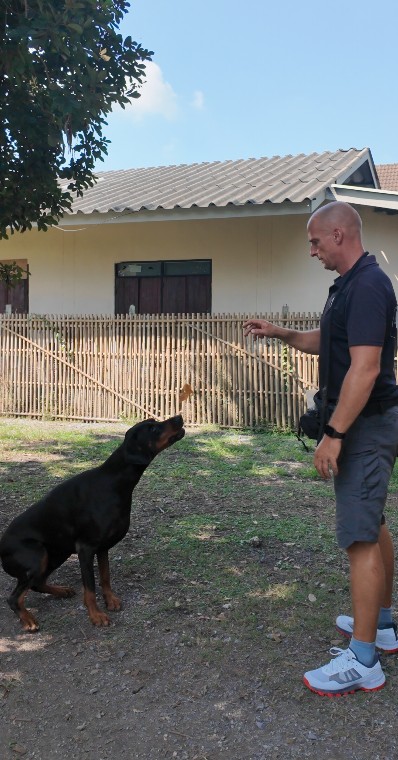
You might focus entirely on your dog’s responses during training, but the relationship flows bidirectionally. Your dog doesn’t just respond to your commands—they read your emotional state with remarkable precision, sensing tension in your posture, excitement in your energy, and anticipation in your movements before you even reach for the treat pouch.
When you become anxious about whether your dog will perform correctly, that anxiety transmits directly to your companion. Your slightly elevated heart rate, the subtle tension in your shoulders, the faster pace of your breathing—your dog perceives all of it. This creates a feedback loop where your anticipation of their performance heightens their arousal, which then increases your stress about maintaining their focus, which further elevates their nervous system activation. 🧠
The handler who maintains calm, grounded presence creates space for their dog’s nervous system to down-regulate between repetitions. Conversely, the handler who becomes increasingly animated with each successful performance inadvertently teaches their dog that training is an exciting, arousing activity rather than a calm, focused partnership.
Recognizing Your Own Treat Dependency
Be honest with yourself: have you become dependent on treats to get your dog’s attention? Do you feel anxious training without your treat pouch? Does your dog’s focus completely disappear when you’re not holding food? These patterns reveal as much about your training habits as they do about your dog’s conditioning.
Many handlers develop their own treat dependency, using food as a crutch rather than a tool. This happens gradually—you notice your dog responds better with treats, so you use them more frequently. Soon, you’re delivering treats every few seconds, and the moment you stop, your dog’s engagement vanishes. You’ve unintentionally created a system where both you and your dog have become locked into treat-driven interaction rather than genuine relationship-based training.
The path forward requires examining your role in the cycle. Can you engage your dog’s attention through calm presence, clear communication, and relational connection without immediately reaching for food? This shift—from handler-as-treat-dispenser to handler-as-calm-guide—represents the foundation of sustainable training that builds internal motivation rather than external dependency.
Transitioning to Balanced Reinforcement: Practical Strategies
Understanding Variable Reinforcement Schedules
The solution to over-rewarding doesn’t mean eliminating treats—it means using them strategically through variable reinforcement schedules. Once your dog understands a behavior, continuous reinforcement (treating every single repetition) should give way to intermittent reinforcement, where treats appear unpredictably. This might seem counterintuitive, but variable schedules actually strengthen behavior more effectively than continuous ones.
Why does unpredictability work better? Because your dog can’t anticipate exactly when the reward will appear, the Reward Prediction Error loop diminishes. Their nervous system doesn’t maintain constant high-alert anticipation. Instead, they remain engaged and attentive without the stress-inducing expectation of immediate reward delivery.
Start by delivering treats for approximately 70% of correct responses, randomly varying which responses get rewarded. Gradually reduce this to 50%, then 30%, ensuring that the treat becomes a pleasant surprise rather than an expected transaction. During this process, you must fill the gaps with other forms of reinforcement—verbal praise delivered in a calm, appreciative tone, gentle tactile contact, or brief moments of play.
Here’s how to implement variable reinforcement effectively:
- Random selection method: Use a mental coin flip or predetermined pattern (known only to you) to decide which repetitions earn treats, ensuring your dog cannot predict the schedule.
- Quality over quantity: When you do deliver treats, occasionally offer jackpots (multiple treats or extra special high-value rewards) to maintain interest and create positive unpredictability.
- Mix reward types: Alternate between food treats, verbal praise, tactile reinforcement, and life rewards so your dog learns that success brings various forms of acknowledgment.
- Duration before reward: Gradually increase the number of behaviors required before any reward is delivered, building persistence and work ethic.
- Distance variations: Sometimes reward immediately, other times require your dog to complete additional steps or distance before receiving reinforcement.
- Environmental distractions as criteria: Make reward delivery contingent not just on the behavior but on maintaining focus despite distractions, raising the criteria naturally.
- Reward the check-in: Often reward your dog simply for looking at you between behaviors, reinforcing that attention to you (not treat anticipation) is what matters.
Introducing Calm Social Reinforcement
Treats are extrinsic motivators—external objects your dog seeks. But social reinforcement—your attention, touch, and verbal acknowledgment—can become powerful intrinsic motivators when delivered with emotional authenticity. The key lies in the word “calm.” Excited, high-pitched praise can elevate arousal just as much as treats do. Calm, genuine acknowledgment teaches your dog that success brings not just food but connection.
Practice these alternative reinforcement approaches:
- Calm verbal markers: Rather than excited “good boy!” use a warm, steady “yes” or “nice” delivered with genuine appreciation but controlled energy. Your tone should convey satisfaction without ramping up excitement.
- Strategic touch: A gentle hand on your dog’s shoulder or side, maintained for several seconds, activates the parasympathetic nervous system. This isn’t quick patting that excites but sustained, calming contact that says “we’re together, we’re safe, you’re doing well.”
- Shared gaze: Sometimes the most powerful reinforcement is simply meeting your dog’s eyes with calm appreciation. This moment of connection, when your dog checks in with you and finds not just approval but genuine presence, builds the foundation of what we call the Invisible Leash—that awareness and connection that guides without force or constant external motivation.
- Life rewards: Access to desired activities or environments can replace food treats effectively. “Sit” opens the door to outside. “Wait” grants permission to greet another dog. The behavior becomes functional, earning something your dog genuinely wants beyond food.
- Release to sniff: In many contexts, allowing your dog to investigate interesting scents serves as powerful reinforcement, tapping into natural drives without creating the same dopamine spike as food.
- Toy play as reward: For play-motivated dogs, brief tug or fetch sessions can replace treats, though these should still be delivered calmly to avoid excessive arousal.
- Environmental access: Opening gates, allowing exploration of new areas, or permission to jump on furniture can all serve as meaningful life rewards that build functional behaviors.
Crave. Wait. Fray.
Too much reward blurs relief. Each treat lights the seeking circuit, but without pause, excitement turns to unease.
Dopamine meets cortisol. The brain keeps waiting, predicting, missing—each delay a spark of stress masked as motivation.

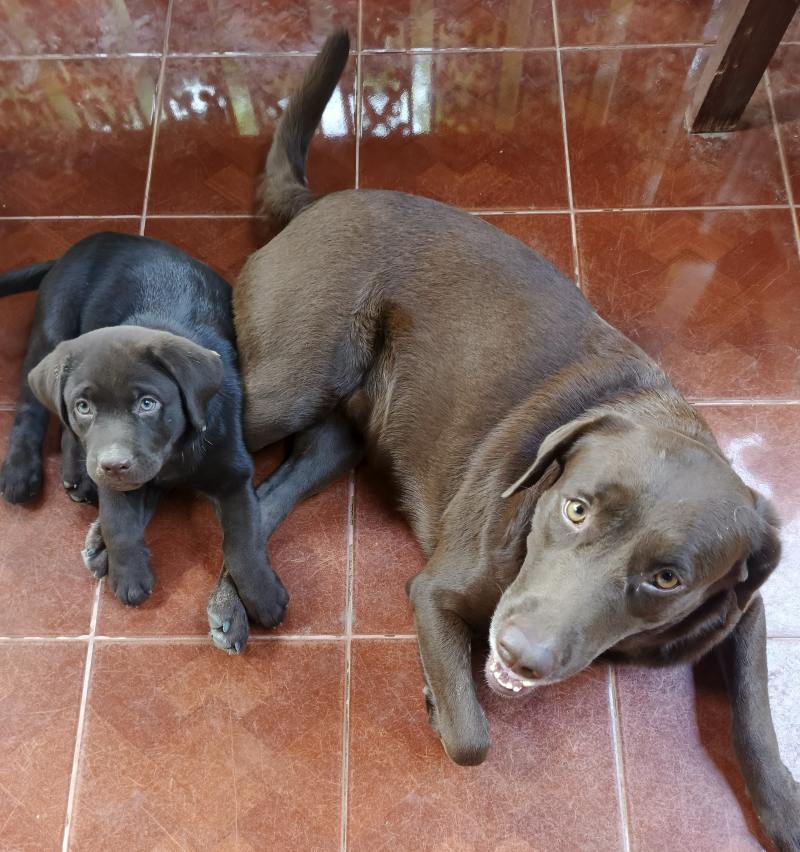
Balance is the bond. Slow breath, soft voice, earned stillness between rewards—this is where learning becomes peace instead of pursuit.
Building Recovery Intervals into Training Sessions
Your dog’s nervous system requires time to process learning and return to baseline arousal between training repetitions. Without built-in recovery intervals, you’re essentially asking their brain to maintain sympathetic activation continuously, which is physiologically exhausting and counterproductive for retention.
Structure your training sessions with deliberate pause points. After several successful repetitions, take a complete break—not to practice something else but to allow your dog to simply exist in calm presence. This might mean sitting together quietly for 30-60 seconds, gentle stroking without commands or expectations, or even a brief walk where nothing is asked of them.
Effective recovery interval strategies include:
- Planned rest breaks: After every 5-7 repetitions, implement a 30-60 second period where no commands are given and your dog can simply breathe and settle.
- Calm physical contact: Use gentle stroking or massage during breaks to activate parasympathetic responses and help your dog’s nervous system down-regulate.
- Environmental observation time: Allow your dog to simply watch their surroundings without interaction, giving their brain time to process learning without additional input.
- Hydration opportunities: Offer water during breaks, as drinking often triggers calming responses and provides a natural pause in training intensity.
- Sniff breaks: Let your dog investigate scents in the training area, engaging their natural information-gathering system in a low-arousal way.
- Handler self-regulation: Use these intervals to check your own breathing and emotional state, ensuring you’re modeling the calm you want to see.
- Gradual session endings: Always end training with an extended calm period rather than abruptly stopping, allowing gradual nervous system transition.
These recovery intervals serve multiple purposes. They allow dopamine levels to normalize, enable parasympathetic activation (the rest-and-digest system), and create psychological space for memory consolidation. You might worry that breaks will reduce training efficiency, but the opposite proves true—dogs who receive regular nervous system down-regulation actually learn more effectively and retain behaviors more reliably. 🐾
🍖 Over-Rewarded Dogs: Understanding Treat-Driven Stress 🧠
When constant treats create anticipation anxiety instead of calm confidence—recognizing the hidden stress behind over-motivation and finding the path to balanced reinforcement
🔬 The Neuroscience: What’s Happening in Your Dog’s Brain
The Dopamine Trap: Dopamine isn’t the “happiness chemical”—it’s the “seeking” chemical that creates drive and craving. High-frequency treats condition your dog’s brain to maintain constant high-alert anticipation, creating a Reward Prediction Error loop where the nervous system stays locked in seeking mode rather than experiencing satisfaction.
The Stress Connection: Sustained dopamine activation without parasympathetic closure triggers cortisol release. Your dog experiences a physiological state where the drive for reward becomes intertwined with stress signaling—excitement becomes indistinguishable from anxiety at the nervous system level.
👀 Recognition: Signs Your Dog Is Over-Rewarded
Behavioral Indicators:
• Whining between repetitions despite correct performance
• Constant scanning of treat pouch rather than focusing on you
• Impulsive rushing and inability to wait for release cues
• Post-reward restlessness instead of calm refocusing
• Frustration aggression when rewards are delayed
Physical Manifestations:
• Dilated pupils even in bright lighting
• Rapid shallow breathing between training sessions
• Tense muscle tone that never fully releases
• Excessive salivation or stress face
• Rigid, high tail position instead of relaxed wag
🎯 The Solution: Transitioning to Balanced Reinforcement
Variable Reinforcement Schedule: Transition from continuous treats to unpredictable delivery. Start with 70% reinforcement, gradually reducing to 30%. The unpredictability actually strengthens behavior while reducing anticipatory stress—your dog can’t maintain constant high-alert when they can’t predict reward timing.
Calm Social Reinforcement: Replace food with connection. Use steady verbal markers, sustained calming touch, shared gaze, and life rewards (access to doors, sniffing, play). These intrinsic motivators build the Invisible Leash of awareness and connection that guides without external dependency.
Recovery Intervals: Build 30-60 second calm breaks after every 5-7 repetitions. These pauses allow dopamine normalization, parasympathetic activation, and memory consolidation. Dogs with nervous system down-regulation time actually learn more effectively and retain behaviors more reliably.
⚠️ Critical: What Over-Rewarding Actually Creates
External Dependency, Not Learning: Over-rewarded dogs develop transactional relationships rather than genuine understanding. They learn “I perform X, you deliver Y” instead of integrating behaviors into their repertoire. Remove the treats, and the behavior collapses—this isn’t training, it’s conditional responding.
Long-Term Welfare Impact: Chronic anticipatory arousal affects overall quality of life. Dogs struggle to truly relax, experience sleep disruption, show generalized anxiety, and develop restlessness even in supposedly calming environments. This isn’t high energy—it’s emotional dysregulation created by training methods.
⚡ The Over-Rewarding Assessment
Ask yourself: Can my dog maintain focus without visible treats? Do they settle quickly after training? Do behaviors transfer to new environments? If you’re delivering treats more than once every 10-15 seconds, if your dog becomes frantic when you open the treat container, or if learned behaviors disappear without food present—you’ve crossed from reinforcement into dependency. The solution isn’t eliminating treats but using them strategically while building value into your presence, calm connection, and the intrinsic satisfaction of cooperation.
🧡 The Zoeta Dogsoul Approach to Balanced Reinforcement
True training success isn’t measured by how quickly your dog responds to treat cues but by the quality of emotional connection and internal motivation you build together. Through the NeuroBond framework, we understand that emotional synchrony and calm relational reinforcement restore balance between external reward and internal safety perception. When training becomes less about dispensing treats and more about building trust, you discover that the most powerful reinforcement was never in your treat pouch—it was in your calm presence, clear guidance, and the secure relationship where cooperation feels inherently rewarding. The moments of Soul Recall—when your dog responds not to bribery but to emotional memory and trust—reveal what sustainable training truly looks like.
© Zoeta Dogsoul – Where neuroscience meets soul in dog training
The NeuroBond Alternative: Emotional Grounding in Training
Shifting from Transaction to Connection
The NeuroBond framework offers a fundamentally different approach to reinforcement—one that prioritizes emotional synchrony and calm relational connection over external reward transactions. This doesn’t mean abandoning treats entirely but recognizing that the most powerful reinforcement comes from the secure, trusting relationship between you and your dog.
When training becomes primarily transactional—you perform, I pay—the relationship quality diminishes. Your dog relates to you as a treat dispenser rather than a trusted guide and companion. The NeuroBond approach reverses this priority: the relationship becomes primary, and treats serve as occasional enhancements to an already rewarding interaction.
Building this foundation requires patience and a willingness to slow down. Instead of rapid-fire repetitions driven by treat delivery, training becomes a conversation—a dance of communication where your dog learns that attention to you, cooperation with your guidance, and calm focus bring not just food but something more valuable: emotional safety, predictability, and genuine connection.
The NeuroBond approach involves these key principles:
- Building trust foundation: Create consistent, predictable interactions where your presence itself becomes rewarding through reliability and emotional safety.
- Using calm, consistent verbal praise: Deliver acknowledgment in tones that promote relaxation rather than heightened excitement, teaching your dog that approval doesn’t require arousal.
- Emphasizing gentle tactile reinforcement: Use touch that soothes rather than stimulates, helping your dog associate training with parasympathetic activation.
- Creating shared experiences: Make the training process itself enjoyable and collaborative rather than just a means to an end (the treat).
- Teaching active self-regulation: Incorporate exercises that encourage your dog to settle, wait, and maintain calm focus, with the reward being the continuation of calm interaction.
- Gradual fading of food rewards: Systematically reduce the frequency and predictability of high-value treats while increasing the value of social and calm reinforcement.
- Focusing on cooperative engagement: Help your dog find satisfaction in the interaction and successful task completion rather than solely in external food rewards.
Teaching Self-Regulation Through Structured Calm
One of the most overlooked aspects of training involves teaching your dog how to self-regulate their arousal levels. Over-rewarded dogs often never learn this skill—they bounce between high arousal (during training) and forced inactivity (in the crate afterward) without developing the capacity to modulate their own nervous system state.
Incorporate these self-regulation exercises into your training routine:
- Settle exercises: Before beginning active training, ask your dog to settle on a mat or designated space for increasing durations. Reward calm lying down, not with excitement but with quiet acknowledgment. This teaches your dog that calm behavior itself is valuable.
- Wait and watch: Build duration into your cues, gradually increasing the time between command and release or between behavior and reward. Start with just seconds, extending slowly. This develops frustration tolerance and impulse control, essential components of emotional regulation.
- Calm-to-excitement-to-calm transitions: Practice deliberately arousing your dog slightly (through brief play or excitement), then guiding them back to calm using your presence and clear cues. This teaches them that they can move between arousal states under your guidance, developing their own emotional flexibility.
- Handler stillness practice: Stand or sit completely still, asking nothing of your dog except to be present with you in calm awareness. Many dogs struggle with this initially, offering behaviors trying to “earn” something. Patience through this teaches them that simply being together is rewarding.
- Breath work observation: Sit calmly with your dog and simply breathe slowly and deeply, noticing when your dog’s breathing synchronizes with yours—this co-regulation builds powerful nervous system connections.
- Progressive relaxation protocols: Teach your dog to relax body parts on cue, starting with simple “chin rest” and progressing to full body relaxation, creating tools they can use in stressful situations.
- Impulse control games: Practice “it’s your choice” exercises where your dog must demonstrate self-control to earn rewards, building their capacity to override immediate impulses.
These exercises might not look like traditional training, but they’re building something far more valuable than individual behaviors—they’re developing your dog’s capacity for emotional regulation, impulse control, and calm presence that makes all other training sustainable.
Protocols for Transitioning from External to Internal Motivation
Phase One: Establishing Foundation with Clarity
If your dog is currently over-rewarded, you cannot simply eliminate treats immediately. They need gradual transition that maintains their confidence while shifting the reinforcement structure. Begin by ensuring every behavior in your training repertoire is crystal clear—your dog should understand exactly what behavior earns reinforcement, with no ambiguity.
During this phase, continue using treats but become more intentional about pairing them with social reinforcement. Every treat should be accompanied by calm verbal acknowledgment and gentle touch. You’re beginning to build value into the social elements that will eventually replace or significantly reduce treat frequency.
Work on establishing a calm marker word or sound that always precedes the treat—not an excited “yes!” but a steady, calm “good” or simple click. This marker becomes the bridge between behavior and reward, and later, the marker itself can become rewarding even when treats don’t always follow.
Phase Two: Introducing Unpredictability and Choice
Once foundation behaviors are solid, begin introducing variable reinforcement. Your dog should never be able to predict which repetition will earn a treat. Mix high-value treats with lower-value ones, occasional treats with verbal praise only, and include “life rewards” like releasing to sniff, opening doors, or access to play.
This phase often reveals how treat-dependent your dog has become. You’ll likely see initial confusion or frustration—whining, repeated behaviors trying to earn the treat, or even shutdown where your dog stops offering behaviors altogether. This is normal and actually represents important learning. Your dog is discovering that treats aren’t guaranteed, which paradoxically makes the remaining treats more valuable while reducing anticipatory stress.
During this phase, it’s crucial that you maintain calm consistency. Don’t cave to whining by delivering unearned treats. Don’t become frustrated with your dog’s confusion. Instead, remain a steady presence, reinforcing the behaviors you see with whatever reinforcement you’ve chosen for that particular repetition, helping your dog understand that they can trust the process even when it’s unpredictable.
Signs you’re ready to progress to the next phase:
- Reduced anticipatory behaviors: Your dog shows less whining, scanning, or fixation on the treat pouch between repetitions.
- Maintained focus without visible food: Your dog can attend to you and perform behaviors even when treats aren’t obviously present.
- Calm acceptance of variable rewards: Your dog doesn’t show frustration or shutdown when treats aren’t delivered for specific repetitions.
- Increased handler attention: Your dog checks in with you more frequently, seeking guidance rather than solely seeking treats.
- Improved settling between sessions: Your dog can relax more quickly after training rather than remaining aroused for extended periods.
- Generalization to new environments: Behaviors maintain stability even in locations where treat delivery has been less frequent.
- Enthusiasm for social rewards: Your dog shows genuine pleasure in verbal praise and physical affection, not just tolerance while waiting for food.
Phase Three: Emphasizing Relationship and Function
In the final transition phase, treats become rare surprises rather than expected payment. The majority of reinforcement comes from your calm acknowledgment, the functional rewards of behaviors (commands that grant access to desired activities), and the intrinsic satisfaction your dog develops for performing well.
This phase requires the deepest handler development. You must become genuinely rewarding to your dog through your presence, attention, and the secure relationship you’ve built. Dogs who have reached this phase often seem to work “just because they want to”—not from treat dependency but from the internal motivation that comes from cooperation, the satisfaction of clear communication, and the emotional security of working with a trusted handler.
You’ll notice remarkable changes in your dog’s demeanor. Training sessions become calmer, more focused, and somehow more connected. Your dog checks in with you more frequently not seeking treats but seeking guidance and connection. The frantic edge of treat anticipation disappears, replaced by attentive presence. This is what Soul Recall looks like in practice—your dog responding not to external bribery but to the emotional memory of successful cooperation and the trust that’s been built through consistent, calm training.
Practical Applications for Different Training Contexts
Modifying Reward Protocols for High-Drive Dogs
Working breeds and high-drive dogs present particular challenges with over-rewarding. These dogs often show intense food motivation, making it tempting to use treats frequently. However, these same dogs typically benefit most from transitioning to internal motivation, as their genetic drives already provide substantial intrinsic motivation if properly channeled.
For high-drive dogs, incorporate breed-specific “instinct rewards”—a herding dog might earn brief controlled chasing, a retriever might get a quick retrieve, a terrier might get permission to investigate a specific area. These rewards tap into genetic drives, providing powerful reinforcement that doesn’t create the same dopamine dysregulation as constant food delivery.
Specific reward modifications for high-drive dogs:
- Controlled chase games: For herding breeds, allow brief moments of chasing a flirt pole or moving target as reward, satisfying instincts without constant food.
- Retrieve opportunities: For sporting breeds, incorporate quick retrieves of favorite toys as reinforcement, channeling natural drive productively.
- Digging or investigation time: For terriers and scent hounds, offer brief periods to dig in approved areas or investigate scent sources.
- Tug play rewards: Use brief, structured tug sessions as high-value reinforcement, with clear start and end cues to maintain handler control.
- Agility obstacles: For athletic breeds, access to favorite obstacles (tunnels, jumps) can serve as powerful life rewards.
- Searching games: Hide treats or toys for your dog to find, rewarding successful task completion with natural seeking behaviors.
- Social play with other dogs: For socially motivated dogs, brief interactions with dog friends can replace food rewards effectively once foundation behaviors are solid.
Additionally, these dogs require more structured calm periods. Their natural intensity means they struggle more with self-regulation, making your calm guidance even more critical. Build longer settle periods between work sessions, require calm behavior before releasing to high-arousal activities, and consciously teach them that calm focus is as valuable as intense drive.
Addressing Over-Rewarding in Reactive or Anxious Dogs
For dogs with reactivity or anxiety issues, over-rewarding presents a particularly problematic trap. Well-meaning handlers often inadvertently increase treat frequency trying to help their dogs feel better around triggers, but this can actually heighten arousal and make reactivity worse. The dog learns to anticipate treats when triggers appear, which increases their scanning for both treats and triggers, raising overall arousal rather than creating calm confidence.
With reactive dogs, focus reinforcement on calm state changes rather than specific behaviors. When your dog notices a trigger but remains below threshold, mark and reward that awareness without excitement. Build value into calm observation—your dog learns that seeing triggers calmly is what earns reinforcement, not performing specific behaviors or showing arousal.
Gradually increase the criteria so that longer duration of calm focus is required before reinforcement, and systematically introduce more social/tactile reinforcement than treats. Your calm presence should become the primary safety signal, with treats serving as occasional bonuses rather than the main reassurance.
Adapting Training for Senior Dogs
Senior dogs present unique considerations when addressing over-rewarding. Many older dogs have spent years in treat-based training systems and show strong conditioning to food rewards. Changing their reinforcement patterns requires extra gentleness and patience, as established neural pathways don’t adapt as readily in aging brains.
Focus on comfort and connection as primary reinforcers for senior dogs. A warm resting spot, gentle massage, calm companionship—these can become more valuable than treats for dogs whose appetites or digestive systems may be changing with age. The goal isn’t to eliminate treats but to help your senior dog find satisfaction in calmer, more varied forms of reinforcement that honor their stage of life.
Keep training sessions shorter with longer recovery intervals. Senior nervous systems require more time to down-regulate, and cognitive processing may be slower. Build in success by keeping criteria clear and achievable, focusing on maintaining their dignity and confidence rather than pushing for new complex behaviors.
Long-Term Welfare Implications of Reward Balance
The Impact on Overall Emotional Health
Dogs living in constant anticipatory arousal don’t just struggle during training—this state affects their overall quality of life. Chronic activation of the seeking system without adequate satisfaction contributes to generalized anxiety, sleep disruption, and difficulty settling even in supposedly relaxing environments like home.
You might notice your over-rewarded dog can’t truly relax even during cuddle time, constantly watching you for the next opportunity or interaction. They might pace more than other dogs, vocalize frequently, or show other signs of restlessness. This isn’t high energy—it’s emotional dysregulation created by training methods that inadvertently taught their nervous system to remain in constant anticipation mode.
Transitioning to balanced reinforcement improves not just training outcomes but overall emotional wellness. Dogs develop the capacity for genuine rest, deep sleep, and calm presence. They learn that life isn’t a constant transaction or performance but includes periods of simply being together without expectations. This emotional grounding reflects the core philosophy of Zoeta Dogsoul—that true training success measures not just behavioral outcomes but the quality of emotional life and relationship depth it creates. 🧡
Building Resilience Through Balanced Reinforcement
Dogs trained primarily through balanced reinforcement that includes internal motivation show greater resilience when facing novel situations, environmental changes, or handler stress. Because their confidence doesn’t depend entirely on external food delivery, they maintain stable behavior even when circumstances change.
This resilience extends to aging as well. Dogs who’ve developed internal motivation often age more gracefully, maintaining engagement and responsiveness even as physical capabilities decline. Their motivation for interaction and cooperation doesn’t depend on physical rewards that might become less appealing as appetite changes or mobility issues develop.
The long-term welfare benefits of addressing over-rewarding extend beyond the individual dog as well. Handlers who learn balanced reinforcement develop better reading skills, deeper empathy for canine emotional states, and more realistic expectations about training timelines. The entire household benefits when the dog’s emotional regulation improves and the pressure to constantly deliver treats diminishes.
Moving Forward: Your Balanced Reinforcement Journey
Assessing Your Current Training Approach
Take honest inventory of your training habits. Count how many treats you deliver in a typical five-minute training session. Notice whether your dog can focus on you without food visible. Observe their behavior between repetitions—are they calm and attentive or anxiously anticipating the next treat?
Use this checklist to assess whether over-rewarding has become problematic:
- Treat frequency: Count treats per training session—are you delivering more than one treat every 10-15 seconds?
- Focus without food: Can your dog maintain attention and perform behaviors when treats aren’t visible or present?
- Whining or vocalization: Does your dog whine, bark, or make frustrated sounds during training even when performing correctly?
- Treat container reactions: Does opening your treat bag or container create frantic excitement or obsessive fixation?
- Distance work: Can your dog perform behaviors at a distance from you, or do they need to remain close to the treat source?
- Post-training arousal: How long does it take your dog to settle after training sessions—minutes or hours?
- Behavior without treats: Do learned behaviors completely fall apart when you forget your treat pouch?
- Handler dependency: Can other family members or trainers work with your dog, or are behaviors tied specifically to the primary treat deliverer?
- Environmental generalization: Do behaviors transfer to new locations and contexts, or do they require the same setup (including visible treats) to remain solid?
- Frustration tolerance: How does your dog respond when rewards are delayed by even a few seconds—do they maintain composure or become agitated?
This assessment isn’t about judgment but about recognizing where you are so you can chart a thoughtful path forward. Many devoted handlers discover they’ve inadvertently created treat dependency while genuinely trying to use positive reinforcement effectively. Recognizing the pattern is the first step toward healthier balance.
Creating Your Personalized Transition Plan
Every dog-handler team will require a slightly different approach to transitioning from over-rewarding to balanced reinforcement. Consider your dog’s individual temperament, history, current training level, and specific challenges when creating your plan.
Set realistic timelines—significant changes in reinforcement patterns typically require weeks or months, not days. Break your transition into clear phases with specific criteria for moving to the next level. Document your progress, noting not just behavioral outcomes but your dog’s emotional state, stress signals, and overall well-being.
Seek support when needed. Working with a trainer versed in balanced reinforcement, polyvagal-informed training, or the NeuroBond approach can provide invaluable guidance. These professionals can observe patterns you might miss and offer personalized adjustments to your plan.
Embracing the Emotional Connection
Ultimately, transitioning from over-rewarding to balanced reinforcement represents a shift in your training philosophy—from behavior-focused to relationship-focused, from transaction to connection, from external control to internal motivation. This shift requires patience with yourself and your dog as you both learn new patterns of interaction.
Celebrate the small victories: the moment your dog chooses to focus on you without treats visible, the first time they settle calmly after training instead of remaining aroused, the growing sense of partnership you feel as your relationship deepens beyond food transactions. These markers of progress matter more than perfect technical execution.
Remember that this journey isn’t about achieving perfection but about continuous improvement and deepening understanding. Some days will feel like setbacks. Your dog might regress temporarily when stressed or in new environments. This is normal and expected. Maintain your calm consistency, trust the process, and keep focusing on the relationship foundation that makes sustainable training possible.
That balance between clear communication and emotional safety, between structured learning and genuine connection—that’s the essence of Zoeta Dogsoul. When training becomes less about delivering treats and more about building trust, you’ll discover that the most powerful reinforcement was never in your treat pouch at all. It was in your presence, your calm guidance, and the secure relationship that makes your dog want to work with you simply because being together feels right.
Through understanding the neuroscience of reward and the emotional landscape of your dog’s experience, you can transform training from a transactional exchange into a deeply connected partnership. The path from over-rewarding to balanced reinforcement isn’t always easy, but the destination—a calm, confident dog who works from internal motivation and genuine connection—is worth every patient step of the journey.










