

Introduction: The Hidden Crisis of the Underemployed Mind
Picture a Border Collie staring at shadows on the wall for hours, or an Australian Shepherd pacing endlessly despite a two-hour walk. You might recognize these scenes from your own living room, and if you do, you’re witnessing something profound: a crisis of unfulfilled purpose.
Herding breeds like Border Collies, Australian Shepherds, and Kelpies weren’t designed for the modern companion life we offer them. These dogs carry within them thousands of years of genetic programming—intricate neural pathways built for control, vigilance, and problem-solving. When we bring them into our homes without understanding this complex mental architecture, we’re not just adopting a pet. We’re welcoming a working professional into early, involuntary retirement.
Did you know that the behavioral issues you’re seeing might not be disobedience or hyperactivity at all? They could be the neurobiological equivalent of burnout—what happens when a brilliant mind has nowhere to direct its energy. The restless pacing, the fixation on moving objects, the inability to settle: these aren’t character flaws. They’re distress signals from a brain engineered for purpose, now left without one.
This guide will help you understand what’s happening inside your herding dog’s mind when instinct meets inactivity. We’ll explore the science behind their needs, decode the behaviors that signal frustration, and most importantly, show you how to provide the cognitive fulfillment that can transform your relationship. Next, we’ll dive into the neurobiological foundation that makes these dogs so special—and so vulnerable.
The Neurobiological Foundation: Understanding the Herding Mind
What Makes a Herding Dog’s Brain Different
Your herding dog’s brain is fundamentally wired differently from other breeds. While all dogs descended from wolves with hunting instincts, herding breeds underwent specific selection for control rather than capture, for movement regulation rather than chase-and-kill sequences. This created unique neural pathways that light up not when prey is caught, but when movement is managed.
Think of it this way: a retriever’s brain rewards completion—the duck is brought back, dopamine floods the system, satisfaction achieved. But your herding dog’s brain rewards the process itself—the circling, the eye contact, the subtle positioning that controls movement. This means their reward system is designed for sustained, complex engagement rather than simple task completion.
The prefrontal cortex in these breeds shows heightened activity during decision-making tasks. They’re constantly scanning, assessing, predicting. Their brain’s salience network—the system that determines what deserves attention—operates at an intensity that would exhaust most other breeds. This is why your Australian Shepherd notices the neighbor’s cat three houses away while your Labrador sleeps peacefully beside you.
The Chemistry of Unfulfilled Drive
When these deeply ingrained drives remain unsatisfied, something troubling happens in your dog’s neurochemistry. Research on chronic stress reveals that persistent activation of goal-seeking systems without resolution leads to elevated cortisol levels—the stress hormone that makes it nearly impossible for your dog to relax, even when exhausted.
The dopamine system, designed to reward successful herding behaviors, starts seeking any source of stimulation when real work isn’t available. This creates what researchers call “compensatory hyperarousal”—your dog’s brain essentially creating its own stimulation loops because the authentic ones are missing. Shadow chasing, light fixation, obsessive ball focus: these aren’t random quirks. They’re your dog’s dopamine system desperately trying to engage its herding circuitry with whatever stimuli are available.
What’s particularly concerning is the impact on learning capacity. When stress hormones remain chronically elevated, the hippocampus—crucial for forming new memories and learning adaptive behaviors—actually becomes less efficient. This means your frustrated herding dog isn’t just unhappy; they’re also becoming less capable of learning the calm behaviors you’re trying to teach them. It’s a vicious cycle that conventional training often fails to address. 🧠
Through the NeuroBond approach, we recognize that trust and emotional connection become the foundation for recalibrating this dysregulated arousal. But first, we need to understand what these neurobiological patterns look like in daily behavior.
Recognizing the Signs: When Instinct Becomes Distress
The Language of Unmet Needs
Your herding dog is communicating their frustration constantly—you just need to know what to look for. These behavioral patterns aren’t misbehavior; they’re your dog’s attempts to self-regulate an overactive mind without appropriate outlets.
Obsessive Staring and Fixation When your Border Collie stares at the wall, the ceiling fan, or watches shadows with unwavering intensity, they’re attempting to engage their “eye” behavior—the predatory stare genetically refined for controlling sheep. Without livestock to manage, this powerful instinct redirects to whatever movement their hypervigilant brain can find. You might notice their body goes rigid, their breathing becomes shallow, and they seem completely unreachable in these moments.
Shadow and Light Chasing This behavior often starts innocently—a playful pounce at a reflection—but escalates into a compulsive pattern. The movement of shadows triggers the chase-and-control sequence hardwired into their brain. Each successful “catch” releases a small dopamine reward, reinforcing the behavior. Unfortunately, unlike real herding work, this loop never satisfies the deeper need for purposeful control, so it becomes increasingly compulsive.
Reactivity and Hypervigilance Does your Australian Shepherd alert to every sound, every movement, every change in the environment? This isn’t anxiety in the traditional sense—it’s the vigilance system operating without an off switch. In a working context, this awareness keeps the flock safe. In your living room, it becomes an exhausting state of constant readiness with no productive outlet.
Pacing and Restlessness The endless circling, the inability to settle, the getting up and lying down repeatedly—these are signs that your dog’s movement regulation system is activated without purpose. Their brain is telling them to gather, to circle, to control movement, but there’s nothing to gather. The behavior becomes its own feedback loop, creating movement for movement’s sake.
Displacement Behaviors Watch for seemingly random behaviors that interrupt normal activities: sudden scratching when not itchy, excessive yawning when not tired, frantic digging at nothing. These displacement behaviors occur when your dog experiences internal conflict—their brain demanding engagement while their environment offers none.
Quick Reference: Behavioral Warning Signs of Cognitive Deprivation
- Staring or fixation lasting more than 30 seconds at walls, shadows, lights, or ceiling fans
- Inability to settle after physical exercise – pacing, whining, or restlessness despite being physically tired
- Obsessive focus on one object or activity – ball fixation, toy guarding, or single-minded pursuit of specific items
- Reactivity escalation – increasingly intense responses to normal environmental stimuli (doorbells, passing cars, other dogs)
- Self-stimulating behaviors – tail chasing, spinning, excessive licking, or repetitive movements without clear purpose
- Inability to disengage – continues behaviors even when called, offered treats, or redirected
- Extreme vigilance – constantly scanning environment, unable to relax even in familiar, safe spaces
- Redirected herding behaviors – chasing children’s feet, nipping at moving objects, or attempting to control household member movements
If you’re seeing three or more of these signs regularly, your herding dog is likely experiencing significant cognitive frustration. 🐾
The Feedback Loop Problem
Here’s what makes this situation particularly challenging: herding work provides constant, clear feedback. The sheep move, the dog adjusts, the sheep respond, the dog refines their approach. This feedback loop is deeply rewarding and naturally regulating—it teaches the dog when to engage and when to back off.
In the absence of this feedback, your herding dog loses their ability to self-regulate arousal. Without external cues telling them “the job is done,” their brain never receives the signal to switch off the working mind. This is why a tired herding dog often seems more manic, not calmer—physical exhaustion doesn’t resolve the cognitive need for structured, purposeful engagement.
The environmental predictability of your home, while comforting to some breeds, can actually increase stress in herding dogs. Random sounds and movements occur throughout the day, triggering their vigilance system, but never in the predictable patterns that would allow them to anticipate, prepare, and successfully manage these “challenges.” Next, we’ll explore how this chronic frustration reshapes your dog’s emotional landscape.
The Emotional Consequences: From Frustration to Dysregulation
When Smart Dogs Create Their Own Chaos
There’s a phenomenon we see repeatedly in purpose-deprived herding breeds that researchers call “learned chaos”—a paradoxical state where highly intelligent dogs begin creating disorder as a way to generate the stimulation their brains crave.
Your Australian Shepherd who methodically empties the toy basket, one toy at a time, isn’t being destructive for destruction’s sake. They’re creating a task, a sequence, something for their problem-solving mind to organize. Your Border Collie who “herds” your children with increasing intensity isn’t being aggressive—they’re attempting to impose order on the unpredictable movement patterns of young humans.
This self-created stimulation becomes increasingly maladaptive because it lacks the natural boundaries and feedback that real work provides. A sheep pushes back against too much pressure, teaching the dog subtlety. Your sofa cushions don’t resist, so the behavior escalates without natural limits. Over time, these compensatory behaviors become so ingrained that they can resemble compulsive disorders.
The Spectrum of Emotional Dysregulation
Chronic frustration of goal-seeking systems doesn’t just create behavioral issues—it fundamentally alters your dog’s emotional baseline. You might notice your once-focused companion now struggles with emotional regulation across multiple contexts.
From Focused to Fixated The intense focus that makes herding breeds exceptional workers can transform into pathological fixation when misdirected. Your dog’s ability to concentrate, normally a strength, becomes a liability as they lock onto inappropriate targets with an intensity that seems almost trance-like. This fixation activates similar neural pathways to their working drive but without the satisfaction of meaningful completion.
From Alert to Anxious The vigilance that kept flocks safe becomes generalized anxiety when there’s no clear purpose to that watchfulness. Your dog begins responding to stimuli with increasing intensity, their threshold for arousal dropping lower and lower. What started as appropriate alertness to environmental changes escalates into panic at the slightest unexpected sound or movement.
From Driven to Desperate Perhaps most heartbreaking is watching the confident drive of a working breed devolve into desperate restlessness. The energy that should fuel purposeful problem-solving instead manifests as frantic, unfocused activity. Your dog wants to work but doesn’t know what the work is, leading to an emotional state similar to human burnout—exhausted yet unable to rest, driven yet directionless.
The Invisible Wounds of Under-Stimulation
What you’re seeing isn’t just behavioral—it’s a form of psychological distress. Research on cognitive load and mental underuse reveals that high-intelligence individuals (human and canine) forced into unstimulating environments experience measurable changes in stress markers, emotional stability, and cognitive function.
Your herding dog experiencing chronic purpose deprivation shows symptoms similar to humans in severely under-challenging jobs: decreased frustration tolerance, increased irritability, difficulty with emotional regulation, and sometimes even what appears to be depression—a learned helplessness that comes from having drive without direction.
The amygdala, your dog’s emotional processing center, becomes hypersensitive. Small stressors that a fulfilled herding dog would handle easily now trigger disproportionate reactions. This isn’t weakness or poor temperament—it’s the neurobiological consequence of a brain built for complexity being offered only simplicity. 🧡
Through Soul Recall moments, we sometimes glimpse how these dogs remember what it feels like to have purpose—you might see it in their eyes when they successfully solve a problem, even a simple one. That brief clarity reminds us that underneath the dysregulation is still that brilliant, capable mind waiting for meaningful work.

The Hidden Cost of Physical Exercise Alone
Why “A Tired Dog Is a Good Dog” Fails Herding Breeds
You’ve probably heard this advice a hundred times: exercise your high-energy dog more, and behavioral problems will disappear. So you run your Border Collie for an hour, throw the ball until your arm aches, maybe even hire a dog walker for additional daily runs. Yet somehow, your dog seems more wired, not less.
Here’s what’s happening: physical exhaustion without cognitive fulfillment actually worsens the problem for herding breeds. Their bodies tire, but their minds remain desperately active, creating what researchers call the “exhausted but wired” state. The mismatch between physical fatigue and mental alertness generates additional stress, making it even harder for your dog to settle.
Think about it this way—sending your herding dog to run laps is like asking a chess master to do jumping jacks instead of playing chess. Yes, they’ll get tired. No, they won’t feel fulfilled. The neural pathways designed for decision-making, strategy, and problem-solving remain unengaged, continuing to fire without purpose.
The Ball-Obsessed Dog: A Case Study in Dopamine Addiction
The Border Collie who brings you the ball obsessively, who whines and stares and can’t think about anything else, isn’t just enthusiastic about fetch. They’re caught in a dopamine-seeking loop that mimics but never satisfies their herding instinct.
Each throw and retrieve provides a small dopamine hit—the ball moves, they control it, small reward. But unlike the complex, varied challenges of actual herding work, fetch is repetitive and predictable. The reward diminishes with each repetition, but the drive intensifies, creating a compulsive need to chase that initial high. Your dog becomes less satisfied with each throw, yet more desperate for the next one.
This is the compensatory behavior pattern emerging from unmet instinctual needs. The movement, the focus, the retrieval—these elements superficially resemble herding work but lack the cognitive complexity and meaningful feedback that would truly satisfy your dog’s brain. Over time, this can develop into a genuine behavioral addiction, where your dog literally cannot disengage from the object of fixation.
Signs Your Dog Has Entered a Dopamine-Seeking Loop:
- Anticipatory anxiety – whining, pacing, or staring at you before play even begins
- Inability to enjoy the activity – seems stressed or frantic rather than joyful during fetch
- Persistent bringing – drops ball at your feet constantly, even when you’re clearly busy
- Sleep disruption – wakes from rest to check on ball location or bring it to you
- Aggression around the trigger object – guards the ball, growls if anyone approaches it
- Declining response to other rewards – treats, praise, or toys no longer motivate; only the ball matters
- Physical exhaustion without mental satisfaction – continues demanding the activity despite obvious tiredness
- Withdrawal symptoms – if ball is removed, shows signs of genuine distress: pacing, whining, searching behaviors
The distinction between healthy play drive and compulsive behavior is crucial to recognize early, before neural pathways become deeply ingrained.
The Overstimulation Paradox
Counterintuitively, many herding dogs living in constantly busy, active households show worse behavioral symptoms than those in calmer environments. This is the overstimulation paradox: random, unpredictable activity without structure or purpose generates more stress than helpful engagement.
Your dog’s brain is constantly activated by the chaos—children running, visitors arriving, TV sounds, random movements—but never in ways that allow for successful task completion or meaningful problem-solving. It’s like being interrupted from important work every few minutes: each interruption triggers the working mind, but prevents any satisfying completion. The result is a dog who’s simultaneously over-aroused and under-fulfilled.
Environmental randomness versus predictability significantly impacts your herding dog’s coping mechanisms. Predictable routines, even quiet ones, provide a framework that reduces anxiety. Random stimulation without clear outcomes amplifies it. This explains why some herding breeds paradoxically do better in structured, calm households than in “active, exciting” ones. 🐾
The Human-Dog Disconnect: Misreading Energy as Purpose
When Love Isn’t Enough
This might be difficult to hear, but it’s important: the deep emotional bond you share with your herding dog, while valuable, doesn’t replace their need for structured purpose. Many devoted owners unconsciously practice what researchers call “anthropomorphic bonding”—treating their dog as a furry human family member while ignoring their breed-specific working drives.
You provide comfort, affection, companionship, and security—all wonderful things. But your Border Collie’s brain doesn’t process these as substitutes for the cognitive work they were bred to perform. It’s not that they don’t appreciate your love; it’s that their neurobiological needs operate on a different system entirely.
The disconnect often deepens when owners interpret their dog’s restless behavior as requests for more attention or affection. You might spend more time playing, cuddling, or “being present” with your anxious Australian Shepherd, confused when this extra attention doesn’t calm them. The problem isn’t the amount of interaction—it’s the type. Without understanding the difference between emotional fulfillment and purposeful cognitive engagement, you may inadvertently reinforce the very anxiety you’re trying to soothe.
Misinterpreting “Energy” vs. “Drive”
Here’s a critical distinction that trips up many herding breed owners: energy and drive are not the same thing. Energy is general arousal, the physical capacity for activity. Drive is directed motivation toward specific, instinctual behaviors.
When you see your dog’s restlessness and assume they need more exercise, you’re addressing energy. But what they’re actually expressing is unfocused drive—the herding instinct activated without appropriate direction. Adding more physical activity might exhaust the energy but does nothing to fulfill the drive, leaving your dog physically tired but mentally frantic.
This misinterpretation creates frustrating cycles: you exercise more, your dog seems more hyper, so you exercise even more, and behavioral problems escalate. The solution isn’t more of what you’re already doing—it’s a fundamental shift in how you engage your dog’s mind.
The Well-Meaning Mistakes
Many owners, out of love and good intentions, inadvertently worsen their herding dog’s frustration:
Common Well-Meaning Mistakes That Backfire:
- Over-exercising without purpose – adding more walks, runs, or fetch sessions while ignoring cognitive needs, leading to the “exhausted but wired” state
- Constant companionship without structure – being home all day but providing random interaction rather than scheduled work sessions, creating anticipatory anxiety
- Interrupting focus moments – redirecting every time your dog shows intense concentration, preventing them from completing any mental task
- Treating all arousal as negative – attempting to calm your dog whenever they show energy, rather than distinguishing between frantic arousal and engaged focus
- Inconsistent boundaries – sometimes allowing herding behaviors toward children or other pets, other times punishing them, creating confusion about when drive expression is acceptable
- Using only food rewards – relying exclusively on treats rather than incorporating the intrinsic reward of task completion
- Anthropomorphizing their needs – projecting human emotional needs onto your dog (“they just need more cuddle time”) while ignoring breed-specific drives
- Avoiding all “stress” – eliminating productive challenge and frustration tolerance building in attempt to keep dog perpetually comfortable
Over-Protecting from “Stress” Trying to shield your sensitive Australian Shepherd from all challenges or frustrations might seem caring, but it denies them the productive stress (eustress) that builds confidence and provides cognitive satisfaction. A life without manageable challenges is especially difficult for breeds built to solve problems.
Providing Unstructured “Freedom” The idea that a large yard or off-leash time equals happiness overlooks what herding dogs actually need. Unstructured freedom without purposeful tasks often increases anxiety. Your dog has space to pace in larger circles, but still no clarity about what they should be doing.
Reinforcing Displacement Behaviors When your fixated Border Collie finally disengages from shadow-staring to seek your attention, you might reward this break with affection and praise. Unfortunately, this can inadvertently reinforce the entire cycle: stare intensely, get briefly petted, return to staring—now with added reinforcement.
Assuming Breed Doesn’t Matter The belief that “a dog is a dog” and all breeds need roughly the same things is perhaps the most damaging misconception. Your herding dog’s needs are as specialized as those of a working sled dog or a scent hound—ignoring this specificity leads to chronic frustration for both of you.
Through the Invisible Leash concept, we understand that true connection isn’t about physical control or even constant proximity—it’s about aligned purpose and mutual understanding of what the work is. This awareness, not constant vigilance, creates harmony between you and your herding dog. Next, we’ll explore practical approaches to providing the cognitive fulfillment your dog desperately needs.
Driven. Wired. Restless.
Purpose is their heartbeat. Herding dogs aren’t built for leisure; they’re built for leadership. Their minds need direction the way their hearts need rhythm—without it, instinct turns inward, and brilliance becomes burden.
Control is their language. What feels like obsession to you is fulfillment to them. The circling, the staring, the precision—all are echoes of purpose unspent, of neural pathways craving completion.


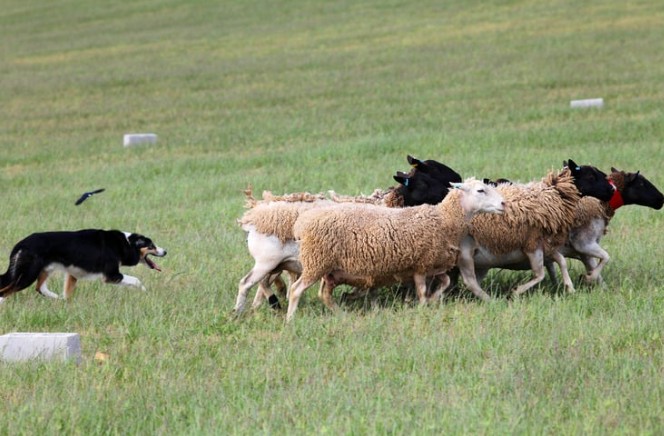
Connection is their cure. When logic meets empathy, burnout gives way to balance. The NeuroBond approach doesn’t suppress drive—it channels it through trust, presence, and meaningful engagement.
Rebuilding Purpose: Practical Pathways to Cognitive Fulfillment
Understanding “Proxy Work”
Since most herding breed owners don’t have access to actual livestock, the key becomes providing “proxy work”—activities that engage the same neural pathways and problem-solving systems as real herding without requiring sheep in your backyard.
Effective proxy work shares essential characteristics with herding: it requires decision-making, involves managing or controlling movement, provides clear feedback, includes both success and challenge, and allows your dog to “complete” tasks for psychological closure.
Essential Elements of Effective Proxy Work:
- Decision-making requirement – your dog must choose between options, not just follow rote commands
- Movement regulation component – involves controlling, directing, or managing something in motion
- Clear success/failure feedback – your dog knows immediately whether their strategy worked
- Appropriate difficulty level – challenging enough to engage prefrontal cortex, achievable enough to prevent frustration
- Task completion opportunity – has a definite beginning, middle, and end for psychological closure
- Variable complexity – can be made progressively more challenging as skills develop
- Engages natural instincts – activates herding-related neural pathways (gathering, controlling, strategic positioning)
- Limits to prevent compulsion – structured with clear start/stop signals to prevent obsessive repetition
This isn’t about keeping your dog busy—it’s about engaging their working brain in ways that feel authentic to their instinctual drives. The goal is to create structured challenges that activate their prefrontal cortex (decision-making), engage their reward pathways (dopamine for success), and most importantly, teach them to turn their working mind on and off deliberately.
Structured Cognitive Tasks That Actually Work
Scent Work and Nose Games While herding dogs aren’t primarily scent breeds, structured nose work brilliantly engages their problem-solving systems. Hide treats or toys in increasingly complex patterns, creating “search and gather” tasks that mimic the mental processes of locating and controlling scattered sheep.
Start simple: three boxes, one with a treat. Progress to room-wide searches with multiple targets. The cognitive load of systematic searching, deciding where to investigate next, and the satisfaction of successful completion provides genuine mental fulfillment. Sessions should be 10-15 minutes—just enough to engage the working brain without creating compulsive patterns.
Movement Regulation Games Teach your herding dog to control the movement of objects besides animals. Rolling a large exercise ball in specific directions, “herding” remote-control toys through obstacle courses, or even organized games where they guide family members to specific locations all engage the control-and-manage instinct productively.
The key is that your dog must make decisions about how to move the object, not just chase it. This engages the prefrontal cortex in the same way that deciding how to position themselves relative to sheep would.
Problem-Solving Sequences Create multi-step tasks that require planning and adjustment. For example: dog must ring a bell, open a door by pulling a rope, navigate through a channel, and place a toy in a box. Each step alone is simple; the sequence requires memory, planning, and adjustment—exactly the cognitive processes herding work demands.
Change the sequences regularly to prevent rote memorization. The goal is engaged thinking, not just learned routines. You’ll know you’re successful when you see your dog pause, assess, and problem-solve rather than frantically trying random behaviors.
Structured Settling Exercises Equally important as engagement is teaching your herding dog to deliberately disengage. After intense cognitive work, practice structured settling: a specific mat or bed, specific cues for “work is done,” and reinforcement for calm behavior.
This isn’t punishment or suppression—it’s teaching your dog’s brain that there’s a time to work and a time to rest, mirroring the natural rhythms they’d experience in actual herding contexts. This prevents the burnout and fixation that comes from a working mind that never learns to power down.
Treibball: The Perfect Proxy
If you can only choose one structured activity, consider Treibball—a sport specifically designed to engage herding instincts. Your dog learns to push large balls into a goal using nose, chest, and strategic positioning. It requires control, planning, adjustment based on feedback, and provides clear task completion.
What makes Treibball especially effective is that it engages the exact neural pathways used in herding: assessing the situation, planning approach, making subtle positional adjustments, and successfully moving objects to target locations. Your dog gets to be a problem-solving worker again, which is what their brain has been craving. 🧠
🧠 The Cognitive Crisis: Understanding Herding Breeds Without Purpose
A neurobiological journey from frustration to fulfillment 🐾
Phase 1: Recognition
Identifying the invisible crisis
The Neurobiological Reality
Herding dogs possess neural pathways built for control, vigilance, and problem-solving. Their prefrontal cortex shows heightened activity during decision-making, and their salience network operates at intensity that would exhaust most breeds. Without appropriate outlets, these systems create chronic stress through elevated cortisol and dysregulated dopamine seeking.
Warning Signs You’ll Observe
• Obsessive staring at walls, shadows, or ceiling fans (30+ seconds)
• Inability to settle after physical exercise
• Pacing, spinning, or repetitive movements without purpose
• Extreme reactivity to normal environmental stimuli
• Fixation on single objects (ball obsession, light chasing)
⚠️ Critical Understanding
These aren’t behavioral problems—they’re distress signals from a brain engineered for purpose, now left without one. If you’re seeing three or more warning signs regularly, your dog is experiencing significant cognitive deprivation.
Phase 2: Understanding the Disconnect
Why love alone isn’t enough
Energy vs. Drive: The Critical Distinction
Energy is general arousal and physical capacity. Drive is directed motivation toward specific instinctual behaviors. Physical exercise addresses energy but does nothing to fulfill drive—leaving your dog exhausted but mentally frantic.
The “Exhausted but Wired” Paradox
Running your Border Collie for hours creates physical fatigue without cognitive fulfillment. The body tires but the mind remains desperately active. This mismatch generates additional stress, making it harder—not easier—for your dog to settle.
What Your Dog Actually Needs
Not more exercise—purposeful cognitive engagement. Not constant attention—structured challenges with clear feedback. Not freedom—meaningful tasks with beginnings, middles, and satisfying completions. Through the Invisible Leash concept, we understand that connection isn’t about control but about aligned purpose.
Phase 3: The Dopamine-Seeking Loop
When compensation becomes compulsion
How Compensatory Behaviors Develop
Without authentic herding work, your dog’s dopamine system seeks any stimulation. Shadow chasing, light fixation, obsessive ball focus—these activate herding circuitry superficially but never satisfy the deeper need. Each repetition reinforces the behavior while diminishing the reward, creating genuine behavioral addiction.
Signs of Dopamine Addiction
• Anticipatory anxiety before play begins
• Frantic rather than joyful during activities
• Sleep disruption to check on trigger objects
• Aggression or guarding around fixation items
• Declining response to other rewards
• Physical exhaustion without mental satisfaction
The Feedback Loop Problem
Real herding provides constant, clear feedback that naturally regulates arousal. Without this, your dog’s brain never receives the “job done” signal. The working mind never powers down, leading to the frantic, unfocused state that seems like hyperactivity but is actually chronic, unfulfilled engagement.
Phase 4: Emotional Dysregulation
When brilliance becomes burden
The Progression of Frustration
Focused → Fixated: Healthy concentration transforms into pathological obsession. Alert → Anxious: Productive vigilance becomes generalized anxiety. Driven → Desperate: Confident purpose devolves into frantic, directionless activity.
Learned Chaos: Intelligence Without Outlet
Highly intelligent dogs begin creating disorder to generate stimulation. Methodically emptying toy baskets, herding children with increasing intensity, creating tasks where none exist—these aren’t destruction but desperate attempts at problem-solving when no real problems are provided.
The Path Forward: Soul Recall
Through moments of Soul Recall, we glimpse how these dogs remember purposeful engagement. Watch their eyes when they successfully solve a problem—that brief clarity reminds us the brilliant mind is still there, waiting beneath the dysregulation for meaningful work.
Phase 5: Rebuilding Purpose
Practical pathways to cognitive fulfillment
Understanding “Proxy Work”
Activities that engage the same neural pathways as real herding: decision-making, movement control, clear feedback, appropriate challenge, and task completion for psychological closure. This isn’t busywork—it’s engaging the working brain authentically.
Effective Proxy Work Activities
• Scent Work: Systematic searching and gathering (10-15 min sessions)
• Movement Regulation Games: Herding balls or RC toys through obstacles
• Problem-Solving Sequences: Multi-step tasks requiring planning
• Treibball: The perfect proxy—pushing balls to goals using strategic positioning
• Structured Settling: Teaching the working mind to deliberately power down
Essential Elements of Effective Work
Requires decision-making • Involves movement control • Provides immediate feedback • Offers appropriate difficulty • Allows task completion • Engages natural instincts • Has clear start/stop signals • Prevents compulsive repetition
Phase 6: The NeuroBond Approach
Healing through connection and challenge
What Makes NeuroBond Different
Traditional training focuses on suppression. The NeuroBond approach combines emotional synchrony with structured challenge, recalibrating arousal by giving meaning to engagement rather than demanding calm. Your dog learns work has context with clear boundaries, you’re a reliable partner providing genuine challenges, and settling is rest between tasks—not giving up on drive.
Emotional Co-Regulation Foundation
Before any training succeeds, establish emotional co-regulation—your dog’s nervous system syncing with yours. Practice being calm presence during arousal without redirecting. Your anxiety amplifies their arousal; your genuine calm becomes their calm. This creates the foundation for all other interventions.
Rehabilitation Timeline Expectations
Weeks 1-2: Foundation and predictable routines. Weeks 3-6: Building complexity, first signs of voluntary settling. Weeks 7-12: Integration and increased frustration tolerance. Month 4+: Healthy patterns become baseline, brilliant working breed emerges.
Phase 7: Daily Structure Implementation
Creating sustainable rhythms
Sample Daily Schedule for Working Families
6:30 AM: 10-min scent game before breakfast (mental wake-up)
12:00 PM: 15-min training or challenging puzzle
5:30 PM: 20-min walk with training breaks every 5 minutes
6:30 PM: 30-min structured work session (Treibball, scent work)
7:00 PM: Immediate transition to settling mat with chew
Weekly: One novel challenge + one sport/class session
The Key Principles
Morning mental wake-up prevents all-day arousal. Distributed engagement (75+ min daily) prevents anticipatory anxiety. Clear work-rest boundaries teach regulation. Consistent timing allows nervous system predictability. Quality of engagement matters more than quantity of time.
Signs of Progress
Voluntary disengagement from stimuli • Anticipates work but settles otherwise • Faster arousal recovery • Reduced fixation behaviors • Improved frustration tolerance • Genuine rest periods • Problem-solving confidence • Contextual understanding of work vs. rest time
Phase 8: Breed-Specific Welfare Standards
Redefining what herding breeds need
Proposed Minimum Standards
• Daily 20-30 min structured cognitive engagement
• Regular decision-making opportunities
• Environmental complexity 3-4x weekly
• Purposeful task completion access
• Arousal regulation training for owner and dog
• Protected rest periods (2-3 hours enforced calm daily)
• Feedback-based activities with clear results
Why Current Guidelines Fail
Standard welfare focuses on physical basics: space, food, exercise. A herding dog meeting all these requirements can still suffer profound cognitive deprivation. They’re physically comfortable but mentally starving—and our frameworks don’t recognize this invisible suffering.
The Ethical Path Forward
Breeders must honestly educate about cognitive requirements. Rescues must shift messaging beyond “high-energy.” Owners need comprehensive education pre- and post-adoption. Recognizing incompatibility isn’t failure—it’s prioritizing welfare over ego. Rehoming to appropriate working homes can be the kindest choice.
🔍 Understanding Individual Variation in Herding Breeds
Lower Drive Individuals
Needs: 15-20 min daily cognitive work
Lifestyle Fit: Companion homes with modest enrichment
Outlook: Can thrive in typical family settings with basic structure
Moderate Drive Individuals
Needs: Consistent daily proxy work + novel challenges
Lifestyle Fit: Active families committed to structured engagement
Outlook: Function well with appropriate outlets and arousal management
High Drive Individuals
Needs: Extensive daily cognitive work + actual working/sport engagement
Lifestyle Fit: Working homes or dedicated sport competitors
Outlook: May require placement beyond typical companion settings
Puppyhood (8 weeks – 6 months)
Focus: Building frustration tolerance through very short challenges
Challenge: Instincts emerging without impulse control
Critical: Preventing compulsive patterns from developing early
Adolescence (6 months – 2 years)
Focus: Structured work during critical brain development
Challenge: Intensifying drive with poor judgment
Critical: Neural pathways formed now influence entire adult life
Senior Years (10+ years)
Focus: Adapted proxy work without physical strain
Challenge: Sharp mind in failing body
Critical: Stationary problem-solving, modified movement control, mentoring roles
⚡ Quick Reference: Essential Formulas
Minimum Daily Cognitive Work: 20-30 minutes structured engagement + 10-15 minutes mental wake-up + novel weekly challenge
Work-Rest Ratio: For every 30 minutes of intense cognitive work, provide 90-120 minutes of structured rest
Progress Timeline: Expect 12-16 weeks for significant rehabilitation of chronically frustrated herding breeds
Arousal Recovery: Healthy baseline = returning to calm within 15-20 minutes after stimulating event
Red Flag Threshold: 3+ behavioral warning signs = significant cognitive deprivation requiring immediate intervention
🧡 The Essence of Zoeta Dogsoul
Your herding dog isn’t too much—they’re exactly right for a purpose you haven’t yet provided. Through the NeuroBond approach, trust and emotional connection become the foundation for recalibrating arousal. The Invisible Leash reminds us that awareness, not tension, guides the path between you and your working breed. In moments of Soul Recall, when your dog’s eyes brighten with purposeful engagement, you witness the brilliant mind that’s been waiting beneath the frustration all along.
That balance between honoring instinct while creating modern pathways for expression, between scientific understanding and soulful connection, between recognizing breed heritage while adapting to contemporary life—that’s where transformation happens. These dogs don’t need to be calmed down; they need something meaningful to do. The moment you truly hear that message and begin providing it, everything changes.
© Zoeta Dogsoul – Where neuroscience meets soul in dog training
The NeuroBond Approach: Healing Through Connection and Challenge
What Makes NeuroBond Different
Traditional training focuses on compliance: teaching your dog to follow commands and suppress unwanted behaviors. The NeuroBond approach recognizes that for purpose-deprived herding breeds, this alone misses the fundamental issue. Your dog doesn’t need more control—they need purposeful engagement that makes control unnecessary because their deeper needs are met.
NeuroBond combines emotional synchrony with structured challenge. It’s based on understanding that your herding dog’s behavior isn’t something to suppress but rather energy to redirect; that their sensitivity isn’t a flaw but a superpower when properly channeled; and that the human-dog relationship itself can become a source of purposeful engagement when we stop trying to “fix” the dog and start providing what they actually need.
This approach recalibrates arousal by giving meaning to engagement rather than simply demanding calm. Your dog learns that work happens in specific contexts with clear beginnings and endings, that you’re a reliable partner who provides genuine challenges, and that settling isn’t giving up on their drive but rather resting between meaningful tasks.
Emotional Co-Regulation: The Foundation
Before any training or activity can succeed with a chronically frustrated herding dog, you must establish emotional co-regulation—the ability for your dog’s nervous system to sync with and be calmed by yours.
Herding dogs are exquisitely attuned to emotional states. Your anxiety about their behavior amplifies their arousal. Your frustration becomes their agitation. But the reverse is also true: your genuine calm can become their calm, if you’ve built sufficient trust and connection.
Practice being a calm presence during your dog’s aroused states without trying to immediately change their behavior. Sit nearby while they’re fixated on something, breathing slowly and deeply, thinking calm thoughts. Don’t interact, don’t redirect—just be calm. Over days and weeks, your nervous system becomes an anchor their nervous system can reference.
This isn’t passive—it’s one of the most active choices you can make. It requires tremendous self-regulation on your part, especially when your herding dog’s behavior is triggering your own stress. But it creates the foundation upon which all other interventions rest.
Building Trust Through Predictable Challenge
Chronically frustrated dogs often lose trust that anything meaningful will happen. Each day looks the same, no real challenges appear, and learned helplessness sets in—”nothing I do matters, so why engage?”
Rebuilding trust requires creating predictable patterns of meaningful challenge. This means:
Consistent work sessions at the same times each day, so your dog’s brain learns to anticipate purposeful engagement rather than existing in constant low-level arousal hoping something interesting might happen.
Clear start and end signals for work time versus rest time. A specific collar or harness for work, a specific mat for settling. Your dog needs to know when they should activate their working brain and when they can truly rest.
Graduated difficulty where challenges grow with your dog’s skill, maintaining that sweet spot of “difficult but achievable” that generates genuine satisfaction rather than either boredom or overwhelming frustration.
Real consequences where your dog’s decisions matter—if they problem-solve correctly, they succeed; if they don’t, they must try a different approach. This feedback loop is what’s been missing.
Calm-State Reinforcement Without Suppression
Here’s the delicate balance trainers must achieve: reinforcing calm states without suppressing the working drive that makes your herding dog who they are.
The difference is in the framing. Suppression says “your drive is wrong, be calm instead.” Calm-state reinforcement says “your drive is powerful and valuable, and learning to rest between work sessions makes you even more effective.”
Reward your dog’s ability to engage intensely in structured work, then disengage and settle afterward. This maintains the drive while teaching regulation. You’re not diminishing their fire—you’re teaching them to bank it for when it’s needed, preventing the burnout that comes from constant, unfocused arousal.
Watch for subtle signs of voluntary disengagement during intense activities—the moment your fixated Border Collie blinks and looks away from the object, the instant your pacing Australian Shepherd chooses to lie down. These micro-moments of self-regulation deserve immediate, generous reinforcement. You’re supporting the neural pathways that allow them to self-regulate rather than depending on external controls.
The Rehabilitation Timeline
If your herding dog has spent months or years in chronic frustration, understand that rehabilitation takes time. The neural pathways of compulsive behaviors are deeply ingrained, and rebuilding healthy patterns requires patience.
Weeks 1-2: Foundation Focus on emotional co-regulation and establishing predictable routines. Introduce simple proxy work but keep sessions brief. Your dog may initially seem more aroused as their system adjusts to actual engagement after prolonged understimulation.
Weeks 3-6: Building Complexity Gradually increase cognitive challenges while maintaining strict boundaries between work and rest times. You should see the first signs of voluntary settling, though they may be brief and fragile.
Weeks 7-12: Integration Your dog begins generalizing their new skills—engaging more appropriately with stimuli, showing increased frustration tolerance, demonstrating longer periods of genuine calm. Compulsive behaviors may still appear during stress but are more interruptible.
Month 4+: Maintenance and Growth With consistent practice, healthy patterns become the new baseline. Your dog’s threshold for arousal increases, their ability to self-regulate strengthens, and the brilliant, focused working breed you hoped for begins to emerge from beneath the frustrated behaviors.
Signs Your NeuroBond Rehabilitation Is Working:
- Voluntary disengagement – your dog can break focus from stimuli and check in with you without prompting
- Anticipation of work sessions – shows excitement at work-time cues but settles calmly at other times
- Faster recovery from arousal – returns to baseline calm more quickly after stimulating events
- Reduced fixation behaviors – shadow-chasing, staring, or obsessive focus decreases in frequency and intensity
- Improved frustration tolerance – handles challenges or delays with less reactivity
- Genuine rest periods – achieves deep, peaceful sleep rather than hypervigilant dozing
- Problem-solving confidence – approaches novel challenges with focused curiosity rather than frantic energy
- Contextual understanding – differentiates between work time, play time, and rest time without confusion
Through moments of Soul Recall, you’ll increasingly see flashes of that instinctual brilliance expressed appropriately—your dog solving a puzzle and then peacefully resting, confident that tomorrow will bring new, meaningful challenges. That’s the essence of Zoeta Dogsoul: honoring the breed’s nature while providing modern pathways for its expression. 🧡
Breed-Specific Welfare: A Call for Change
Why Current Guidelines Fail Herding Breeds
Most breed welfare guidelines focus on basics: adequate space, food, water, socialization, and exercise. While these are necessary, they’re not sufficient for breeds whose primary needs are cognitive rather than purely physical.
Current standards treat all medium-to-large active breeds roughly the same: they need space to run, daily exercise, and basic training. This one-size-fits-all approach fundamentally misunderstands what herding breeds require for psychological health.
A herding dog who meets all standard welfare requirements—ample yard space, two hours of daily exercise, regular meals, veterinary care, and social interaction—can still be suffering from profound cognitive deprivation. They’re physically comfortable but mentally starving, and our welfare frameworks don’t recognize this form of deprivation because it leaves no visible scars.
Defining Minimum Cognitive Workload Requirements
What would breed-specific welfare guidelines look like for herding breeds? They would include minimum cognitive workload requirements just as they include minimum exercise requirements.
Proposed Minimum Welfare Standards for Herding Breeds:
- Daily structured cognitive engagement – minimum 20-30 minutes of problem-solving activities specifically designed to engage herding instincts
- Access to decision-making opportunities – regular chances to make meaningful choices rather than only following commands
- Environmental complexity and novelty – exposure to changing challenges at least 3-4 times weekly to maintain cognitive flexibility
- Purposeful task completion – opportunities to engage in multi-step activities with clear beginnings and satisfying conclusions
- Arousal regulation training – explicit education for owners on recognizing and managing breed-specific arousal patterns
- Protected rest periods – structured downtime where working drives are not stimulated, minimum 2-3 hours of enforced calm daily
- Feedback-based activities – access to tasks where the dog’s actions produce clear, immediate results they can learn from
- Social work opportunities – for multi-dog households, supervised activities where herding instinct can be appropriately expressed
Daily Structured Mental Engagement A minimum of 20-30 minutes of structured cognitive work specifically designed to engage problem-solving, decision-making, and instinctual drives. This isn’t optional enrichment—it’s as fundamental as feeding.
Environmental Complexity Access to changing challenges and novel problems rather than static environments. This doesn’t mean constant chaos but rather thoughtfully managed variety that keeps problem-solving systems active.
Purposeful Task Access Regular opportunities to engage in activities that mimic core breed functions—controlling movement, making independent decisions, completing sequences, and receiving clear feedback on success or failure.
Arousal Regulation Training Explicit education for both dog and owner on recognizing arousal states and practicing deliberate regulation, treating this as a welfare requirement rather than optional behavioral training.
Rest Protection Structured downtime where working drives are not stimulated, acknowledging that herding breeds need protection from constant stimulation as much as they need protection from understimulation.
The Ethical Responsibility of Breeding and Placement
Breeders of herding dogs carry tremendous responsibility. When you breed dogs with intact, powerful working drives and place them in companion homes, you’re obligated to ensure those homes can meet the breed’s actual needs—not just the romanticized version.
Honest placement would involve difficult conversations: “This Border Collie puppy needs an hour daily of actual cognitive work, not just exercise. If you work 10-hour days and come home exhausted, this breed will suffer in your care, no matter how much you love dogs.”
Rescue organizations and breed-specific rescues must also shift their messaging. “High-energy dog needs active family” doesn’t capture the reality. “Working breed requires daily cognitive challenges and structured purposeful engagement” tells the truth.
Owner Education as Welfare
Perhaps most critical is educating current herding breed owners about the neurobiological realities we’ve explored. Many loving, well-intentioned people are unknowingly creating the conditions for chronic frustration simply because no one told them that their Australian Shepherd needs fundamentally different things than their previous Golden Retriever.
Comprehensive education should be standard practice:
- Pre-adoption counseling that honestly explains cognitive needs
- Post-adoption follow-up to assess if the dog’s needs are being met
- Accessible resources for proxy work and structured engagement
- Support networks for owners struggling with typical herding breed behaviors
- Destigmatizing the recognition that some placements may not be appropriate, allowing for rehoming to more suitable environments without shame
This isn’t about gatekeeping or elitism—it’s about preventing suffering. When a brilliant Border Collie develops compulsive disorders from years of cognitive deprivation, that’s a welfare failure as serious as physical neglect. Our frameworks need to recognize this. 🐾
Special Considerations: Life Stages and Individual Variation
The Developing Mind: Puppyhood and Adolescence
Young herding dogs present unique challenges because their drives are emerging without the impulse control to regulate them. Your Border Collie puppy who obsessively herds leaves, cars, or shadows isn’t being bad—their instincts are coming online without the cognitive development to modulate them appropriately.
During puppyhood (8 weeks to 6 months), focus on building frustration tolerance through very short cognitive challenges with clear success. Avoid inadvertently creating compulsive patterns by recognizing when play becomes fixation. If your puppy can’t disengage from an activity, that activity needs boundaries, not more access.
Adolescence (6 months to 2 years) is particularly critical. Drive intensifies while judgment remains poor, creating the perfect storm for developing maladaptive patterns. This is when many herding dogs are surrendered to shelters, labeled “too hyper” or “unmanageable.” In reality, they’re expressing normal developmental patterns for their breed but without appropriate outlets.
Structured work during adolescence isn’t just behavioral management—it’s teaching their developing brain healthy patterns for expressing drive. The neural pathways being formed now will influence their entire adult life. An adolescent herding dog who learns that drive can be expressed through purposeful work, then regulated with rest, becomes an adult dog with healthy arousal patterns.
The Senior Herding Dog: When the Mind Outlasts the Body
Perhaps no situation is more poignant than the aging herding dog whose mind remains sharp while their body fails. Your 12-year-old Australian Shepherd still wants to work, still needs cognitive engagement, but can no longer handle the physical demands of intense activity.
Senior herding dogs require adapted proxy work that provides cognitive challenge without physical strain:
Stationary Problem-Solving Puzzle toys, scent discrimination, memory games—activities requiring mental effort without movement.
Modified Movement Control Herding lightweight balls or toys that require strategy but not speed, allowing your senior dog to express their control instinct within physical limitations.
Teaching and Demonstration If you have a younger dog, involving your senior in “teaching” can provide purpose. They model behaviors, guide interactions, and take on the mentoring role that comes naturally to experienced working dogs.
The emotional challenge for owners is accepting that your senior’s drive hasn’t diminished even as their capacity has. Respecting their need for cognitive engagement while protecting their failing body requires creative compassion.
Individual Variation: Not All Herding Dogs Are the Same
While we’ve discussed breed tendencies, individual variation within herding breeds is substantial. Some Border Collies have moderate drive well-suited to companion life with modest cognitive enrichment. Others possess such intense working drive that anything short of actual herding work leaves them chronically frustrated.
Recognizing your individual dog’s drive level is critical for setting appropriate expectations:
Lower Drive Individuals May thrive with 15-20 minutes of daily cognitive work, occasional novel challenges, and otherwise companion life. These dogs are often the successful family pets who happen to be herding breeds.
Moderate Drive Individuals Need consistent daily proxy work, regular introduction of new challenges, and active management of arousal states. With appropriate outlet, they function well in companion settings.
High Drive Individuals Require extensive daily cognitive work, access to complex problem-solving, and ideally some form of actual working or sport engagement. Honest assessment might reveal they need placement in working or sport homes rather than typical companion settings.
There’s no shame in recognizing that your specific dog’s needs exceed what you can reasonably provide. Rehoming to an appropriate working or sport home isn’t failure—it’s prioritizing your dog’s welfare over ego. 🧡
Living Successfully with a Herding Breed: Integration Strategies
Daily Structure That Supports Mental Health
Creating a sustainable daily rhythm that meets your herding dog’s needs without burning you out requires thoughtful structure:
Morning Mental Wake-Up Begin each day with 10-15 minutes of cognitive work before breakfast. This engages your dog’s working mind early, preventing the all-day arousal that comes from anticipating something that never comes. Simple scent games or problem-solving puzzles work well.
Midday Physical + Mental If possible, a midday session combining physical exercise with mental engagement—not just walking, but training during the walk, or fetch with frequent obedience breaks requiring impulse control.
Evening Structured Work Your main daily work session: 20-30 minutes of proxy work, training, or problem-solving. This is when you provide the bulk of cognitive challenge. Follow immediately with structured settling time to teach the work-rest transition.
Pre-Bed Settling Routine Consistent calm activities signaling day’s end—gentle massage, slow feeding puzzle, or simply calm parallel time. Your dog’s nervous system needs clear indicators that no more arousal is coming, allowing genuine rest.
Quick Daily Schedule Template for Working Families:
- 6:30 AM – 10-minute scent game or puzzle before breakfast (mental wake-up)
- 7:00 AM – Breakfast in slow-feeder or puzzle toy
- 12:00 PM – If home: 15-minute training session or problem-solving task; if away: leave challenging puzzle toy
- 5:30 PM – 20-minute walk with training breaks every 5 minutes (sit-stay at corners, wait at curbs, recall practice)
- 6:30 PM – 30-minute structured work session: Treibball, scent work, or movement control games
- 7:00 PM – Immediate transition to settling mat with long-lasting chew
- 9:00 PM – Brief bathroom break, then calm parallel time before bed
- Weekly – One novel challenge or new training concept introduced; one sport or class session if possible
This schedule provides approximately 75 minutes of cognitive engagement daily—distributed throughout the day to prevent all-day anticipatory arousal—while maintaining clear work/rest boundaries.
Managing the Multi-Dog Household
If you have multiple dogs, your herding breed’s dynamics with them require attention. Herding dogs often attempt to control other dogs’ movement, which can range from benign to problematic depending on how other dogs respond.
Provide Individual Work Time Your herding dog needs one-on-one sessions where they’re the sole focus. Group activities don’t provide the same cognitive fulfillment as individual challenges where all problem-solving belongs to them.
Monitor Herding Behaviors If your Border Collie constantly controls where other dogs can go, blocking doorways or herding them away from resources, this isn’t dominance—it’s untrained instinct. Redirect this drive to appropriate activities before it damages relationships.
Use Other Dogs as Training Partners Structured games where your herding dog “manages” other dogs’ movement with your guidance can provide excellent proxy work—teaching them to call another dog, guide them to specific locations, or signal when they should move or stay.
Adapting for Different Living Situations
Apartment Living Herding breeds in apartments face unique challenges but can thrive with sufficient cognitive work. Focus on problem-solving activities, regular training sessions, and strategic use of dog sports or training classes. The physical space matters less than the mental engagement.
Rural/Farm Living Even with space and property, purpose-deprivation can occur if your dog has access but not direction. A herding dog with 10 acres and nothing to do with it may be no better off than one in an apartment with structured daily work.
Work-From-Home Owners Your constant presence can be either blessing or curse. Some herding dogs settle well when their person is home but not actively engaging them. Others experience constant activation, expecting engagement because you’re available. Establish clear boundaries about work time versus rest time.
Working Families Limited time makes structure even more critical. One focused 30-minute session provides more benefit than three hours of passive presence. Prioritize quality of engagement over quantity of time.
Emergency Protocols for Regression
Even with excellent management, stressful periods (moving, new baby, schedule changes) can trigger regression to previous maladaptive patterns. Have protocols ready:
Immediate Intervention for Fixation If obsessive staring or shadow-chasing resurfaces, interrupt gently but completely—change rooms, go outside, engage in a different activity. Don’t allow the behavior to run its compulsive course.
Double-Down on Structure During stressful times, increase structure rather than decreasing it. More frequent, shorter work sessions provide stability when everything else feels chaotic.
Return to Basics Temporarily simplify cognitive challenges to ensure consistent success. Your dog needs confidence-building experiences during stress, not novel complex problems that might increase frustration.
Seek Professional Support Don’t hesitate to consult trainers or veterinary behaviorists familiar with herding breeds if regression is severe or sustained. These specialists can provide interventions you might not think of independently. 🧠
Conclusion: Honoring the Working Soul
Understanding what we’ve explored together—the neurobiological needs, the behavioral signals, the emotional consequences, and the pathways to fulfillment—transforms how we see our herding dogs. That restless Border Collie isn’t difficult; they’re unemployed. That reactive Australian Shepherd isn’t bad; they’re unfulfilled.
You now understand that your herding dog’s brain operates at an intensity most breeds never experience, that their drives aren’t optional preferences but fundamental needs, and that providing physical exercise alone while ignoring cognitive fulfillment is like feeding only protein while withholding all other nutrients—technically they won’t starve, but they can’t truly thrive.
The journey of living successfully with a herding breed isn’t about controlling their intensity but channeling it, not suppressing their drive but directing it, not breaking their will but honoring their purpose. Through the NeuroBond approach, you’ve learned that trust and emotional connection become the foundation for this work, that the Invisible Leash of mutual understanding matters more than any physical restraint, and that moments of Soul Recall—when your dog’s eyes brighten with purposeful engagement—reveal the brilliant working soul that’s been waiting beneath the frustration.
Is a Herding Breed Right for Your Life?
This is the question we must ask honestly, both before bringing a herding dog into your life and, for those already living with one, in ongoing reflection about whether you can meet their true needs.
A herding breed may thrive in your care if you:
- Genuinely enjoy daily training and problem-solving activities
- Can commit to 30+ minutes of daily structured cognitive work
- View your dog’s intense focus as an asset to direct rather than a problem to solve
- Have the emotional regulation to remain calm when your dog is highly aroused
- Find fulfillment in the challenge of understanding and meeting complex needs
- Are willing to continuously educate yourself about behavioral science and training methods
- Can accept that your herding dog’s needs differ fundamentally from other breeds
A herding breed may struggle in your care if you:
- Want a companion who’s content with walks and cuddles
- Work long, unpredictable hours with limited energy for daily structured engagement
- Prefer spontaneous, unstructured approaches to pet ownership
- Become frustrated by intense focus or high-energy behavior
- Expect your dog to naturally “calm down” with age without active intervention
- View training as an occasional activity rather than lifestyle integration
There’s no judgment in recognizing incompatibility. The kindest thing you can do for both yourself and a herding dog is honest assessment of whether you can sustainably meet their needs.
Moving Forward Together
For those committed to this journey, remember that you’re not just raising a pet—you’re stewarding a working professional through their career transition to a different kind of work. Your herding dog brings incredible gifts: unwavering focus, problem-solving brilliance, emotional sensitivity, and loyalty that runs bone-deep.
The trade-off is that these gifts require cultivation. They need your commitment to providing purpose, your creativity in designing proxy work, your patience during rehabilitation from chronic frustration, and your acceptance that life with a herding breed looks different than life with other dogs.
But when you get it right—when you see your Border Collie solve a complex puzzle and then peacefully settle, when your Australian Shepherd engages in structured work and then offers you that calm, satisfied gaze—you’ll understand why people become devoted to these breeds despite the challenges.
That balance between brilliance and burden, between instinct and adaptation, between honoring heritage while creating new pathways for expression—that’s the essence of Zoeta Dogsoul. It’s the recognition that these dogs aren’t problems to be fixed but minds to be engaged, not energy to be drained but purpose to be fulfilled.
Your herding dog is waiting for you to understand what they’ve been trying to tell you all along: they don’t need to be calmed down—they need something meaningful to do. The moment you truly hear that message and begin providing it, everything changes. 🐾
Next Steps for Deeper Understanding: If you’re committed to this journey, consider exploring structured canine sports (herding trials, Treibball, agility, nose work), connecting with breed-specific communities who understand these unique needs, and continuing to educate yourself on canine cognition and behavioral science. Your herding dog’s brilliant mind deserves nothing less than your informed, committed partnership.
Remember: they’re not too much—they’re just exactly right for a purpose you haven’t yet provided. Now that you understand, you can begin.










