
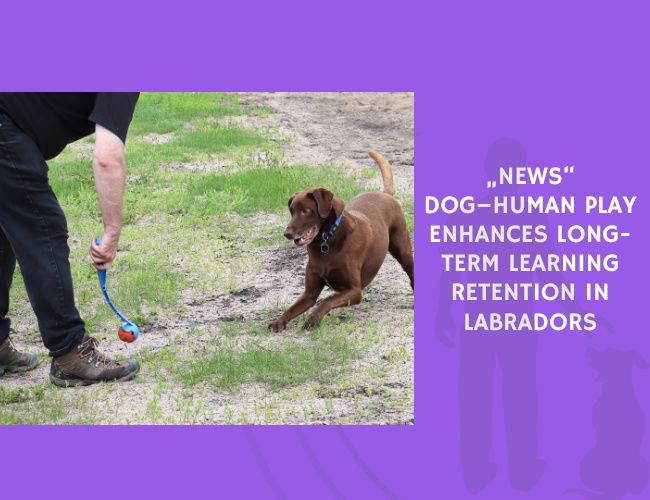
Published in Animals, this follow-on study examined how emotional arousal induced by post-training play impacts memory reconsolidation and retention in Labrador Retrievers. The research builds upon prior findings showing that play after learning a new task can improve short-term recall. Here, the same dogs were re-tested one year later using a two-choice discrimination paradigm to measure how well they remembered the previously learned task.
All participating dogs successfully relearned the task, but those from the dog–human play group required significantly fewer trials and made fewer errors compared to dogs who had rested post-learning. This suggests that emotionally stimulating, positive interactions following training act as a reinforcement enhancer, amplifying the encoding and consolidation of new information. The effect remained measurable even after a full year, indicating remarkable durability in memory influenced by affective context.
Physiological measures such as heart rate monitoring further supported the hypothesis that mild emotional arousal—induced through play—creates a favourable neurochemical environment for memory stabilization. While the sample size was modest, and age effects could not be fully excluded, the study provides robust preliminary evidence that emotionally positive post-training activities strengthen long-term cognitive outcomes in dogs.
Affenzeller’s findings underscore the powerful role of emotional connection in learning, suggesting that reinforcement is not merely mechanical but deeply tied to affective synchrony between dog and human. Within relational models such as NeuroBond, this supports the idea that shared joy and engagement anchor behavioural memory more effectively than repetition alone.
Source: Affenzeller, N. (2020). Dog–Human Play, but Not Resting Post-Learning Improve Re-Training Performance up to One Year after Initial Task Acquisition in Labrador Retriever Dogs: A Follow-On Study. Animals, 10. Published July 1, 2020.










