
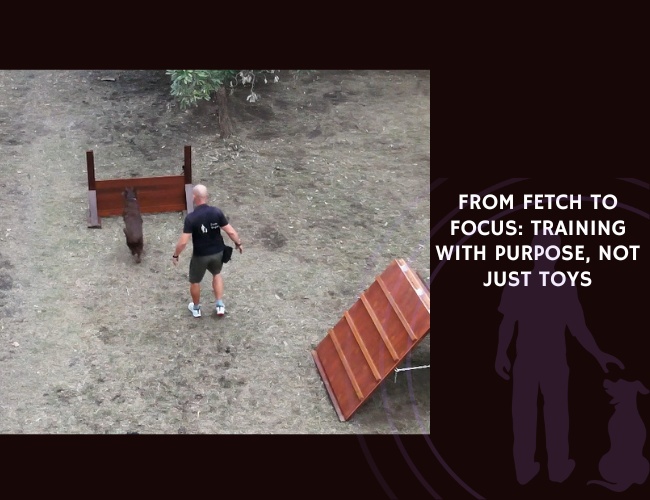
Introduction: Rethinking How We Train Our Dogs
Have you ever watched your furry friend become absolutely fixated on that squeaky ball, only to wonder if there’s something deeper missing from their training routine? You’re not alone in questioning whether the endless games of fetch are truly building the focused, well-adjusted companion you envision. The journey from toy-driven excitement to purposeful training represents one of the most transformative shifts you can make in your dog’s development—one that touches on neuroscience, behavioral psychology, and the profound bond between human and canine.
In this comprehensive guide, we’ll explore how structured training with clear objectives can enhance your dog’s working memory, attention span, and overall wellbeing in ways that toy-based play alone simply cannot achieve. Let’s guide you through the science, the practice, and the remarkable outcomes that emerge when we shift our focus from entertainment to engagement, from distraction to direction.
Character & Behavior: Understanding the Canine Mind Beyond Play
The Neural Architecture of Focus
Your dog’s brain is a remarkable organ, capable of far more sophisticated processing than many realize. When we engage in purposeful training, we’re not just teaching tricks—we’re actively sculpting neural pathways that govern attention, impulse control, and executive function. The mesolimbic reward system, located deep within your dog’s subcortical brain regions, responds powerfully to structured learning experiences.
Did you know that repeated engagement in focused training activities actually reinforces neural pathways through dopaminergic feedback systems? This means that each successful training session makes future focus less effortful and more automatic for your dog. It’s like building a mental muscle that grows stronger with each purposeful repetition.
Working Memory vs. Momentary Excitement
While that tennis ball might capture your dog’s attention for minutes at a time, structured training engages working memory in fundamentally different ways. Working memory—your dog’s ability to hold and manipulate information—develops through:
- Sequential command chains that require remembering multiple steps
- Problem-solving exercises that demand sustained mental effort
- Delayed reinforcement scenarios that build patience and retention
The difference is profound. A dog chasing a ball exercises prey drive and physical coordination, but a dog working through a complex training sequence develops cognitive flexibility that transfers to real-world situations. This isn’t to say play lacks value—rather, it’s understanding that play alone doesn’t build the comprehensive cognitive toolkit your companion needs.
The Arousal Regulation Challenge
You might notice your high-drive breed becoming increasingly frantic during fetch sessions, each throw ramping up excitement until calm focus becomes impossible. This escalating arousal pattern, while natural, can actually work against behavioral goals. Structured training provides something crucial: arousal regulation through purposeful engagement.
When we transition from fetch-driven excitement to problem-solving tasks, we’re teaching our dogs to modulate their emotional states. This self-regulation capacity becomes essential for managing reactivity, reducing anxiety, and maintaining composure in challenging situations. 🧠
Vocalization & Communication: How Your Dog Really “Talks” Through Training
Beyond the Bark: Reading Engagement Signals
Your dog’s communication during purposeful training tells a richer story than the excited barks of playtime. Watch for these subtle signals that indicate deep engagement:
- The focused whine – a soft, controlled vocalization showing mental effort
- Anticipatory breathing patterns – rhythmic, measured breaths during problem-solving
- Silent attention – the profound quiet of complete concentration
These communication patterns reveal something important: your dog is learning to express needs and understanding through nuanced channels, not just excitement-driven outbursts.
Building a Vocabulary of Understanding
Purpose-driven training creates what researchers call “well-learned cue-response pairings”—essentially, a shared language between you and your dog. Unlike the simple “throw-catch” dynamic of toy play, this vocabulary encompasses:
Positional cues that communicate spatial awareness and boundaries. Your dog learns not just “sit” but “sit and remain focused despite distractions.”
Duration markers that teach patience and sustained attention. The difference between a momentary stay and a prolonged settle represents cognitive growth.
Contextual discrimination where your dog learns that different environments require different responses—calm focus at the café, alert readiness on the trail.
This sophisticated communication system emerges through consistent, structured training that toy-based play simply cannot replicate. Your dog isn’t just responding to stimuli; they’re engaging in genuine two-way communication.
Training & Education: The Science of Purposeful Learning
The Cognitive Control Revolution
Recent research in canine cognition reveals that cognitive control training enhances both conscious and non-conscious regulation of behavior. This means your dog develops two parallel systems: deliberate response to commands and automatic appropriate behaviors. Let’s explore how this dual-system development works.
When you engage in structured training with clear objectives, you’re activating your dog’s prefrontal cortex—the brain region responsible for executive function. This activation differs fundamentally from the subcortical arousal triggered by toy play. The result? Enhanced capacity for:
- Impulse inhibition – resisting immediate gratification for greater rewards
- Cognitive flexibility – adapting behavior to changing circumstances
- Sustained attention – maintaining focus despite distractions
The Reinforcement Hierarchy: Beyond Toys
Research demonstrates that dogs’ brains show equal or greater activation when expecting verbal praise compared to food rewards. This finding revolutionizes our understanding of motivation. Your voice, your approval, your engaged attention—these become powerful reinforcers that transcend physical objects.
Consider this hierarchy of reinforcement in purposeful training:
Primary reinforcers include food, water, and physical comfort—the basics of survival. But in domestic dogs, social reinforcement often supersedes these biological drives.
Secondary reinforcers gain power through association. That clicker sound, paired consistently with positive outcomes, becomes a bridge to understanding. Unlike a toy that provides immediate gratification, these bridges build anticipation and focus.
Relational reinforcers represent the pinnacle of training sophistication. The release of oxytocin when your dog locks eyes with you, the cortisol reduction following your calming presence—these neurochemical responses create bonds stronger than any toy could forge.
Structured Progressions vs. Random Play
The beauty of purposeful training lies in its progressive nature. Unlike the repetitive cycle of fetch, structured training builds systematically:
Week 1-2: Foundation behaviors with clear start and end points Week 3-4: Duration building, adding time between cue and reward Week 5-6: Distraction proofing, maintaining focus amid environmental challenges Week 7-8: Generalization across contexts, ensuring skills transfer to new situations
This progression mirrors human educational models, recognizing that learning requires scaffolding, repetition with variation, and gradual complexity increases. Your dog isn’t just learning tricks; they’re developing learning strategies that apply broadly. 🐾
Performance & Activities: Channeling Drive Into Purpose
From Fetch Frenzy to Focused Work
That intense drive your Border Collie shows for the frisbee? It’s not problematic—it’s potential waiting for direction. The key lies in channeling that enthusiasm into structured activities that satisfy instinctual needs while building cognitive skills.
Scent work transforms prey drive into methodical searching. Your dog learns to systematically investigate areas, discriminate between odors, and indicate discoveries without grabbing or chasing. This isn’t suppressing drive; it’s refining it.
Agility with purpose goes beyond physical exercise. Each obstacle requires body awareness, spatial reasoning, and response inhibition. Your dog must think before acting, plan movements, and adjust strategies—cognitive demands absent from simple fetch.
Rally obedience combines movement with mental challenges. Unlike repetitive ball throwing, rally requires remembering sequences, maintaining heel position despite distractions, and transitioning smoothly between exercises. The mental fatigue from 15 minutes of rally often exceeds an hour of fetch.
The Working Memory Workout
Purposeful training creates what neuroscientists call “cognitive load”—the mental effort required to process and respond to information. This load, when appropriately balanced, strengthens working memory through:
- Multi-step sequences requiring information retention across time
- Variable reinforcement schedules demanding attention to subtle cues
- Problem-solving scenarios engaging creative thinking
Your dog’s brain literally changes through this training. Neural plasticity—the brain’s ability to reorganize and form new connections—responds powerfully to cognitive challenges that simple toy play cannot provide.
Measuring Success Beyond Speed
In toy-driven play, success often means faster retrieval, higher jumps, or longer play sessions. Purposeful training redefines success through:
Latency to respond – the thoughtful pause before action showing impulse control Duration of focus – sustained attention without external stimulation Discrimination accuracy – choosing correctly among multiple options Generalization ability – applying skills across varied contexts
These metrics reflect genuine cognitive development rather than mere physical prowess or excitement levels.
Nutritional Support for Cognitive Development
Fueling Focus, Not Frenzy
Your dog’s diet plays a crucial role in supporting the cognitive demands of purposeful training. While high-energy play might call for simple carbohydrates, sustained mental work requires different nutritional support.
Omega-3 fatty acids, particularly DHA and EPA, directly support neural function and cognitive processing. Dogs engaged in regular mental challenges show improved performance when supplemented appropriately. Consider adding:
- Fish oil supplements (adjusted for your dog’s weight)
- Whole fish meals twice weekly
- Algae-based alternatives for sensitive stomachs
B-complex vitamins support neurotransmitter production essential for focus and learning. Unlike the quick energy needed for fetch, these vitamins enable sustained cognitive effort through:
- Enhanced neural communication
- Improved stress resilience
- Better memory consolidation during rest
Timing Nutrition for Training Success
The when matters as much as the what. Strategic feeding supports cognitive performance:
Pre-training (30-60 minutes before): Light, protein-rich snacks maintaining alertness without fullness. Think small portions of chicken or turkey.
During training: Tiny, high-value rewards that don’t disrupt focus. Single pieces of freeze-dried liver or cheese maintain motivation without satiation.
Post-training: Balanced meals supporting recovery and memory consolidation. Include complex carbohydrates and quality proteins for optimal neural recovery.
This nutritional timing differs markedly from the “play anytime” approach of toy-based activities, recognizing that cognitive work demands specific metabolic support.
Health Concerns: The Hidden Costs of Toy Obsession
Physical Stress Patterns
While we often focus on the mental aspects, the physical health implications of toy-obsessed versus purpose-trained dogs deserve attention. Repetitive fetch creates specific stress patterns:
Joint impact from repeated jumping and sudden direction changes can accelerate degenerative conditions, particularly in large breeds. Purposeful training, with its varied movements and controlled pacing, distributes physical stress more evenly.
Dental damage from obsessive ball carrying affects many toy-focused dogs. The constant pressure and repetitive motion can wear teeth prematurely. Structured training uses the mouth purposefully—carrying specific items on cue, releasing promptly—preserving dental health.
Muscle imbalances develop through repetitive motions. That characteristic “fetch sprint” overdevelops certain muscle groups while neglecting others. Purpose-driven activities promote balanced physical development through varied movement patterns.
The Stress Response System
Chronic high arousal from constant toy play affects your dog’s stress response system. The hypothalamic-pituitary-adrenal (HPA) axis, responsible for managing stress, can become dysregulated through:
- Constant cortisol elevation during high-excitement play
- Inability to achieve calm baseline states
- Disrupted sleep patterns from residual arousal
Purpose-driven training, with its emphasis on calm focus and regulated arousal, supports healthy HPA axis function. Your dog learns to engage intensely when appropriate, then return to restful states—a crucial life skill.
Behavioral Health Implications
The European Society of Veterinary Clinical Ethology (ESVCE) emphasizes that training methods significantly impact canine welfare. Toy-obsessed dogs often develop:
Resource guarding around preferred toys, creating household tension and potential aggression. Purpose-trained dogs learn that resources are abundant and sharing brings rewards.
Compulsive behaviors like shadow chasing or tail spinning, often stemming from redirected prey drive. Structured training channels these drives productively, reducing compulsive tendencies.
Anxiety disorders linked to overstimulation and inability to self-soothe. The self-regulation skills developed through purposeful training provide coping mechanisms for anxiety-provoking situations. 😄
Purposeful. Engaged. Focused.
Play entertains, training transforms. Fetch fuels prey drive, but structured exercises sculpt neural pathways for attention, memory, and impulse control.
Focus builds like muscle. Dopamine-driven reinforcement strengthens circuits with every session, making concentration easier and more natural over time.


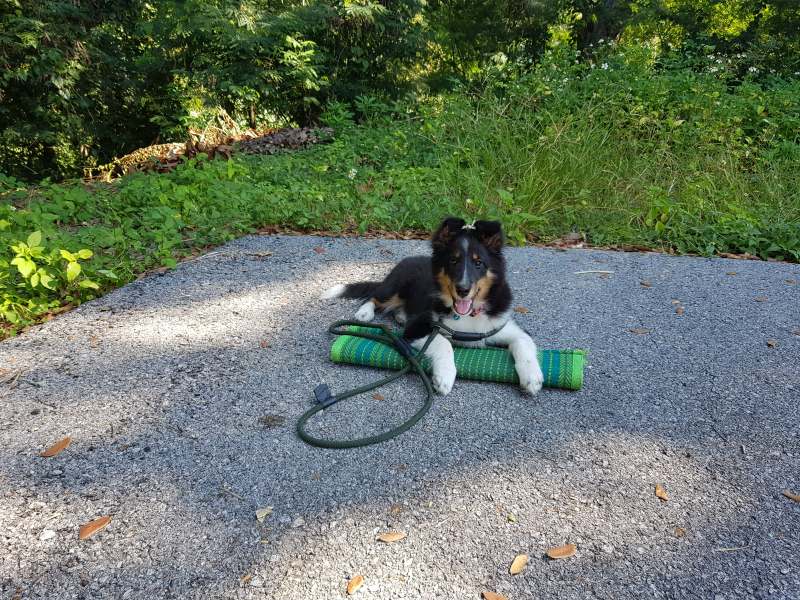
Engagement outlasts excitement. Toys spark fleeting joy, while purposeful training develops cognitive flexibility that carries into daily life and deepens your bond.
Lifestyle & Environment: Creating Spaces for Purposeful Engagement
Designing Your Training Environment
Your home environment profoundly influences training success. Unlike the simple “throw space” needed for fetch, purposeful training requires thoughtful environmental design:
Designated calm zones where your dog practices settled behavior without toys present. These spaces, perhaps a specific mat or bed, become associated with relaxation and focus rather than excitement.
Variable training stations throughout your home enabling spontaneous training opportunities. A heel position by the kitchen counter, a wait at the top of stairs, a focused settle during dinner—life becomes training.
Distraction gradients allowing progressive challenge increases. Start training in quiet spaces, gradually introducing environmental complexity as skills solidify. This systematic approach impossible with chaotic toy play.
The Social Environment Factor
Your dog’s social world extends beyond toys to encompass family members, other pets, and community interactions. Purpose-driven training enhances social success through:
- Predictable responses that family members can reliably elicit
- Appropriate greetings replacing jumping excitement with calm acknowledgment
- Public composure enabling café visits, therapy work, or peaceful walks
This social sophistication emerges from structured training’s emphasis on contextual awareness—understanding that different situations require different behaviors.
Time Investment: Quality Over Quantity
Many believe toy play’s efficiency—throw ball, dog runs, repeat—makes it superior for busy schedules. However, purposeful training often requires less total time while yielding superior results:
15 minutes of focused training can mentally exhaust your dog more than an hour of fetch. The cognitive demand of problem-solving, impulse control, and sustained attention creates productive fatigue.
Integrated daily activities become training opportunities. Your morning routine transforms into heel practice, position changes, and duration stays. No extra time required—just purposeful intention.
Rest and consolidation receive proper emphasis. Unlike the “more is better” mentality of toy play, purposeful training recognizes that learning requires processing time. Strategic rest periods enhance retention and prevent burnout.
Senior Care: Cognitive Health Through the Golden Years
Maintaining Mental Acuity
As your dog ages, the benefits of purpose-driven training become even more pronounced. While physical limitations might restrict fetch games, cognitive engagement remains possible and crucial:
Neural preservation through continued learning helps maintain cognitive function. The “use it or lose it” principle applies powerfully to aging canine brains. Purposeful training provides gentle mental stimulation without physical strain.
Adaptation strategies for sensory changes keep senior dogs engaged. As vision dims, scent work becomes primary. As hearing fades, visual cues gain importance. This flexibility isn’t possible with toy-dependent activities.
Confidence maintenance through achievable challenges prevents the anxiety often accompanying aging. Your senior dog continues experiencing success, maintaining self-efficacy despite physical changes.
Modified Approaches for Maximum Benefit
Senior dogs require thoughtful training modifications that toy play cannot accommodate:
- Shorter sessions with frequent breaks preventing fatigue
- Lower-impact activities emphasizing mental over physical challenge
- Higher-value reinforcement compensating for reduced sensory acuity
- Patience and repetition acknowledging slower processing speeds
These adaptations maintain cognitive engagement while respecting physical limitations—something impossible when training revolves around physical toy retrieval.
The Human-Canine Bond: Beyond Objects to Connection
Trust as the Ultimate Reinforcer
The research is clear: dogs release oxytocin when making eye contact with their humans, and cortisol levels drop after positive human interaction. This neurochemical response reveals something profound—your relationship itself becomes the most powerful training tool.
Purpose-driven training nurtures this bond through:
Mutual attention where both partners remain fully present and engaged. Unlike the divided attention of toy throwing, purposeful training requires genuine connection.
Synchronized breathing that naturally occurs during focused training. You and your dog literally harmonize physiologically, deepening your bond beyond conscious awareness.
Shared accomplishment from overcoming challenges together. Each breakthrough strengthens trust and mutual respect in ways toy play cannot achieve.
Communication Sophistication
The communication developing through purposeful training transcends simple commands. You’re building:
- Predictive understanding where your dog anticipates needs before explicit cues
- Emotional attunement recognizing and responding to subtle mood shifts
- Collaborative problem-solving working together toward solutions
This sophisticated communication emerges from consistent, structured interaction focused on understanding rather than entertainment.
The Invisible Leash Phenomenon
Advanced purposeful training creates what many call the “invisible leash”—a connection so strong that physical restraints become unnecessary. This isn’t achieved through toy bribery but through:
Trust building where your dog chooses proximity and attention over distraction Intrinsic motivation making cooperation inherently rewarding Mutual respect recognizing both partners’ contributions to success
This level of connection, impossible through toy-dependent training, represents the pinnacle of the human-canine relationship. 🧡
Conclusion: Is Purpose-Driven Training Right for Your Dog?
As we’ve explored throughout this journey, the shift from fetch to focus represents more than a training philosophy—it’s a fundamental reimagining of how we engage with our canine companions. The science speaks clearly: structured training with clear objectives enhances working memory, builds executive function, strengthens the human-animal bond, and promotes overall welfare in ways that toy-driven play simply cannot match.
But this doesn’t mean abandoning play entirely. Rather, it’s about recognizing that our dogs deserve more than endless repetition of the same stimulating but ultimately limited activity. They deserve cognitive challenges that grow with them, communication systems that deepen understanding, and relationships built on trust rather than toys.
Consider these questions as you evaluate your training approach:
- Does your dog show signs of toy obsession, anxiety, or inability to settle?
- Are behavioral issues like reactivity or poor impulse control affecting quality of life?
- Do you desire deeper communication and connection with your dog?
- Is your current training preparing your dog for real-world success?
If you answered yes to any of these, the transition to purpose-driven training could transform your relationship. Start small—replace one fetch session with structured training. Notice the difference in your dog’s focus, calmness, and engagement. Watch as frustration transforms into satisfaction, excitement into enthusiasm, and obsession into partnership.
The journey from fetch to focus isn’t always easy. It requires patience, consistency, and a willingness to see your dog as more than an entertainment-seeking missile. But the rewards—a calm, confident, deeply connected companion capable of navigating life’s complexities with grace—make every moment of purposeful training worthwhile.
Your dog is waiting to show you what they’re truly capable of. Will you give them the chance to move beyond the ball and discover their full potential? The choice, and the remarkable journey that follows, begins with your next training session. Make it purposeful. Make it matter. Make it about more than just toys. 🐾
Next Steps: Your Purpose-Driven Training Journey
Ready to begin? Start with these foundational exercises that build focus without toy dependence:
- The Settling Protocol: Teach calm as a default, not exhaustion as the only route to rest
- Eye Contact Duration: Build connection through sustained mutual attention
- Environmental Discrimination: Practice different behaviors in different contexts
- Impulse Control Ladders: Systematically increase self-regulation challenges
- Scent Detection Basics: Channel drive into methodical searching
Remember, this transformation doesn’t happen overnight. But with each purposeful session, you’re building something toys alone could never create—a thinking, feeling, deeply connected partner ready for whatever life brings. Welcome to the world of purpose-driven training. Your dog’s fullest potential awaits.










