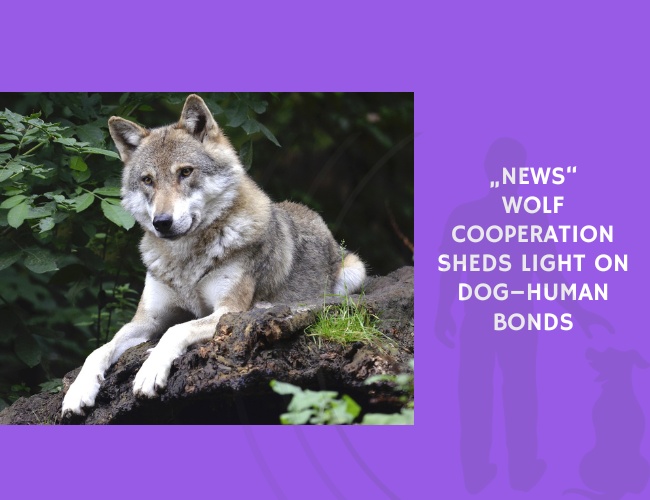
Published in Animals, the review by Giada Cordoni and Elisabetta Palagi explores how the cooperative sociobiology of wolves provides a blueprint for understanding modern dog behavior and the evolution of the dog–human relationship. As one of the most cooperative canid species, wolves rely heavily on group members for survival, coordinating efforts in territorial defense, hunting, and offspring care.
Despite their structured hierarchies, wolves engage in sophisticated social exchanges. Subordinates can offer help to dominant individuals, effectively bargaining for social tolerance in a cooperative “commodity exchange.” These dynamics demonstrate that rank does not rigidly dictate behavior but is shaped through continuous negotiation and social leverage.
The authors also highlight wolves’ post-conflict strategies, including reconciliation, consolation of victims, and calming behaviors toward aggressors. Such interactions require emotional awareness and the capacity to modulate behavior depending on the social context. These strategies help maintain group cohesion and reduce the spread of aggression within the pack.
Another key component of wolf sociobiology is adult social play, especially play fighting. Though physically similar to real aggression, play is governed by nuanced communication signals and rapid adjustments that keep the interaction non-threatening. This ability to coordinate intentions and actions reflects advanced cognitive and social skills.
Cordoni and Palagi suggest that these traits created a fertile evolutionary platform for artificial selection during domestication. Humans capitalized on wolves’ pre-existing cooperative tendencies, ultimately shaping dogs into partners capable of inter-species communication, emotional attunement, and flexible social behavior. By tracing these ancestral roots, the review deepens our understanding of how dogs developed the capacity for strong, affective bonds with humans.
Source: Cordoni, G., & Palagi, E. (2019). Back to the Future: A Glance Over Wolf Social Behavior to Understand Dog–Human Relationship. Animals. Published November 1, 2019.