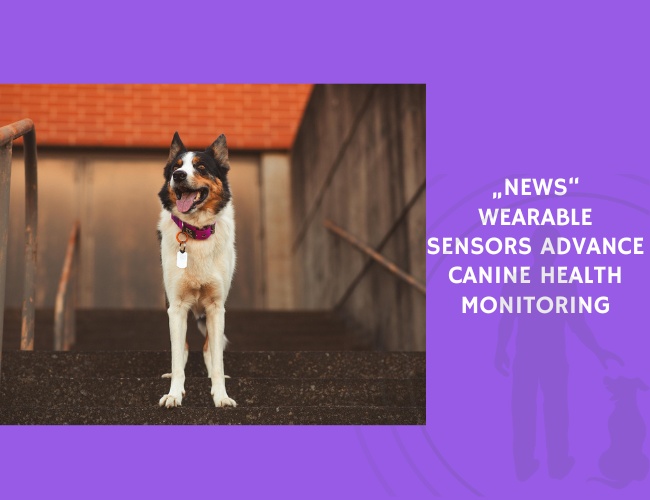
Published in the IEEE Sensors Journal, this work addresses the growing interest among veterinarians, trainers, and working-dog handlers in real-time physiological monitoring outside laboratory conditions. Understanding heart rate, heart rate variability, and respiratory patterns is essential for interpreting dogs’ stress, distress, excitement, and other emotional states across diverse environments.
The researchers developed a wearable system integrating three sensing modalities: electrocardiogram (ECG) for electrical activity of the heart, photoplethysmogram (PPG) for pulse and perfusion tracking, and inertial measurement units (IMU) for behavioral motion detection. Because canine skin is well insulated under dense fur, the team evaluated various ECG electrode designs and enhanced them using conductive polymer coatings to improve signal quality.
To optimize optical sensing, the system incorporated light guides and optical fibers to couple PPG sensors effectively to the skin surface, allowing reliable pulse detection even through thick coat layers. These innovations support continuous data capture during normal canine activities, making the system suitable for home, field, and operational settings.
This sensor platform forms the foundation of a broader canine body-area network capable of collecting physiological and behavioral information wirelessly. Paired with ongoing efforts to use IMUs for automated behavior classification, the technology aims to map emotional and environmental influences onto measurable physiological markers.
Ultimately, the researchers envision applications in training, welfare monitoring, working-dog performance optimization, and early detection of stress-related issues. By enabling long-term, non-invasive monitoring, this system supports a deeper understanding of canine emotional health and strengthens communication between dogs and their handlers.
Source: Brugarolas, R., Latif, T., et al. (2016). Wearable Heart Rate Sensor Systems for Wireless Canine Health Monitoring. IEEE Sensors Journal. Published May 15, 2016.