
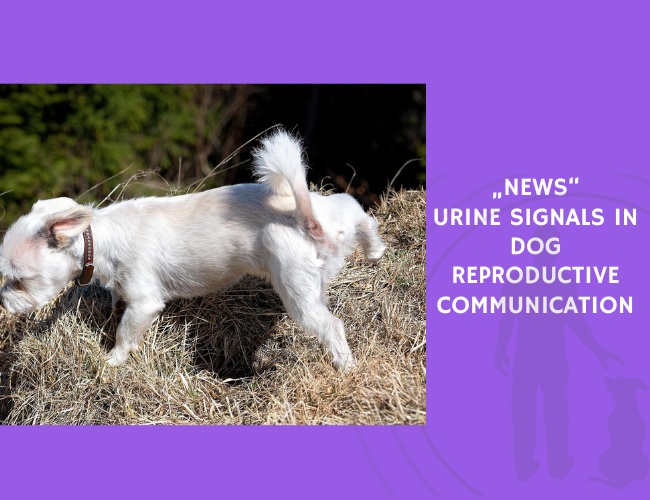
In a study published in Animals, Woszczyło, Jezierski, Szumny, Niżański, and Dzięcioł (2020) investigated how male dogs detect and interpret semiochemical cues emitted by females during estrus. While previous work emphasized volatile odorants as long-distance attractants, this study examined the possibility that biologically meaningful reproductive signals may instead require close physical proximity.
The researchers conducted two complementary experiments. In the first, five male dogs were exposed to air containing odor molecules from an estrous female and from estrous urine, with food odor and clean air serving as controls. Males showed interest in volatile cues from the female, yet without accompanying visual signals, these odors alone did not trigger clear signs of sexual arousal. Notably, food odor elicited longer sniffing durations than estrous urine, indicating that volatiles from urine alone are insufficient as long-distance sexual attractants.
The second experiment evaluated responses from 25 male dogs given direct access to urine samples from estrous females, anestrous females, males, and humans. Here, estrous urine reliably evoked longer sniffing times, and only direct contact with estrous urine elicited licking and salivation—behaviors associated with transfer of nonvolatile compounds to the vomeronasal organ. These findings indicate that male assessment of female reproductive state involves detection of both volatile airborne cues and nonvolatile compounds accessed during close contact.
Together, the results suggest that urine odor in estrus does not function as a long-distance sexual signal in dogs. Instead, estrous urine supports a nuanced, close-range communication system in which male dogs rely on multisensory chemical information before making mating decisions. The study underscores the complexity of canine reproductive signaling and the importance of both volatile and nonvolatile pathways in semiochemical communication.
Source: Woszczyło, M., Jezierski, T., Szumny, A., Niżański, W., & Dzięcioł, M. (2020). The Role of Urine in Semiochemical Communication between Females and Males of Domestic Dog (Canis familiaris) during Estrus. Animals.










