
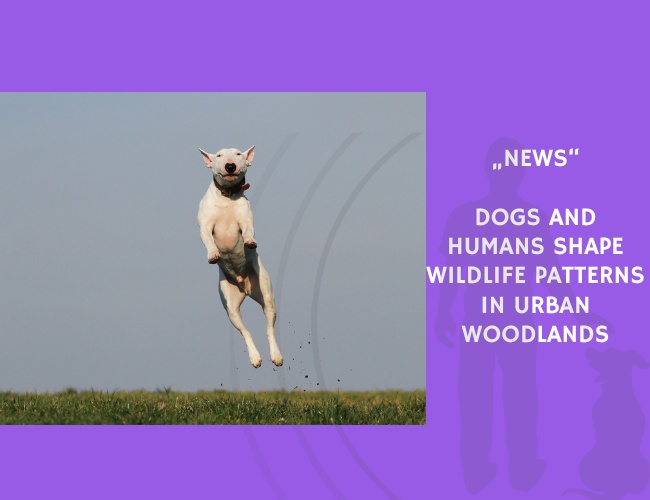
Urban woodlands are essential habitats where wildlife and people frequently overlap. Beasley and colleagues (2023) investigated how humans and their dogs influence the spatial and temporal behavior of wildlife in Hampstead Heath, London, one of the city’s largest and most visited natural areas.
Using camera trap data, researchers compared bird and mammal activity across areas with high and low levels of human and dog visitation. Results showed that most species, including common woodland birds and mammals, did not significantly alter their activity patterns between heavily and lightly visited sites.
The exception was the European hedgehog (Erinaceus europaeus), which displayed extended activity in the mornings and early evenings in less disturbed areas. This shift may influence hedgehog reproductive success and survival, highlighting the vulnerability of certain species to anthropogenic disturbance.
While most wildlife appeared to adapt to human and dog presence, the study emphasizes the importance of further research into subtle behavioral changes that may accumulate over time. Urban green spaces serve as shared environments, and understanding these dynamics can inform conservation strategies and responsible dog walking practices.
Source: Beasley, R., Carbone, C., Brooker, A., Rowcliffe, M., & Waage, J. (2023). Investigating the impacts of humans and dogs on the spatial and temporal activity of wildlife in urban woodlands. Urban Ecosystems, 26, 1843–1852. Published August 24, 2023.










