
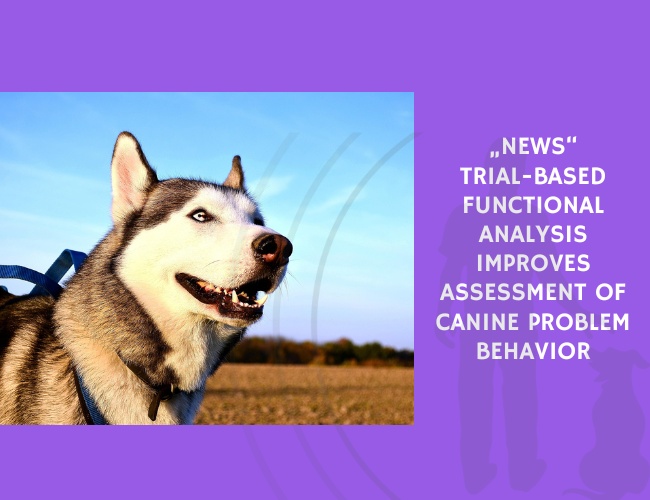
Published in the Journal of Applied Behavior Analysis, this study by Allyson R. Salzer, C. Dozier, Florence D. DiGennaro Reed, and Derek D. Reed expands the application of functional analysis (FA) to domesticated dogs. While FA is well established in human behavior analysis, its use with nonhuman species has been limited, and modifications tailored to naturalistic settings for animals remain understudied.
The authors compared a standard functional analysis with a trial-based functional analysis (TBFA) across multiple forms of dog problem behavior. TBFA embeds brief control and test conditions into natural environments, making it more practical for use with companion dogs, working dogs, and shelter populations.
Results showed that the standard FA and TBFA produced corresponding outcomes for every dog assessed. This strong consistency indicates that TBFA offers a reliable alternative to traditional FA while requiring fewer resources and allowing assessment in everyday contexts rather than laboratory-like settings.
Following the analyses, the researchers developed individualized treatment plans designed to reduce each dog’s problem behavior. These interventions were tailored to the maintaining variables identified through FA—such as attention, escape, or access to preferred items—demonstrating the clinical value of precise functional assessment.
One major implication of the study is the feasibility of TBFA for privately owned dogs and shelter dogs. Because it can be conducted in naturalistic environments and in shorter, more flexible sessions, TBFA makes functional analysis more accessible to practitioners, trainers, and behavior consultants who work outside controlled research facilities.
By showing that trial-based FA is both valid and practical, the study contributes a meaningful advancement to canine behavior assessment. Clinicians gain a new tool for determining why problem behavior occurs and for designing evidence-based, function-matched treatment strategies that enhance the welfare and manageability of dogs in a variety of care settings.
Source: Salzer, A. R., Dozier, C., DiGennaro Reed, F. D., & Reed, D. D. (2024). Functional analysis and treatment of problem behavior by domesticated canines. Journal of Applied Behavior Analysis. Published November 7, 2024.










