Study Chiang Mai, Thailand, December 23, 2025 – A new evaluation of a canine ocular simulator shows promising evidence that realistic models can strengthen veterinary student training while reducing dependence on live dogs.
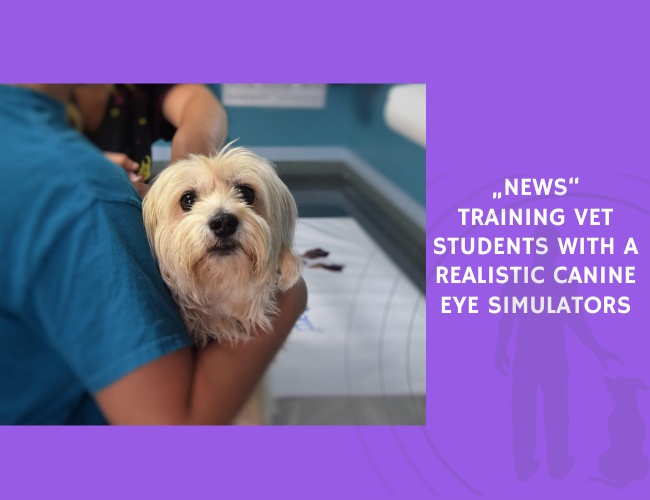
Fundic examination—an essential diagnostic process in veterinary ophthalmology—is notoriously difficult for novice learners. Live canine patients often show discomfort or intolerance during indirect fundoscopy, making skill development challenging for students. To address this barrier, researchers designed and assessed a new canine ocular simulator aimed at improving training outcomes without compromising animal welfare.
The study involved six board-certified veterinary ophthalmologists and nineteen second-year veterinary students. Participants completed indirect fundic examinations on both a live dog and the new model. Students practiced for 30 minutes prior to assessment, using either the simulator or a live dog under a standardized protocol.
Across all performance metrics—time to completion, standardized checklist scores, global skill ratings, and eye-tracking measures—experts consistently outperformed novices, confirming expected distinctions in proficiency. Importantly, expert and novice evaluations indicated that the simulator was both realistic and useful as a training tool.
When comparing training methods, researchers found no significant differences between students who practiced first on the simulator and those who practiced on a live dog. Both groups performed similarly on subsequent assessments. These results suggest that the canine ocular model can successfully support early skill acquisition without reducing educational quality.
The model’s ability to provide a standardized, repeatable, and low-stress training environment positions it as an important tool for veterinary education. By minimizing reliance on live animals and allowing students to practice early competence-building tasks, simulation-based training may enhance learning efficiency while promoting ethical teaching standards.
Source: Banse, H., McMillan, C. J., Anderson, S. J., et al. (2021). Development of and Validity Evidence for a Canine Ocular Model for Training Novice Veterinary Students to Perform a Fundic Examination. Journal of Veterinary Medical Education. No DOI was provided in the supplied text.