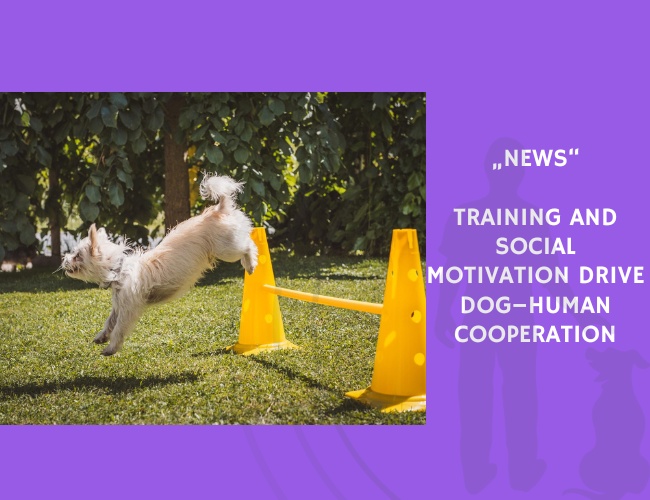
Dogs are widely recognized for their capacity to cooperate with humans, whether in herding, hunting, or providing assistance. However, the drivers of spontaneous cooperation in family dogs have remained unclear. Csepregi and Gácsi (2023) explored whether breed function, training experience, and social motivation influence dogs’ willingness to help their owners.
The researchers tested 100 family dogs from various breed groups, including non-working breeds and both cooperative and independent working breeds. The dogs participated in an “out-of-reach” task, in which they had the opportunity to assist their owners in obtaining an inaccessible object. Importantly, owners never directly asked for help, allowing the study to measure dogs’ spontaneous cooperative tendencies.
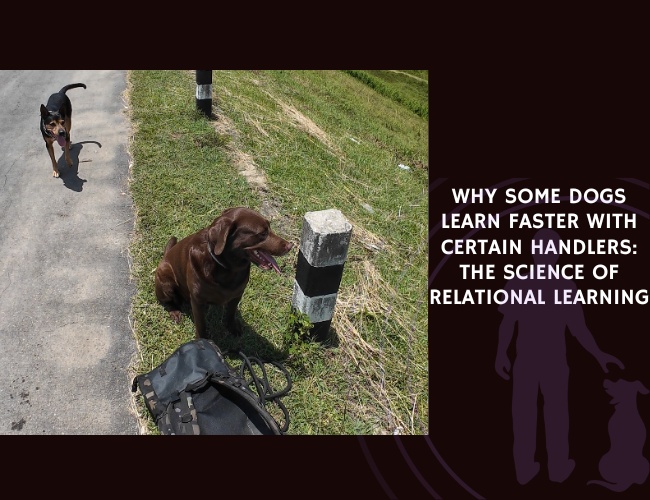
The results showed that breed function had no significant impact on cooperation. Instead, dogs with higher levels of training and those rated by their owners as having stronger social motivation were more attentive, paid closer attention to their partners, and were more willing to cooperate. Interestingly, training level and social motivation were independent of each other, yet both contributed significantly to cooperative behavior.
These findings suggest that cooperation in dogs is less about inherited breed traits and more about individual experience and social inclination. The authors emphasize the need for test methods that do not rely solely on pre-trained skills, as well as the importance of considering both life history and social context when studying canine cooperation.
Source: Csepregi, M., & Gácsi, M. (2023). Factors Contributing to Successful Spontaneous Dog–Human Cooperation. Animals, 13. Published July 1, 2023.