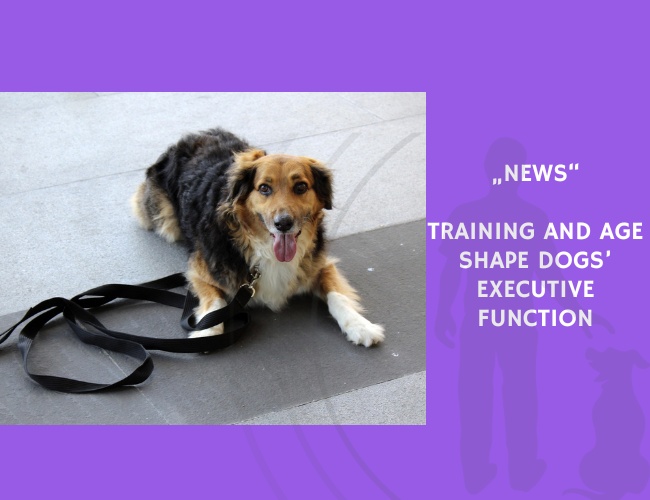
Executive functions—skills such as working memory, attention, and inhibition—allow dogs to regulate their behavior and respond adaptively to challenges. In humans, these abilities evolve with age, and researchers have long suspected similar patterns in dogs. In this study, Maike Foraita and colleagues examined whether the Dog Executive Function Scale (DEFS), initially developed for adult dogs, could accurately assess these cognitive skills in younger (8 years) dogs.
The team analyzed data from a wide age range of dogs and confirmed that the same EF structure applies to juvenile, adult, and senior dogs. This means that the DEFS can reliably measure self-regulation and cognition throughout the canine lifespan. However, how these skills develop and decline varies depending on age and training history.
Working memory and attention toward the owner followed a U-shaped trajectory—improving in early life, peaking in adulthood, and declining in senior years. In contrast, forms of inhibition showed more complex age-related trends: delay inhibition decreased with age, while motor regulation increased. These findings mirror patterns seen in human cognitive aging.
Training and occupation emerged as strong predictors of EF performance. Working dogs and those with more extensive training histories demonstrated higher executive function scores, regardless of age. For pet dogs, participation in diverse training activities appeared especially beneficial for enhancing self-control and attention.
The study emphasizes that executive function in dogs is both age- and experience-dependent. Encouraging structured training, enrichment, and mental challenges at any life stage can help maintain cognitive health and improve behavioral outcomes, much like cognitive exercise does in humans.
Source: Foraita, M., Howell, T., & Bennett, P. C. (2023). Executive Functions as Measured by the Dog Executive Function Scale (DEFS) over the Lifespan of Dogs. Animals, 13. Published February 1, 2023.