
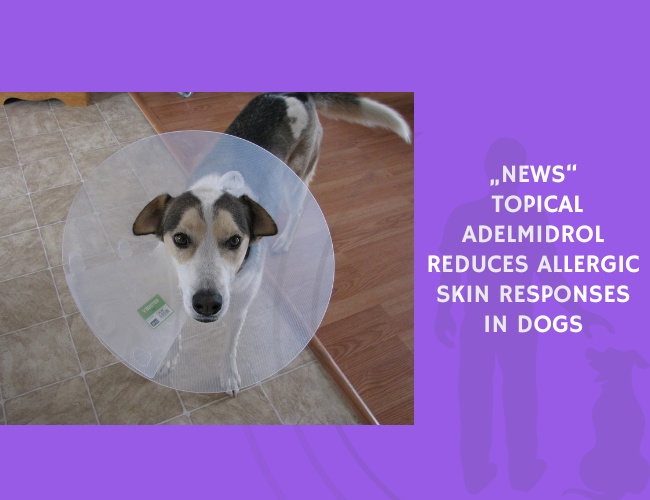
Allergic dermatitis is a common condition in companion animals, often driven by excessive immune responses to environmental antigens. The present study investigated whether topically applied adelmidrol could modulate both the early and late phases of allergic skin inflammation in sensitized dogs. As a derivative of azelaic acid and an analogue of the anti-inflammatory compound palmitoylethanolamide (PEA), adelmidrol is designed for local application and targeted modulation of cutaneous immune activity.
Six hypersensitive Beagle dogs underwent repeated intradermal injections of Ascaris suum extract over eight consecutive days. Each dog received adelmidrol (2%) on one lateral thoracic area and a vehicle control on the opposite side, allowing direct comparison of treatment effects within subjects. Skin responses were monitored throughout the treatment period, and biopsies were collected 24 hours after the final antigen challenge.
The results revealed a significant reduction in wheal size on days four and seven in areas treated with adelmidrol compared with control-treated skin. This demonstrates a clear inhibition of the immediate allergic response. Additionally, biopsies taken after eight days of treatment showed a marked decrease in cutaneous mast cell numbers in the adelmidrol-treated sites. Because mast cells are central mediators in allergic inflammation, their reduction indicates that adelmidrol effectively attenuates both acute and sustained immune activation.
Together, these findings highlight the therapeutic potential of topical adelmidrol as an intervention for allergic dermatitis in dogs. By reducing antigen-induced wheal formation and lowering mast cell density, this compound may help veterinarians better manage inflammatory skin reactions and improve comfort for allergic companions.
Source: Cerrato, S., Brazis, P., della Valle, M. F., Miolo, A., & Puigdemont, A. (2012). Inhibitory effect of topical Adelmidrol on antigen-induced skin wheal and mast cell behavior in a canine model of allergic dermatitis. BMC Veterinary Research. Published November 26, 2012.










