
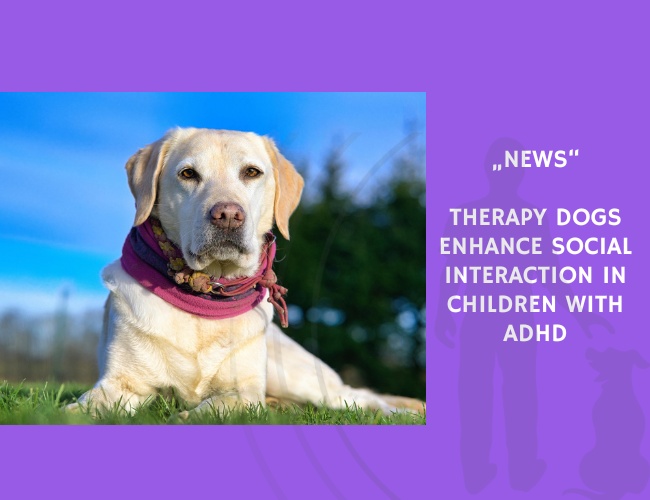
Published in Frontiers in Psychiatry, the study by Leanne O. Nieforth and colleagues offers a nuanced look into how canine-assisted interventions (CAIs) may benefit children diagnosed with Attention-Deficit/Hyperactivity Disorder (ADHD). Affecting roughly 10% of children in the United States, ADHD is characterized by symptoms such as inattention, impulsivity, and hyperactivity, which can hinder both academic and social functioning. This study aimed to determine whether integrating a therapy dog into cognitive behavioral therapy sessions could improve social engagement in affected children.
The researchers used the Observation of Human-Animal Interaction for Research (OHAIRE) Coding System to analyze over 320 minutes of recorded therapy sessions involving 35 children. Participants were randomly assigned to one of two conditions: a live therapy dog group or a control group using a stuffed dog. Behaviors were coded across domains of animal-directed and human-directed social interaction, including interactions with adults and peers. Statistical analysis employed repeated measures mixed models to evaluate behavioral change over time.
Interestingly, children showed similar levels of interaction with the live and stuffed dogs themselves. However, the presence of a live therapy dog significantly increased human-to-human social interactions over the course of the 12-week program. Specifically, children in the live dog condition demonstrated marked increases in adult-directed social interactions (p < 0.0001) and peer-directed interactions (p = 0.014). These findings suggest that therapy dogs act as social catalysts, encouraging children to communicate more effectively with people around them rather than focusing exclusively on the animal.
The study also underscores the therapeutic distinction between live animals and artificial substitutes. While stuffed dogs elicited engagement, only live therapy dogs prompted enduring growth in interpersonal behaviors, indicating that authentic human-animal interaction fosters social-emotional development. The authors advocate for incorporating behavioral coding in future CAI studies to clarify how animal presence mediates psychosocial outcomes.
By quantifying changes in real-time social behavior, Nieforth et al. provide strong empirical support for the inclusion of therapy dogs in interventions targeting social functioning in children with ADHD. The findings point toward a model where human-animal partnerships enhance therapy effectiveness, particularly by creating a safe, motivating, and emotionally responsive environment.
Source: Nieforth, L. O., Guérin, N. A., Stehli, A., Schuck, S. E. B., Yi, K., & O’Haire, M. (2024). Observation of human-animal interaction for research (OHAIRE) behavior coding in a randomized control trial of children with attention-deficit hyperactivity disorder (ADHD) and a canine-assisted intervention. Frontiers in Psychiatry, 15. Published February 27, 2024.










