
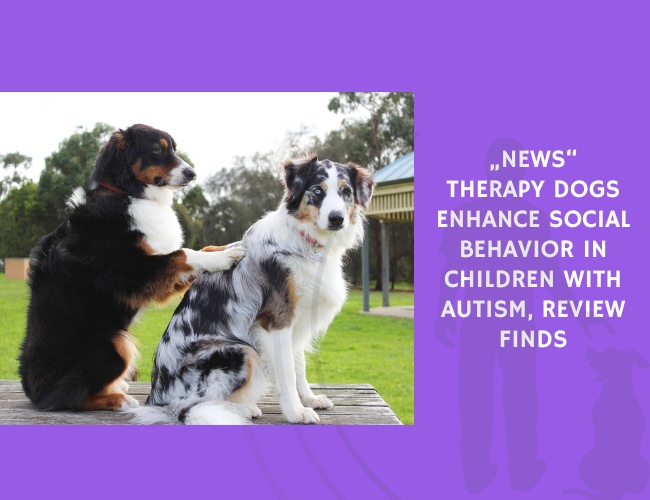
This systematic review by K. Hardy and R. Weston synthesizes the peer-reviewed literature on canine-assisted therapy (CAT) for children diagnosed with Autism Spectrum Disorder. Animal-assisted therapy has long been proposed as a means to increase prosocial behaviors, and dogs—being accessible, trainable, and socially responsive—are the most commonly used animals in therapeutic contexts.
After applying inclusion and exclusion criteria, the authors identified five qualifying studies. Across these studies, the presence of a therapy dog consistently correlated with increases in both the frequency and duration of social behaviors in children with ASD. These enhancements were observed during treatment sessions and, in one case, maintained during follow-up assessments, suggesting some degree of lasting benefit.
Reported improvements included greater eye contact, more frequent verbal initiations, increased physical proximity to others, and higher overall engagement in structured or semi-structured social activities. The calming presence of the therapy dog was also noted as a contributing factor, potentially reducing anxiety and enabling more sustained social interaction.
Despite these promising findings, the review highlights important methodological limitations. Sample sizes were generally small, analytic procedures were sometimes suboptimal, and interventions lacked standardized protocols, making direct comparisons difficult. These weaknesses suggest that current data may not fully capture the true scope of CAT’s impact.
Nevertheless, the consistency of positive trends across all included studies indicates that canine-assisted therapy is a promising intervention for supporting social development in children with ASD. The authors call for more rigorous, larger-scale research to clarify treatment mechanisms, establish standardized methodologies, and better determine long-term outcomes.
Overall, the review positions therapy dogs as valuable partners in promoting social engagement, emotional comfort, and prosocial growth among children on the autism spectrum.
Source: Hardy, K., & Weston, R. (2020). Canine-Assisted Therapy for Children with Autism Spectrum Disorder: a Systematic Review. Published June 1, 2020.










