
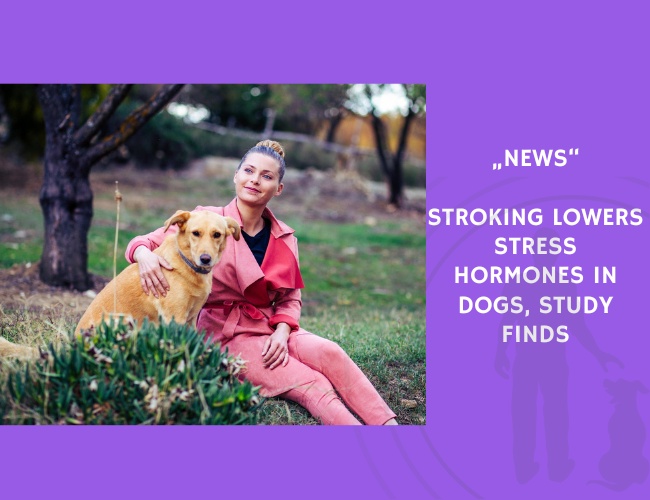
Stress management is a key aspect of dog welfare, particularly in contexts like veterinary visits. Research has shown that the dog’s brain hemispheres play different roles in emotion processing, and paw preference—known as laterality—is a visible marker of this asymmetry. Right-pawed dogs are thought to rely more on their left hemisphere, which is linked to calmer, repetitive processing, while left-pawed dogs rely more on their right hemisphere, associated with fear and aggression.
In this study, 40 dogs of different breeds and sexes were tested. The researchers measured blood levels of noradrenaline, serotonin, and cortisol before and after stroking. Results showed that stroking consistently reduced cortisol, the primary stress hormone, while increasing serotonin, which promotes calmness and well-being. These effects were present across both sexes and paw types, but important differences emerged.
Male dogs generally showed higher levels of all three neuromodulators than females, indicating stronger stress responses. Meanwhile, right-pawed dogs had higher serotonin and noradrenaline than left-pawed dogs, suggesting that they adapt more readily to stress. The findings confirm that pawedness and sex influence stress physiology, but stroking remains an effective way to reduce stress in all dogs.
The study provides further evidence for the importance of positive tactile interaction between humans and dogs, not only for emotional comfort but also for measurable physiological benefits. For veterinarians, trainers, and owners alike, incorporating stroking into handling routines can be a simple yet powerful tool to improve canine welfare.
Source: Karpiński, M., Ognik, K., Garbiec, A., Czyżowski, P., & Krauze, M. (2021). Effect of Stroking on Serotonin, Noradrenaline, and Cortisol Levels in the Blood of Right- and Left-Pawed Dogs. Animals, 11. MDPI.










