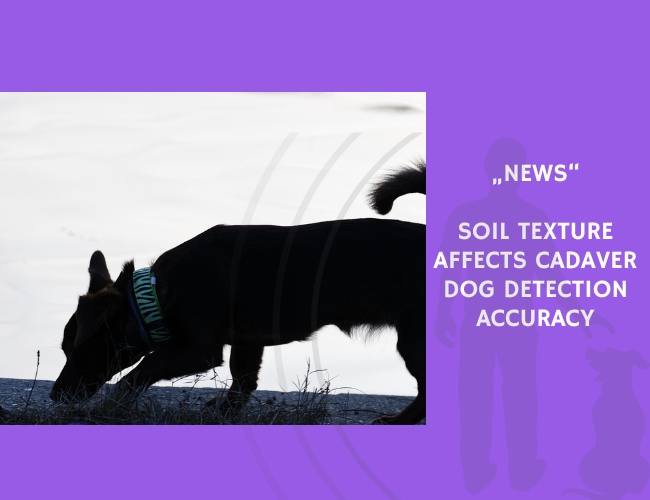
Human remains detection dogs (HRDDs) are invaluable tools in forensic and disaster recovery operations. Their acute sense of smell enables them to locate buried or concealed human remains even under challenging environmental conditions. However, environmental variables such as soil composition may influence how scent molecules travel from underground to the surface, affecting the dogs’ ability to detect them.
In a study published in the Journal of Forensic Sciences, M. B. Alexander and colleagues examined how soil texture—the ratio of sand, silt, and clay—affects odor movement and detection accuracy. Using controlled burial sites with varying soil types, they measured how well trained cadaver dogs could identify the presence of buried human remains under different textural conditions.
The results demonstrated that soil texture significantly influenced scent detection difficulty. Coarser, sandy soils allowed for greater air permeability and faster odor diffusion, facilitating easier detection by dogs. In contrast, dense clay soils tended to trap volatile compounds, delaying or even blocking odor release to the surface. Intermediate textures, such as loam, produced variable results depending on moisture content and burial depth.
The study concluded that search operations should adjust search segment sizes, sweep widths, and time allocation based on the soil type of the search area. In clay-rich environments, smaller grid sizes and longer search durations may be necessary to compensate for reduced odor availability, whereas sandy soils may permit broader sweeps and faster progression.
By identifying soil texture as a key environmental factor in odor transmission, the research provides actionable insights for forensic teams and canine handlers. Optimizing search strategies according to soil conditions can enhance the likelihood of successful detection and improve overall efficiency in recovery missions.
Source: Alexander, M. B., Hodges, T. K., Wescott, D., & Aitkenhead-Peterson, J. (2016). The Effects of Soil Texture on the Ability of Human Remains Detection Dogs to Detect Buried Human Remains. Journal of Forensic Sciences, 61. Published May 1, 2016.