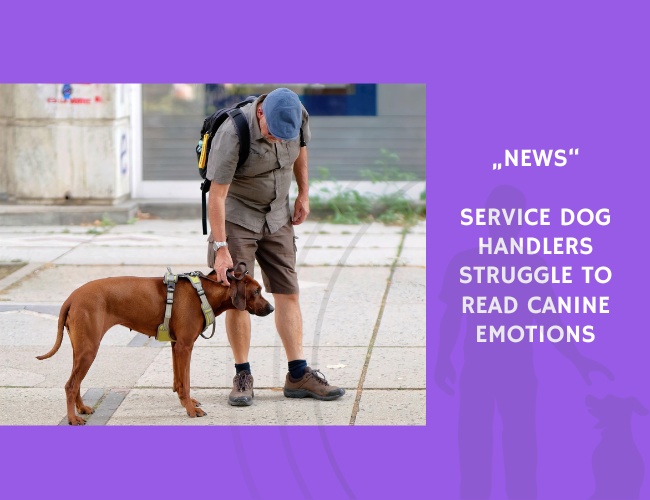
Animal-assisted interventions (AAI) are increasingly used to support patients with conditions such as post-traumatic stress disorder (PTSD). Within these programs, psychiatric service dogs (PsySD) are trained under an emotional service profile to alert when their handlers display signs of anxiety. However, questions remain about whether such specialized training influences handlers’ ability to recognize their dogs’ emotional states and welfare signals.
Fisher and MacKay (2020) compared two groups of handlers: 23 psychiatric service dog handlers and 16 search-and-rescue handlers (SARK9), the latter working with dogs trained without emotional service profiling. Participants were asked to evaluate canine affective states using standardized video presentations, complete the Animal Empathy Scale, and report personal observations of their handler–dog relationship.
The results showed that both groups struggled with recognizing stress-related body language and subtle emotional cues. Although SARK9 handlers identified stress signals slightly more often than PsySD handlers, the difference was not statistically significant. Importantly, there was no correlation between empathy scores and the ability to correctly identify canine affective states.
These findings indicate that even highly experienced handlers may miss or misinterpret the body language associated with subtle canine emotions. The authors suggest that this challenge provides an opportunity to improve training programs, not only for service dog teams but for all contexts where accurate interpretation of canine behavior is critical to welfare and success.
Source: Fisher, C., & MacKay, J. R. D. (2020). Recognition of Canine Emotion by the Psychiatric Service Dog Owner-Handler.