
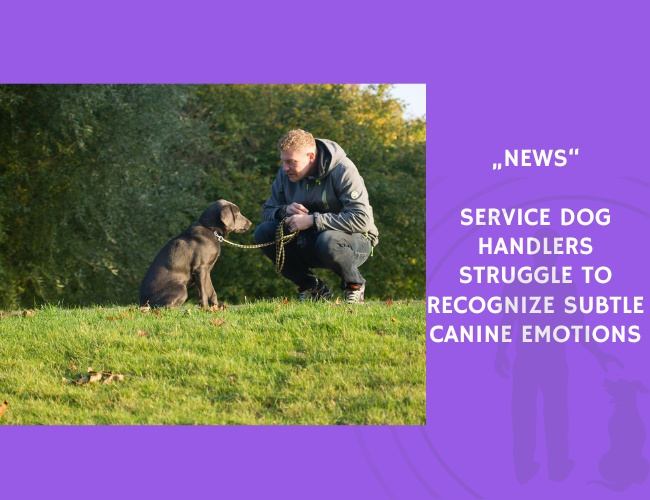
Animal-assisted interventions (AAI) are increasingly used in therapeutic contexts, particularly for individuals with post-traumatic stress disorder (PTSD). Psychiatric service dogs are trained under the emotional service profile to alert handlers to rising anxiety. However, questions remain about whether this handler-focused training influences a handler’s ability to recognize canine welfare states.
Fisher & MacKay (2020) compared 23 psychiatric service dog handlers (PsySD) with 16 search-and-rescue dog handlers (SARK9), a group without emotional service training. Participants completed the Animal Empathy Scale, identified canine affective states in standardized videos, and reflected on their dog–handler relationships.
Findings showed no significant correlation between handler empathy and the ability to identify canine affective states. While a greater proportion of search-and-rescue handlers recognized stress-related body language compared to psychiatric service dog handlers, the difference was not statistically significant. Across both groups, subtle cues of stress and affective change were difficult to detect.
These results suggest that service dog teams may face challenges in accurately interpreting canine body language, regardless of training background. The authors emphasize that program development to improve handler recognition of canine emotional states could advance welfare outcomes and strengthen long-term team success.
Source: Fisher, C., & MacKay, J. R. D. (2020). Recognition of Canine Emotion by the Psychiatric Service Dog Owner-Handler. Publication Date: November 2, 2020.










